Model-Specific Guide: Jeep Wrangler JK & JL Axle Leak Diagnosis
Whether you are wheeling a modern JL Wrangler with factory M210/M220 axles or maintaining a legacy JK Dana 44, a compromised axle or pinion seal demands immediate attention. Off-road articulation, water fording, and extreme driveline bind routinely degrade seal lips, leading to lubricant starvation. Ignoring a leak inevitably results in catastrophic ring and pinion failure, turning a $50 seal replacement into a $2,500 axle rebuild. This guide provides a dealership-level diagnostic and repair protocol for Jeep differential leaks, ensuring your drivetrain survives the trail.
Diagnostic Matrix: Pinpointing the Leak Source
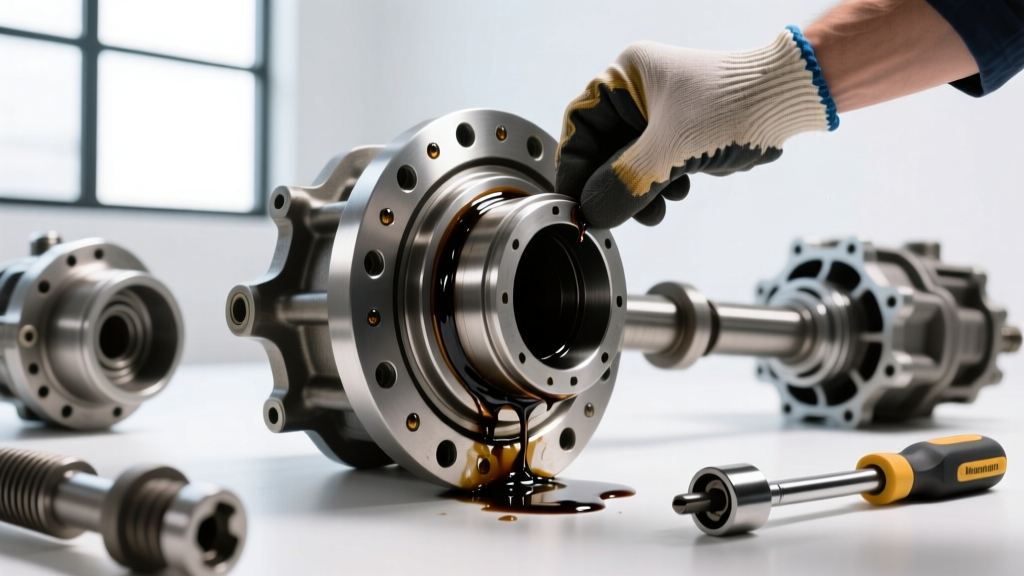
Before unbolting a single component, you must accurately identify the leak's origin. Gear oil migrates along surfaces, often making the lowest point of the differential housing a deceptive indicator. Clean the entire axle assembly with brake cleaner, run the vehicle, and inspect the following high-failure zones.
| Leak Location | Visual Symptoms | Common Failure Cause | Severity Level |
|---|---|---|---|
| Axle Shaft Seal (Hub) | Fluid inside the wheel rim; wet brake pads; ABS sensor coated in oil. | Worn seal lip from axle shaft scoring; mud/sand ingress destroying the rubber. | High (Ruins brake friction material) |
| Pinion Seal (Driveshaft) | Fluid slung radially onto the skid plate, exhaust, and fuel tank. | Excessive pinion bearing play; worn yoke mating surface; dry-rotted rubber. | Critical (Rapid fluid loss) |
| Differential Cover | Seeping along the perimeter of the diff pan; wet lower shock mounts. | Over-torqued cover bolts warping the flange; degraded RTV or torn gasket. | Moderate (Slow weep) |
| Axle Tube Vent | Fluid dripping from the vent hose routed to the frame rail. | Overfilled housing; severe axle articulation causing fluid surge into the vent tube. | Low (Usually an overfill issue) |
Essential Tools and OEM Part Numbers
To execute this repair to factory standards, bypass generic auto parts store seals. According to SKF Automotive engineering guidelines, premium fluorocarbon (FKM) seal lips offer vastly superior heat and abrasion resistance compared to standard nitrile rubber, which is critical for heavily loaded Jeep axles.
JK Dana 44 Rear Axle Parts
- Axle Shaft Seal: Mopar 05252531AB or Timken 710928
- Pinion Seal: Mopar 05252525 or Timken 2043
- Friction Modifier: Mopar 04318060AD (Required for Trac-Lok LSD)
JL M220 Rear Axle Parts
- Axle Shaft Seal: Mopar 68223852AA
- Pinion Seal: Mopar 68304905AA
- Diff Cover Gasket: Mopar 68304913AA (JL uses a reusable rubber-coated steel gasket, not RTV)
Step-by-Step: Axle Shaft Seal Replacement (JL M220 / JK Dana 44)
Replacing the inner axle shaft seal requires removing the shaft from the housing. This is a meticulous process where contamination is your primary enemy.
1. Teardown and Extraction
Break the lug nuts loose, raise the vehicle, and support the axle on jack stands. Remove the wheel, brake caliper (hang it with a bungee cord to avoid stressing the brake line), and brake rotor. Unbolt the four axle shaft retainer nuts (13mm or 1/2-inch typically). Use a slide hammer with an axle shaft puller attachment to extract the shaft. Warning: Do not pry the shaft out, as you will destroy the wheel bearing and ABS tone ring.
2. Seal Removal and Housing Prep
Once the shaft is out, use a dedicated seal puller to extract the old seal. Inspect the axle tube bore for rust or pitting. If the bore is scored, use a fine-grit emery cloth to smooth it. Wipe the inside of the axle tube with a lint-free shop towel and brake cleaner. Any leftover grit will instantly destroy the new seal lip upon installation.
3. Installation and Torque Specs
Lubricate the new seal lip with fresh gear oil. Use a seal driver or a large socket that matches the exact outer diameter of the seal housing to tap it in perfectly square. Drive it until it seats fully against the internal shoulder. Reinsert the axle shaft, ensuring the splines do not catch and fold the seal lip. Torque the JL M220 axle shaft retainer nuts to 60 lb-ft (81 Nm) and the JK Dana 44 nuts to 55 lb-ft (75 Nm) in a crisscross pattern.
The Pinion Seal Dilemma: Crush Sleeve Protocols
Replacing a pinion seal on a Jeep differential is fraught with peril due to the crush sleeve used to set pinion bearing preload. If you over-torque the pinion nut, you will over-crush the sleeve, requiring a complete differential teardown to fix.
The Safe Method (Seal Only Replacement):
- Use a beam-style torque wrench to measure the rotating pinion torque (usually 15-25 in-lbs) before disassembly.
- Mark the pinion nut and yoke with a paint pen to record the exact rotational depth.
- Use a heavy-duty yoke holder and a 3/4-inch drive breaker bar to remove the nut.
- Remove the yoke with a gear puller, tap out the old seal, and install the new one.
- Reinstall the yoke and torque the pinion nut exactly back to your paint marks, verifying that the rotating torque matches your pre-teardown measurement.
Expert Warning: Never use an impact wrench to reinstall a pinion nut. The instantaneous torque spikes will crush the sleeve past the point of no return. If you exceed the target preload, you must install a new crush sleeve and reset the bearing preload from scratch. For comprehensive torque specifications, always consult Dana Spicer's official service manuals.
Selecting the Correct Jeep Differential Fluid
When performing this repair, selecting the correct jeep differential fluid is paramount to the longevity of your ring and pinion. The shift from the JK to the JL generation brought significant changes to factory lubricant specifications, driven by the need for improved fuel economy and higher thermal stability in modern axles.
Fluid Specifications and Capacities
According to the American Petroleum Institute (API), all Jeep axles require GL-5 rated gear oil to protect the hypoid gear cut of the ring and pinion. Using GL-4 will result in rapid gear wear and void your warranty.
| Axle Model | Standard Fluid Spec | Heavy Duty / Rubicon Spec | Approximate Capacity |
|---|---|---|---|
| JK Dana 30 (Front) | 75W-90 GL-5 Synthetic | 75W-90 GL-5 Synthetic | 1.3 Liters (1.4 Qt) |
| JK Dana 44 (Rear) | 75W-90 GL-5 Synthetic | 75W-140 GL-5 Synthetic | 1.7 Liters (1.8 Qt) |
| JL M210 (Front) | 75W-85 GL-5 Synthetic | 75W-85 GL-5 Synthetic | 1.2 Liters (1.3 Qt) |
| JL M220 (Rear) | 75W-85 GL-5 Synthetic | 75W-140 GL-5 Synthetic | 1.4 Liters (1.5 Qt) |
The Limited-Slip Additive Factor
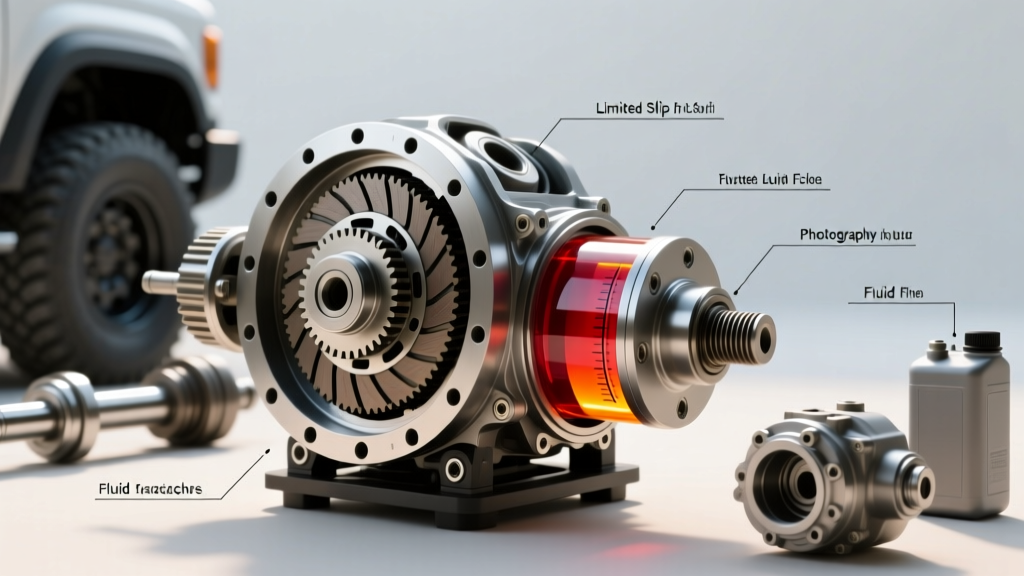
If your Jeep is equipped with a Trac-Lok clutch-type limited-slip differential (LSD), you must add 2.5 oz (75 ml) of Mopar Friction Modifier (Part #04318060AD) to the rear axle. Failure to do so will result in severe chatter, clutch pack degradation, and binding during low-speed turns. Note: Rubicon models equipped with electronic locking differentials do not require friction modifier, as they use an open-differential design when unlocked.
Dealership vs. DIY Cost Analysis (2026 Estimates)
Understanding the financial breakdown helps justify the DIY approach for this repair. Dealership labor rates in 2026 average $165 to $210 per hour, and axle seal replacement is typically billed at 2.5 to 3.0 hours per side.
- Dealership Repair (Single Axle Seal + Fluid): $650 - $850
- Independent 4x4 Shop: $450 - $600
- DIY Cost (OEM Seals + Premium Synthetic Fluid): $85 - $130
By investing in a $40 slide hammer puller set and a torque wrench, you can execute a factory-grade repair for a fraction of the dealership cost, while gaining the confidence to perform trail-side emergency repairs when you are miles away from the nearest service bay.