The Hidden Danger Behind "Just Topping Off" Your Diff
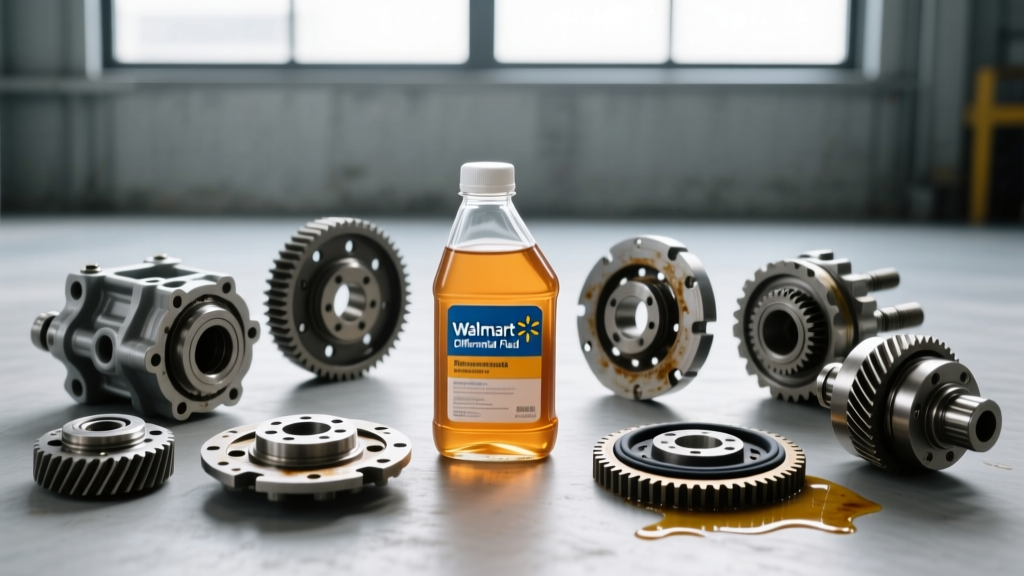
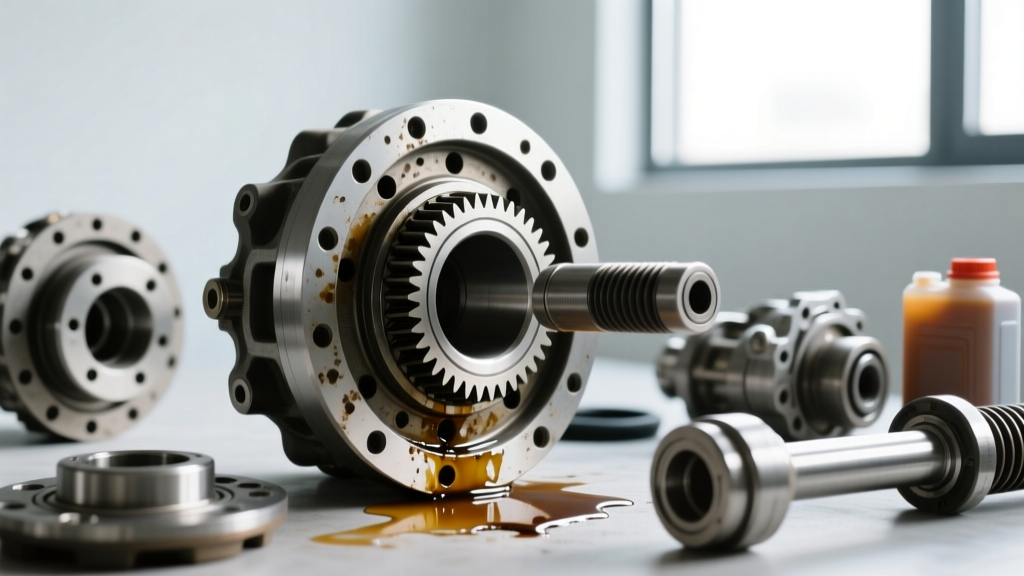
If you are searching for the differential fluid change cost because you noticed a pungent, sulfur-smelling puddle of gear oil on your driveway, stop right there. A standard drain-and-fill service will not fix a blown seal. In the Jeep Wrangler JK and JL community, the Dana 44 front and rear axles are legendary for their off-road capability, but they are equally notorious for developing pinion yoke and inner axle shaft leaks as they age and accumulate high mileage.
Ignoring a differential leak or simply topping it off with 75W-140 synthetic gear oil is a temporary bandage that will inevitably lead to catastrophic ring and pinion failure. When fluid levels drop below the pinion bearing centerline, the high-speed rotational friction generates immense heat, annealing the bearing steel and ultimately causing the pinion gear to walk, destroying your gear set. In this model-specific repair guide, we break down exactly how to diagnose, repair, and budget for Dana 44 seal failures, comparing the true repair costs against a standard fluid service.
Identifying the Leak: Pinion Seal vs. Axle Shaft Seal
Before you order parts from RockAuto or your local dealer, you must accurately pinpoint the leak source. Differential fluid is thick and tends to travel along the axle housing before dripping, which can fool the untrained eye.
- Pinion Yoke Seal Leak: Fluid is slung forward from the center of the differential pumpkin, coating the driveshaft, the crossmember, and the exhaust. This is caused by a worn rubber lip on the pinion seal or a grooved yoke mating surface.
- Inner Axle Shaft Seal Leak: Fluid pools at the back of the brake rotor, inside the wheel well, or drips directly from the axle tube end. This indicates the inner axle seal has failed, allowing gear oil to bypass the bearing and ruin your brake pads.
- Differential Cover Leak: A slow weep around the perimeter of the rear cover. This is usually due to degraded RTV silicone or a warped aftermarket differential cover.
Dana 44 Pinion Seal Replacement: Step-by-Step & Torque Specs
The pinion seal (Part # National 2043 or Spicer 43375) is the most common failure point on the Dana 44. Replacing it seems straightforward—remove the nut, pull the yoke, swap the seal—but the hidden danger lies in the crush sleeve located inside the pinion bearing housing.
The Crush Sleeve Dilemma and Rotational Drag
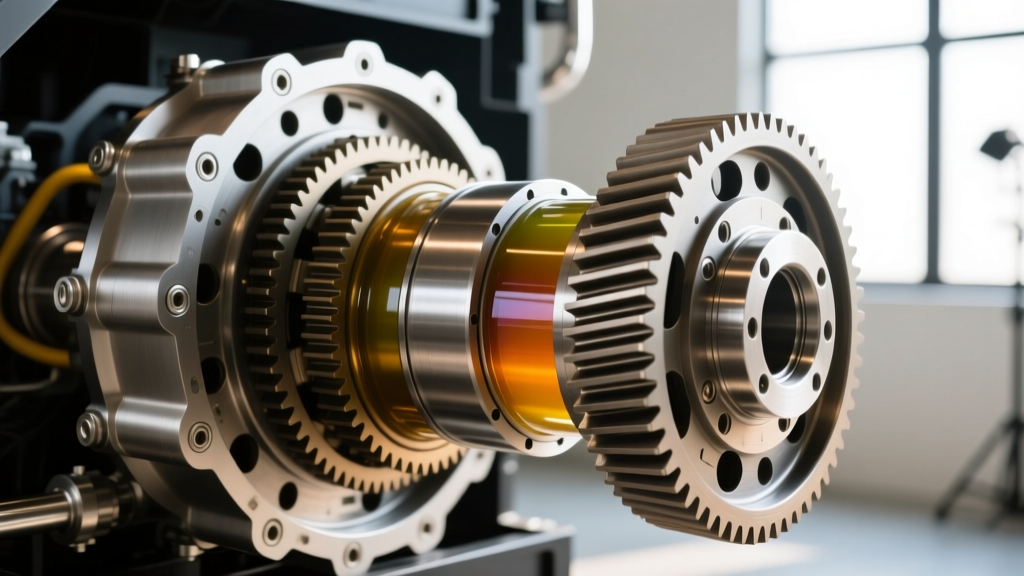
The factory Dana 44 uses a crush sleeve to set the pinion bearing preload. If you use an impact wrench to remove or reinstall the pinion nut, you will over-compress the crush sleeve, resulting in excessive bearing preload, rapid bearing death, and a whining differential.
Mechanic's Pro-Tip: Before removing the pinion nut, use a beam-style inch-pound torque wrench to measure the rotational drag of the pinion. For used bearings on a Dana 44, this should typically read between 12 and 22 in-lbs. Write this number down. When installing the new seal and yoke, tighten the pinion nut incrementally while checking the rotational drag until you hit your exact baseline number. Do not exceed it.
Upgrade to a Solid Pinion Spacer
To eliminate the crush sleeve headache permanently, we highly recommend installing a Solid Pinion Spacer Kit (available from Yukon Gear or Spicer Parts) during this repair. A solid spacer uses shims to set preload, meaning you can safely use an impact gun to torque the pinion nut to the factory specification of 200-250 lb-ft without risking over-compression. This is a massive E-E-A-T upgrade for any Wrangler that sees heavy towing or off-road use.
Dana 44 Inner Axle Shaft Seal & Bearing Repair
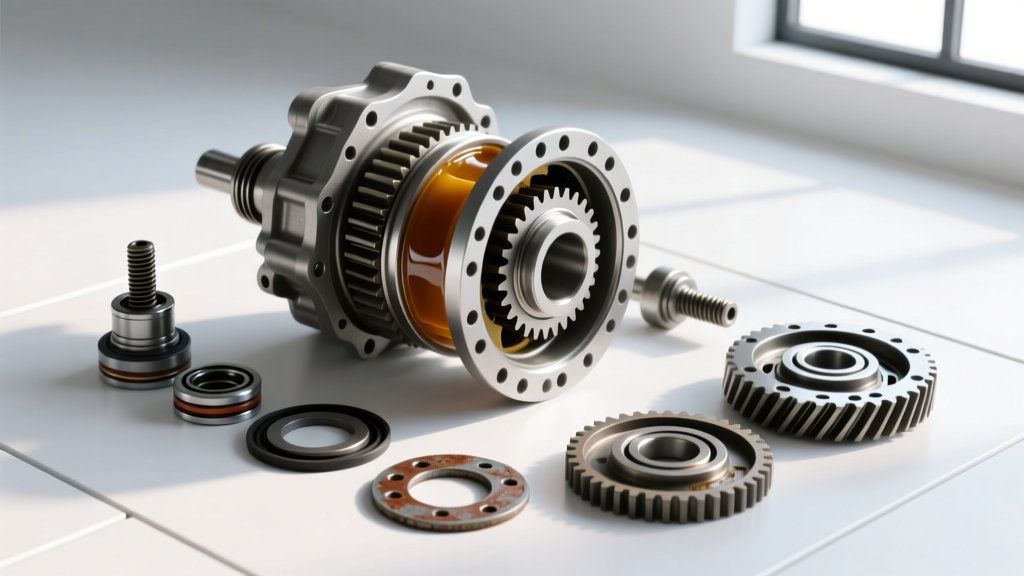
If your leak is originating from the axle tube ends, you are dealing with an inner axle seal failure. On the rear semi-floating Dana 44, the bearing and seal are pressed onto the axle shaft outside the housing.
- Disassembly: Remove the wheel, brake caliper, and rotor. Unbolt the four 1/2-inch (or 13mm) retainer plate nuts securing the axle shaft.
- Extraction: Slide the axle shaft out of the housing. Inspect the shaft surface where the seal rides; if it is deeply grooved, the shaft must be replaced or fitted with a Speedi-Sleeve.
- Press Work: The bearing and seal are pressed together. You must use a hydraulic press to remove the old retainer ring, bearing, and seal.
- Reassembly: Press on the new bearing (Timken 1563), followed by the new inner axle seal (National 710114 or Spicer 10-102-5). Ensure the seal is seated squarely and the rubber lip is lightly lubricated with fresh gear oil before sliding it back into the housing.
Breaking Down the Differential Fluid Change Cost vs. Repair
Understanding the financial difference between routine maintenance and actual leak repair is critical for Wrangler owners. As of 2026, shop labor rates have climbed, making DIY seal repairs highly attractive for those with the right tools. Below is a realistic cost comparison.
| Service Type | DIY Cost (Parts & Fluid) | Shop Cost (2026 Rates) | Labor Time |
|---|---|---|---|
| Standard Diff Fluid Change | $45 - $85 | $150 - $250 | 1 - 1.5 Hours |
| Pinion Seal Replacement | $25 - $60 | $350 - $550 | 2.5 - 4 Hours |
| Inner Axle Seal Replacement | $40 - $90 | $450 - $750 | 3 - 5 Hours |
| Full Rebuild (Ring/Pinion/Bearings) | $400 - $800 | $1,500 - $2,800 | 8 - 12 Hours |
As the table illustrates, the differential fluid change cost at a dealership is roughly $200. However, if you pay a shop for a fluid change without addressing a leaking pinion seal, you will be back in six months paying $500 for the seal repair, plus another $200 for the fluid that just leaked out. Fix the root cause first.
Fluid Specifications, Capacities, and the Friction Modifier Debate
Once your seals are replaced, refilling the Dana 44 requires precision. The factory fill plug is located on the upper third of the differential cover. The correct fluid level is exactly at the bottom edge of the fill hole threads.
Choosing the Right Gear Oil
For daily driving and mild trails, a high-quality 75W-90 Full Synthetic is sufficient. However, if you run larger than 35-inch tires, tow frequently, or wheel in deep water, step up to a 75W-140 Synthetic like AMSOIL Severe Gear. The heavier viscosity maintains its protective film strength under the extreme heat generated by modified Jeep drivetrains.
Capacity: The standard Dana 44 rear holds approximately 2.0 to 2.2 quarts. The front Dana 44 (which features a disconnected stabilizer bar and different housing geometry) holds roughly 1.3 to 1.5 quarts.
Do You Need a Friction Modifier?
This is where many owners make a costly mistake. If your Jeep is equipped with the factory Trac-Lok limited-slip differential (clutch-type), you must add Mopar Friction Modifier (Part # 4318060AD) or an equivalent LSD additive. Failing to do so will result in severe chatter and binding during low-speed turns, ultimately destroying the clutch packs. Conversely, if you have upgraded to an aftermarket locking differential like an ARB Air Locker or an Eaton E-Locker, do not use friction modifier. These units rely on the raw friction of standard gear oil to engage properly; adding modifiers can cause the locking collars to slip.
Final Torque Specifications for Reassembly
Before putting your tools away, ensure all driveline hardware is torqued to factory specifications to prevent vibration and future leaks:
- Differential Cover Bolts (10mm / 3/8-inch): 30-35 lb-ft. (Do not overtighten, or you will warp the cover and cause a new leak).
- Driveshaft Pinion Yoke Strap Bolts (12mm): 70-90 lb-ft.
- Wheel Lug Nuts (1/2-20 or 14x1.5): 100-110 lb-ft.
By diagnosing the exact source of your differential leak and understanding the true repair costs versus a simple fluid swap, you can keep your Dana 44 axles turning reliably for hundreds of thousands of miles. Never let a $20 seal turn into a $2,500 gear rebuild.