The Diagnostic Dilemma: NVH Source Isolation
When a driver reports an intermittent shudder, slip, or rhythmic clicking from the engine bay, the immediate assumption is often a failing transmission clutch. However, modern vehicles feature multiple friction and electromagnetic coupling devices. A frequent culprit masquerading as a drivetrain fault is the HVAC compressor clutch. Understanding the fundamentals of electromagnetic engagement is critical for drivetrain specialists to eliminate parasitic engine loads before pulling a transmission. In this 2026 diagnostic guide, we break down exactly how does an ac clutch work, and contrast its failure modes with true intermittent manual transmission clutch failures.
The Core Question: How Does an AC Clutch Work?
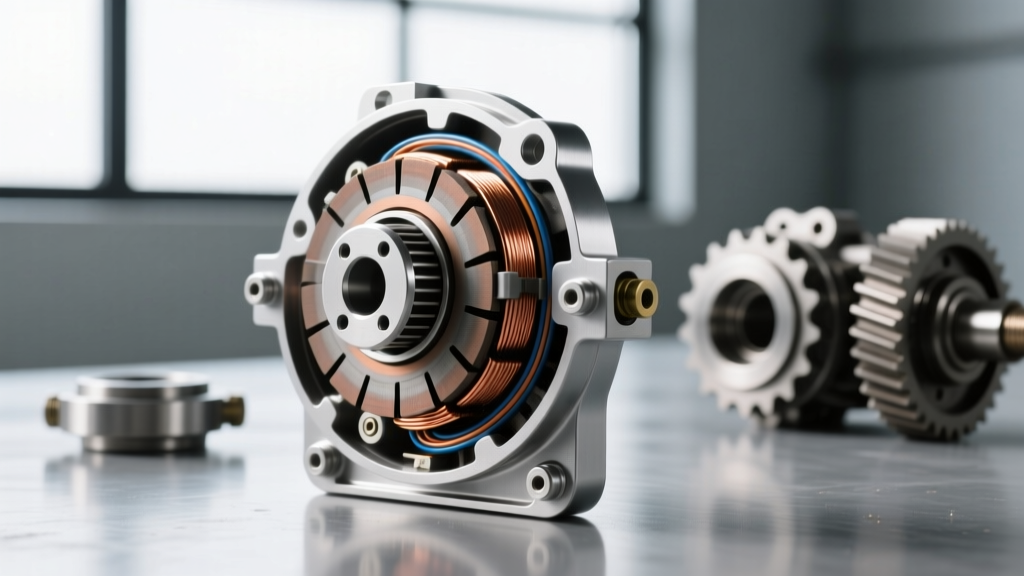
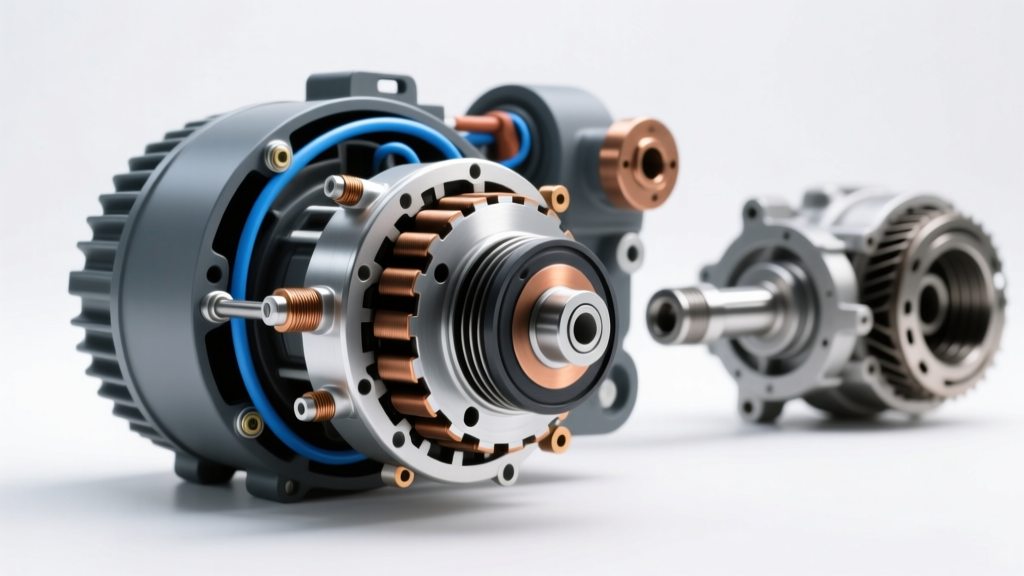
To accurately diagnose intermittent shudder, we must first isolate the A/C system. The automotive A/C compressor clutch is an electromagnetic friction device designed to engage and disengage the compressor pulley from the engine's serpentine belt drive. It consists of three primary components:
- The Pulley: Driven continuously by the serpentine belt via a bearing assembly.
- The Electromagnetic Coil: A stationary copper winding housed inside the pulley that generates a magnetic field when energized by 12V DC current.
- The Hub (Pressure Plate): Connected directly to the compressor shaft via a splined or keyed interface.
When the HVAC control module grounds the coil circuit, the magnetic field pulls the hub against the spinning pulley face. Friction locks the two together, turning the compressor shaft. The critical specification here is the air gap—the distance between the pulley face and the hub when disengaged. According to SAE International guidelines, this gap typically must be maintained between 0.4mm and 0.6mm. If the air gap exceeds 0.8mm due to wear on the friction surfaces, the magnetic flux is insufficient to pull the hub in completely, resulting in intermittent slipping, especially when the coil heats up and electrical resistance increases.
Intermittent Transmission Clutch Problems: The Drivetrain Reality
If you have ruled out the A/C compressor by pulling the HVAC relay and the shudder persists, the fault lies within the manual transmission or its hydraulic actuation system. Intermittent clutch problems are notoriously difficult to pin down because they are often temperature-dependent or load-dependent.
1. Hydraulic Bypass in Concentric Slave Cylinders (CSC)
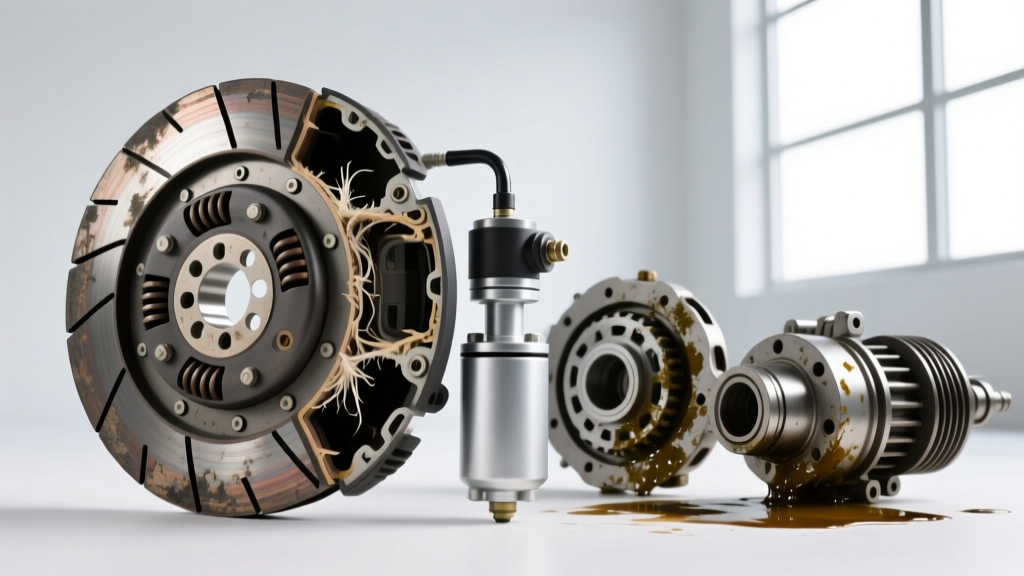
Modern manual transmissions, such as the Tremec TR-6060 or the ZF S6-53, utilize a Concentric Slave Cylinder (CSC) mounted inside the bellhousing. A classic intermittent failure occurs when the internal cup seals of the CSC degrade. When the transmission fluid and bellhousing reach operating temperatures (often exceeding 212°F / 100°C in heavy traffic), the degraded rubber seal softens. Under pedal pressure, DOT 4 hydraulic fluid bypasses the seal internally rather than pushing the release bearing. The symptom? The clutch pedal intermittently drops to the floor, or the clutch slips under heavy throttle, only to work perfectly again after a 10-minute cooldown. For GM applications, OEM replacement part numbers like GM 24264147 or FTE Automotive KG4333 are required to resolve this thermal bypass.
2. Dual-Mass Flywheel (DMF) Spring Hysteresis
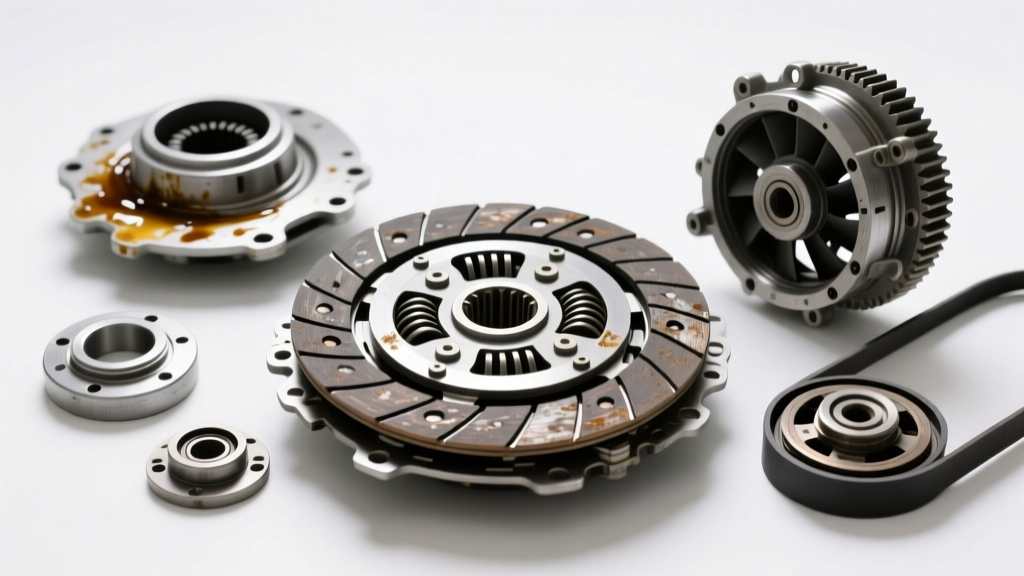
Intermittent chatter upon taking off from a stop in 1st or 2nd gear is frequently misdiagnosed as a warped clutch disc or oil contamination. In reality, it is often the torsional dampening springs inside the Dual-Mass Flywheel (DMF) losing their hysteresis. Schaeffler Group (LuK) engineering data indicates that when DMF springs fatigue, they fail to absorb low-frequency engine torsional vibrations. This results in an intermittent, violent shudder that feels exactly like a slipping clutch. Diagnostics require checking the flywheel runout with a dial indicator; LuK specifies a maximum runout of 0.050 inches (1.27mm) at the friction surface. Additionally, checking the rotational free-play (which should not exceed 25 degrees of arc) is mandatory before installing a new clutch kit.
Diagnostic Matrix: HVAC vs. Drivetrain Intermittent Shudder
Use the following matrix to quickly isolate the source of the intermittent vibration or slip.
| Symptom Profile | A/C Clutch Failure Mode | Transmission Clutch Failure Mode | Definitive Diagnostic Test |
|---|---|---|---|
| Rhythmic clicking at idle | Excessive air gap (>0.8mm) causing the hub to slap the pulley. | Worn release bearing or DMF spring rattle. | Command A/C off via scan tool. If noise stops, it is the A/C clutch. |
| Shudder during 1-2 shift | Compressor short-cycling due to high head pressure. | DMF spring fatigue or contaminated friction disc. | Monitor A/C high-side pressure. Check DMF rotational free-play. |
| Slip under heavy load | N/A (A/C clutch does not affect drivetrain torque transfer). | CSC thermal bypass or worn pressure plate diaphragm. | Perform stall test in gear; monitor hydraulic pedal pressure decay. |
| Intermittent engine bog | Compressor seizing intermittently, overloading the serpentine belt. | Clutch dragging due to master cylinder pushrod misadjustment. | Measure clutch pedal free-play (Spec: 1/2' to 3/4'). |
Step-by-Step Diagnostic Protocol
When a vehicle presents with intermittent engagement issues, follow this strict isolation protocol to avoid unnecessary transmission removals:
- Isolate the Parasitic Load: With the engine idling, use a bi-directional scan tool to command the A/C compressor clutch relay OFF. If the engine RPM smooths out and the shudder vanishes, the transmission is innocent. Proceed to measure the A/C clutch coil resistance with a multimeter. A healthy coil reads 3.0 to 5.0 ohms. A reading of 'OL' or >10 ohms indicates a failing winding.
- Verify the Air Gap: Use a feeler gauge to measure the A/C clutch air gap at three equidistant points. If it exceeds 0.6mm, remove the hub and remove a shim from the compressor shaft to restore the 0.4mm specification.
- Test the Hydraulic System: If the A/C system is functioning normally, attach a pressure transducer to the clutch hydraulic line. Have an assistant hold the pedal down for 60 seconds. If pressure drops by more than 15%, the CSC is internally bypassing or the master cylinder is failing.
- Inspect the Drivetrain: Drop the inspection cover. Check for clutch dust (indicating slip) or ATF/DOT 4 fluid leaks (indicating seal failure). If installing a new clutch, always torque the flywheel bolts to OEM specs. For example, GM LS-series engines require 74 lb-ft plus an additional 90 degrees of torque-to-yield rotation, as noted by TREMEC service documentation.
2026 Repair Cost & Sourcing Guide
Accurate diagnosis saves customers thousands of dollars. Replacing a transmission clutch when the fault lies in the HVAC system is a catastrophic failure of diagnostic logic. Below are the average 2026 market costs for these specific repairs:
- A/C Clutch Coil & Hub Assembly: $80 - $150 for parts (e.g., Four Seasons or GPD). Labor is minimal (0.5 hours) as it can usually be done without evacuating the refrigerant system if care is taken not to damage the front seal.
- A/C Compressor Full Replacement: $650 - $1,100 (Requires refrigerant recovery, vacuum, and recharge).
- CSC (Concentric Slave Cylinder) Replacement: $450 - $700. Requires transmission removal, but the part itself is relatively inexpensive ($90 - $180).
- DMF and Clutch Kit Replacement: $1,200 - $2,200. A high-quality LuK RepSet PLUS (which includes the DMF, clutch disc, pressure plate, and CSC) costs between $500 and $850, with labor accounting for the bulk of the invoice.
Expert Tip: Never reuse a Dual-Mass Flywheel if you are replacing a worn clutch disc. The torsional springs in a DMF have a finite fatigue life. Installing a new friction disc against a fatigued DMF will result in immediate, intermittent chatter and rapid wear on the new clutch friction material. Always replace the DMF, clutch, and CSC as a matched set.