The Hidden Link Between Hydraulics and Clutch Slipping
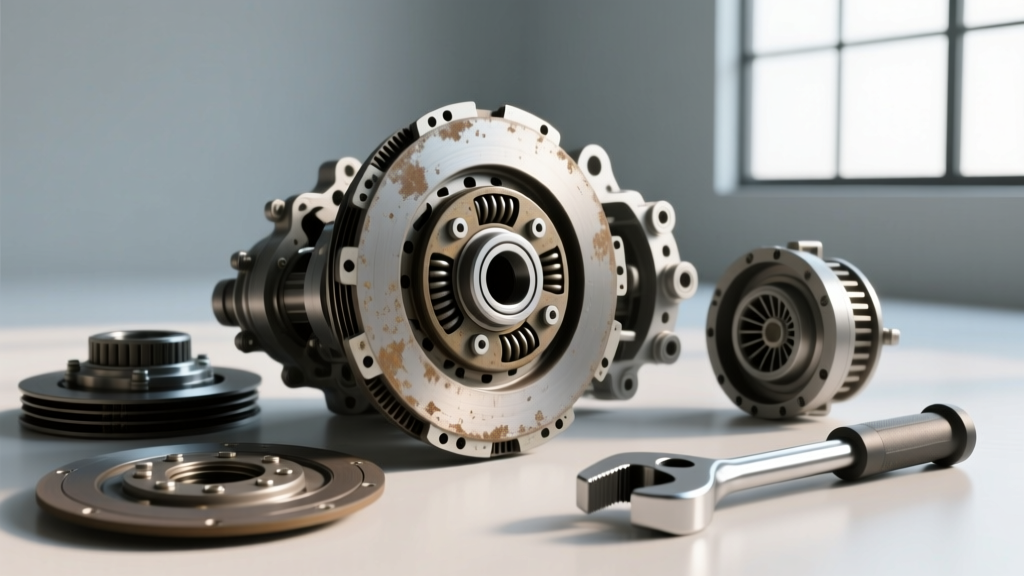
When a manual transmission begins to slip, the immediate assumption among most drivers and even some generalist mechanics is that the friction disc is worn out. However, in modern hydraulic manual setups, the root cause often traces back to the hydraulic circuit. Specifically, neglected or degraded clutch fluid in car reservoirs and master cylinders can lead to incomplete pressure plate engagement, mimicking the exact symptoms of a burnt clutch disc.
Unlike older cable-actuated systems, hydraulic clutches rely on Pascal’s Law to multiply pedal force. A standard 5/8-inch (16mm) bore master cylinder pushes DOT-rated fluid through a hard line to a slave cylinder, which then actuates the release bearing. If the fluid is contaminated, aerated, or bypassing internally due to seal degradation, the clamping force on the pressure plate drops. Under high torque loads—such as climbing a grade or accelerating in fourth gear—the friction disc breaks traction, resulting in a slip.
As a core tenet of preventive maintenance, understanding how to differentiate between mechanical friction wear and hydraulic-induced slip will save you from unnecessary transmission removals and thousands of dollars in misdiagnosed repairs.
Symptoms of Hydraulic-Induced Clutch Slipping
Diagnosing the origin of the slip requires a methodical approach. A slipping clutch caused by hydraulic failure often presents with secondary symptoms that a purely mechanical failure will not. When evaluating the clutch fluid in car systems, look for these specific indicators:
- RPM Flares Under Load: Engine RPMs rise without a corresponding increase in vehicle speed, typically in 4th or 5th gear.
- Pedal Sponginess or Slow Return: The pedal feels mushy at the top of its travel or returns slowly after being depressed, indicating aerated fluid or a failing return spring.
- Fluid Level Drops Without External Leaks: If the master cylinder pushrod seal fails, fluid can bypass internally or leak down the firewall into the cabin, or leak directly into the bellhousing via a failing Concentric Slave Cylinder (CSC).
- Pedal Fade Under Heavy Use: After stop-and-go traffic or track use, the clutch begins to slip. This is caused by moisture-contaminated DOT fluid boiling in the slave cylinder, creating compressible vapor.
Diagnostic Matrix: Mechanical Wear vs. Hydraulic Failure
| Diagnostic Factor | Mechanical Disc/Plate Wear | Hydraulic Fluid / Cylinder Failure |
|---|---|---|
| Pedal Free-Play | Excessive free-play (pedal travels far before resistance) | Normal free-play, but spongy resistance afterward |
| Engagement Point | Engages very high on the pedal travel | Engagement point fluctuates or drops to the floor |
| Fluid Reservoir | Fluid level remains stable and clear | Fluid level drops, appears dark, or contains debris |
| Slip Consistency | Slips consistently under load regardless of temperature | Slipping worsens after heavy use (fluid boil/fade) |
| Release Bearing Noise | Often quiet until complete failure | May squeal if slave cylinder is misaligned or leaking |
Step-by-Step Diagnosis: Testing the Hydraulic Circuit
Before ordering a new clutch kit, perform these three critical tests to isolate the clutch fluid in car hydraulics as the culprit.
1. Measure Pedal Free-Play and Slave Throw
Using a steel ruler, measure the pedal free-play at the pad. Most OEM specifications (such as Honda or Mazda) call for 10mm to 15mm of free-play before the master cylinder pushrod engages. Next, have an assistant depress the clutch pedal while you measure the slave cylinder pushrod throw. For a Tremec T56 or T56 Magnum transmission, the slave cylinder must move the release bearing approximately 12mm to 14mm to fully disengage the clutch. If the throw is only 6mm to 8mm, the pressure plate fingers are not being fully compressed. When you release the pedal, the slave may not fully retract, leaving the release bearing resting against the diaphragm springs, which slightly lifts the pressure plate and causes slipping under load.
2. The Master Cylinder Bypass Test
Internal bypassing is a silent killer of clamping force. To test this, press the clutch pedal to the floor and hold it there for 60 seconds. If the pedal slowly sinks toward the floor, or if the slave cylinder pushrod slowly retracts while the pedal is held down, the internal cup seals inside the master cylinder have failed. Fluid is bypassing from the high-pressure side to the low-pressure side. The master cylinder must be rebuilt or replaced (common part numbers include LUK or Sachs master cylinders, typically costing $60–$120).
3. Fluid Boiling Point and Contamination Check
DOT 3 and DOT 4 brake fluids are hygroscopic, meaning they absorb moisture from the atmosphere over time. According to Castrol's fluid engineering data, standard DOT 3 fluid has a dry boiling point of 401°F (205°C), but its "wet" boiling point (at 3.7% water absorption) drops drastically to 284°F (140°C). Because the clutch slave cylinder is often mounted directly on the bellhousing near hot exhaust headers, the fluid can easily reach these temperatures. When the fluid boils, vapor pockets form. Vapor is compressible; therefore, pedal pressure is wasted on compressing gas rather than clamping the friction disc. Use a cheap electronic brake fluid tester to check the moisture content. If it exceeds 2%, an immediate flush is required.
Concentric Slave Cylinders (CSC) vs. External Slaves
Your diagnostic and maintenance approach will vary heavily depending on whether your vehicle uses an external slave cylinder or an internal Concentric Slave Cylinder (CSC).
- External Slave Cylinders: Found on older trucks, Jeeps (AX15 transmissions), and many imports. These are easy to inspect. Look for weeping fluid around the rubber boot. Replacement is cheap ($120–$250) and does not require dropping the transmission.
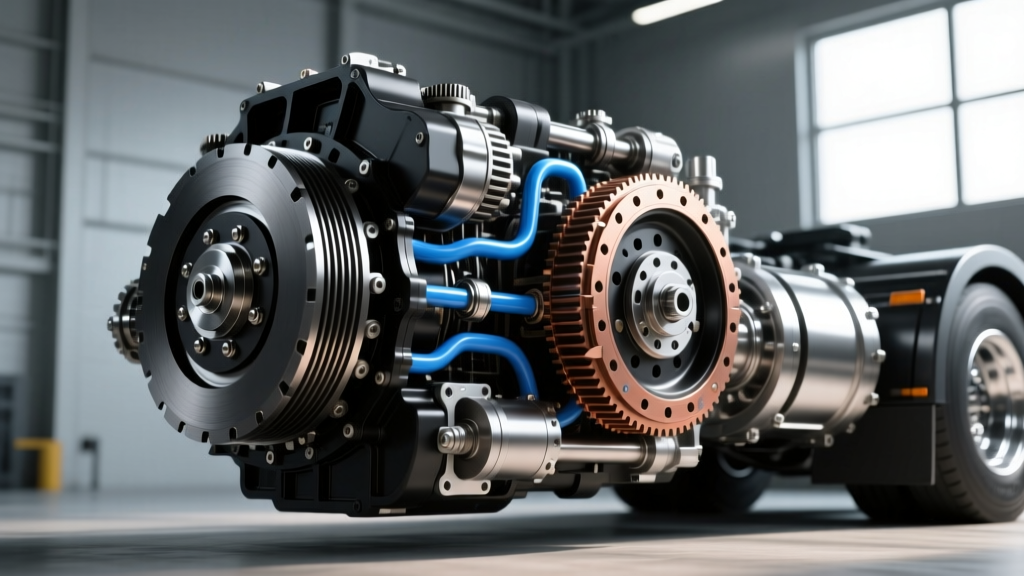
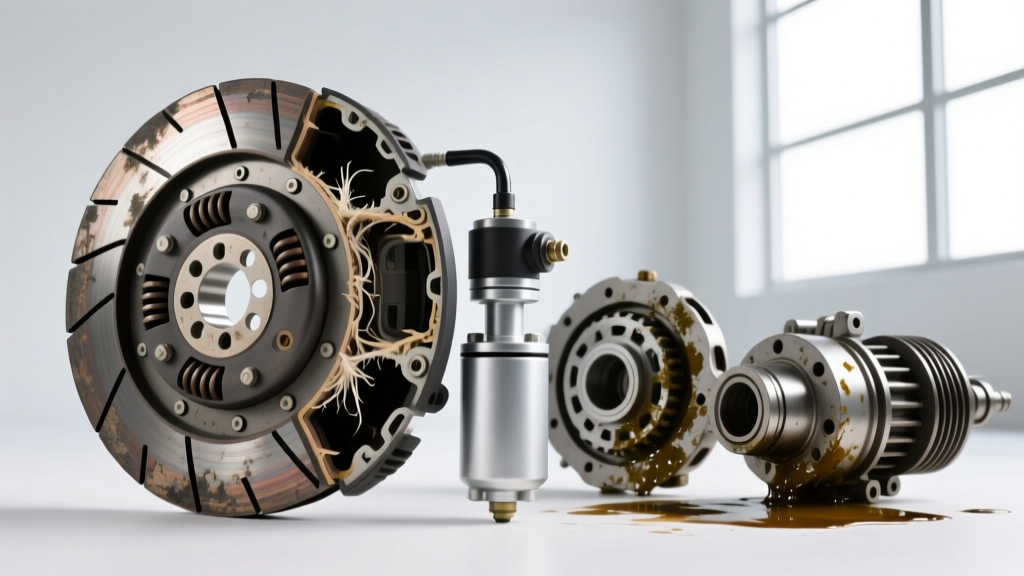
- Concentric Slave Cylinders (CSC): Standard on modern performance cars (e.g., GM LS platforms with the 6L80/Tremec, BMW E90/E46, Ford Mustang MT-82). The CSC wraps around the transmission input shaft inside the bellhousing. If a CSC leaks, fluid coats the friction disc, causing catastrophic slipping and contamination. Preventive rule: Never reuse a CSC when performing a clutch job. Always install a new OEM or premium aftermarket unit (e.g., Sachs 3189 600 031 for BMW applications, retailing around $140–$180).
Preventive Maintenance: Flushing and Bleeding Protocols
To prevent hydraulic-induced slipping, the clutch fluid in car systems must be flushed every 2 years or 30,000 miles. Follow these professional protocols to ensure a perfect bleed and maximum clamping force.
Fluid Selection
Always use the DOT rating specified on the master cylinder cap. Upgrading from DOT 3 to a high-performance DOT 4 or DOT 5.1 is generally acceptable and recommended for track or heavy-towing vehicles. Motul RBF 600 is a favorite among transmission specialists due to its 626°F dry boiling point. Warning: Never use DOT 5 (silicone-based) fluid in a standard hydraulic clutch system; it is compressible, does not absorb water, and will result in a spongy pedal and immediate slipping.
The Power Bleed Method
Manual bleeding (pump-and-hold) often traps micro-bubbles in the hard lines, especially on vehicles where the slave cylinder sits lower than the master cylinder. Use a pressure bleeder (like the Motive Products Power Bleeder) set to 10–15 PSI.
- Clean the reservoir cap thoroughly to prevent debris from entering the master cylinder.
- Attach the pressure bleeder and pressurize the system to 12 PSI.
- Open the slave cylinder bleeder valve. Torque Spec Note: Bleeder valves are delicate. Use a proper flare-nut wrench and apply no more than 6–8 Nm (53–70 in-lbs) of torque when closing to prevent snapping the screw inside the slave housing.
- Allow fluid to flow until it is completely clear and free of micro-bubbles (usually 250ml to 500ml of fluid).
- Close the valve, release pressure, and verify pedal firmness.
For a comprehensive visual guide on hydraulic bleeding sequences, reference this Car and Driver technical tutorial on proper clutch bleeding techniques.
Cost Breakdown: Maintenance vs. Repair
Ignoring the hydraulic system turns a minor maintenance task into a major drivetrain repair. Below is a realistic cost comparison for 2026 labor and parts rates.
| Service / Repair | Parts Cost | Labor Cost | Total Estimate |
|---|---|---|---|
| Hydraulic Fluid Flush (Preventive) | $15 - $25 | $75 - $110 | $90 - $135 |
| External Slave Cylinder Replacement | $40 - $90 | $120 - $180 | $160 - $270 |
| Internal CSC Replacement (Requires Trans Removal) | $140 - $220 | $600 - $1,100 | $740 - $1,320 |
| Full Clutch Kit & Flywheel (Due to fluid contamination slip) | $350 - $800 | $800 - $1,500 | $1,150 - $2,300 |
Summary: Protecting Your Drivetrain
Clutch slipping is not always a death sentence for your friction disc. By systematically testing pedal free-play, measuring slave throw, and analyzing the moisture content of the clutch fluid in car reservoirs, you can accurately diagnose hydraulic fade before it destroys your pressure plate. Commit to a strict 24-month fluid flush interval using high-quality DOT 4 or DOT 5.1 fluid, and always replace internal concentric slave cylinders during any bellhousing service. Proper hydraulic maintenance ensures crisp shifts, maximum torque transfer, and the longevity of your manual transmission.