The Role of the Inter Axle Differential in Modern AWD
When diagnosing all-wheel-drive (AWD) and four-wheel-drive (4WD) drivetrains, technicians and enthusiasts often focus on the front and rear axles. However, the inter axle differential—commonly referred to as the center differential—is the critical component responsible for splitting torque between the front and rear driveshafts. Unlike an inter-wheel differential that compensates for left-to-right wheel speed variations during cornering, the inter axle differential manages the rotational speed differences between the front and rear axles. Because the front wheels travel a slightly different arc than the rear wheels during steering maneuvers, a locked 50/50 torque split without a center differential would result in severe drivetrain wind-up, tire chirping, and catastrophic transfer case failure.
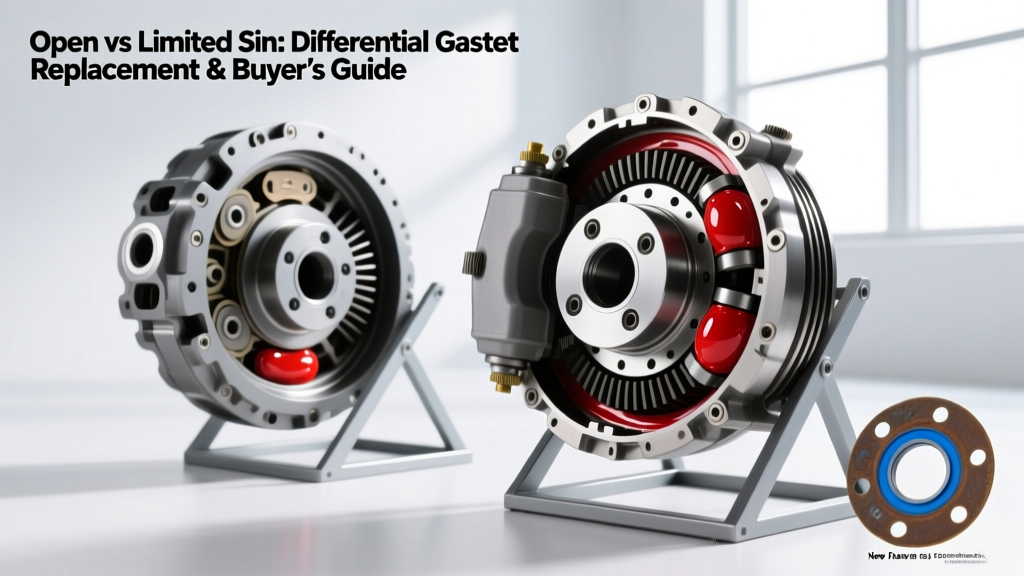
As of 2026, the architecture of center differentials has evolved from simple open bevel-gear designs to complex viscous couplings, Torsen (torque-sensing) helical gear sets, and electronically controlled multi-clutch packs. Regardless of the design, the lifeblood of the inter axle differential is its specialized gear oil or transfer case fluid. Fluid degradation is the leading cause of center differential binding, noise, and torque-split faults.
Top 3 Symptoms of Center Differential Failure
Identifying a failing inter axle differential requires isolating the symptom from standard wheel-bearing or ring-and-pinion noise. Here are the primary indicators of center diff distress.
1. Drivetrain Binding on Tight Turns (The "Figure-8" Test)
The most common complaint regarding a failing center differential is a "hopping" or binding sensation during low-speed, tight-radius turns, such as pulling into a parking space. This occurs when the clutch packs inside a limited-slip center diff lock up, or when a viscous coupling suffers from internal fluid shear and hysteresis, effectively locking the front and rear driveshafts together.
Diagnostic Test: Perform the "Figure-8" test on wet pavement. Drive the vehicle in a tight, continuous figure-8 pattern at 5-10 mph. If the tires chirp, the steering wheel fights your input, or you feel a rhythmic hopping from the chassis, the inter axle differential is failing to differentiate. According to the AA1Car Automotive Library, this binding is frequently misdiagnosed as a bad CV joint or stuck brake caliper, but a simple fluid friction-modifier analysis usually reveals the true culprit.
2. High-Frequency Whining Under Load
A high-pitched whine or howl that changes frequency with vehicle speed (rather than engine RPM) points to mechanical wear inside the center differential housing. This is often caused by the pinion bearings supporting the center diff input shaft, or by improper gear backlash between the center ring and pinion gears. If the fluid has been subjected to extreme thermal loads—such as towing heavy trailers or sustained track use—the viscosity index improvers break down, leading to metal-on-metal contact and micro-pitting on the gear teeth.
3. AWD Warning Lamps and Torque Split Limp Mode
In modern active AWD systems (like those utilizing BorgWarner or Magna Powertrain transfer cases), the inter axle differential is managed by a dedicated ECU. If the fluid is degraded, the clutch pack may slip excessively, generating abnormal heat. The temperature sensor inside the center diff housing will trigger an AWD warning lamp on the dashboard and force the system into a limp mode, defaulting to a safe 100% rear-wheel-drive or 50/50 locked split to prevent a fire or total mechanical disintegration.
Fluid Chemistry: Why the Wrong Gear Oil Destroys Center Diffs
The single most destructive mistake made during drivetrain maintenance is treating the inter axle differential as a standard open differential. Many center differentials utilize clutch-based limited-slip mechanisms or viscous couplings that require highly specific friction modifiers.
Expert Insight: Using a standard API GL-5 75W-90 gear oil without a Limited Slip (LS) additive in a clutch-pack center differential will cause immediate chatter. The friction modifiers are what allow the clutch plates to slip and grab smoothly. Without them, the plates stick and slip violently, generating enough localized heat to warp the steel plates and permanently ruin the center differential.
Furthermore, some transfer cases require API GL-4 fluid rather than GL-5. GL-5 fluids contain high levels of sulfur-phosphorus extreme pressure (EP) additives, which can be corrosive to the yellow metals (brass, bronze, copper) used in the synchronizers and sensor rings of certain inter axle differential assemblies.
Diagnostic Matrix: Symptom to Solution
Use the following diagnostic framework to narrow down your inter axle differential troubleshooting.
| Symptom | Primary Suspect | Verification Test | Corrective Action |
|---|---|---|---|
| Tire chirp / hopping on tight turns | Depleted friction modifier or sheared viscous fluid | Figure-8 test on wet asphalt; check for clutch chatter | Drain, flush, and refill with OEM-specified LS fluid |
| Speed-dependent whining | Pinion bearing wear or gear micro-pitting | Coast-down test (whine changes on deceleration indicates pinion bearing) | Center diff rebuild; replace bearings and set backlash |
| AWD Warning Light / Limp Mode | Overheated clutch pack or failed temp sensor | Scan for transfer case DTCs (e.g., P084A, P2784); check fluid for burnt smell | Fluid flush if caught early; clutch pack replacement if burnt |
| Clunk on acceleration/deceleration | Excessive center diff gear backlash or worn chain | Driveshaft rotational slack check (over 15 degrees is excessive) | Replace center diff assembly or transfer case chain |
OEM Specifications and Torque Data (2026 Reference)
When servicing the inter axle differential, precision is mandatory. Below are exact specifications for common AWD/4WD platforms. For deeper gear setup parameters, drivetrain specialists at Ring-Pinion.com recommend always measuring and recording original backlash and rotational drag before disassembly.
Toyota VF4B Transfer Case (4Runner / Tacoma / FJ Cruiser)
The VF4B utilizes a Torsen-style helical gear center differential, providing a default 40:60 front-to-rear torque split. Because it is a gear-driven limited-slip design, it does not require clutch-pack friction modifiers, but it demands high-quality synthetic GL-5.
- Fluid Specification: Toyota Genuine 75W-85 GL-5 (Part# 08885-81080) or equivalent synthetic.
- Center Diff Capacity: 1.1 Liters (1.16 Quarts) - Note: This is separate from the main transmission fluid.
- Drain Plug Torque: 27 lb-ft (37 Nm).
- Fill Plug Torque: 27 lb-ft (37 Nm).
BorgWarner 4411 (Ford Explorer AWD / Terrain Management)
This active center differential/coupling relies on an electronically controlled clutch pack to route torque rearward. Using standard gear oil here will destroy the clutch pack and the internal pump.
- Fluid Specification: Motorcraft XL-12 Transfer Case Fluid (Part# 7.3L / XL-12).
- Capacity: 1.2 Liters (1.27 Quarts).
- Drain/Fill Plug Torque: 20 lb-ft (27 Nm).
- Service Interval: Every 60,000 miles under severe towing conditions.
Audi Quattro with Crown Gear Center Differential (ZF 8HP Integration)
In modern Audi applications (e.g., S4, Q5), the Torsen/Crown Gear inter axle differential is integrated directly into the ZF 8HP transmission housing. It does not have a separate drain plug. Servicing the center diff requires a full transmission fluid service.
- Fluid Specification: ZF LifeguardFluid 8. As noted by ZF Friedrichshafen AG, using aftermarket "multi-vehicle" fluids in the 8HP can alter the hydraulic pressure required to actuate the integrated center diff clutches.
- Total System Capacity: ~8.5 Liters (varies by specific ZF 8HP55A/65A model).
- Pan Bolt Torque: 8 Nm (71 lb-in) in a specific star pattern.
Repair Costs and Rebuild Realities
If a fluid flush and friction modifier additive do not resolve the binding or whining, mechanical intervention is required. As of 2026, the cost to rebuild or replace an inter axle differential varies wildly based on integration.
For standalone transfer cases (like the Toyota VF4B or Ford BW4411), a center differential rebuild kit (bearings, seals, and clutch packs) typically costs between $250 and $450. Labor to remove the transfer case and bench-rebuild the center diff assembly averages 4 to 6 hours, bringing the total shop cost to roughly $800 to $1,400.
However, if the center differential is integrated into the transmission (as seen in the ZF 8HP, Subaru 6MT DCCD, or Mitsubishi SS4-II setups), the entire transmission or transfer case must be removed and torn down. In these scenarios, dealerships often refuse to rebuild the center diff, opting instead for a remanufactured unit exchange. A remanufactured integrated center diff assembly can range from $1,800 to $3,500, with labor pushing the total repair well past the $4,000 mark.
Ultimately, the most cost-effective maintenance you can perform on your AWD system is strictly adhering to OEM fluid specifications and intervals. The inter axle differential operates under immense mechanical stress; treating its fluid requirements with precision is the only way to ensure seamless torque delivery and long-term drivetrain survival.