In modern automotive repair, a misfilled gearbox is not merely a maintenance oversight; it is an active mechanical emergency. With the proliferation of 8-speed, 9-speed, and 10-speed automatic transmissions, the days of topping off a gearbox with a generic 'universal' fluid are long gone. If you or a previous mechanic installed the incorrect fluid specification, understanding when to replace automatic transmission fluid shifts from a routine mileage interval to an immediate, critical rescue operation. Diagnosing a fluid type mismatch requires looking past standard wear-and-tear symptoms and identifying the specific hydraulic and frictional anomalies that occur when the wrong chemical formulation meets precision-engineered clutch packs.
Critical Warning: Never trust 'Multi-Vehicle' synthetic blends for ZF, Aisin, or modern GM/Ford applications. These fluids rely on compromise friction modifiers that will actively degrade torque converter clutch (TCC) apply times and cause irreversible clutch glazing within 5,000 miles.
The Chemistry of Friction Modifiers and Viscosity
To accurately diagnose a fluid mismatch, you must understand what the fluid is actually doing inside the valve body and torque converter. Automatic transmission fluid (ATF) is a highly engineered hydraulic medium governed by strict SAE International Standards. The two most critical variables are kinematic viscosity and the friction modifier package.
Kinematic viscosity, typically measured in centistokes (cSt) at 100°C, dictates how quickly hydraulic pressure builds in the clutch apply circuits. For example, ZF LifeguardFluid 8 operates at a remarkably low 5.6 cSt to ensure rapid shift times in the ZF 8HP transmission. If a technician mistakenly fills this unit with an older, thicker fluid like Dexron III (approx. 7.2 cSt), the transmission control module (TCM) will register delayed clutch apply times, resulting in harsh, flaring shifts between 2nd and 3rd gear.
Equally important is the friction modifier package. Modern transmissions rely on specific kinetic-to-static friction ratios to manage the Torque Converter Clutch (TCC). If the fluid lacks the exact organic friction modifiers required by the OEM, the TCC will oscillate between slipping and locking, manifesting as a rhythmic shudder typically felt between 35 and 55 mph under light throttle.
Symptom Matrix: Identifying the Misfill by Transmission Model
Diagnosing the wrong fluid type requires correlating specific driving symptoms with the transmission model and its required OEM specification. The table below serves as a rapid-reference diagnostic matrix for common misfill scenarios encountered in shops today.
| Transmission Model | Required OEM Spec | Common Misfill Error | Resulting Symptom Profile |
|---|---|---|---|
| GM 6L80 / 6L90 | Dexron VI / Dexron ULV | Mercon LV or 'Universal' | TCC shudder at 45-55 mph; P0741 (TCC Performance) codes. |
| ZF 8HP45 / 8HP70 | ZF LifeguardFluid 8 | Generic ATF+4 or Dexron VI | Harsh 2-3 upshifts; delayed reverse engagement; valve body solenoid lag. |
| Ford 10R80 | Mercon ULV | Standard Mercon LV | Clutch pack glazing; P073x gear ratio errors; overheating under load. |
| Aisin AW F8FXX (FWD) | Aisin WS (World Standard) | Toyota T-IV or Dexron VI | Shift flares on cold starts; premature clutch material degradation. |
Deep Dive: The GM 6L80 and 8L90 Family
The GM 6L and 8L series transmissions are highly sensitive to friction modifiers. According to technical bulletins from the Automatic Transmission Rebuilders Association (ATRA), using a fluid with an incompatible modifier package will cause the TCC apply valve to pulse erratically. If a customer complains of a 'rumble strip' feeling on the highway, and a scan tool reveals TCC slip speeds oscillating wildly, suspect a fluid mismatch before condemning the torque converter.
Deep Dive: The ZF 8HP Series
ZF explicitly states in their ZF Aftermarket documentation that LifeguardFluid specifications are chemically matched to the specific elastomers and friction materials used in their mechatronic units. Introducing a non-approved fluid causes the synthetic rubber seals in the clutch pistons to either swell or shrink. This leads to internal hydraulic leaks, which the TCM attempts to compensate for by maxing out line pressure, resulting in the infamous 'ZF bang' during downshifts.
OBD-II Diagnostic Protocol for Suspected Fluid Errors
Before dropping the transmission pan to inspect the fluid visually, use a bi-directional OBD-II scan tool to pull live Transmission Control Module (TCM) data. A fluid mismatch will leave a distinct digital footprint in the Parameter IDs (PIDs).
- TCC Slip Speed (RPM): Commanded lockup should result in a slip speed of less than 10-20 RPM. If the fluid has the wrong friction modifiers, you will see slip speeds bouncing between -50 and +80 RPM, indicating the clutch is physically chattering.
- Transmission Fluid Temperature (TFT): Incorrect viscosity fluids create excessive hydrodynamic drag and shear. If the TFT consistently runs 20°F to 30°F hotter than the engine coolant temperature under normal cruising conditions, the fluid's shear stability is failing.
- Clutch Apply Time (ms): Advanced scan tools can read the time it takes for a specific clutch pack to reach target pressure. Apply times exceeding 400ms on an 8-speed or 10-speed transmission heavily indicate a fluid viscosity mismatch or severe fluid degradation.
- Line Pressure Variance: If the TCM is constantly commanding maximum line pressure (e.g., 200+ PSI) just to maintain a 1:1 gear ratio, the fluid is likely too thin or the friction material is glazed from an incompatible chemical reaction.
Visual and Olfactory Pan Inspection
When the digital data points toward a fluid issue, the physical inspection confirms it. Drop the transmission pan and evaluate the following:
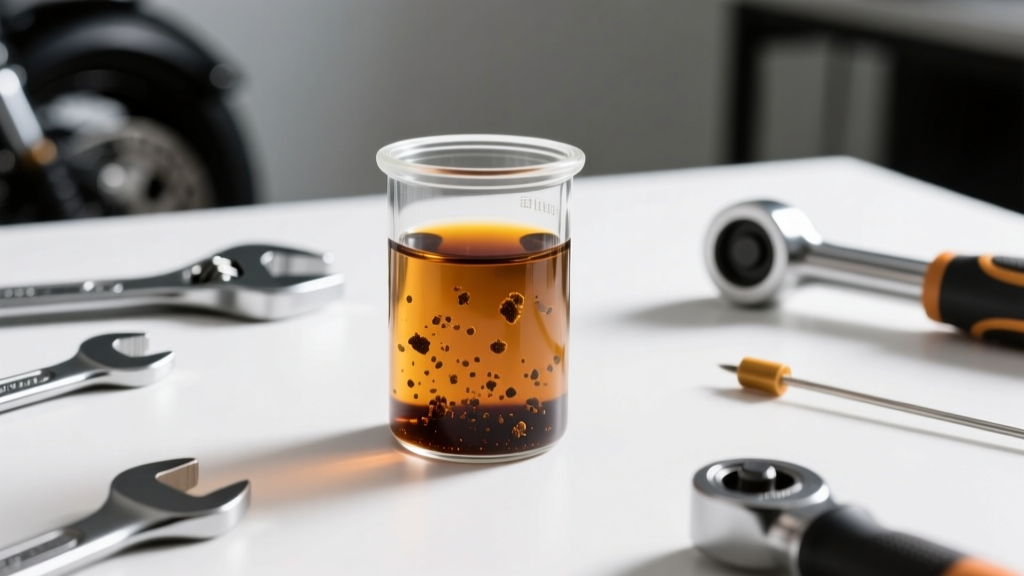
- Color Deviation: OEM fluids have distinct dyes. Dexron VI is typically a deep, clear red. Mercon ULV is often a lighter, almost amber-red. ZF Lifeguard 8 is a pale yellow/green. If the fluid on the dipstick looks brownish but lacks a burnt smell, it may simply be the natural color of the correct fluid (like Honda DW-1 or Toyota WS) mixed with a red universal fluid, creating a muddy appearance.
- The Smell Test: Burnt ATF smells like charred toast. This indicates extreme heat and clutch degradation. However, if the fluid smells acrid, sour, or like sulfur, it is a sign of a chemical breakdown where the wrong additive package is reacting with the transmission's internal metals and elastomers.
- Magnet Inspection: A small amount of fine metallic paste is normal. However, if you find distinct friction material debris (which looks like dark, gritty sand) in the pan after only a few thousand miles, the wrong fluid has stripped the paper-based clutch linings.
Corrective Action: The Double-Flush Protocol
If you have confirmed a fluid type mismatch, a simple drain-and-fill is entirely insufficient. The torque converter and the transmission cooler lines retain between 40% and 60% of the total system fluid volume. Leaving even two quarts of the wrong fluid in the torque converter is enough to ruin the friction modifier balance of the new, correct fluid.
You must perform a complete fluid exchange. In a professional setting, this is done using a dialysis-style fluid exchange machine that pushes new fluid through the cooler lines at the exact rate the transmission pump is pushing the old fluid out, ensuring zero mixing. For DIYers or shops without a machine, the 'Double Flush' method is mandatory:
- Drop the pan, replace the filter (if applicable), and refill with the exact OEM-spec fluid.
- Drive the vehicle for 50 to 100 miles, ensuring the TCM cycles through all gears and locks/unlocks the TCC multiple times to thoroughly mix the fluids inside the torque converter.
- Perform a second complete drain-and-fill (or machine exchange) to dilute the incorrect fluid concentration to less than 2%.
- Execute a TCM 'Adaptive Value Reset' via the scan tool to force the computer to relearn clutch apply volumes with the correct fluid hydraulics.
2026 Cost Expectations for Corrective Exchanges
Correcting a misfilled transmission is an investment in preventing a $4,000+ rebuild. As of 2026, pricing for a complete OEM fluid exchange typically falls into the following ranges:
- OEM Fluid Costs: True OEM fluids (e.g., Motorcraft Mercon ULV, GM Dexron ULV, ZF Lifeguard 8) range from $25 to $45 per quart. A full exchange requires 11 to 14 quarts, totaling $275 to $630 in parts alone.
- Labor Rates: A machine exchange takes roughly 1.5 hours of shop time. At current national average labor rates of $130 to $180 per hour, expect to pay $195 to $270 in labor.
- Total Investment: A proper corrective double-flush or machine exchange will generally cost between $450 and $900, depending on the vehicle's fluid capacity and whether a new transmission pan/filter assembly (often integrated on ZF and Mercedes 7G/9G tronic units) is required.
Identifying the wrong transmission fluid early through symptom analysis and PID monitoring is the difference between a costly fluid exchange and a catastrophic transmission failure. Always verify the exact OEM specification on the transmission dipstick, pan sticker, or factory service manual before introducing any fluid into the system.