The Tri-Sump Architecture: Why Motorcycle Transmission Fluid Matters
When discussing motorcycle transmission fluid, it is critical to first distinguish between shared-sump and dedicated-sump architectures. The vast majority of Japanese and European sportbikes utilize a shared sump where engine oil lubricates the pistons, crankshaft, and transmission gears while also managing the wet clutch. However, the Harley-Davidson Milwaukee-Eight (M8) 107 and 114 Touring platforms utilize a distinct tri-sump design. The engine oil, primary chaincase fluid, and motorcycle transmission fluid are entirely separate systems.
Because the Harley 6-speed Cruise Drive transmission does not share its lubricant with the engine or the clutch assembly, the fluid is not contaminated by combustion byproducts or clutch friction material. Instead, it is subjected exclusively to extreme shear forces from helical cut gears, high-pressure bearing loads, and thermal cycling. As we move through the 2026 riding season, diagnosing the smell, color, and particulate matter of this dedicated fluid remains the most reliable early-warning system for impending mainshaft bearing or gear dog failures. This model-specific guide will walk you through the exact olfactory and visual diagnostics required to assess the health of your M8 transmission.
The Olfactory and Visual Diagnostic Matrix
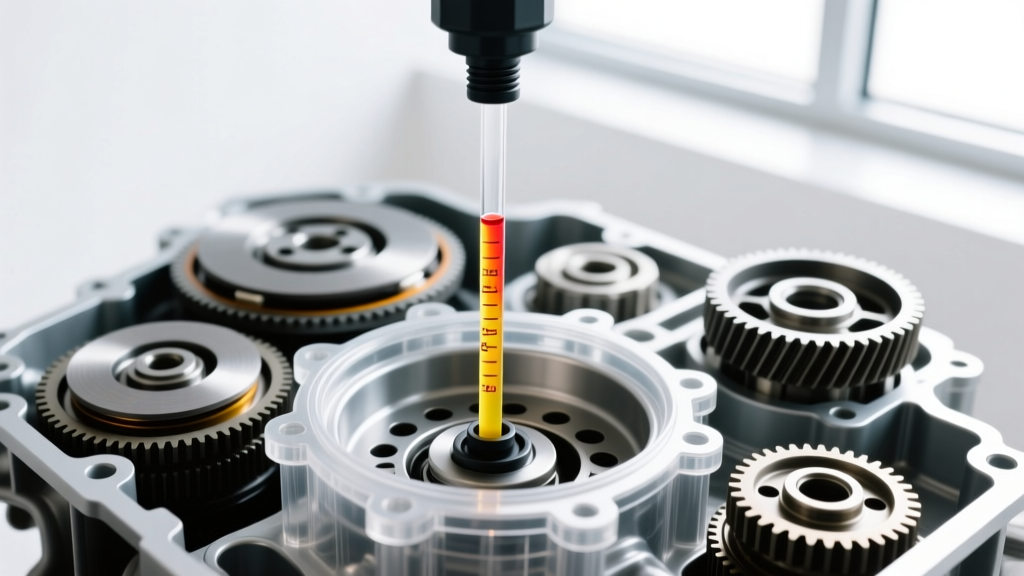
Your nose and eyes are the first line of defense against catastrophic gearbox failure. When pulling the transmission dipstick or draining the fluid, cross-reference your findings with the matrix below to determine the internal mechanical condition of the Cruise Drive unit.
| Fluid Condition / Smell | Visual Appearance | Mechanical Translation & Action Required |
|---|---|---|
| Sweet / Syrupy | Translucent Amber / Red (depending on dye) | Normal. Fluid is within its service life and shear-stability parameters. No action required. |
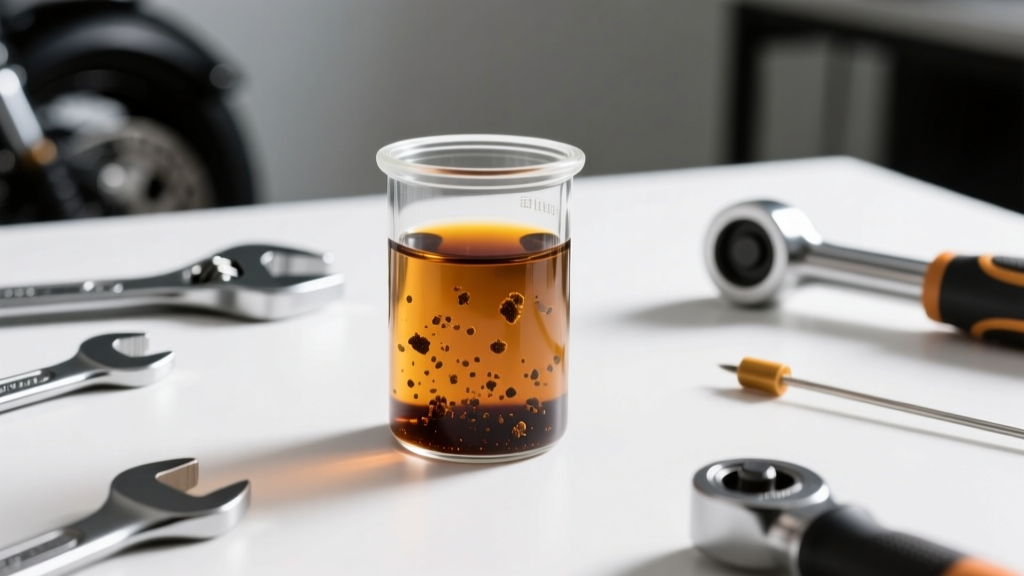
| Burnt / Acrid | Dark Brown / Opaque Black | Thermal Breakdown. Fluid has exceeded its flash point. Viscosity index improvers have sheared. Immediate drain and fill required; inspect for dragging brakes or slipping clutch transferring heat. |
| Rancid / Sulfuric | Cloudy / Grayish Tint | Additive Depletion. Extreme pressure (EP) additives containing sulfur/phosphorus have degraded. Gear wear is imminent. |
| Odorless / Damp | Milky / Frothy Emulsion | Water Intrusion. Breather tube compromise. Fluid cannot maintain hydrodynamic film. Drain immediately to prevent hypoid gear pitting. |
Thermal Breakdown and the Burnt Smell
A burnt, acrid odor emanating from your motorcycle transmission fluid is a definitive indicator of severe thermal degradation. Dedicated V-Twin transmission fluids, whether you are using Harley-Davidson SYN3 (Part # 99824-01) or a premium aftermarket alternative like AMSOIL V-Twin Synthetic Transmission Oil, rely on complex polymers to maintain shear stability. The helical gears in the M8 6-speed transmission generate immense lateral shearing forces that literally tear these polymer chains apart over time.
When the fluid is subjected to excessive heat—often caused by aggressive riding in stop-and-go traffic, improper rear belt tension causing parasitic drag, or a failing mainshaft bearing generating localized friction—the base oil oxidizes. This oxidation process produces volatile organic compounds that smell distinctly like burnt toast or acrid chemicals. Once the fluid smells burnt, its film strength is compromised. The protective boundary layer between the gear teeth and the roller bearings is reduced to near zero, leading to metal-on-metal contact. If you detect this smell, do not simply top off the reservoir; a complete drain and fill is mandatory, followed by a thorough inspection of the rear wheel alignment and belt deflection to ensure you are not overloading the transmission output shaft.
Water Intrusion: The Milky Emulsion Threat
If your motorcycle transmission fluid resembles a strawberry milkshake or a frothy, milky emulsion, water has infiltrated the gearbox. Unlike the engine, which generates enough heat to evaporate minor condensation, the transmission operates at lower average temperatures and cannot easily boil off trapped moisture. Water intrusion on the M8 platform almost always traces back to the transmission breather tube (Part # 63898-06A).
The factory breather tube is routed high up under the seat to prevent water ingestion during rain or shallow puddle crossings. However, riders who frequently use high-pressure washers on their bikes, or those who ford deep water on adventure-touring builds, can force water past the breather fitting. Once inside, the water mixes with the agitation of the spinning gears, creating an emulsion. This milky fluid is disastrous for the transmission. Water lacks the load-bearing capacity of oil, leading to immediate cavitation, micro-pitting on the gear faces, and accelerated corrosion of the shift forks and detent plunger. If you find milky fluid, you must flush the system with a cheap, dedicated gear oil, run the bike for 20 minutes to circulate and suspend the moisture, and then drain it completely before refilling with your premium synthetic motorcycle transmission fluid.
Metallurgical Swarf Analysis on the Magnetic Drain Plug
Condition assessment goes far beyond smell and color; it requires a forensic analysis of the debris trapped by the magnetic drain plug. The Harley-Davidson M8 transmission utilizes a specific magnetic drain plug (Part # 40285-06) designed to capture ferrous metals before they circulate through the bearings. According to expert maintenance guides on RevZilla's Common Tread, interpreting this swarf is the difference between a routine service and a $3,000 teardown.
- Fine, Fuzzy Gray Sludge: This is normal wear. It consists of microscopic iron particles from the initial break-in of the gears and the shift drum. If the magnetic plug is covered in a smooth, paste-like gray fuzz, your transmission is healthy.
- Chunky Metallic Flakes (Ferrous): If you can feel distinct, jagged pieces of metal on the magnet, or if they resemble small metallic fingernail clippings, you have active gear spalling or bearing cage failure. This requires immediate splitting of the cases.
- Non-Magnetic Glitter (Bronze/Brass): The magnetic plug will not catch bronze or brass. If you drain the fluid into a clean white pan and see a gold, glitter-like shimmer suspended in the oil, you are experiencing severe wear on the bronze bushings that support the transmission shafts. This is a critical failure mode that precedes total mainshaft seizure.
The Wet Clutch Misconception
A frequent point of confusion for riders transitioning from metric cruisers or sportbikes to the Harley-Davidson Touring lineup is the assumption that clutch slip or chatter is related to the motorcycle transmission fluid. It is vital to understand that the M8 clutch assembly resides entirely within the primary chaincase, bathed in primary chaincase lubricant (such as Formula+). The transmission fluid has absolutely zero interaction with the clutch friction plates.
If you are experiencing clutch slip, harsh engagement, or primary chain noise, changing your transmission fluid will not resolve the issue. Conversely, if you are experiencing false neutrals, clunky downshifts, or difficulty finding neutral at a stoplight, the issue lies within the transmission detent mechanism, the shift linkage geometry, or the viscosity of the transmission fluid itself. Using an oil that is too thick in cold climates can cause hydraulic lock between the gear dogs, making the shifter feel notchy until the fluid reaches operating temperature.
Service Specifications and Torque Requirements
Proper maintenance of the motorcycle transmission fluid requires adherence to exact factory specifications to prevent casing damage or fluid leaks. The M8 6-speed transmission has a strict fluid capacity and torque profile that must be respected during any diagnostic drain or routine service.
- Fluid Capacity: 1.0 Quart (32 oz / 0.95 Liters). Overfilling will cause the fluid to aerate as the spinning gears whip it into a foam, leading to a loss of lubrication and increased internal pressure that will blow out the transmission seals.
- Drain Plug Torque: 14-20 ft-lbs (19-27 Nm). Always use a fresh crush washer to prevent weeping.
- Fill Plug Torque: 14-20 ft-lbs (19-27 Nm). The fill plug also serves as the dipstick; ensure the O-ring on the dipstick cap is pliable and free of flat spots to maintain a weather-tight seal.
- Recommended Lubricant: A dedicated 75W-90 synthetic gear oil or a 20W-50 synthetic V-Twin specific transmission fluid. As noted by AMSOIL's V-Twin engineering specifications, dedicated transmission fluids feature higher shear-stability ratings than standard engine oils, which is critical for protecting the hypoid and helical gear sets under heavy touring loads.
By systematically evaluating the smell, visual emulsion, and magnetic swarf of your motorcycle transmission fluid, you can accurately predict the internal health of your Milwaukee-Eight 6-speed gearbox. Never ignore a burnt odor or a milky tint; these are the final warnings before a minor maintenance issue escalates into a catastrophic mechanical failure on the highway.