The Mechanical Purity of Manual Fluid Maintenance in 2026
As we navigate the automotive landscape of 2026, the manual transmission has largely been relegated to track cars, heavy-duty haulers, and enthusiast specials. Yet, for those who still row their own gears, maintaining the gearbox is a masterclass in mechanical simplicity. Unlike modern automatic transmissions, which rely on a labyrinth of solenoids and thermistors, a manual gearbox requires nothing more than the correct viscosity, a level surface, and basic hand tools.
However, understanding the stark contrast between checking manual transmission fluid and the electronic fragility of modern automatics—where a transmission fluid temperature sensor replacement can quickly escalate into a four-figure repair—highlights exactly why manual drivetrains remain a favorite among purists and fleet managers alike.
The Golden Rule: Checking Manual Transmission Fluid
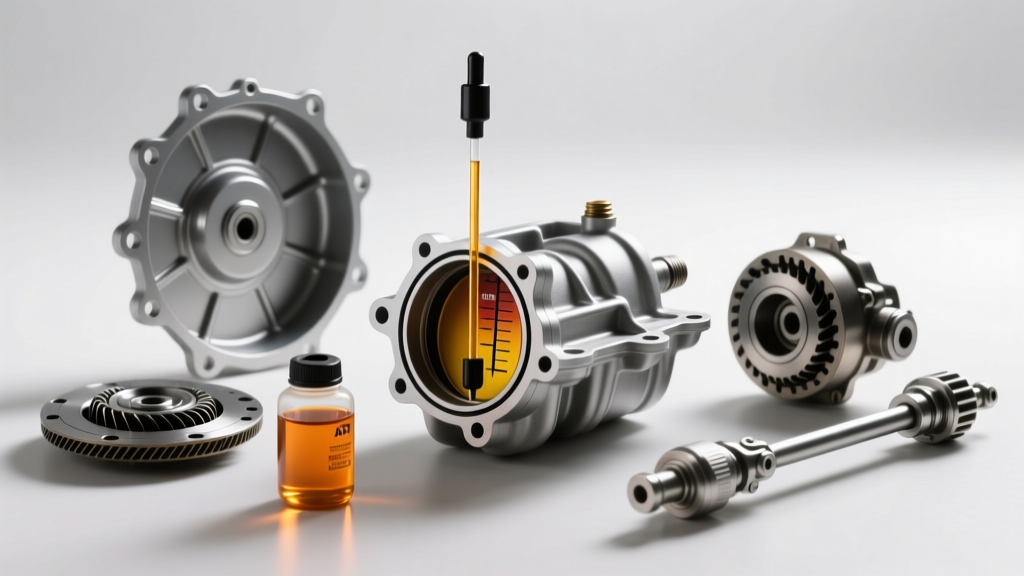
Checking manual transmission fluid is fundamentally different from checking automatic fluid via a dipstick. Most modern manual transmissions utilize a sealed or semi-sealed design with a fill plug and a drain plug located on the side and bottom of the casing, respectively.
Step 1: The 'Fill-Plug First' Mandate
Before you even touch the drain plug, always break loose the fill plug. This is the most critical rule in manual transmission maintenance. If you drain the fluid and subsequently discover the fill plug is seized, rounded off, or welded shut by years of corrosion, your vehicle is effectively bricked until the casing is removed or aggressively drilled out.
Step 2: Vehicle Leveling and Ingress Prevention
Manual transmissions are highly sensitive to fluid volume. Being off by just one degree of pitch can result in a 0.3L to 0.5L discrepancy in the fill level. Use a digital angle finder on a flat machined surface (like the oil pan or subframe) to ensure the vehicle is perfectly level on your lift or jack stands. Thoroughly wire-brush the area around the fill plug to prevent road grit from falling into the synchromesh assemblies.
Step 3: Fluid Level and Condition Assessment
The correct fluid level is exactly at the bottom edge of the fill plug threads. Insert your pinky finger or a bent zip-tie into the hole. If fluid immediately weeps out, it is full. When inspecting the drained fluid, look for the type of particulates:
- Brass/Gold Glitter: Normal wear from synchromesh rings. Safe to ignore in moderate amounts.
- Steel Chunks/Shavings: Indicates bearing or gear tooth failure. Immediate teardown required.
- Sludge/Water Emulsion: Looks like a chocolate milkshake. Indicates a breached input shaft seal or condensation buildup from short-trip driving.
The Automatic Contrast: The TFT Sensor Headache
To truly appreciate the simplicity of a manual gearbox, one only needs to look at the maintenance realities of modern automatics like the GM 6L80, Ford 10R80, or ZF 8HP. In these units, shift pressure, torque converter clutch lockup, and line pressure are entirely dictated by fluid temperature. This data is gathered by the Transmission Fluid Temperature (TFT) sensor.
When the Thermistor Fails
TFT sensors are negative temperature coefficient (NTC) thermistors. As fluid heats up, their electrical resistance drops. When these sensors fail, they typically drift out of the expected 2,000 to 3,000 Ohm range at operating temperature, or short out entirely, throwing codes like P0711 (Range/Performance) or P0712 (Low Input). The TCM will default to a fail-safe temperature (usually 176°F / 80°C), resulting in harsh shifts, delayed lockup, and limp mode.
The True Cost of Transmission Fluid Temperature Sensor Replacement
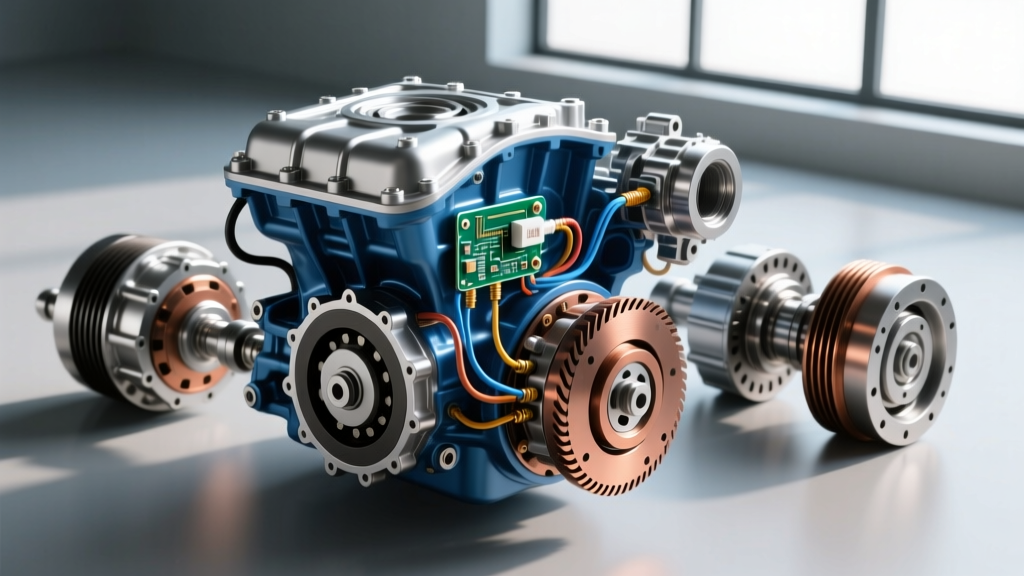
In older automatics, a TFT sensor was a $30 part that threaded into the case. Today, the reality of a transmission fluid temperature sensor replacement is far more punishing. In the ubiquitous ZF 8HP series found in everything from BMWs to Ram trucks, the TFT sensor is soldered directly onto the Mechatronic unit's internal TCM circuit board.
You cannot simply swap the sensor. A failure requires either dropping the valve body to send the TCM out for specialized micro-soldering repair, or replacing the entire Mechatronic assembly—a job that routinely costs between $1,400 and $2,800 in parts and programming labor alone. According to diagnostic guidelines from the Automatic Transmission Electronic Systems Association (ATESA), integrated TCM thermal failures are among the top three reasons for premature automatic transmission removals in late-model European vehicles.
Thermal Dynamics: Manuals vs. Automatics
Manual transmissions do not generate the same sheer-heat as automatic torque converters, but they still require meticulous thermal management. Without a sensor to monitor heat, manuals rely on the thermal stability of the gear oil and the cooling fins cast into the aluminum housing.
Choosing the right fluid is paramount. While many light-duty manuals (like the Tremec MT-82) actually call for Automatic Transmission Fluid (ATF) to ensure rapid synchromesh engagement, heavy-duty and European manuals require dedicated GL-4 or GL-5 gear oils. As noted by the formulators at Red Line Synthetic Oil, using a GL-5 fluid in a transmission designed for GL-4 can lead to synchromesh slippage due to the high concentration of sulfur-phosphorus extreme pressure (EP) additives, which make the friction surface too slippery for the brass synchronizers to grab.
Comparative Maintenance Data Table
| Transmission Model | Common Application | Capacity | Fill Plug Torque | OEM Fluid Spec / Type |
|---|---|---|---|---|
| Tremec MT-82 | Ford Mustang (2011-2023) | 3.0 L | 23 Nm (17 lb-ft) | Motorcraft Dexron III / MERCON V (ATF) |
| Mazda Skyactiv-MT | Mazda3 / MX-5 Miata | 1.7 L | 25 Nm (18 lb-ft) | Mazda Long Life Gear Oil (GL-4 75W-80) |
| Porsche G96 | 997/991 Carrera (Manual) | 3.5 L | 30 Nm (22 lb-ft) | Pentosin FFL-3 / GL-5 75W-90 (LSD Mod) |
| Aisin AZ6 | Nissan 370Z / Infiniti G37 | 2.8 L | 34 Nm (25 lb-ft) | Nissan GT-R Type II / GL-4 |
| GM 6L80 (Automatic) | Chevy Silverado / Camaro SS | 11.2 L (Dry) | N/A (Pan Bolts) | Dexron ULV (Integrated TFT Sensor) |
Edge Cases: Manuals with Active Cooling
Are there manual transmissions that require temperature monitoring? Yes, but they are rare. Certain heavy-duty applications, like the Dodge Ram equipped with the G56 manual transmission and a factory towing package, utilize an external fluid cooler loop. However, even in these setups, the temperature sensor is typically located in the cooling line or the differential, not inside the manual gearbox itself, and it is used to control a cooler bypass valve rather than dictating shift logic.
Dual-Clutch Transmissions (DCTs) like the Porsche PDK or VW DSG blur the line. They feature manual-like gearsets but rely on hydraulic actuation and wet clutches. These absolutely require TFT sensors, and a transmission fluid temperature sensor replacement on a DSG mechatronic unit carries the same steep premium as a ZF 8HP automatic.
Expert Takeaways for the Drivetrain Enthusiast
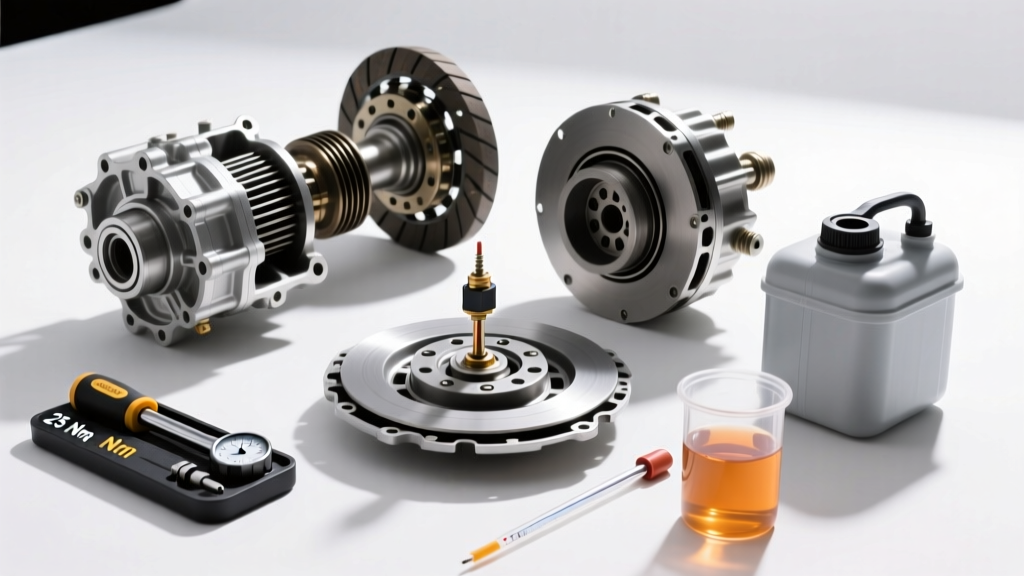
If you are wrenching on a true manual transmission in your garage, your maintenance workflow is refreshingly analog. Invest in a high-quality 3/8-inch drive torque wrench calibrated for low-end settings (15-40 Nm), as over-torquing aluminum fill plugs is a common novice mistake that leads to stripped casings. Use a magnetic drain plug to catch ferrous debris, and adhere strictly to the manufacturer's GL-4 versus GL-5 requirements.
Conversely, if you are diagnosing an automatic transmission throwing thermal codes, understand that a simple 'sensor swap' is rarely in the cards. Prepare for a mechatronic removal, a fluid flush, and a proprietary TCM reflash. In the ongoing battle of drivetrain maintenance, the manual transmission's lack of electronic oversight isn't just a nod to nostalgia—it is a massive advantage in long-term reliability and serviceability.