The Great Debate: Cable vs. Hydraulic Clutch Actuation
If you are diving into the world of classic car restomods, kit cars, or track builds, one of the first drivetrain hurdles you will face is clutch actuation. For decades, mechanical linkages and cables were the undisputed standard. However, as modern manual transmissions like the Tremec TKX and T56 Magnum have become ubiquitous in the swap community, the demand for smoother, more reliable pedal operation has skyrocketed. This brings us to a common crossroads for beginners and seasoned builders alike: should you stick with a traditional cable setup, or upgrade to a hydraulic system? More specifically, is investing in a high-performance Wilwood clutch master cylinder worth the effort and cost?
In this beginner-friendly explainer, we will break down the physics, practical realities, and real-world costs of cable versus hydraulic clutch systems. We will also provide a deep dive into why Wilwood Engineering remains the gold standard for hydraulic conversions in 2026, complete with exact part numbers, bore sizing mathematics, and installation torque specs.
How Cable Clutch Systems Work (And Where They Fail)
A cable clutch system relies on a simple mechanical connection. When you press the pedal, a steel cable housed within a lined sheath pulls on the clutch fork, engaging the throwout bearing. While elegantly simple, cable systems are governed by the laws of friction and mechanical binding.
The Inherent Flaws of Cables
- Friction and Wear: Over time, the internal lining of the cable sheath degrades. Moisture ingress leads to rust, increasing pedal effort and creating a 'notchy' feel.
- Heat Expansion: In tight engine bays, exhaust headers often route near the firewall. Extreme heat causes the steel cable to expand and the sheath to melt or bind, resulting in inconsistent clutch disengagement.
- Firewall Flex: Cables pull directly against the firewall. Without heavy reinforcement, the thin sheet metal will flex under the 400+ lbs of torque required to disengage a heavy-duty diaphragm clutch, robbing you of pedal travel.
- Adjustment Nightmares: As the clutch disc wears, the cable requires manual adjustment at the bellhousing to maintain the correct free-play, usually between 1/8-inch and 1/4-inch.
The Hydraulics Advantage: Fluid Power Explained
Hydraulic systems replace the physical cable with incompressible brake fluid, operating on Pascal's Law. When you apply force to the master cylinder piston, that pressure is transmitted equally through the hydraulic lines to the slave cylinder or hydraulic throwout bearing.
The result? A dramatic reduction in pedal effort, a linear and smooth pedal feel, and the complete elimination of mechanical binding. Furthermore, hydraulic systems are self-adjusting regarding clutch wear, provided the slave cylinder has adequate stroke length.
Spotlight: The Wilwood Clutch Master Cylinder
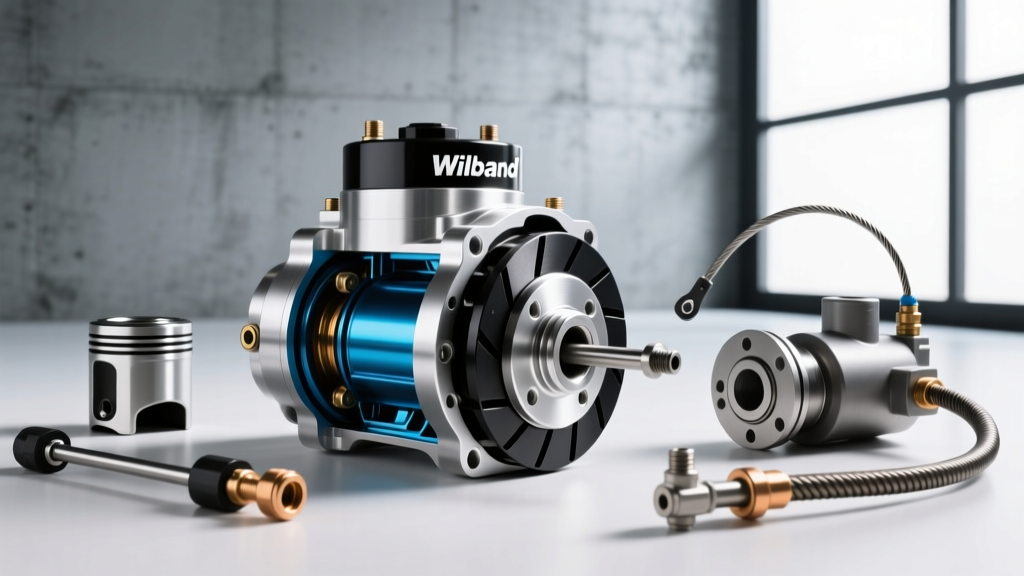
When builders decide to ditch the cable, the Wilwood clutch master cylinder is overwhelmingly the component of choice. Unlike bulky OEM-style cast-iron master cylinders designed for specific factory pedal boxes, Wilwood units are compact, lightweight, and universally adaptable.
Wilwood machines these cylinders from high-grade aluminum and finishes them in a durable black E-coat that resists corrosion and brake fluid damage. But the real magic lies in the bore sizing options, which allow you to fine-tune your pedal ratio and feel.
Decoding Bore Sizes: 3/4" vs. 7/8"
Choosing the right bore size is the most critical decision in your hydraulic conversion. Here is the golden rule of hydraulics: A smaller bore requires less pedal effort but yields more pedal travel. A larger bore requires more pedal effort but yields less pedal travel.
- Part #260-1304 (3/4-inch Bore): Priced around $65.00. Ideal for standard passenger cars, light-duty clutches, and setups with a 6:1 or higher pedal ratio. It provides a light, progressive pedal feel but requires adequate pedal travel to fully disengage the clutch.
- Part #260-1305 (7/8-inch Bore): Priced around $72.00. Best suited for heavy-duty racing clutches (like multi-disc sintered iron setups), limited pedal travel scenarios (like floor-mounted pedal boxes), or lower pedal ratios (4:1 to 5:1).
Expert Tip: Never pair a large-bore master cylinder with a small-bore slave cylinder unless you have mathematically verified the stroke volume. Doing so will result in a clutch that fails to disengage, leading to catastrophic gear grinding or transmission damage.
Head-to-Head Comparison Chart
To help you visualize the differences, here is a direct comparison between a standard aftermarket cable setup and a Wilwood hydraulic conversion.
| Feature | Aftermarket Cable System | Wilwood Hydraulic System |
|---|---|---|
| Pedal Feel | Variable, prone to binding and friction spikes | Linear, smooth, and highly predictable |
| Pedal Effort | High (dependent on mechanical leverage) | Low to Medium (tunable via bore size and pedal ratio) |
| Heat Resistance | Poor (sheath melting, cable expansion) | Excellent (PTFE lines and high-temp DOT fluid) |
| Installation Cost | $120 - $180 (Cable + brackets) | $250 - $400 (Master, Slave, AN lines, fluid) |
| Maintenance | Frequent lubrication and free-play adjustment | Fluid flush every 2 years; bleed if air enters |
Real-World Conversion: Swapping to a Wilwood Setup
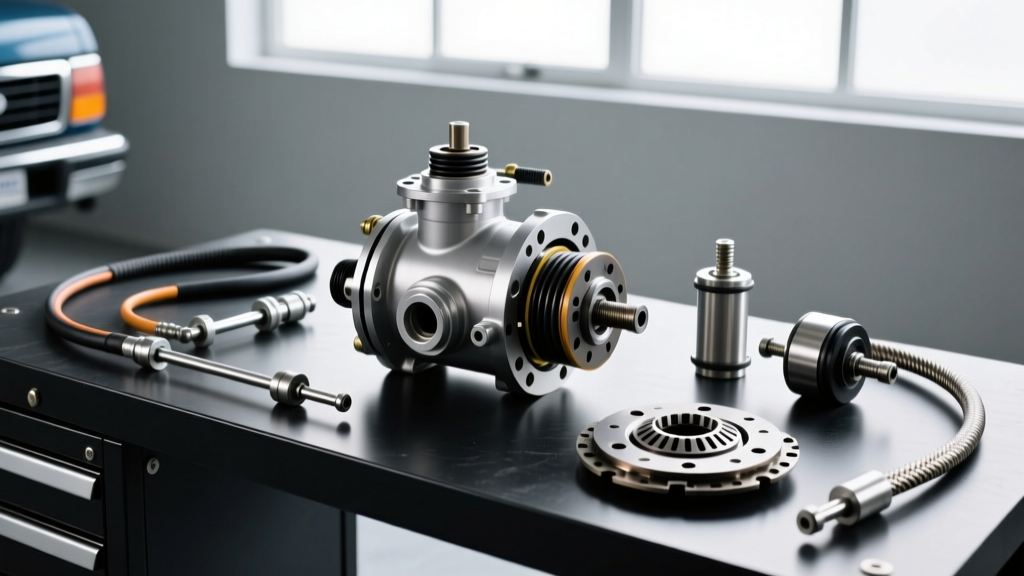
Converting from a cable to a hydraulic system is a straightforward weekend project if you follow proper engineering practices. Here is a step-by-step overview of what a Wilwood clutch master cylinder installation entails.
1. Firewall Mounting and Reinforcement
The Wilwood 260-series master cylinders utilize a standard 2-bolt flange mount. You must drill two 5/16-inch holes in the firewall. Because the hydraulic system generates immense pressure (often exceeding 1,200 PSI at the slave), you must use a steel backing plate or firewall reinforcement bracket behind the sheet metal. Torque the mounting nuts to 15 ft-lbs using a high-quality anti-seize compound on the threads.
2. Pushrod Alignment (The 1.5-Degree Rule)
The most common cause of premature master cylinder failure is pushrod misalignment. The pushrod connecting your clutch pedal to the Wilwood piston must be perfectly straight. According to Wilwood Engineering's technical manuals, any angularity exceeding 1.5 degrees will cause the piston to cock inside the bore, scoring the aluminum and destroying the internal seals. Always use a spherical rod end (heim joint) at the pedal connection to ensure bind-free articulation.
3. Plumbing the Lines: AN3 vs. AN4
Ditch the cheap rubber vacuum hoses. You must use PTFE-lined, stainless steel braided hoses. For most clutch applications, an AN3 (3/16-inch ID) line is perfectly adequate and offers excellent pedal response due to low fluid volume expansion. However, if you are running a remote slave cylinder with long line runs (over 6 feet), step up to an AN4 (1/4-inch ID) line to reduce flow restriction and ensure rapid clutch engagement.
4. Fluid Selection and Bleeding
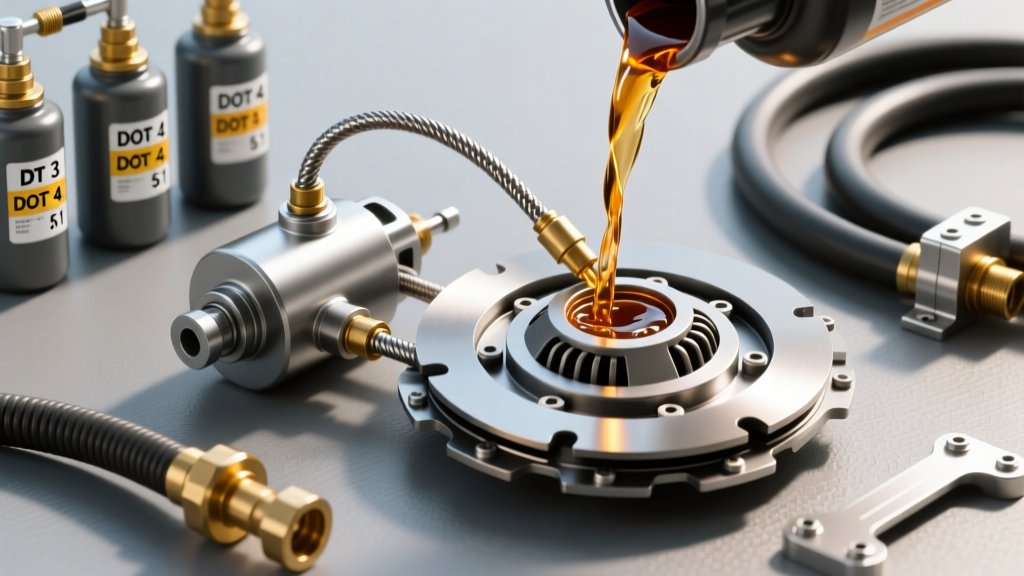
Wilwood master cylinders are designed for standard glycol-based brake fluids. Use a high-quality DOT 4 or DOT 5.1 fluid with a high dry boiling point (above 500°F). Never use DOT 5 silicone fluid, as it is highly compressible and will result in a spongy, unpredictable pedal.
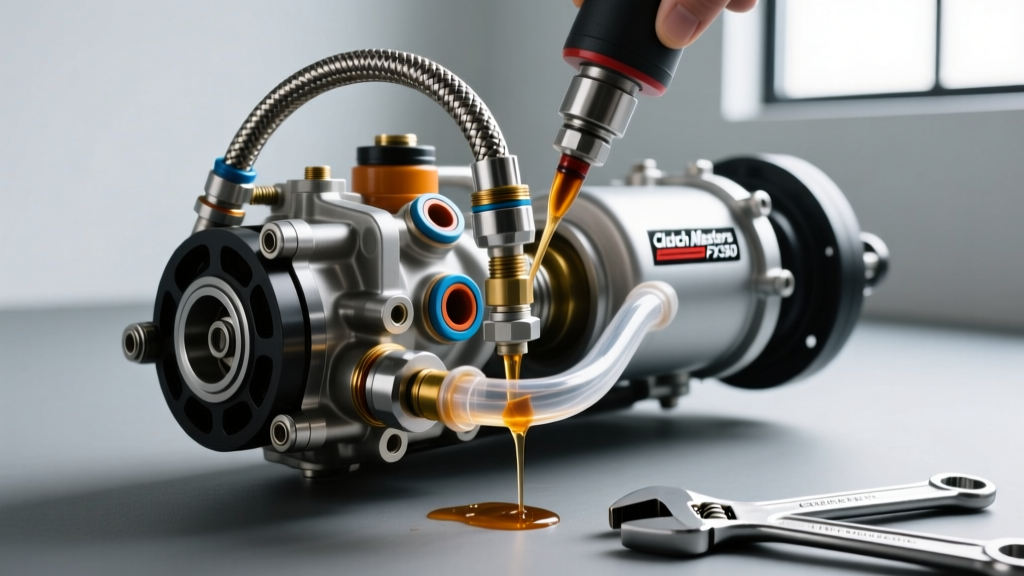
For bleeding, skip the archaic 'pump-and-hold' method which often whips air into the fluid. Invest in a pressure bleeder (like the Motive Products Power Bleeder). Apply 12 to 15 PSI to the master cylinder reservoir, open the bleed screw at the slave cylinder, and let the fluid flow until it is completely free of micro-bubbles. For complex setups, TREMEC's driveline tech library recommends bench-bleeding the slave cylinder or hydraulic throwout bearing before installing it in the bellhousing to save hours of frustration.
Which System is Right for Your Build?
Ultimately, the choice between cable and hydraulic comes down to your vehicle's purpose and your budget. If you are restoring a numbers-matching classic car where factory originality is paramount, a high-quality cable system is the correct path. However, if you are building a pro-touring muscle car, a track-focused roadster, or swapping a modern high-torque engine into a classic chassis, the hydraulic route is non-negotiable.
Upgrading to a Wilwood clutch master cylinder transforms the driving experience. It removes the mechanical friction from the equation, giving you the precise, feather-light modulation required to execute perfect rev-matches and launch smoothly from a standstill. By understanding bore sizing, respecting pushrod alignment tolerances, and using the correct PTFE plumbing, your hydraulic conversion will provide bulletproof reliability for tens of thousands of miles.
For further reading on pairing hydraulic actuation with modern manual transmissions, consult the installation guides provided by Speedway Motors and your specific transmission manufacturer.