The Off-Road Drivetrain Divide: CVT vs. Manual Hydraulics
As we navigate the 2026 off-road season, drivetrain preventive maintenance remains the dividing line between finishing a desert race or rock-crawling trail and getting towed back to camp. Off-road enthusiasts generally fall into two distinct camps regarding clutch actuation and power delivery: the Continuously Variable Transmission (CVT) systems found in modern UTVs, and the heavy-duty manual transmissions utilizing hydraulic actuation in custom buggies, Jeeps, and Broncos. While a RZR 1000 clutch upgrade focuses on optimizing centrifugal forces, spring rates, and belt grip, hydraulic clutch system diagnosis requires a meticulous understanding of fluid dynamics, master/slave cylinder bore ratios, and throwout bearing clearances. This comprehensive preventive maintenance guide bridges both worlds, equipping you with the exact diagnostic steps, torque specifications, and component data needed to keep your drivetrain engaged.
Symptom Isolation: Hydraulic Failures vs. CVT Belt Slip
Before tearing into the bellhousing or pulling the CVT clutches, accurate symptom diagnosis is critical. The drivetrain will communicate its failures through distinct mechanical feedback.
Manual Hydraulic Clutch Symptoms
- Pedal Sponginess or Sinking: Indicates aerated fluid or internal master cylinder bypassing. If the pedal slowly sinks to the floor while holding the clutch in at a stoplight, the primary cup seal inside the master cylinder has failed.
- Clutch Drag (Inability to Shift): If the transmission grinds when shifting into first or reverse, the hydraulic system is not providing adequate stroke volume to fully disengage the pressure plate. This points to a failing slave cylinder, a stretched hydraulic line, or an incorrectly adjusted pushrod.
- External Fluid Leaks: Puddles of DOT fluid near the firewall (master cylinder) or weeping from the bellhousing inspection cover (external slave cylinder).
Polaris RZR 1000 CVT Symptoms
- Delayed Engagement: A noticeable lag between pressing the throttle and the vehicle moving, often caused by worn primary clutch weights or a glazed drive belt.
- High RPM / Low Speed (Slipping): The engine revs aggressively without a proportional increase in wheel speed. This indicates insufficient clamping force on the secondary clutch or a belt that has worn past its minimum width specification.
- Chatter or Vibration: Felt during low-speed crawling, typically caused by contaminated clutch sheaves or an out-of-round drive belt.
RZR 1000 Clutch Upgrade: CVT Preventive Maintenance
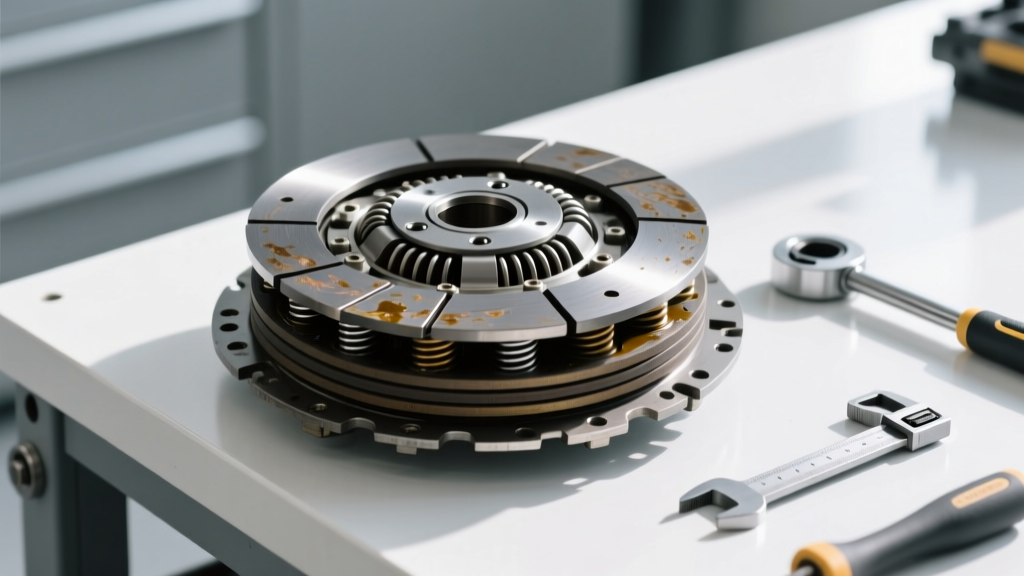
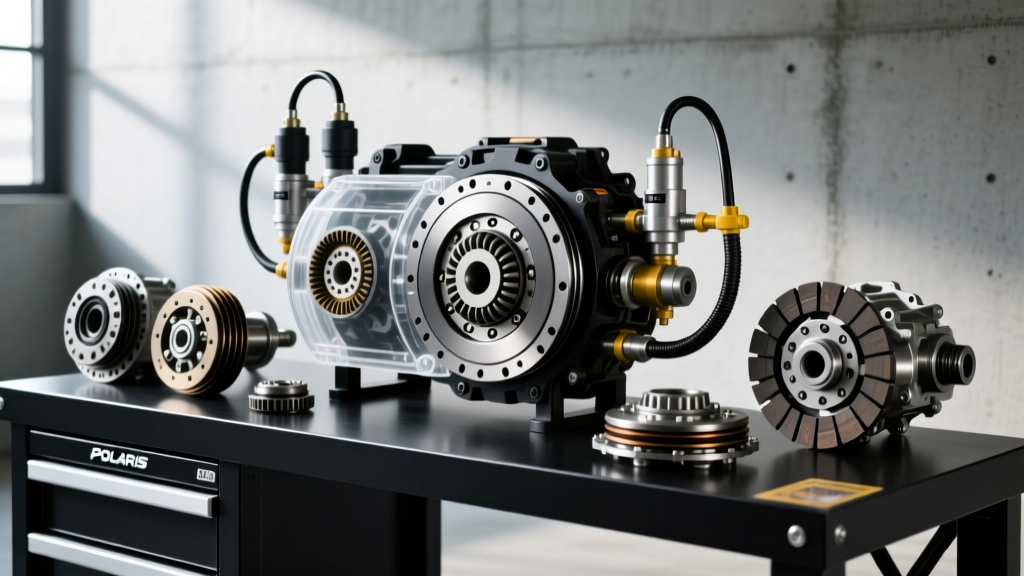
The Polaris RZR 1000 utilizes an Engine Braking System (EBS) primary clutch and a team-style secondary clutch. A proper Hunterworks or Dalton Industries RZR 1000 clutch upgrade isn't just about adding horsepower; it's about matching the clutch profile to your tire size and terrain to prevent premature belt degradation.
Key CVT Specs and Torque Values
When performing preventive maintenance or an upgrade on the RZR 1000, adhere strictly to these parameters:
- Primary Clutch Bolt Torque: 120 ft-lbs. (Note: Use a dedicated clutch holding tool. The threads are standard right-hand, but the breakaway torque is immense).
- Clutch Puller Thread: 3/4"-16. Never use a standard automotive puller; you will strip the crankshaft threads.
- Belt Deflection: 1/8" to 1/4" of slack when the belt is seated in the secondary clutch and pushed firmly.
- Weight Profiles: Upgrading from OEM to aftermarket adjustable weights (e.g., 62g to 68g) allows you to lower the engagement RPM, which is critical for oversized 35-inch tires to prevent belt slip and excessive heat generation.
Hydraulic Clutch System Diagnosis: The Manual Off-Roader's Guide
For manual transmission off-roaders—such as a Jeep Wrangler JK running an Aisin NSG370 or a Ford Bronco with a Tremec MT-82—the hydraulic clutch system is the weakest link in an otherwise bulletproof drivetrain. Preventive diagnosis requires evaluating the entire hydraulic circuit from the pedal assembly to the throwout bearing.
Step 1: Master Cylinder and Fluid Diagnostics
The master cylinder converts mechanical pedal force into hydraulic pressure. Most off-road applications utilize a 3/4" or 13/16" bore master cylinder. Over time, the internal rubber seals degrade, especially if exposed to high heat from nearby exhaust headers or if the wrong fluid is used.
Preventive Action: Flush the system every 24 months using a high-quality DOT 4 or DOT 5.1 fluid. Standard DOT 3 fluid absorbs moisture rapidly, lowering its boiling point and leading to vapor lock during heavy trail use. Premium DOT 4 fluids, such as Motul RBF 600, offer a dry boiling point of 593°F (312°C), providing a massive safety margin for desert racing environments.
Step 2: Slave Cylinder and Throwout Bearing Evaluation
Modern manual 4x4s frequently use Concentric Slave Cylinders (CSC) located inside the bellhousing. While this eliminates the need for external linkage adjustments, it makes diagnosis and replacement significantly more labor-intensive, as it requires transmission removal.
- External Slave Cylinders: Found on older rigs (e.g., Chevy NV4500 setups). Check the pushrod clearance. There should be a slight free-play (typically 0.020" to 0.040") between the pushrod and the clutch fork to prevent the throwout bearing from riding constantly against the pressure plate fingers.
- Internal CSCs: Listen for a high-pitched whining noise that changes pitch when the clutch pedal is depressed. This indicates a failing throwout bearing or a scoring CSC piston. If your internal slave is showing symptoms of failure, upgrade to a heavy-duty aftermarket unit from manufacturers like Summit Racing or LuK, which feature upgraded stainless steel braided lines and reinforced piston seals.
Comparative Maintenance Table: RZR CVT vs. Hydraulic Manual
| Maintenance Metric | Polaris RZR 1000 (CVT Upgrade) | Manual 4x4 (Hydraulic System) |
|---|---|---|
| Primary Wear Component | Drive Belt & Primary Weights | Throwout Bearing & Fluid Seals |
| Service Interval | Belt inspection every 1,000 miles | Fluid flush every 2 years / 24,000 miles |
| Diagnostic Tooling | Clutch puller, belt deflection gauge | Pressure gauge, vacuum bleeder |
| Average Upgrade Cost | $250 - $600 (Weights, Springs, Helix) | $150 - $450 (Master/Slave Kit, Lines) |
| Failure Consequence | Stranded (Loss of forward motion) | Stranded (Inability to shift gears) |
Bleeding and Flushing: Critical Hydraulic Procedures
A common pitfall in hydraulic clutch system diagnosis is misdiagnosing a poorly bled system as a failed component. Off-road vehicles with long, routed hydraulic lines or remote reservoirs are prone to trapping air bubbles in high spots.
- Vacuum Bleeding: Using a vacuum bleeder at the slave cylinder nipple is the most effective way to pull fluid down from the master cylinder without introducing air. Apply 15-20 in-Hg of vacuum until the fluid runs completely clear of micro-bubbles.
- Reverse Bleeding: For stubborn systems (like the GM T56 Magnum setups), reverse bleeding forces fluid from the slave cylinder up to the master cylinder, naturally pushing air bubbles upward where they can escape the reservoir.
- Pedal Cycling: After bleeding, cycle the pedal 50 times rapidly. This dislodges micro-bubbles clinging to the internal walls of the hydraulic lines and the CSC piston housing.
Proactive Replacement vs. Reactive Failure
Whether you are dialing in a Polaris RZR 1000 clutch upgrade for a dune run or prepping a hydraulic manual transmission for the Rubicon Trail, preventive maintenance relies on data, not guesswork. Measure your CVT belt width with digital calipers and replace it if it drops below the OEM minimum threshold (usually around 1.18 inches for the RZR 1000). Similarly, track the mileage on your hydraulic clutch fluid; DOT fluid is hygroscopic and will corrode your slave cylinder from the inside out if neglected. By treating your drivetrain's actuation systems with the same reverence as your engine's internals, you ensure that when you drop the hammer, the power actually makes it to the dirt.