Upgrading to a high-performance manual drivetrain often necessitates a multi-friction setup, but diagnosing intermittent triple disc clutch problems remains one of the most frustrating challenges for drivetrain specialists and enthusiasts alike. Unlike single-disc organic setups that fail predictably and progressively, triple disc clutches—such as the McLeod Pro 1000 or the Ram Clutches 900 Series—operate on the edge of hydraulic and mechanical tolerances. When they malfunction, the symptoms are often maddeningly inconsistent: the car might launch perfectly on the street, only to slip violently at 5,500 RPM in fourth gear, or exhibit severe chatter on cold mornings that completely vanishes once the friction materials reach operating temperature.
The Anatomy of Multi-Disc Intermittent Faults
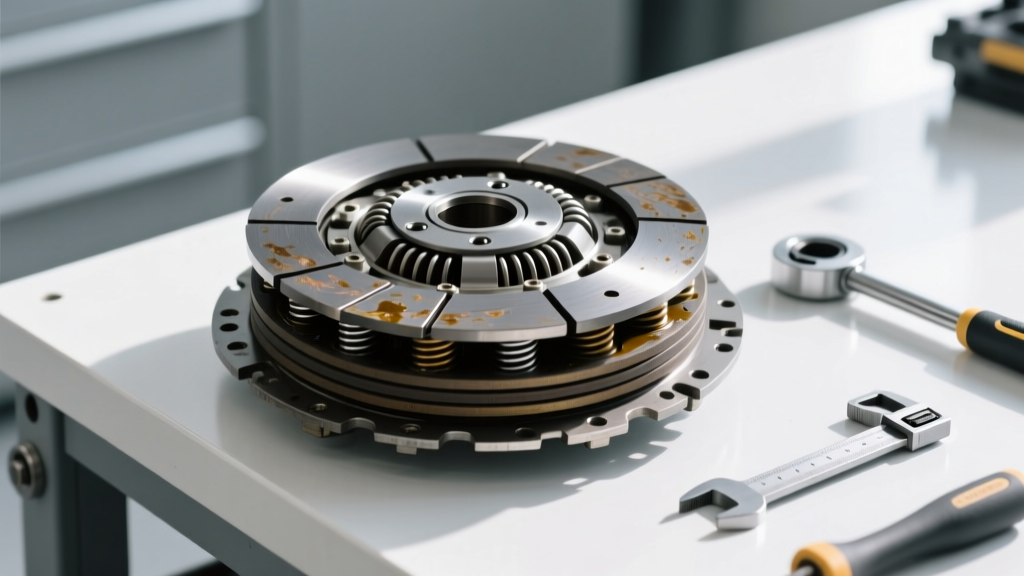
To understand why a triple disc clutch acts up intermittently, you must understand its architecture. These systems utilize three friction discs and two intermediate floater plates sandwiched between the flywheel and the pressure plate. This design multiplies the torque capacity without requiring a singular, bone-shattering clamp load on the pedal. However, it introduces multiple moving parts that must float and engage simultaneously. If the hydraulic release system experiences a 0.020-inch variance, or if the bellhousing concentricity is off by just a few thousandths of an inch, the floater plates will not seat evenly. This results in localized hot spots, uneven wear, and intermittent slip or grab that defies standard single-disc diagnostic logic.
Symptom 1: High-RPM Slipping Under Heavy Load
The most common intermittent complaint is a clutch that holds 600 lb-ft of torque in lower gears but slips when pulling high RPM in overdrive (e.g., 4th or 5th gear in a Tremec T-56 Magnum). Many assume the friction material is glazed, but in a triple disc setup, this is rarely the root cause.
The Hydraulic Preload Trap
Intermittent high-RPM slipping is frequently caused by inadequate clearance between the clutch master cylinder pushrod and the piston. As the hydraulic fluid (typically DOT 4 or DOT 5.1) heats up during aggressive driving, it expands. If there is zero clearance at the pushrod, the expanding fluid has nowhere to go but down the hydraulic line, slightly applying the release bearing. In a triple disc setup generating 2,800 to 3,200 lbs of clamp load, even a 15-lb inadvertent preload on the release bearing will cause the floater plates to slip microscopically under high-torque, high-RPM loads.
- Diagnostic Fix: Verify a minimum of 0.050-inch to 0.100-inch freeplay at the master cylinder pushrod. Ensure the pedal returns fully to the firewall stop.
- Inspection Point: Check the clutch fork pivot ball for mushrooming. A worn pivot ball alters the fulcrum geometry, reducing the effective clamping force on the floater plates under thermal expansion.
Symptom 2: Cold-Start Chatter That Vanishes at Operating Temp
If your triple disc clutch chatters violently when pulling away from a stoplight on a cold morning, but operates smoothly after 10 minutes of driving, you are dealing with a friction material or flywheel step-height issue. Metallic and cerametallic friction materials (common in triple disc race setups) require heat to generate their optimal coefficient of friction.
Flywheel Step Height and Floater Plate Hang-Up
Chatter is essentially the floater plates grabbing and releasing in rapid succession. This happens when the flywheel step height is incorrect for the specific pressure plate being used. For example, GM LS applications typically require a positive step height of 0.010" to 0.020", whereas Ford Modular V8s often require a 0.000" (flat) step. If a machine shop resurfaces the flywheel but ignores the step height, the pressure plate diaphragm is forced into an over-extended position. When cold, the diaphragm spring rate is too aggressive, causing chatter; as the metal heats and expands, the geometry shifts just enough to smooth out the engagement.
Pro-Tip: Always measure the flywheel step height with a straight edge and feeler gauge before installing a multi-disc clutch. If the step is worn beyond 0.005" of the manufacturer's specification, the flywheel must be replaced or remachined. Shimming the pressure plate is a temporary band-aid that will lead to catastrophic floater plate failure.
Symptom 3: Inconsistent Pedal Feel and "Ghost" Disengagement
Intermittent issues where the clutch pedal feels "spongy" only after sitting in traffic, or where the transmission grinds into reverse intermittently, point directly to hydraulic aeration or thermal soak in the slave cylinder.
Hydraulic Fluid Thermal Dynamics
Triple disc clutches require immense hydraulic volume and pressure to overcome heavy diaphragm springs. If the slave cylinder is mounted inside the bellhousing (internal concentric slave), it is subjected to radiant heat from the exhaust and friction materials. This heat boils the microscopic moisture in the brake fluid, creating compressible gas bubbles that cause intermittent disengagement failures.
| Fluid Type | Dry Boiling Point | Wet Boiling Point | Best Application |
|---|---|---|---|
| DOT 3 | 401°F (205°C) | 284°F (140°C) | Stock/OEM Daily Drivers |
| DOT 4 | 446°F (230°C) | 311°F (155°C) | Street/Strip Triple Disc Setups |
| DOT 5.1 | 518°F (270°C) | 356°F (180°C) | High-HP Track Cars (Requires frequent flushing) |
| DOT 5 (Silicone) | 500°F (260°C) | N/A (Does not absorb water) | NEVER USE (Compressible, ruins pedal feel) |
Diagnostic Protocol: Bleed the system using a Motive pressure bleeder set to exactly 15 PSI. Gravity bleeding or pedal-pumping is insufficient for the complex internal galleries of a multi-disc hydraulic release bearing. If the pedal still drops intermittently in traffic, upgrade to a braided stainless steel clutch line to eliminate hose expansion under high line pressure.
The Bellhousing Alignment Factor: A Hidden Culprit
You cannot diagnose intermittent triple disc clutch problems without verifying bellhousing concentricity. High-horsepower engines produce severe harmonic vibrations. If the bellhousing is misaligned relative to the crankshaft centerline, the transmission input shaft orbits eccentrically.
- Mount a Dial Indicator: Attach a magnetic base to the flywheel and position a Mitutoyo dial indicator against the inside bore of the bellhousing.
- Rotate the Crankshaft: Turn the engine 360 degrees and record the Total Indicator Runout (TIR).
- Evaluate the Data: The absolute maximum allowable TIR for a Tremec T-56 Magnum or Ford TR-3650 is 0.005".
If your TIR reads 0.008" or higher, the input shaft is physically wiggling inside the pilot bearing and the clutch discs. This causes the floater plates to wear unevenly on their drive lugs. The result? The clutch will grab perfectly when the engine is at a specific harmonic resonance, but slip or chatter intermittently when the RPM shifts and the harmonic orbit changes. Correcting this requires installing offset dowel pins (e.g., Lakewood or RobbMc Performance) to dial the housing back within the 0.005" tolerance.
When to Pull the Transmission: Hard Limits and Costs
Diagnosing from the outside has its limits. If you have verified hydraulic freeplay, confirmed proper DOT fluid usage, and dialed in the bellhousing TIR to under 0.005", the intermittent fault is internal. It is time to pull the transmission.
Internal Failure Modes to Inspect
- Floater Plate Drive Straps: Inspect for micro-fractures or elongated rivet holes. Fatigued straps allow the floater plates to tilt, causing intermittent contact.
- Clutch Hub Marbling: Check the splines on the friction discs. If they show "marbling" or galling, the discs are binding on the input shaft during release, preventing full disengagement or causing erratic re-engagement.
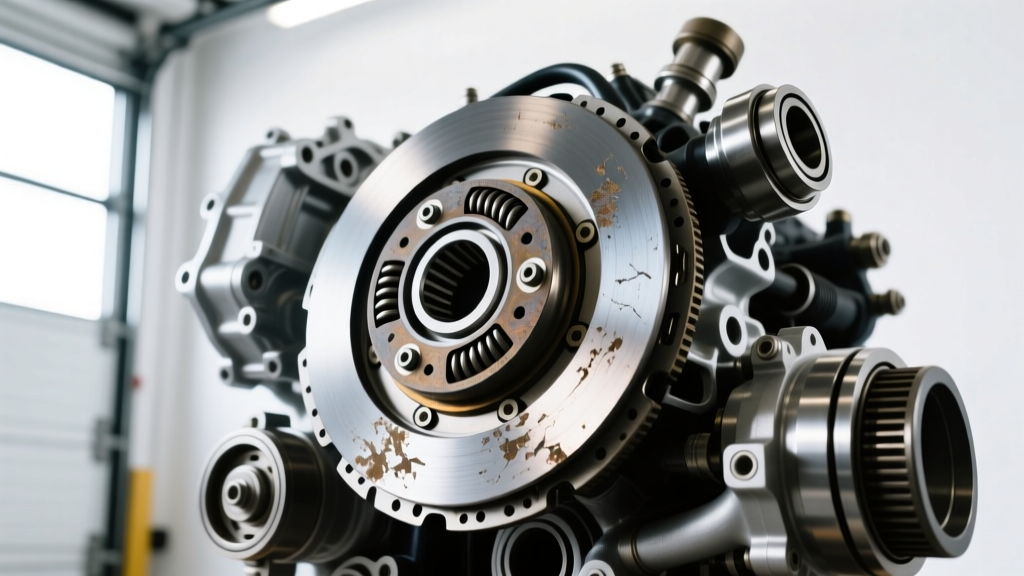
- Pressure Plate Fingers: Look for uneven wear patterns on the diaphragm fingers where the release bearing makes contact. Asymmetrical wear indicates a bent input shaft or a failing pilot bearing.
2026 Replacement Cost Expectations
Budgeting for a triple disc clutch R&R requires realistic expectations. As of 2026, a premium triple disc kit (including a billet steel flywheel, hydraulic release bearing, and alignment tool) ranges from $1,800 to $3,200 depending on the manufacturer and torque rating. Labor for transmission removal, bellhousing dial-indicating, and reinstallation typically runs between $1,200 and $2,000 at a specialized manual transmission shop. Do not cut corners on the pilot bearing; always replace it with a high-quality sealed unit (such as a Torrington needle bearing) during the R&R to prevent future input shaft wobble.