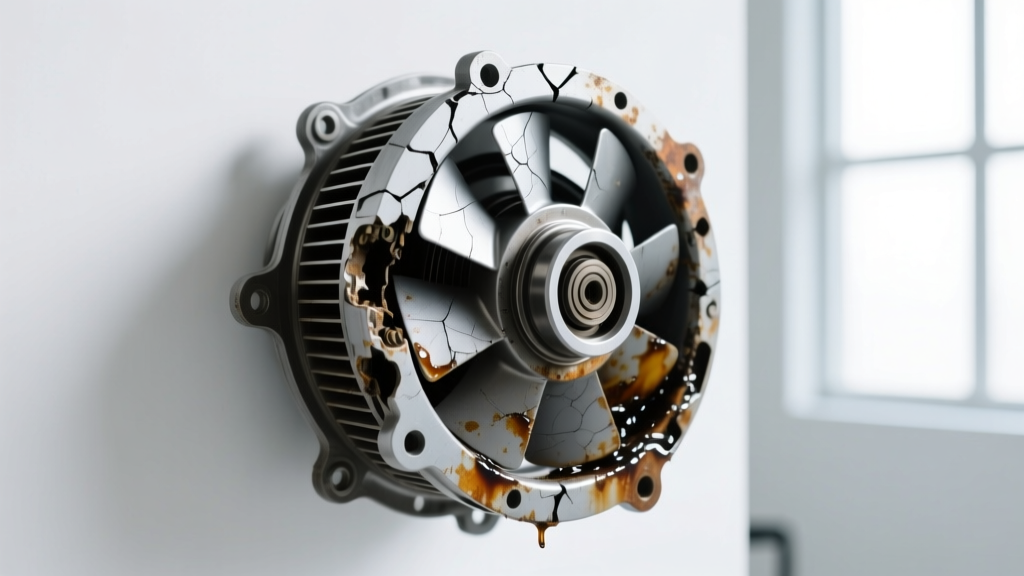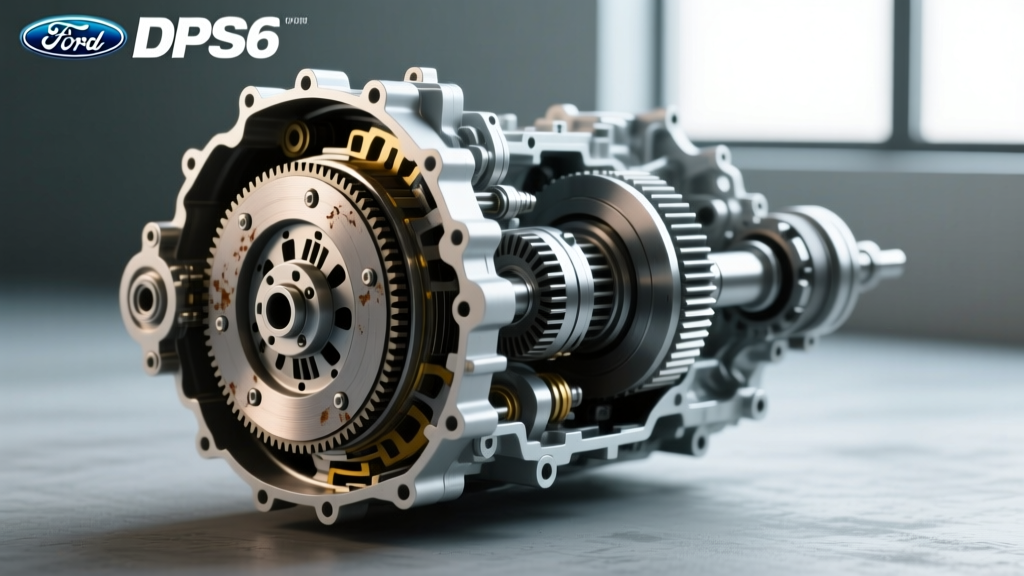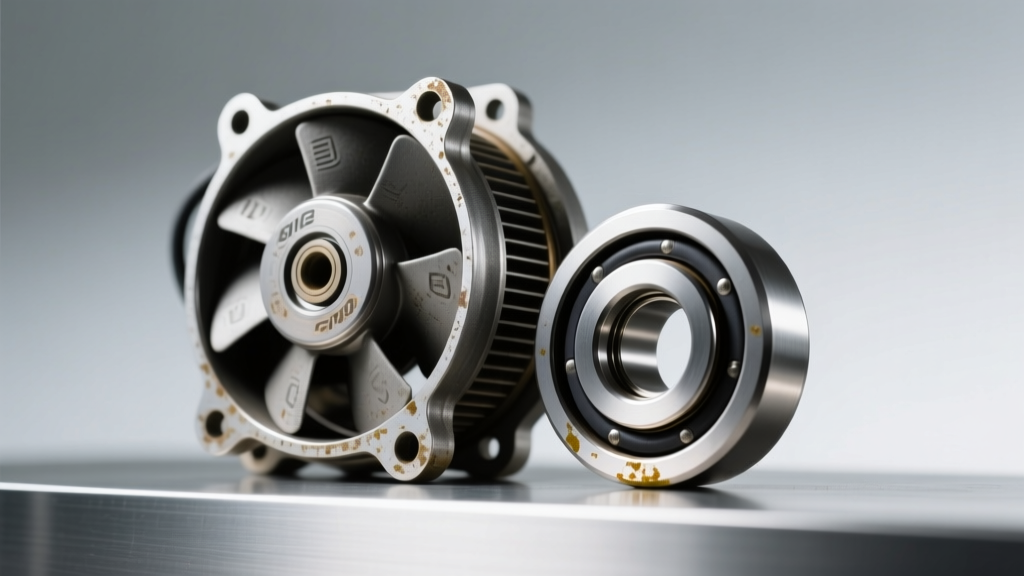
The Front-of-Engine Noise Dilemma: Isolating the Source
For automotive technicians and DIY enthusiasts working on GM LS-platform vehicles, few diagnostic scenarios are as frustrating as a mysterious grinding or roaring noise emanating from the front of the engine bay. When a customer or forum user complains about severe front-end acoustics, the immediate suspicion often falls on the engine cooling system. Many enthusiasts mistakenly attribute a failing throw-out bearing (TOB) to fan clutch issues because both components reside at the front of the powertrain and can generate similar low-frequency roaring or high-pitched scraping sounds. However, misdiagnosing a failing transmission release bearing as a viscous fan failure will result in a wasted weekend, unnecessary parts costs, and eventually, a stranded vehicle when the clutch system catastrophically disintegrates.
In this model-specific repair guide, we focus exclusively on the legendary GM LS engine family paired with the Tremec T56 Magnum and factory TR-6060 transmissions. Whether you are troubleshooting a 5th-generation Camaro SS or a custom LS-swapped project car built in 2026, understanding the acoustic and mechanical differences between the water pump/fan assembly and the bellhousing internals is critical for accurate clutch system diagnostics.
Acoustic Diagnostic Matrix: Fan Clutch vs. Throw-Out Bearing
Before dropping the transmission, you must perform a systematic auditory analysis. The viscous fan clutch relies on a bimetallic strip and silicone shear fluid to modulate engine cooling, while the throw-out bearing manages the rotational friction between the stationary hydraulic actuator and the spinning clutch pressure plate diaphragm. Use the following matrix to isolate the noise profile:
| Diagnostic Condition | Fan Clutch Issues (Viscous Shear) | Throw-Out Bearing Failure |
|---|---|---|
| Cold Start (First 2 Minutes) | Loud, aggressive roar that settles as fluid warms and shear drops. | Silent, or a light metallic scrape that remains constant. |
| Revving in Neutral | Pitch follows engine RPM linearly; sounds like a small aircraft. | Pitch fluctuates; may introduce a metallic rattle or chirp. |
| Clutch Pedal Depressed | Absolute zero change in the acoustic profile. | Noise dramatically worsens (growling) or disappears entirely. |
| Vehicle Coasting (In Gear) | Noise decreases proportionally as engine RPM drops. | May squeal or tick during deceleration due to drivetrain backlash. |
The Stethoscope Isolation Technique
To definitively rule out fan clutch issues, use a mechanic's stethoscope. With the vehicle safely raised on a lift and the engine idling, place the probe on the water pump snout and the fan clutch mounting hub. If the roaring is isolated here, your cooling system requires service. Next, place the probe directly on the aluminum bellhousing, specifically near the inspection cover and the hydraulic slave cylinder line. A failing TOB will transmit a harsh, gritty vibration through the aluminum casing that is unmistakable once you know what to feel for.
Platform Deep Dive: TR-6060 vs. T56 Magnum Architecture
The GM LS and Tremec ecosystem utilizes two entirely different throw-out bearing architectures depending on the exact transmission model. Confusing these two setups is a common pitfall when ordering replacement parts.
1. The Factory TR-6060 (Concentric Slave Cylinder)
Found in the 2010-2015 Camaro SS and Cadillac CTS-V, the TR-6060 eliminates the traditional clutch fork in favor of a Concentric Slave Cylinder (CSC). The CSC acts as both the hydraulic actuator and the throw-out bearing, wrapping entirely around the transmission input shaft. Because it is constantly in contact with the pressure plate fingers, it spins whenever the engine is running.
- Common Part Numbers: GM 24264160, LuK LSC109, Sachs SH5073.
- Primary Failure Mode: Internal hydraulic seal weeping. When the internal O-rings fail, DOT 4 brake fluid is slung directly onto the clutch friction disc by centrifugal force, causing immediate clutch slip and eventual friction material delamination.
2. The Aftermarket T56 Magnum (External Fork & Standard TOB)
The T56 Magnum is the gold standard for LS-swaps and crate engine builds. It utilizes a traditional external hydraulic slave cylinder that pushes a stamped steel clutch fork, which in turn pivots a standard throw-out bearing against the pressure plate only when the pedal is depressed.
- Common Part Numbers: SKF MTOB-1005, GM 12345921 (Bearing), GM 12583798 (Pivot Ball).
- Primary Failure Mode: Carbon face wear and pivot ball galling. The carbon contact ring wears down to the metal rivets, causing a horrific metal-on-metal screech when the pedal is pressed. Simultaneously, the clutch fork pivot ball wears a groove into the fork, creating a rhythmic 'tick-tick-tick' at idle that vanishes when pedal pressure loads the fork.
Step-by-Step Replacement & Critical Torque Specifications
Replacing the throw-out bearing or CSC requires dropping the transmission. As of 2026, with the widespread availability of advanced ceramic clutch kits, ensuring the hydraulic actuation geometry is perfectly set is more important than ever. Below are the exact factory torque specifications for the GM LS/T56 platform. Note: Always verify against your specific aftermarket block plate or flywheel manufacturer instructions.
CRITICAL WARNING: The Concentric Slave Cylinder (CSC) mounting bolts are extremely sensitive to over-torquing. Applying standard bellhousing torque values to the CSC will crack the plastic hydraulic housing, resulting in immediate fluid loss upon bleeding.
Essential Torque Specifications
- Flywheel to Crankshaft (M16 Bolts): 74 lb-ft, plus an additional 90-degree turn. (Use new torque-to-yield bolts; never reuse GM flywheel bolts).
- Bellhousing to Engine Block (M12 Bolts): 35 lb-ft. Apply a medium-strength threadlocker to the top bolts to prevent vibration-induced backing out.
- CSC to Transmission Case (TR-6060): 89 lb-INCHES. (This is roughly 7.4 lb-ft. Use a specialized inch-pound torque beam).
- Clutch Fork Pivot Ball (T56 Magnum): 20 lb-ft. Coat the spherical ball with high-melting-point molybdenum grease to prevent fork wear.
- Hydraulic Line Banjo/Retainer: 11 lb-ft. Over-tightening will crush the Teflon sealing ring inside the quick-connect fitting.
The Hydraulic Bleeding Protocol
Air trapped in the hydraulic line will cause incomplete clutch disengagement, which forces the throw-out bearing to ride constantly against the spinning diaphragm springs, accelerating wear. Use a high-quality DOT 4 synthetic fluid. Perform a gravity bleed for 20 minutes at the slave cylinder bleeder screw, followed by 30 manual pedal pumps with a partner. Finally, utilize a vacuum bleeder at the master cylinder reservoir to extract microscopic bubbles trapped in the GM firewall-mounted master cylinder.
2026 Market Cost Breakdown & Sourcing
Budgeting for a throw-out bearing repair requires accounting for the mandatory ancillary parts that should be replaced while the transmission is out of the vehicle. Labor rates for transmission removal and installation (R&R) on a Camaro SS or typical LS-swapped chassis average between 4.5 and 6.0 hours.
- OEM CSC / TOB Assembly: $120 - $190 (Source from authorized LuK or SKF distributors).
- DOT 4 Synthetic Fluid & Line Flush Kit: $25 - $40.
- Clutch Fork & Pivot Ball Kit (Magnum only): $85 - $110.
- Professional Labor (R&R + Bleed): $675 - $1,050 (Based on a $150-$175/hr independent specialist rate).
While the parts themselves are relatively inexpensive compared to the internal synchronizers or gear sets found inside the Tremec T56 and TR-6060 transmissions, the labor intensity of the job dictates that you should always replace the clutch disc, pressure plate, and flywheel simultaneously if they show any signs of heat spotting or wear.
Final Diagnostic Verdict
Differentiating between cooling system anomalies and transmission release bearing failures requires a methodical approach. By leveraging the pedal-sweep test, utilizing a stethoscope on the bellhousing, and understanding the distinct architectural differences between the TR-6060 CSC and the T56 Magnum external fork, you can confidently diagnose the root cause of the noise. For further technical data on bearing load ratings and hydraulic seal materials, consult the SKF Automotive Bearing Catalog or review the latest clutch system technical bulletins provided by LuK Clutch Systems. Proper diagnosis not only saves money but prevents catastrophic damage to your transmission's input shaft and bellhousing.