The Hidden Variable in Manual Transmission Longevity
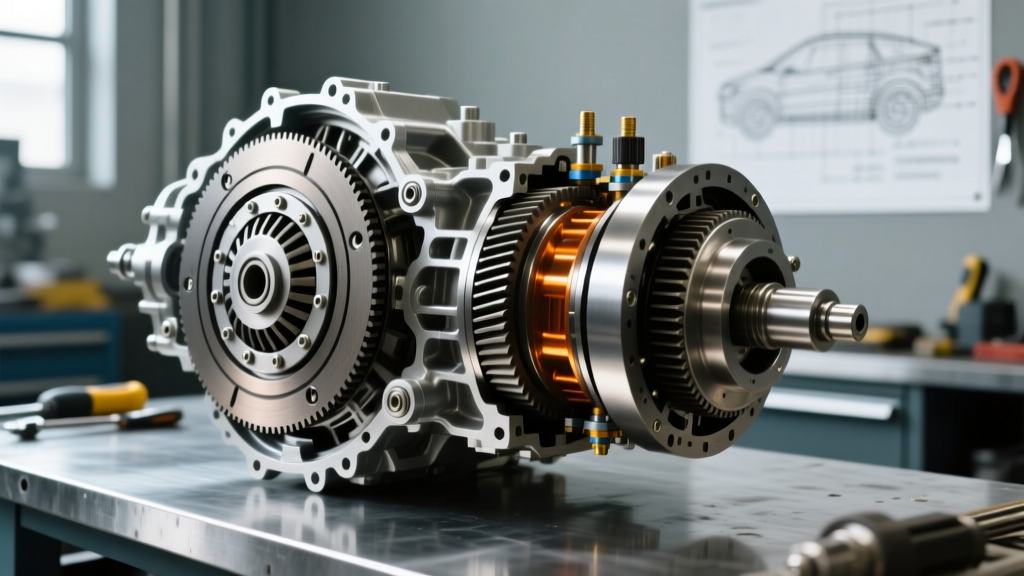
When enthusiasts and daily commuters alike ask how long does a clutch last, the conversation almost exclusively revolves around the friction disc, pressure plate, and flywheel. While a high-quality organic clutch disc can easily survive 80,000 to 120,000 miles under normal driving conditions, the hydraulic actuation system that engages it is frequently ignored until a catastrophic failure occurs. As an automotive transmission specialist, I see countless manual vehicles sidelined not because the friction material wore out, but because the hydraulic clutch system degraded, leading to incomplete disengagement, synchro damage, and premature clutch failure.
In this 2026 preventive maintenance guide, we will pivot away from the friction surfaces and perform a deep-dive hydraulic clutch system diagnosis. Understanding the interplay between master cylinders, slave cylinders, and hygroscopic fluids is the true secret to maximizing your manual transmission's lifespan.
How Long Does a Clutch Last? The Hydraulic Reality
The physical clutch assembly's lifespan is directly tethered to the health of its hydraulic actuation. If the hydraulic system cannot fully disengage the clutch due to internal bypassing, vapor lock, or mechanical binding, the friction disc will drag against the flywheel during shifts. This 'micro-slipping' generates immense heat, glazing the friction material and accelerating wear by up to 40%. Therefore, the answer to 'how long does a clutch last' is entirely dependent on your hydraulic maintenance intervals.
The Hygroscopic Threat to DOT Fluids
Most modern manual transmissions utilize DOT 3, DOT 4, or DOT 5.1 brake fluid in the clutch reservoir. These fluids are glycol-ether based and inherently hygroscopic, meaning they actively absorb moisture from the atmosphere through the reservoir cap vent and microscopic pores in rubber brake lines.
According to AMSOIL Technical Services, a mere 3% water contamination by volume can drop the boiling point of standard DOT 4 fluid from 446°F (230°C) to roughly 311°F (155°C). In a high-heat bellhousing environment—especially in performance vehicles or trucks used for towing—this moisture-laden fluid can boil, creating compressible gas bubbles (vapor lock). When vapor lock occurs, pedal pressure drops to the floor, and the clutch fails to disengage, forcing the driver to grind gears or stall the engine.
Master Cylinder Diagnostics: Internal Bypass and Pushrod Geometry
The clutch master cylinder (CMC) is the command center of the hydraulic system. Diagnosing a failing CMC requires looking beyond external leaks. The most common failure mode in vehicles like the Honda Civic (K-series) or the Subaru WRX is internal seal bypass.
- The Pedal Sink Test: With the engine running and the vehicle in gear, press the clutch pedal to the floor and hold it with steady, moderate pressure for 60 seconds. If the pedal slowly sinks toward the floorboards without any visible fluid dripping from the firewall or footwell, the internal primary cup seal is bypassing fluid back into the reservoir.
- Pushrod Free Play Measurement: Many OEM master cylinders require a specific pushrod free play (typically 0.020' to 0.040') between the pedal arm and the CMC piston. If an aftermarket pedal stop or adjustable pushrod is set with zero free play, it can block the internal fluid return port. This traps pressure in the line, causing the clutch release bearing to ride constantly against the pressure plate fingers, destroying both the bearing and the diaphragm spring in under 5,000 miles.
Concentric Slave Cylinder (CSC) vs. External Slave Failures
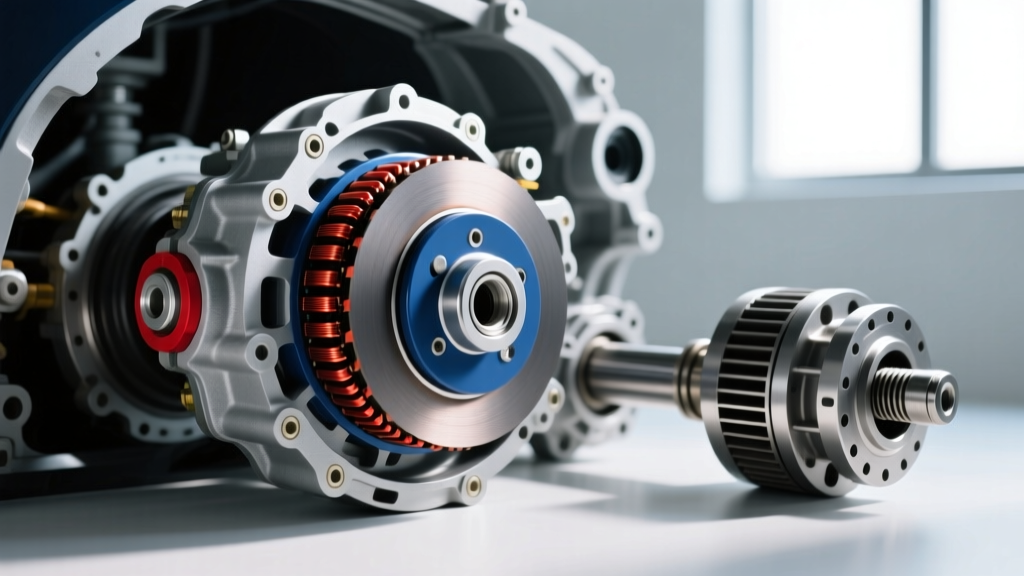
Modern drivetrains have largely migrated from external lever-actuated slave cylinders to Concentric Slave Cylinders (CSC), which wrap directly around the transmission input shaft. While CSCs eliminate mechanical pivot wear and self-adjust for clutch thickness, they introduce severe diagnostic challenges.
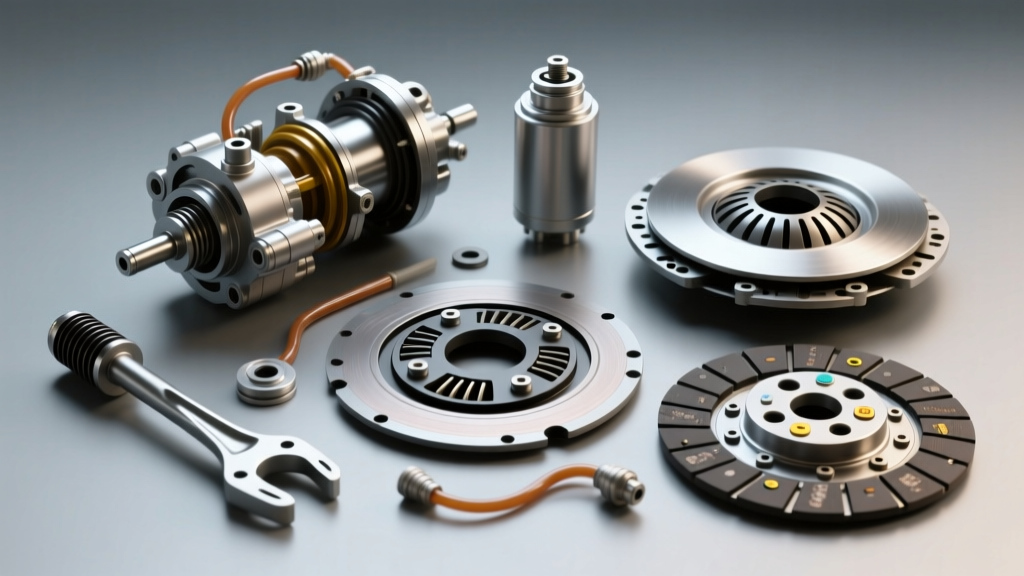
Because the CSC lives inside the bellhousing, it is subjected to extreme ambient heat and friction dust. Schaeffler Group (the parent company of LuK) engineering data highlights that thermal cycling causes the CSC's internal PTFE seals to harden and crack. A failing CSC often exhibits a 'spongy' pedal that requires multiple pumps to build pressure, or a distinct clicking noise emanating from the bellhousing when the pedal is depressed. Unlike an external slave (like the Sachs SH5001 found on older GM Tremec T56 applications) which can be replaced in 30 minutes for under $80, a CSC replacement (such as the LuK LSC308 for the Ford MT-82) mandates complete transmission removal, pushing labor costs between $800 and $1,400.
Expert Diagnostic Tip: If your clutch pedal feels notchy or binds at the top of its travel, do not immediately condemn the CSC. Inspect the hard plastic hydraulic line routing. Many OEMs use convoluted plastic tubing that can kink or melt near exhaust headers, creating a physical restriction that mimics internal seal failure.
Identifying Micro-Leaks and Line Degradation
OEM rubber hydraulic hoses are prone to internal delamination and external swelling. When rubber hoses swell under hydraulic pressure, the volumetric expansion absorbs pedal travel, resulting in a spongy, disconnected pedal feel. Upgrading to PTFE-lined, stainless steel braided clutch lines (from manufacturers like Goodridge or Earl's) eliminates hose swell, providing a rigid, 1:1 pedal ratio and significantly improving shift precision. When diagnosing a soft pedal, always clamp off the rubber flex line with a specialized hose clamp; if the pedal instantly becomes rock-hard, the rubber hose is the culprit, not the master or slave cylinder.
2026 Preventive Maintenance Matrix
To ensure your friction components reach their maximum mileage, adhere to this hydraulic preventive maintenance schedule. Costs reflect 2026 average market rates for OEM-equivalent parts and independent labor.
| Component / Action | Preventive Action | Interval | Est. 2026 Cost | Failure Symptom if Ignored |
|---|---|---|---|---|
| Hydraulic Fluid Flush | Complete DOT 4 fluid exchange via reverse bleed | Every 2 Years / 30k Miles | $60 - $90 | Vapor lock, internal master cylinder corrosion |
| Master Cylinder (CMC) | Inspect pushrod free play and return port function | Every 60k Miles | $120 - $250 (Part) | Pedal sinking, clutch drag, synchro grinding |
| External Slave Cylinder | Check boot integrity and pushrod pivot wear | Every 50k Miles | $80 - $150 (Part) | External weeping, incomplete disengagement |
| Concentric Slave (CSC) | Replace proactively during clutch disc service | Every Clutch R&R | $120 - $220 (Part) | Catastrophic fluid loss inside bellhousing |
| Hydraulic Flex Line | Upgrade to PTFE Stainless Braided line | 100k Miles / Once | $40 - $85 (Part) | Hose swell, spongy pedal, internal delamination |
Precision Bleeding Protocols: Vacuum, Pressure, and Reverse
Properly bleeding a hydraulic clutch system is notoriously more difficult than bleeding brakes due to the upward routing of the hydraulic line from the master cylinder down to the slave, which creates natural air traps. Relying solely on the traditional 'two-person pump-and-hold' method often leaves micro-bubbles suspended in the system.
The Reverse Bleed Advantage
For stubborn systems (notoriously the Toyota GR86 and Nissan 370Z platforms), reverse bleeding is the gold standard. Using a large syringe and clear PTFE tubing, fresh DOT 4 fluid is injected directly into the slave cylinder bleeder valve, pushing fluid upward to the master cylinder reservoir. Because air naturally rises, this method forces trapped bubbles up and out of the reservoir, completely eliminating sponginess in a single pass.
Critical Torque Specifications
When performing hydraulic diagnostics that require bellhousing or slave cylinder removal, adhering to exact torque specifications is non-negotiable to prevent case warping or fluid leaks:
- GM LS-Series (T56 / TR-6060) Bellhousing to Engine Block: 37 lb-ft (M12x1.75 bolts).
- Ford MT-82 Bellhousing to Engine Block: 33 lb-ft.
- Concentric Slave Cylinder (CSC) Mounting Bolts: Typically M8x1.25 hardware; torque to 15-18 lb-ft. Over-torquing CSC bolts can crack the cast-aluminum transmission input shaft retainer plate.
- Hydraulic Line Banjo Bolts / Flare Nuts: 12-15 lb-ft. Always use new copper or aluminum crush washers to prevent high-pressure weeping.
Final Diagnosis
So, how long does a clutch last? If you ignore the hydraulic system, you may find yourself replacing a $600 clutch kit at 40,000 miles due to drag-induced glazing and synchro destruction. If you treat the hydraulic system as a critical, wear-sensitive component—flushing hygroscopic fluids bi-annually, verifying pushrod geometry, and proactively replacing CSCs during drivetrain service—your manual transmission will deliver crisp, reliable shifts for well over 100,000 miles. Preventive hydraulic diagnosis is not just about maintaining pedal feel; it is the ultimate safeguard for your entire drivetrain investment.