When a rhythmic clicking or cycling noise emanates from the engine bay of a manual transmission vehicle, it triggers a very specific diagnostic dilemma. Many drivers panic when they hear this metallic engagement sound and search online because their ac clutch turns on and off repeatedly, assuming an HVAC failure. However, in high-performance and heavy-duty manual platforms—such as those equipped with the Ford MT-82, Tremec T-56 Magnum, or Porsche G50 transaxles—this acoustic signature frequently masks a much more critical drivetrain issue: a failing hydraulic clutch release system.
As an automotive transmission specialist, I frequently see misdiagnoses where owners replace AC compressor components, only to find the noise persists. This preventive maintenance guide will teach you how to differentiate between HVAC short-cycling and hydraulic clutch system degradation, providing actionable diagnostic steps, exact torque specifications, and fluid maintenance protocols to keep your drivetrain engaged and healthy.
The Acoustic Overlap: HVAC Short-Cycling vs. Drivetrain Hydraulics
To accurately perform a hydraulic clutch system diagnosis, we must first understand why these two entirely separate systems sound nearly identical to the untrained ear.
Why the AC Clutch Turns On and Off Rapidly
The air conditioning compressor clutch is an electromagnetic coil that engages the compressor pulley to circulate refrigerant (R134a or R1234yf). If your system is low on refrigerant due to a micro-leak, the low-pressure switch will rapidly cycle the compressor on and off to prevent internal damage. This 'short-cycling' produces a sharp, metallic clack-hiss-clack sound from the engine bay, usually occurring every 2 to 5 seconds at idle.
The Hydraulic Clutch Fork and Release Bearing Chatter
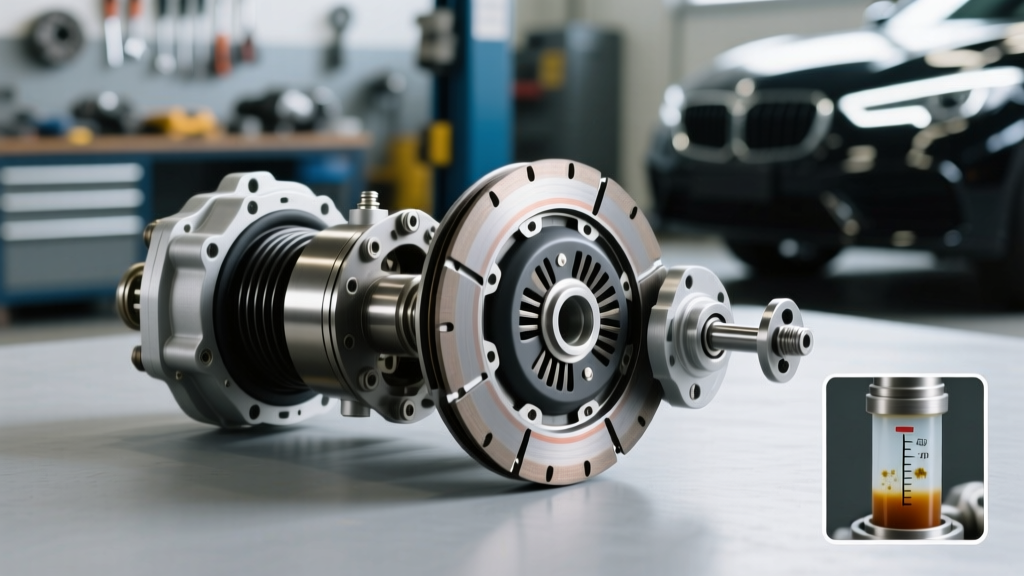
Conversely, a worn hydraulic concentric slave cylinder (CSC) or a degraded clutch fork pivot ball can cause the throw-out bearing (TOB) to lightly tap against the diaphragm spring fingers of the pressure plate. At idle, engine harmonic vibrations can cause the worn hydraulic components to rattle or 'click' rhythmically. Furthermore, a cavitating hydraulic master cylinder can produce a rhythmic squeak or click near the firewall that perfectly mimics the cadence of an AC compressor clutch engaging.
Step 1: Isolating the HVAC System
Before tearing into the bellhousing or bleeding the hydraulic lines, you must rule out the accessory drive system. This takes less than two minutes and requires zero tools.
- Disable the HVAC: Turn the cabin climate control completely off. Ensure the defroster is also off (as many vehicles automatically engage the AC compressor in defrost mode to dehumidify the cabin).
- Listen at the Firewall: If the rhythmic clicking stops immediately, your issue is indeed an AC low-charge condition or a failing compressor coil. You will need to hook up a manifold gauge set to check static and dynamic pressures.
- The Pedal Test: If the noise persists with the AC off, press the clutch pedal exactly one inch. If the pitch of the noise changes, or the clicking stops entirely when pedal pressure is applied, you have confirmed a hydraulic clutch system failure. The pedal pressure is loading the worn pivot ball or taking up the slack in a failing CSC.
Step 2: Deep Dive into Hydraulic Clutch System Diagnosis
Once the AC system is ruled out, we transition to a comprehensive hydraulic clutch system diagnosis. Modern manual transmissions utilize a sealed hydraulic circuit consisting of a Clutch Master Cylinder (CMC), a hydraulic line, and a Concentric Slave Cylinder (CSC) or external slave acting on a fork.
Evaluating the Clutch Master Cylinder (CMC)
The CMC is mounted on the firewall and translates pedal force into hydraulic pressure. A common failure mode in vehicles like the C5-C7 Corvette or late-model Mustangs is internal seal bypass.
- Symptom: The clutch pedal slowly sinks to the floor when held down at a stoplight, or engagement point 'creeps' higher over the course of a drive.
- Preventive Check: Inspect the CMC pushrod for excessive free-play. OEM spec typically dictates 0.5mm to 1.0mm of free-play before the piston engages. Too much free-play causes incomplete disengagement; zero free-play traps fluid and burns out the TOB.
Concentric Slave Cylinder (CSC) Wear and Failure
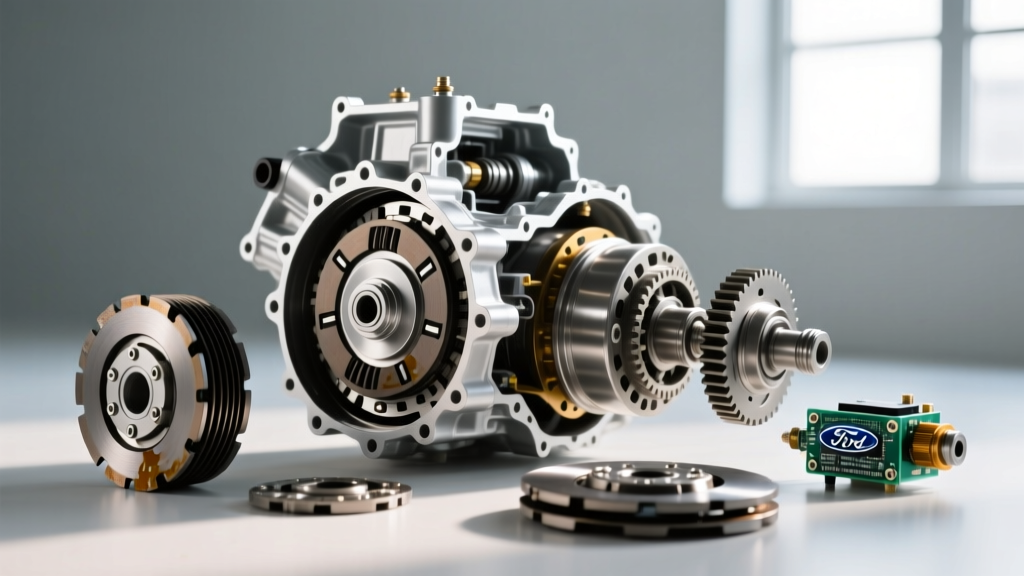
OEMs like FTE Automotive and LuK manufacture the vast majority of CSCs. These units live inside the bellhousing, bathed in clutch dust and extreme heat. The internal PTFE seals degrade over time, especially when subjected to the hygroscopic nature of neglected brake fluid.
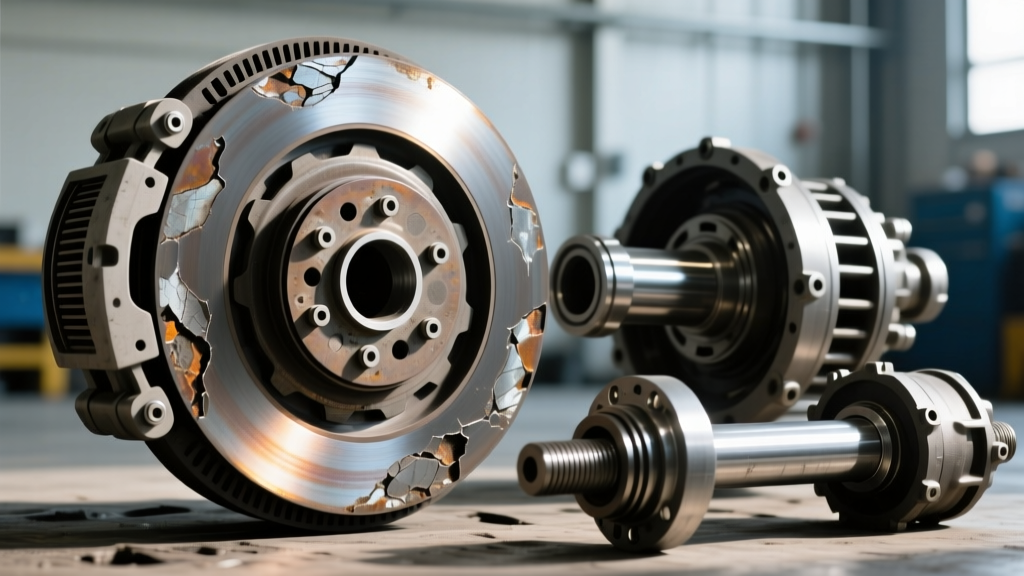
According to FTE Automotive's OEM hydraulic specifications, a CSC should operate smoothly without scoring the transmission input shaft sleeve. If you remove the inspection cover and see deep grooves on the aluminum transmission snout or black, gritty sludge around the fork, the CSC seals have failed, allowing fluid to mix with clutch friction material.
Step 3: Fluid Dynamics and Preventive Maintenance
The most overlooked aspect of manual transmission longevity is hydraulic fluid maintenance. Most OEMs specify DOT 3 or DOT 4 brake fluid for the clutch circuit. Because these fluids are hygroscopic (they absorb moisture from the atmosphere through microscopic pores in the rubber hoses and reservoir cap), the boiling point drops drastically over time. This leads to vapor lock, spongy pedals, and internal corrosion of the CMC and CSC bores.
The MT-82 Bleeding Challenge
If you are maintaining a Ford Mustang equipped with the MT-82 transmission, you must be aware of its notorious difficulty to bleed. The hydraulic line routing creates natural air traps. According to Tremec's service guidelines and Ford TSBs, standard gravity bleeding is insufficient. You must use a pressure bleeder set to 15-20 PSI, combined with the 'zip-tie method' (strapping the clutch pedal to the steering wheel overnight) to keep the CMC internal bypass port open, allowing trapped micro-bubbles to escape into the reservoir.
Preventive Maintenance Specifications & Cost Matrix
Use the following data table to guide your preventive maintenance schedule and budget for hydraulic clutch system diagnosis and repair. Prices reflect average 2026 market rates for OEM and high-quality aftermarket components.
| Component / Service | Preventive Interval | Specification / Torque | Est. Cost (Parts/Labor) |
|---|---|---|---|
| Hydraulic Fluid Flush (DOT 4) | Every 2 Years / 30k Miles | Castrol SRF or Motul DOT 4 | $40 - $80 (DIY/Shop) |
| CMC Pushrod Adjustment | During every fluid flush | 0.5mm - 1.0mm Free-play | $0 (DIY Adjustment) |
| Banjo Bolt / Line Torque | Upon any line removal | 15 - 20 Nm (11 - 15 lb-ft) | N/A |
| CMC Replacement (e.g., FTE / LuK) | Upon internal bypass leak | Mounting nuts: 20 Nm (15 lb-ft) | $90 - $180 / $150 |
| CSC Replacement (Requires Trans Removal) | Upon seal failure or TOB wear | Bellhousing bolts: 50 - 70 Nm | $120 - $250 / $800 - $1,400 |
Advanced Diagnostic Edge Cases
Sometimes, the hydraulic clutch system diagnosis reveals issues that are not strictly hydraulic, but rather mechanical failures exacerbated by hydraulic pressure.
The Worn Pivot Ball Syndrome
In external slave cylinder setups (common in Jeep Wranglers with the NSG370 or older GM trucks), the clutch fork rides on a hardened steel pivot ball. Over 80,000 miles, the ball can wear a crater into the fork pad. When the hydraulic slave pushes the fork, it slips off the worn lip, creating a violent 'pop' or click. AA1Car's diagnostic library frequently cites this mechanical wear as the root cause of clutch chatter that owners mistakenly attribute to hydraulic air entrapment. Preventive maintenance here requires dropping the transmission, inspecting the fork pad depth with calipers, and upgrading to an aftermarket adjustable pivot ball (such as those from B&M or McLeod) to restore proper geometry.
Aftermarket Clutch Upgrades and Hydraulic Mismatches
If you have recently installed an aftermarket twin-disc clutch (e.g., McLeod RST or Centerforce DYAD), the hydraulic system may struggle to disengage the heavier diaphragm springs. Upgrading to a larger bore CMC (e.g., moving from a 3/4" bore to a 7/8" bore) increases hydraulic volume but decreases pedal travel. If not properly matched, this causes the CSC to over-extend, popping the internal seals and dumping fluid into the bellhousing. Always verify the CSC stroke limit against the new pressure plate's finger height before finalizing the bellhousing.
Summary: Listen, Isolate, and Maintain
When your ac clutch turns on and off rapidly, or when a mysterious clicking haunts your engine bay, do not immediately assume the worst—or the most obvious. By systematically isolating the HVAC system and performing a rigorous hydraulic clutch system diagnosis, you can pinpoint the exact source of the noise. Implementing a strict 2-year DOT 4 fluid flush interval, verifying CMC pushrod free-play, and inspecting mechanical wear points will ensure your manual transmission shifts crisply and reliably for hundreds of thousands of miles. Preventive maintenance is always cheaper than a torn-down bellhousing.