Understanding Clutch Cargo Stress in Heavy-Duty Applications
When towing near maximum Gross Combined Weight Rating (GCWR), the rotational mass and thermal load placed on your drivetrain multiply exponentially. For fleet managers and heavy-duty drivers wondering where to watch clutch cargo degradation, the physical slipping of the friction disc is only the final symptom. The root cause frequently traces back to the hydraulic clutch system failing to maintain adequate clamping force under extreme thermal stress. In this 2026 preventive maintenance guide, we dissect the hydraulic diagnosis of manual transmissions—specifically heavy-duty units like the Tremec TR-4050 and ZF S6-650—to ensure your engagement system survives the haul.
The Hydraulic Link: Master and Slave Cylinder Dynamics
The hydraulic clutch system operates on Pascal’s law, translating pedal effort into hydraulic pressure. A standard 5/8-inch (0.625 inches) bore master cylinder pushes DOT 4 fluid through 3/16-inch hard lines to a Concentric Slave Cylinder (CSC) or external slave. When hauling heavy cargo, the engine's torque output demands maximum pressure plate clamping force. If the hydraulic fluid has absorbed moisture, or if the master cylinder's internal cup seals are bypassing fluid due to heat expansion, the clutch will prematurely disengage or slip under load.
Diagnostic Table: Hydraulic Symptoms Under Heavy Load
| Symptom Under Cargo Load | Probable Hydraulic Fault | Diagnostic Action |
|---|---|---|
| Pedal slowly sinks to the floor at stoplights while in gear | Master cylinder internal seal bypass (cup seal degradation) | Check fluid level; inspect firewall pushrod for dampness |
| Delayed engagement or grinding into 1st/Reverse when hot | Fluid vapor lock or boiling in the slave cylinder line | Test fluid moisture content; upgrade to high-temp DOT 5.1 |
| Spongy pedal feel that worsens with cabin heat | Micro-fractures in plastic OEM hydraulic lines | Inspect hard lines near exhaust manifolds; replace with braided steel |
| Incomplete disengagement only when hauling max payload | Firewall flex or worn pedal bushing altering stroke ratio | Measure firewall deflection; install billet firewall brace |
CSC vs. External Slave: Diagnosis by Transmission Type
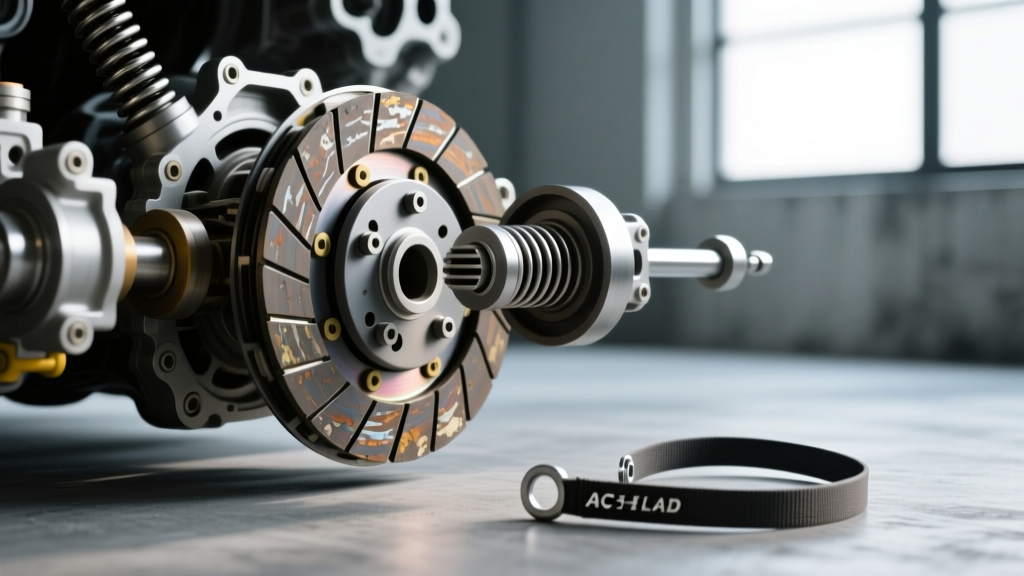
The architecture of your slave cylinder dictates your diagnostic approach. Older heavy-duty trucks, such as those equipped with the legendary New Venture NV4500 or the Aisin G56 (found in Dodge/Ram Cummins diesels), utilize an external slave cylinder mounted on the bellhousing. These are relatively easy to diagnose; you can visually inspect the throwout bearing fork for fluid leaks and measure the pushrod travel (typically requiring 0.450 to 0.500 inches of stroke for full disengagement).
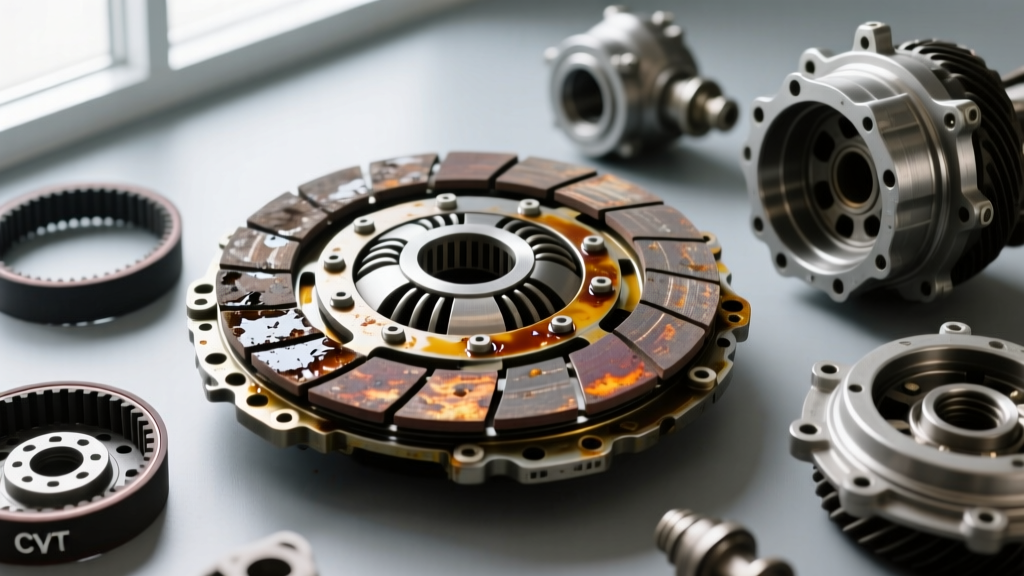
Conversely, modern performance and heavy-duty manuals rely on a Concentric Slave Cylinder (CSC) that wraps around the transmission input shaft. Because the CSC is trapped inside the bellhousing, visual diagnosis is impossible without dropping the transmission. Preventive maintenance for CSC systems requires strict adherence to fluid quality. A failing CSC will exhibit a pedal that slowly drops to the floor only after the vehicle has been driven and the bellhousing reaches operating temperature. If you experience this thermal-related pedal drop, do not ignore it; a CSC fluid leak will contaminate the clutch disc, turning a $150 hydraulic repair into a $1,500 drivetrain teardown.
Preventive Maintenance: Fluid Hygroscopy and Thermal Breakdown
Hydraulic clutch systems share the same fluid reservoir as the brake system in most modern trucks. Glycol-based fluids (DOT 3, DOT 4, DOT 5.1) are highly hygroscopic, meaning they absorb moisture from the atmosphere over time. According to the SAE J1703 standard, DOT 4 fluid must maintain a minimum wet boiling point of 311°F (155°C). However, in a heavy-duty truck pulling a 10,000 lb trailer up a 6% grade, the heat radiating from the transmission bellhousing and exhaust can easily push under-hood and tunnel temperatures past 250°F.
If your fluid has absorbed 3% water by volume, its boiling point plummets, leading to vapor lock. When the fluid boils, gas bubbles compress instead of transferring hydraulic force, resulting in a sudden loss of clutch engagement. Preventive maintenance dictates a complete hydraulic flush every 24 months or 30,000 miles for heavy-haul vehicles. We recommend high-performance fluids like Motul RBF 600 or ATE Type 200, which offer superior dry boiling points (up to 594°F / 312°C) and resist thermal fade.
Measuring Pedal Free-Play and Firewall Deflection
Before condemning the hydraulic cylinders, verify the mechanical linkage. Heavy clutch cargo stress requires heavy-duty pressure plates (like the South Bend Con-OFE or McLeod RST twins), which demand immense pedal effort. This effort transfers back into the firewall. Use a dial indicator or a simple tape measure to check firewall deflection. Have an assistant press the clutch pedal with 80 lbs of force. If the firewall bows inward by more than 1/8-inch, you are losing hydraulic stroke. The master cylinder pushrod must have exactly 1/16-inch to 1/8-inch of free-play before engaging the piston. Zero free-play will cause the master cylinder's internal bypass port to remain blocked, leading to catastrophic pressure buildup, line ruptures, and premature clutch wear.
Step-by-Step Hydraulic Bleeding and Torque Specifications
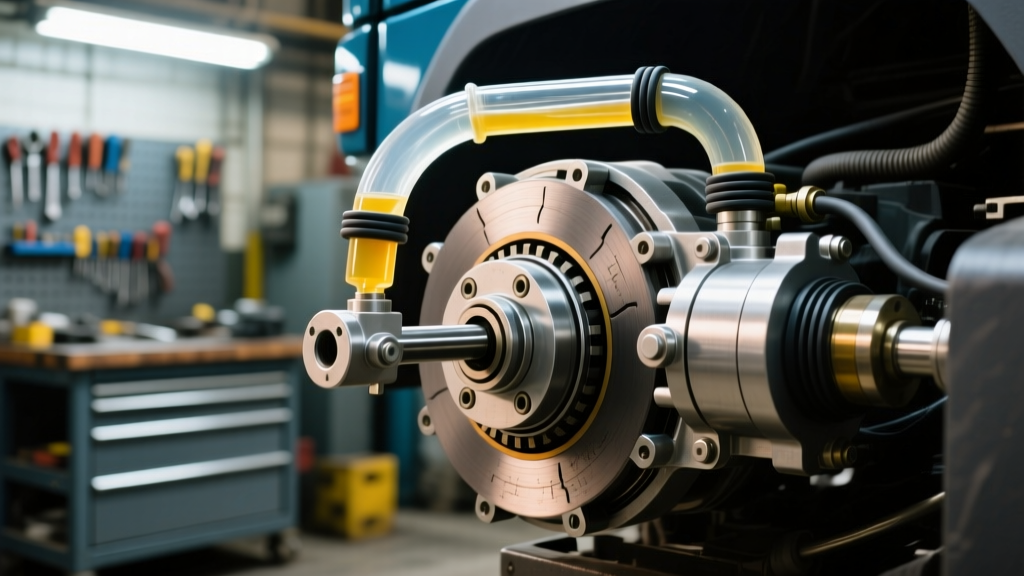
Proper bleeding is critical to removing entrained air that causes spongy pedal feel. For vehicles equipped with a CSC, gravity bleeding is rarely sufficient. You must use a pressure bleeder or perform a manual reverse-bleed.
- Preparation: Extract old fluid using a turkey baster or vacuum extractor. Fill with fresh DOT 4.
- Pressure Bleeding: Attach a pressure bleeder cap to the master cylinder reservoir. Apply exactly 15-20 PSI. Exceeding 30 PSI can rupture the CSC diaphragm.
- Slave Cylinder Bleed: Attach a clear vinyl tube to the 7mm or 8mm bleed screw on the slave cylinder. Open the valve and pump the pedal slowly. Torque Spec: Brass bleed screws are fragile; tighten to exactly 8-10 Nm (6-7 lb-ft) to prevent stripping.
- Line Fittings: When replacing the 3/16-inch inverted flare hydraulic lines, torque the line nuts to 12-15 lb-ft using a flare-nut wrench to avoid rounding.
- Master Cylinder Mounting: Secure the master cylinder to the firewall nuts to 15-20 Nm (11-15 lb-ft).
Pro-Tip for 2026 Diesel Trucks: If your truck features a dual-mass flywheel (DMF) and a CSC, never use a power bleeder at high pressures. The rapid fluid movement can over-extend the CSC piston, causing it to pop out of its bore and leak fluid directly onto the clutch friction disc.
Upgrading for Extreme Cargo Limits
If you routinely push your vehicle's GCWR, the OEM plastic hydraulic lines and cast-aluminum master cylinders may not suffice. Upgrading to a Wilwood 3/4-inch bore aluminum master cylinder increases hydraulic volume and pedal firmness, though it slightly increases pedal effort. Pairing this with Earl's Performance braided stainless steel clutch lines eliminates line expansion under high pressure. Furthermore, installing a billet aluminum firewall brace prevents the firewall from flexing inward under heavy clutch cargo stress, ensuring 100% of your pedal stroke is transferred to the master cylinder pushrod.
Final Diagnostics: Knowing When to Replace
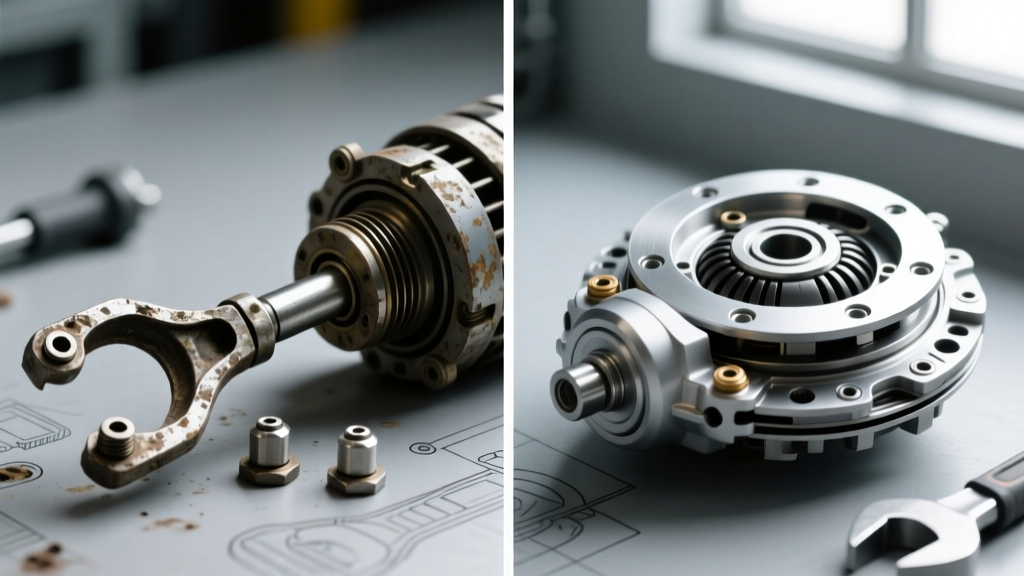
Hydraulic components have a finite lifespan. Master cylinders typically fail between 80,000 and 120,000 miles due to bore scoring. If you notice dark, metallic flakes in the reservoir, the master cylinder's internal anodizing has failed, and the abrasive particles are circulating toward the slave cylinder. Replace both as a matched set (OEM kits range from $180 to $350) and flush the hard lines with denatured alcohol before reassembly. By proactively managing your hydraulic system, you eliminate the guesswork of where to watch clutch cargo limits, ensuring your drivetrain is always ready for the heavy haul.