The Core Question: Where Is the Torque Converter Located in Hybrids?
As automotive technicians and enthusiasts navigate the increasingly complex drivetrain landscape of 2026, one of the most frequent questions we encounter at AutoGearNexus is: where is the torque converter located in a hybrid vehicle? The answer is not as straightforward as it is for traditional internal combustion engine (ICE) vehicles. In a standard automatic, the torque converter sits inside the bellhousing, bridging the engine crankshaft and the transmission input shaft. However, in hybrid vehicles, the location—and the very existence—of the torque converter depends entirely on the specific hybrid topology.
For diagnostics and troubleshooting, understanding this physical location is critical. Misdiagnosing a torque converter clutch (TCC) shudder as an electric motor inverter fault, or vice versa, can lead to thousands of dollars in unnecessary parts replacement. Below, we break down exactly where to find the torque converter in modern hybrid architectures, the symptoms of failure, and real-world service data for popular hybrid transmissions.
Hybrid Topologies and Torque Converter Placement
Not all hybrids use a fluid coupling. To accurately diagnose symptoms, you must first identify the vehicle's hybrid architecture. Here is a structural breakdown of where the torque converter is located based on the system design:
| Hybrid Architecture | Common Examples | Torque Converter Location & Status |
|---|---|---|
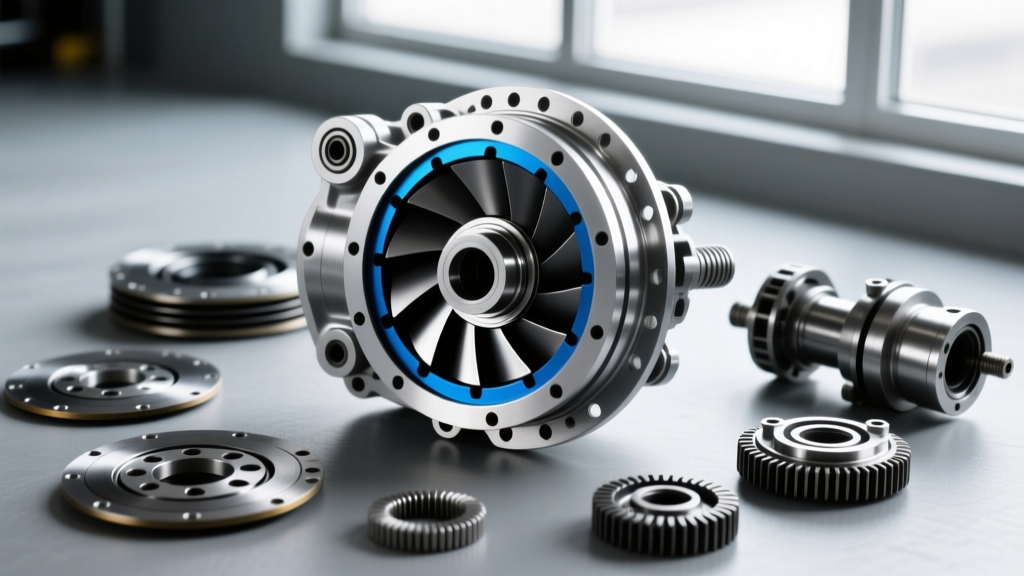
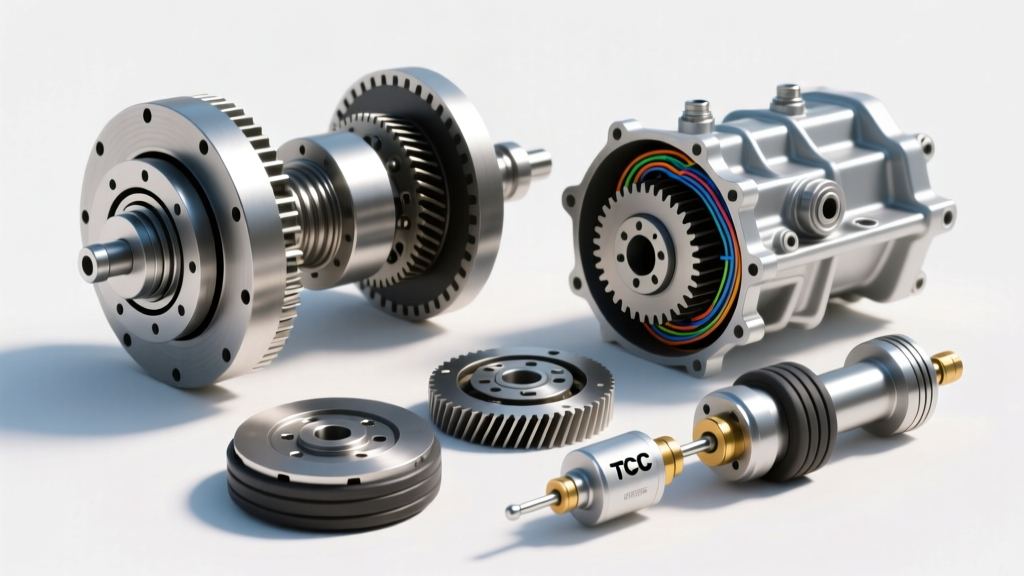
| P2 Parallel Hybrid | ZF 8HP (BMW, Audi), Hyundai/Kia 6F24, Ford 10R80 PowerBoost | Located in the bellhousing, bolted to the flexplate. The electric motor rotor is often integrated directly inside or immediately behind the TC housing. |
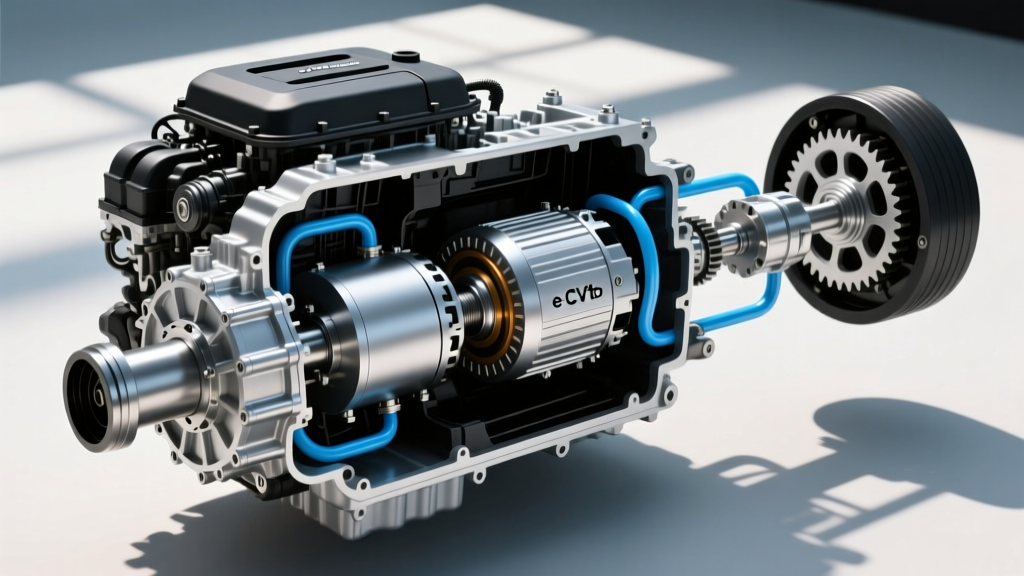
| eCVT (Power Split) | Toyota Prius, Lexus RXh, Ford Escape Hybrid (eCVT) | Does not exist. Uses a Power Split Device (planetary gearset) and Motor-Generators (MG1/MG2) to manage ICE and electric power. |
| P3 / P4 Axle Hybrids | Chrysler Pacifica Hybrid, Volvo Recharge (eAWD) | Front transaxle may use a traditional TC or a wet clutch pack. Rear P4 e-axles use single-speed reducers with no torque converter. |
Diagnosing Torque Converter Symptoms in P2 Hybrids
If your vehicle utilizes a P2 architecture (where the electric motor is sandwiched between the engine and the transmission), the torque converter is subjected to unique stressors. The instant torque delivery from the electric motor, combined with the rotational mass of the ICE, requires specialized torsional dampers inside the torque converter. When these components fail, the symptoms often mimic traditional TC issues but with hybrid-specific triggers.
1. Shudder During EV-to-ICE Transition
In a pure ICE vehicle, torque converter shudder usually occurs during light-throttle acceleration when the TCC attempts to apply. In a P2 hybrid, shudder frequently occurs during the EV-to-ICE handoff. As the vehicle transitions from electric-only mode to hybrid mode, the engine is cranked and synchronized via the electric motor and the torque converter. If the TC's internal damper springs are fatigued or the lockup clutch friction material is glazed, the vehicle will exhibit a violent 3Hz to 5Hz shudder precisely when the engine catches. This is often misdiagnosed as an engine misfire or a failing dual-mass flywheel.
2. Regenerative Braking Drag and Clunks
During regenerative braking, the electric motor reverses torque flow to charge the high-voltage battery. The torque converter must smoothly manage this reverse torque load. A failing TCC solenoid or a warped lockup piston inside the TC will cause a harsh 'clunk' or an erratic dragging sensation when lifting off the accelerator at speeds between 25 mph and 40 mph. Diagnostic trouble codes (DTCs) like P0741 (TCC Stuck Off) or P2784 (Input/Turbine Speed Sensor Correlation) are common, as the transmission control module (TCM) detects a mismatch between engine RPM and transmission input shaft speed.
3. High-Voltage Interlock and No-Start Conditions
Because the electric motor stator is often housed within the transmission bellhousing directly adjacent to the torque converter, a catastrophic internal TC failure (such as a shattered impeller or severe fluid leak into the motor housing) can trigger high-voltage (HV) isolation faults. If transmission fluid breaches the electric motor seals, the vehicle's battery management system (BMS) will detect a drop in isolation resistance, throwing codes like P0AA6 (Hybrid Battery Voltage System Isolation Fault) and disabling the high-voltage system entirely.
Real-World Troubleshooting: ZF 8HP and Hyundai 6F24
Let's look at concrete service data for two of the most common hybrid transmissions on the road today. According to technical service bulletins and ZF Aftermarket documentation, precision is mandatory when servicing these units.
ZF 8HP75H (Used in BMW X5 xDrive45e, Audi Q5 TFSI e)
The ZF 8-speed hybrid variant integrates a 100kW electric motor into the transmission housing. The torque converter is a specialized unit featuring a multi-plate wet lockup clutch and a centrifugal pendulum absorber to cancel out ICE vibrations.
- Fluid Requirement: ZF LifeguardHybrid 8 (Teal/Green color). Warning: Do not use standard amber Lifeguard 8; it lacks the necessary dielectric properties for the integrated motor environment.
- TC to Flexplate Torque Spec: M8 nuts torqued to 25 Nm (18 lb-ft).
- Bellhousing to Engine Block: M10 bolts torqued to 65 Nm (48 lb-ft).
- Common Failure: The mechatronic unit sleeve (Part # 1087.298.369) degrades over time, allowing fluid to cross-contaminate, which leads to erratic TCC apply pressures and shudder.
Hyundai/Kia 6F24 (Used in Sonata Hybrid, Optima Hybrid)
Hyundai utilizes a P2 architecture where the electric motor replaces the traditional torque converter's stator, and a specialized engine disconnect clutch (EDC) is used to separate the ICE from the drivetrain.
- Fluid Requirement: Hyundai SP-IV RR (Reduced Viscosity).
- Fluid Capacity: Approximately 7.1 Liters (7.5 Quarts) for a dry fill, but a drain-and-fill yields roughly 3.5 Liters.
- Common Failure: The Engine Disconnect Clutch (EDC) acts similarly to a TCC. Wear on the EDC friction plates causes slipping during highway cruising, triggering P0741 or P0730 (Incorrect Gear Ratio). Replacing the ECD requires removing the entire transaxle and separating the hybrid motor assembly.
Expert Diagnostic Tip: When diagnosing hybrid drivetrain shudder, always use a bi-directional scan tool to command the TCC/EDC solenoid duty cycle manually while monitoring input and output shaft speeds. If you can replicate the shudder by forcing the clutch to slip at 50% duty cycle, the fault is mechanical (friction material or damper). If the shudder only occurs when the ECU commands the transition, suspect a faulty solenoid valve body or degraded hybrid fluid dielectric properties.
High-Voltage Safety and Replacement Economics
Accessing the torque converter in a P2 hybrid is significantly more labor-intensive than in a conventional vehicle. Because the electric motor is integrated into the bellhousing, technicians must follow strict high-voltage safety protocols. This includes wearing Class 0 insulated gloves, pulling the HV service disconnect plug, and waiting a minimum of 10 to 15 minutes for the inverter capacitors to discharge before unbolting the transmission from the engine block.
As of 2026, the cost to replace a torque converter or integrated EDC assembly in a hybrid vehicle reflects this complexity. While a standard ICE torque converter replacement might cost between $1,200 and $1,800, a hybrid P2 torque converter and motor-assembly service typically ranges from $2,800 to $4,500. This accounts for the specialized hybrid transmission fluid, HV safety certification requirements for the technician, and the extended labor time required to safely support and lower the heavy, motor-integrated transaxle.
For further reading on hybrid drivetrain diagnostics and SAE standards for P2 architectures, refer to the SAE International Technical Papers database, which provides extensive engineering teardowns of modern hybrid coupling mechanisms. Understanding exactly where the torque converter is located—and how it interacts with the electric motor—is the first step toward accurate, cost-effective hybrid transmission repair.