The Drivetrain Divide: Automotive Hydraulics vs. Powersports
As we navigate the automotive repair landscape in 2026, transmission specialists and DIY enthusiasts frequently cross paths with powersports mechanics. While the fundamental physics of transferring engine power to the ground remain constant, the execution varies wildly. Today, we are tackling a highly specific diagnostic subtopic—automotive torque converter clutch (TCC) solenoid problems—while also addressing a common point of confusion for cross-discipline mechanics: the torque converter vs clutch go kart drivetrain debate. Understanding the profound engineering differences between a pulse-width-modulated hydraulic lockup clutch and a mechanical centrifugal powersports system is crucial for accurate diagnosis, repair, and mechanical empathy.
Automotive Torque Converter Clutch (TCC) Solenoid Problems
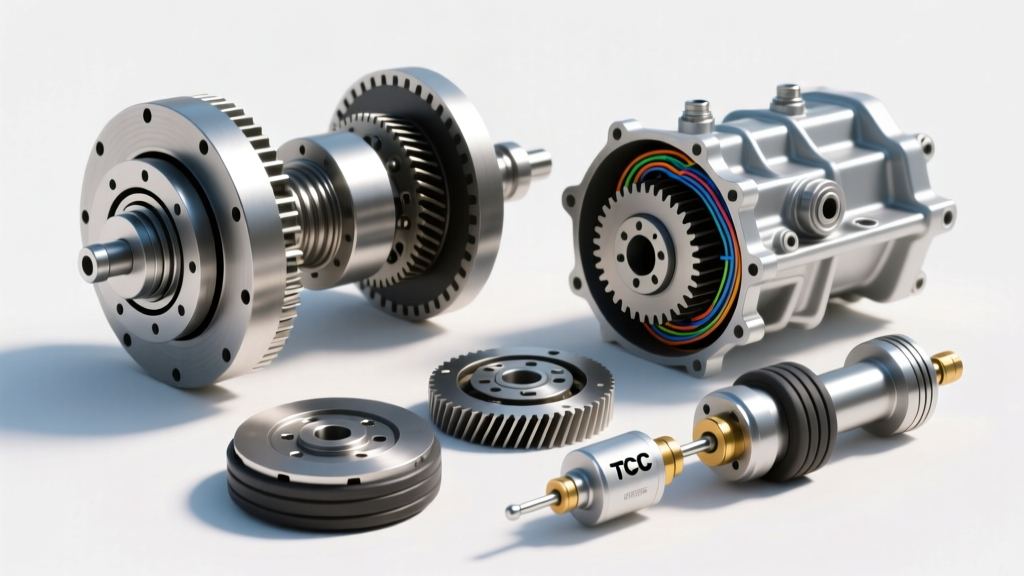
In modern automatic transmissions, the torque converter serves as a fluid coupling. However, to eliminate parasitic slip and improve fuel economy, a Torque Converter Clutch (TCC) physically locks the impeller to the turbine at cruising speeds. The TCC solenoid is the electro-hydraulic gatekeeper that commands this lockup. When it fails, the results range from annoying shudders to complete transmission limp-mode.
4L60E and 6L80 Failure Modes and Part Numbers
The GM 4L60E utilizes a Pulse Width Modulated (PWM) TCC solenoid to allow for a smooth, graduated lockup rather than a harsh, abrupt engagement. A common failure point is the solenoid coil breaking down under thermal stress, or the internal pintle sticking due to clutch material contamination in the fluid.
- 4L60E TCC Solenoid: AC Delco Part #24230298. Typical resistance specification is 10-14 ohms at 68°F (20°C). Replacement cost is roughly $35-$50 for the part.
- 6L80 TEHCM Integration: The 6L80 takes a radically different approach. The TCC solenoid is integrated directly into the Transmission Electro-Hydraulic Control Module (TEHCM). If the TCC solenoid fails, GM protocol dictates replacing the entire TEHCM assembly (Part #24252384), which requires a GDS2 flash to program the new module's pressure tap data. Expect to pay $450-$700 for the TEHCM alone.
ZF 8HP Mechatronic Wear and TCC Shudder
For European and modern domestic applications utilizing the ZF 8HP (8HP45, 8HP70, 8HP90), TCC shudder is rarely a solenoid electrical failure. Instead, it is typically a mechanical wear issue within the mechatronic valve body. The TCC regulator valve oscillates constantly to modulate slip. Over 80,000 miles, this oscillation wears out the aluminum bore, causing hydraulic cross-leaks and resulting in a violent TCC shudder. According to Sonnax transmission experts, installing a sleeved TCC regulator valve kit (such as the Zip Kit 108741-09K) restores hydraulic integrity without requiring a full mechatronic replacement.
Diagnostic Best Practices: Beyond the Code Scanner
When a vehicle arrives with codes like P0740 (TCC Circuit Malfunction), P0741 (TCC Stuck Off), or P0742 (TCC Stuck On), novice mechanics immediately throw parts at the vehicle. Expert diagnostics require a systematic approach:
- Baseline Electrical Testing: Disconnect the transmission harness. Measure the solenoid resistance at the case connector. An open circuit (OL) or a short to ground confirms internal electrical failure.
- Oscilloscope Duty Cycle Analysis: Because PWM solenoids operate on a variable duty cycle (typically 10% to 90% at 300-500 Hz), a simple multimeter cannot verify operational health. Back-probe the TCC control wire with an oscilloscope to verify the Transmission Control Module (TCM) is delivering a clean square wave pattern that shifts duty cycle in response to throttle input.
- Hydraulic Pressure Tap Testing: Install a 0-300 PSI pressure gauge into the TCC apply port. Command the TCC on via a bi-directional scanner. If the solenoid clicks but apply pressure does not rise to match line pressure (minus a small drop for the isolator circuit), you have a mechanical valve body issue, not a solenoid issue.
The Powersports Perspective: Torque Converter vs Clutch Go Kart Systems
Many technicians who work on automotive hydraulics also wrench on off-road vehicles, leading to the frequent search query regarding the torque converter vs clutch go kart setups. It is vital to understand that a go-kart 'torque converter' is fundamentally a misnomer; it is actually a Continuously Variable Transmission (CVT) belt drive, whereas an automotive torque converter is a hydrokinetic fluid coupling.
Go-Kart CVTs vs. Centrifugal Clutches
When builders debate the torque converter vs clutch go kart configuration, they are usually comparing a CVT system (like the Comet TAV2) to a standard centrifugal clutch (like a 10-tooth MAX-TORQ).
- The Go-Kart CVT ('Torque Converter'): Uses a variable-pitch drive pulley on the engine crankshaft and a spring-loaded driven pulley on the jackshaft, connected by an asymmetrical urethane belt (e.g., Comet 218353A1). As engine RPM increases, centrifugal weights force the drive pulley to close, pushing the belt higher and changing the gear ratio continuously. This provides massive low-end torque multiplication for off-road crawling.
- The Centrifugal Clutch: A much simpler, single-ratio device. Friction shoes lined with cork or Kevlar are held inward by tension springs. When the engine hits the engagement threshold (usually around 2,300 RPM), centrifugal force throws the shoes outward against the clutch drum, locking the engine to the chain. It offers zero torque multiplication; it is strictly an on/off coupling device.
Comparative Engineering Data
To visualize the vast engineering gap between these systems, review the comparative data below:
| Feature | Automotive TCC Lockup | Go-Kart CVT ('Torque Converter') | Go-Kart Centrifugal Clutch |
|---|---|---|---|
| Engagement Mechanism | Hydraulic pressure applying friction disc | Mechanical pulley ratio change via belt | Centrifugal force expanding friction shoes |
| Operating Medium | ATF (Automatic Transmission Fluid) | Urethane Drive Belt & Grease | Air-cooled Friction Material |
| Torque Multiplication | 1:1 (Lockup eliminates slip) | Up to 2.7:1 (Variable) | 1:1 (Direct lockup only) |
| Primary Failure Point | PWM Solenoid / Valve Body Bore | Asymmetric Belt Wear / Pulley Binding | Friction Shoe Glazing / Spring Fatigue |
| Maintenance Interval | Fluid flush every 60k-100k miles | Belt replacement every 50-100 hours | Shoe replacement when slipping |
Expert Repair Protocols and Torque Specifications
Whether you are rebuilding a 4L60E valve body or swapping a Predator 212 centrifugal clutch, adhering to precise torque specifications and assembly protocols is non-negotiable. The Automatic Transmission Rebuilders Association (ATRA) consistently highlights that improper valve body torque is a leading cause of post-repair TCC shudder.
Automotive Valve Body Torque Specs
- GM 4L60E Valve Body Bolts: Tighten in the specified sequence to 8-11 Nm (71-97 lb-in). Over-torquing will distort the aluminum separator plate, causing cross-leaks that mimic a failed TCC solenoid.
- GM 6L80 TEHCM Mounting: Ensure the electrical connector pins are perfectly aligned before seating. Torque the TEHCM-to-case bolts to 10 Nm (89 lb-in).
- ZF 8HP Mechatronic: The plastic guide sleeves must be replaced every time the mechatronic is removed. Torque the mechatronic retaining bolts to 8 Nm (71 lb-in) using a calibrated inch-pound torque wrench.
Go-Kart Drivetrain Assembly Tips
If you are servicing the powersports side of the shop, remember that CVT alignment is critical. When installing a Comet TAV2 system, the drive pulley and driven pulley must be perfectly parallel. Use a straight edge across the faces of both pulleys. Furthermore, the driver clutch on a standard centrifugal setup requires a precise air gap (typically 0.015 to 0.020 inches) between the shoes and the drum when at rest. Failing to maintain this gap will result in premature engagement and severe clutch bell overheating.
Summary
Diagnosing torque converter clutch solenoid problems requires a deep understanding of electro-hydraulic circuits, PWM duty cycles, and precise valve body tolerances. Conversely, mastering the torque converter vs clutch go kart debate requires an appreciation for mechanical CVT geometry and centrifugal engagement thresholds. By respecting the unique engineering parameters of both automotive and powersports drivetrains, mechanics can deliver accurate, lasting repairs across the entire spectrum of motorized transport. For further reading on powersports CVT alignment, refer to the engineering guides provided by Comet Industries.