The Weak Link in High-Horsepower Drivetrains
When pushing a 4L60E, 6L80, or Powerglide transmission past the 500-horsepower threshold, the factory torque converter and flexplate rapidly become the most vulnerable components in your drivetrain. While enthusiasts often prioritize cylinder heads, camshafts, and turbo sizing, the mechanical interface between the engine's crankshaft and the transmission's input shaft is subjected to immense torsional shock. Upgrading your torque converter and flexplate is not merely a performance enhancement; it is a critical reliability measure to prevent catastrophic drivetrain failure.
In high-horsepower applications, the rotational mass and torque multiplication required to launch a heavy vehicle generate extreme shear forces. If the components are mismatched or rely on OEM metallurgy, the results are often devastating. Understanding the symptoms of an inadequate setup and knowing how to properly spec an aftermarket system is essential for any serious performance build.
Recognizing the Symptoms of Drivetrain Bottlenecks
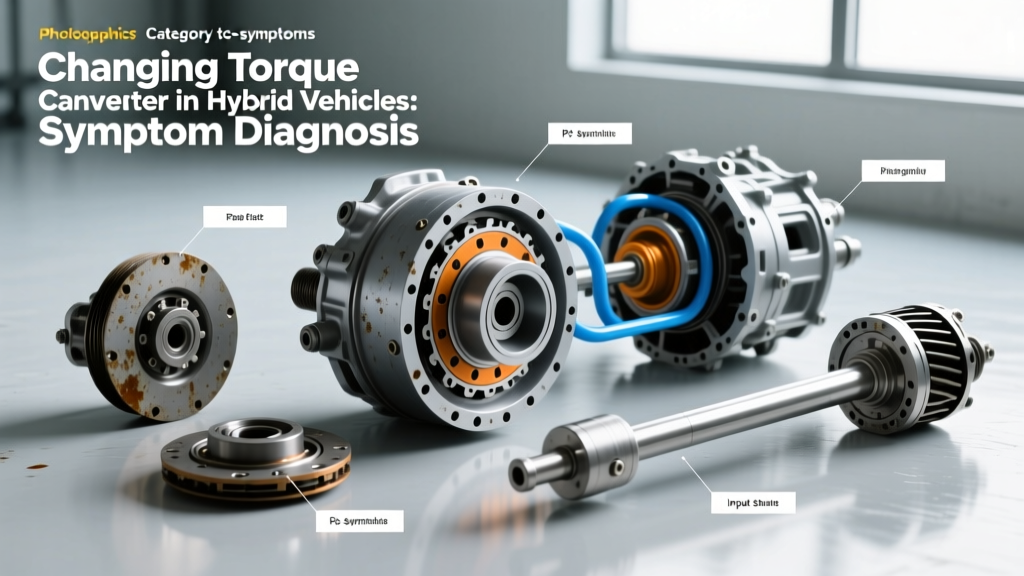
Before a complete mechanical failure occurs, a stressed stock torque converter and flexplate combination will exhibit several warning signs. Identifying these symptoms early can save you from destroying your transmission pump or engine block.
- Converter Ballooning: Under high line pressure and extreme torque, the stamped steel cover of an OEM torque converter can physically expand or 'balloon.' This pushes the converter forward, crushing the transmission pump gears and causing immediate hydraulic failure.
- Flexplate Cracking: Hairline fractures typically originate around the crankshaft bolt circle or the welds securing the starter ring gear. You may hear a rhythmic knocking sound at idle that changes pitch with RPM.
- Ring Gear Shearing: The starter ring gear can separate from the flexplate under high-starter-torque conditions (common with high-compression engines). This manifests as a violent metallic grinding noise during cranking and metallic debris in the bellhousing.
- Stall Speed Inconsistency: If your flash stall speed is significantly lower than the rated specification, the converter's internal fins may be deflecting under load, robbing you of acceleration and generating excessive fluid heat.
SFI-Certified Flexplates: Material, Thickness, and Balancing
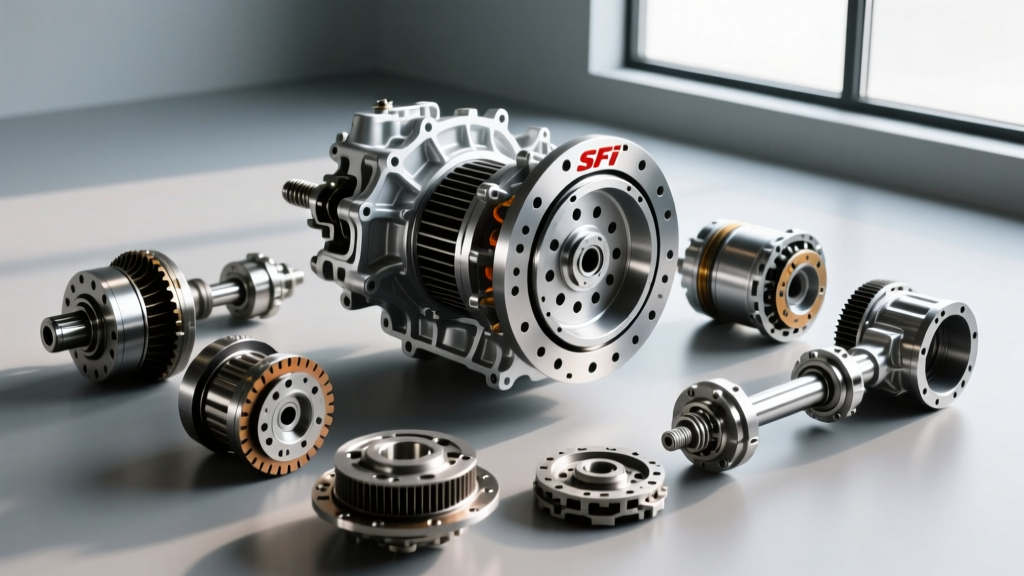
For any vehicle producing over 450 horsepower or utilizing a transbrake, an SFI-certified flexplate is mandatory. The SFI Foundation sets rigorous standards for rotational safety. While a standard OEM flexplate is roughly 0.250 inches thick and made from mild steel, performance flexplates from manufacturers like ATI Performance Products and TCI Automotive are CNC-machined from high-tensile chromoly steel, measuring between 0.375 and 0.500 inches thick.
Choosing the Right SFI Specification
The SFI 29.1 specification is designed for most drag racing and high-performance street applications, safely handling up to 800 horsepower. For extreme power levels, nitrous applications, or top fuel classes, the SFI 29.3 specification requires a reinforced hub and dual-ring gear welding. Furthermore, you must match the engine's balancing requirements. Small block Chevys typically require external balancing (e.g., 28.3 oz-in or 400ci external weights), whereas LS-based engines are internally balanced. Installing an incorrectly balanced flexplate will induce severe harmonic vibrations that can destroy crankshaft main bearings within miles.
Matching Stall Speed to Camshaft Dynamics
The torque converter acts as a fluid coupling and a torque multiplier. In performance applications, selecting the correct 'flash stall' speed is critical to keeping the engine in its optimal powerband upon launch. Flash stall is the maximum RPM the engine will reach when the throttle is pinned against the braking force of the drivetrain. It is heavily dependent on the engine's torque output and the camshaft's intake closing point.
| Camshaft Duration (0.050') | LSA (Lobe Separation Angle) | Target Flash Stall RPM | Ideal Converter Size |
|---|---|---|---|
| 220° - 230° | 112° - 114° | 2,400 - 2,800 RPM | 258mm / 10.0 Inch |
| 235° - 245° | 110° - 112° | 3,000 - 3,600 RPM | 245mm / 9.5 Inch |
| 250°+ | 106° - 108° | 4,000 - 5,500 RPM | 230mm / 8.0 Inch (Powerglide) |
A tighter LSA and higher duration camshaft produce less low-end manifold vacuum and cylinder pressure, requiring a smaller converter diameter to allow the engine to flash into its torque curve. Mismatching a large, low-stall converter with an aggressive cam will result in sluggish launches and severe transmission fluid overheating.
Fastener Science and Critical Torque Specifications
The hardware securing the flexplate to the crankshaft is subjected to cyclical shear loads that exceed the tensile limits of standard OEM bolts. You must upgrade to high-strength aftermarket fasteners, such as ARP's chromoly flexplate bolts (e.g., Part #200-2802 for LS applications or #245-0285 for Gen I SBCs).
Proper installation requires meticulous attention to detail. The crankshaft flange must be perfectly clean and free of oil. Apply a high-strength threadlocker, such as Loctite 271 (Red), to the threads to prevent backing out under harmonic vibration. The standard torque specification for ARP 8740 chromoly flexplate bolts is typically 75 to 85 ft-lbs, but always verify with the manufacturer's instruction sheet. Crucially, ensure that the bolts do not bottom out in the crankshaft blind holes; if they do, they will hydraulically lock or crack the crank flange, leading to catastrophic engine failure.
Pump Engagement and Converter-to-Flexplate Gap
One of the most common mistakes during the installation of a performance torque converter and flexplate is improper gap measurement. The gap between the flexplate mounting pads and the converter's weld nuts must fall strictly between 1/8-inch and 3/16-inch (0.125' to 0.187').
The Dangers of Incorrect Gap
If the gap is less than 1/8-inch, the converter will be pulled forward when bolted to the flexplate. This pre-loads the converter hub against the transmission's internal pump gear. Upon initial startup, the pump gears will bind, shatter, and send metallic shrapnel throughout the transmission valve body and clutch packs. Conversely, if the gap exceeds 3/16-inch, the converter's pilot hub will not fully engage the crankshaft bore, and the drive lugs will barely mate with the transmission pump. Under high torque, this lack of engagement will shear the converter hub or strip the pump drive lugs.
To correct an excessive gap, use hardened steel spacer washers between the flexplate and the converter weld nuts. Never use standard hardware store washers, as they will compress and elongate under the immense clamping force, leading to fatigue failure.
Transmission-Specific Pump Drive Profiles
When selecting a torque converter, the pump drive profile must exactly match your specific transmission model. The 4L60E utilizes a simple flat-drive tang system that mates with the inner pump gear. The heavier-duty 4L80E uses a similar but larger flat-drive setup. However, modern transmissions like the 6L80 and 8L90 utilize a complex multi-lug pump drive system. Furthermore, older Powerglide and TH400 transmissions require specific spline counts on the converter hub to mate with the input shaft. Always verify the pilot diameter, hub engagement depth, and pump drive profile with the manufacturer's technical documentation before final assembly.
Conclusion: Engineering for Longevity
Upgrading your torque converter and flexplate is an exercise in precision engineering. By selecting an SFI-certified chromoly flexplate, matching the converter stall to your camshaft's torque curve, utilizing ARP fasteners with proper threadlocker, and rigorously verifying the 1/8-inch to 3/16-inch gap, you ensure that your engine's power is safely and efficiently transferred to the ground. Do not let a weak link compromise a high-dollar engine build; invest in the rotational assembly's foundation to achieve consistent, reliable performance at the track.