The Evolution of Drivetrain Diagnostics: From Legacy V8s to Electrified Transaxles
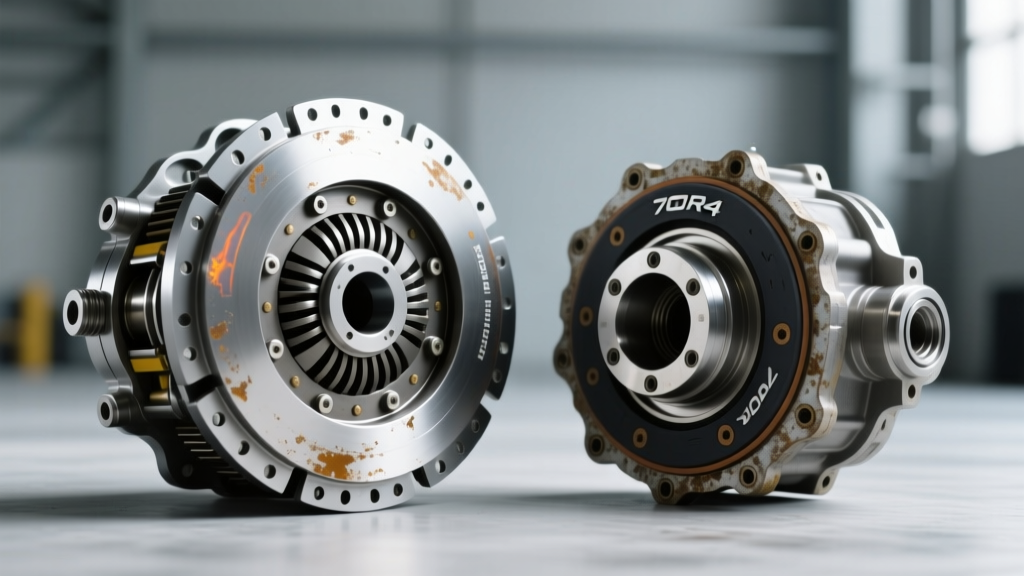
As the automotive industry solidifies its transition toward electrified powertrains in 2026, transmission technicians are facing a steep learning curve. The diagnostic paradigms that governed rear-wheel-drive, longitudinal automatics are being replaced by the complex, integrated systems of hybrid transaxles. However, understanding the mechanical failures of the past is crucial for contextualizing the electro-hydraulic symptoms of today. When veteran technicians think of catastrophic drivetrain vibrations, they often recall the infamous torque converter bolts 4L80E failures that plagued heavy-duty GM trucks. Today, we contrast those purely mechanical failures with the intricate torque converter and torsional damper symptoms found in modern hybrid vehicles, such as those utilizing the Toyota P810 or Ford HF45 architectures.
The 4L80E Paradigm: Mechanical Shear and Flexplate Fatigue
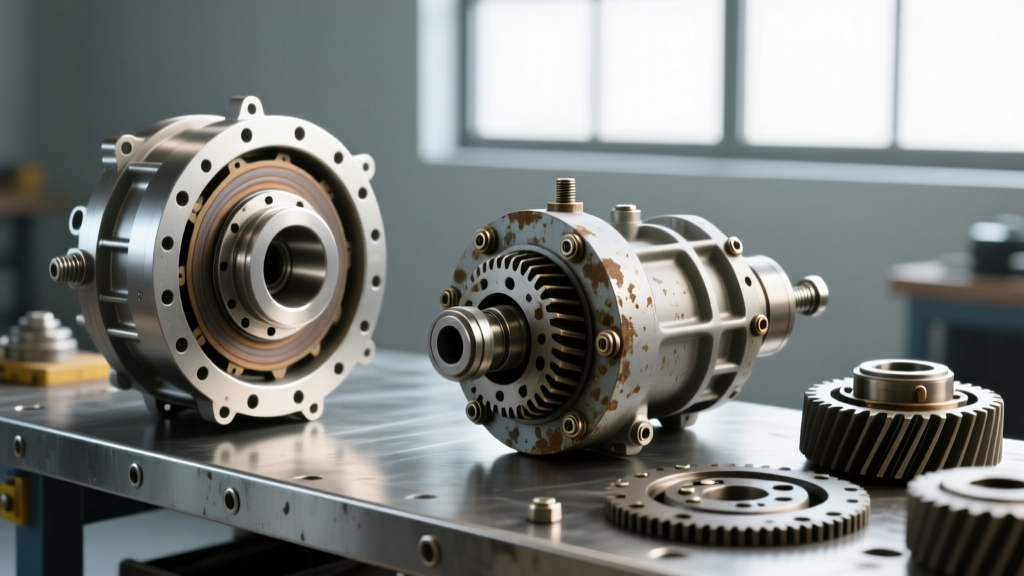
To understand where hybrid diagnostics diverge, we must first establish the baseline of legacy torque converter mounting. The GM 4L80E transmission relies on a traditional torque converter bolted directly to the engine flexplate. In high-torque applications (like the 6.6L Duramax or 8.1L Vortec V8), the rotational mass and torsional spikes place immense stress on the mounting hardware.
Classic 4L80E Bolt Failure Symptoms
- Idle Knocking: A rhythmic, metallic clatter at idle that changes pitch with RPM, caused by the converter hub wobbling against the flexplate.
- Vibration Under Load: Severe driveline shudder during 1-2 or 2-3 shifts as the torque converter clutch (TCC) applies, exacerbating the misalignment.
- Pan Debris: Inspection of the transmission pan reveals metallic shavings and, in severe cases, sheared bolt heads or cracked flexplate fragments.
The factory specification for these fasteners typically demands a torque of 35 lb-ft (46 Nm) paired with a high-strength threadlocker like Loctite 272. When technicians diagnose these units, the physical inspection of the torque converter bolts is binary: they are either intact and torqued to spec, or they have sheared due to improper seating, missing alignment dowels, or extreme harmonic resonance.
Hybrid Torque Converter Architecture: The Motor-Generator Damper
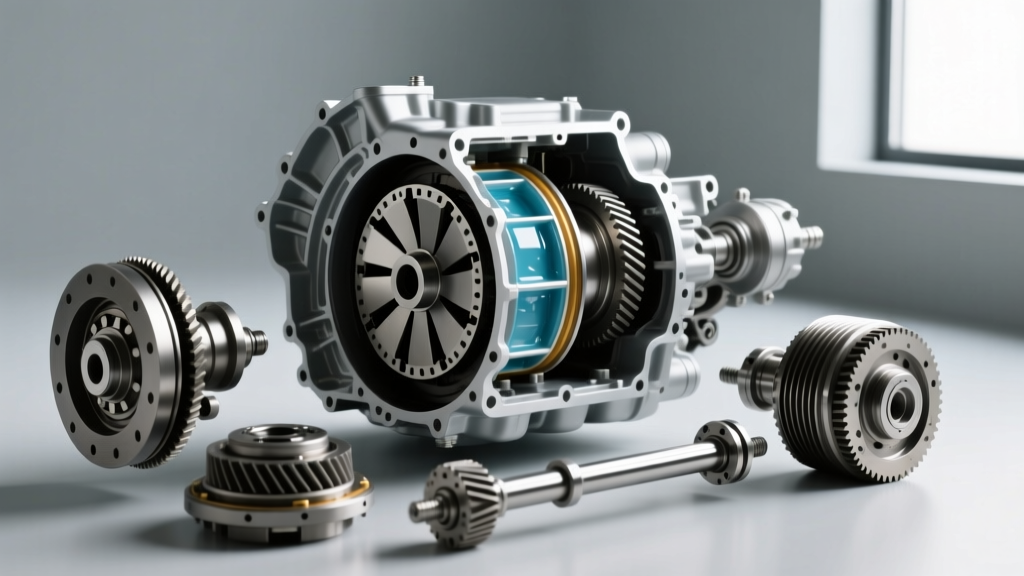
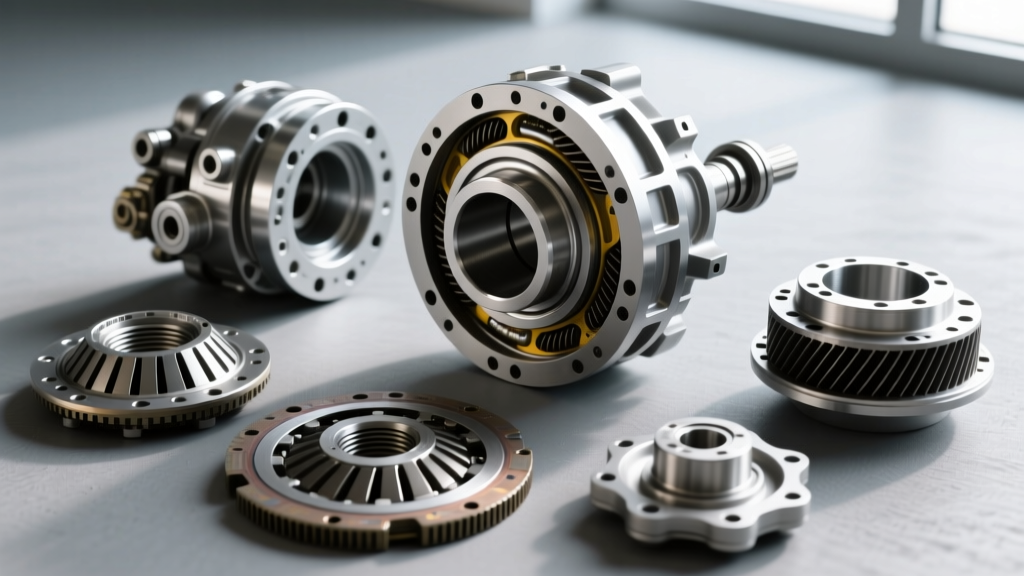
In modern hybrid vehicles, the traditional "torque converter" as a fluid coupling device is largely obsolete. Instead, hybrid transaxles utilize a Torsional Damper and Lockup Clutch Assembly positioned between the Internal Combustion Engine (ICE) and the primary Motor-Generator (MG1 or MG2). Because electric motors produce instant, massive torque (often exceeding 300 lb-ft at zero RPM), the damper must absorb severe torsional spikes during the EV-to-ICE transition.
According to research published in SAE International Technical Papers, hybrid damper assemblies utilize multi-stage coil springs and specialized friction materials to manage the acoustic and vibrational harshness (NVH) of engine start-stops. When this assembly fails, the symptoms mimic a failing torque converter but are deeply intertwined with the vehicle's high-voltage electrical system.
Common Hybrid TC & Damper Symptoms
- EV-to-ICE Transition Clunk: A harsh, metallic engagement shock when the gas engine fires up at 40+ mph, indicating worn multi-stage damper springs.
- High-Speed Shudder (TCC Slip): A rhythmic vibration between 45-65 mph. Unlike a slipping 4L80E TCC, hybrid shudder often triggers inverter thermal protection modes due to erratic MG load calculations.
- Ghost Codes: Diagnostics may pull codes like P0741 (Torque Converter Clutch Circuit Performance) alongside high-voltage codes like P0A0F (Engine Failed to Start) or P3125 (Inverter Over-Temperature), as the powertrain control module (PCM) misinterprets mechanical slip as electrical drag.
Diagnostic Showdown: Mechanical Shear vs. Hybrid Shudder
Diagnosing drivetrain shudder requires isolating mechanical wear from software and hydraulic faults. The table below contrasts the diagnostic approach between legacy 4L80E setups and modern hybrid transaxles.
| Symptom Profile | Legacy 4L80E Root Cause | Hybrid Transaxle Root Cause | Diagnostic Action Required |
|---|---|---|---|
| Low-RPM Idle Vibration | Sheared torque converter bolts; cracked flexplate | Degraded dual-mass torsional damper springs; MG resolver misalignment | 4L80E: Visual pan inspection. Hybrid: Oscilloscope test of MG resolver waveforms. |
| Shudder During TCC Apply | Worn TCC friction material; cross-leak in stator shaft | Contaminated ATF degrading lockup clutch modulation; software mapping fault | Monitor TCC Slip RPM via OBD-II PID. Check hybrid ATF dielectric breakdown. |
| Harsh Engine Start Shock | N/A (Engine is always running) | Frozen lockup clutch piston; failed hydraulic accumulator | Perform active test via bidirectional scan tool to pulse the Linear Solenoid (SLU). |
Step-by-Step Troubleshooting for Hybrid Drivetrain Shudder
When a 2026 hybrid vehicle presents with torque converter-style shudder, technicians must avoid the trap of immediately condemning the transaxle. Follow this structured diagnostic protocol, heavily referenced by industry experts at Transmission Digest:
- Verify Fluid Dielectric Integrity: Hybrid transaxles share fluid between the mechanical gears, the lockup clutch, and the high-voltage motor stators. If the ATF (e.g., Toyota WS or Ford MERCON ULV) has absorbed moisture or suffered thermal breakdown, its dielectric properties drop. This causes micro-arcing in the MG, which the PCM interprets as mechanical drag, resulting in erratic TCC apply. Perform a fluid dielectric test before any mechanical teardown.
- Monitor TCC Slip via Live Data: Connect an advanced bi-directional scanner. Command the TCC to lock at 55 mph in a steady-state cruise. Compare the Engine RPM PID against the Transmission Input Shaft Speed PID. A variance greater than 25 RPM indicates physical lockup clutch degradation or a failing SLU linear solenoid.
- Isolate the Torsional Damper: If the TCC is locking perfectly (0 RPM slip) but the driver still reports a violent shudder during engine start/stop events, the fault lies in the mechanical torsional damper. The multi-stage springs inside the damper hub fatigue over 100,000+ miles, losing their ability to dampen the ICE's initial combustion harmonics.
- Inspect the MG Resolver: Use a digital storage oscilloscope (DSO) to back-probe the Motor-Generator resolver sensors. A distorted sine wave indicates that the rotor is physically wobbling, often a secondary symptom of a failed damper bearing allowing the ICE crankshaft to misalign with the transaxle input.
Cost Analysis: 4L80E Bolt Repair vs. Hybrid Damper Replacement
The financial impact of these repairs highlights the complexity shift in modern drivetrains. For a 4L80E, replacing sheared torque converter bolts and a damaged flexplate (e.g., GM Part #12563532 or aftermarket TCI #399375) is a labor-intensive but mechanically straightforward job. The parts cost is under $150, with labor ranging from 4 to 6 hours for transmission removal, totaling roughly $600 to $1,100.
Conversely, replacing a failed torsional damper and lockup clutch assembly in a hybrid transaxle (such as Toyota Part #13020-21040 for the P810 generation) requires not only transaxle extraction but also high-voltage safety lockout procedures, MG stator disconnects, and specialized inverter recalibration. The damper assembly alone can cost between $800 and $1,400. With 8 to 12 hours of specialized labor, total repair costs frequently range from $2,800 to $4,500.
Conclusion: Adapting to the Electrified Drivetrain
The leap from diagnosing sheared torque converter bolts on a 4L80E to troubleshooting high-voltage torsional dampers in a hybrid transaxle represents the most significant skill shift for transmission technicians in the 21st century. While the legacy V8 trucks relied on brute-force mechanical fastening and simple fluid dynamics, today's hybrids demand a synthesis of hydraulic pressure testing, high-voltage safety protocols, and oscilloscope diagnostics. By understanding the mechanical roots of drivetrain vibration, technicians can more accurately isolate the complex, multi-layered faults inherent in modern hybrid torque converter systems. For ongoing technical updates and valve body schematics, technicians should regularly consult resources like Sonnax Tech Resources to stay ahead of the rapidly evolving 2026 drivetrain landscape.