The evolution of automatic transmissions has fundamentally altered how we diagnose drivetrain NVH (Noise, Vibration, and Harshness) and torque transfer anomalies. For veteran transmission specialists, the foundational benchmark for torque converter clutch (TCC) troubleshooting was often the GM 700R4. Enthusiasts and fleet operators frequently installed an aftermarket 700r4 torque converter lockup kit to bypass factory hydraulic restrictions, allowing manual or vacuum-operated lockup in second and third gears for towing. However, as the automotive landscape shifts heavily toward electrification, applying legacy hydraulic lockup logic to modern hybrid transaxles is a guaranteed path to misdiagnosis.
In 2026, hybrid vehicles do not use traditional fluid-coupling torque converters. Instead, they rely on complex torsional dampers, multi-plate wet clutches, and motor-generator (MG) integration to blend internal combustion engine (ICE) torque with electric propulsion. This article contrasts legacy hydraulic lockup diagnostics with modern hybrid "torque converter" symptom troubleshooting, providing a concrete framework for identifying damper fatigue, clutch drag, and transition shudder.
The Architectural Divide: Fluid Couplings vs. Hybrid Dampers
To understand hybrid drivetrain symptoms, we must first discard the fluid coupling paradigm. The 700R4 utilizes a hydrodynamic torque converter with a single-plate TCC applied via hydraulic pressure routed through the input shaft. When a Sonnax lockup control valve or an aftermarket 700r4 torque converter lockup kit fails, symptoms manifest as hydraulic slip, TCC solenoid chattering, or a complete failure to apply due to cross-leaks in the valve body.
Conversely, hybrid transaxles like the Toyota P810 (found in the RAV4 Hybrid) or the GM Voltec 2ET50 eliminate the fluid coupling entirely. The ICE connects to the transaxle input via a torsional damper assembly and a multi-plate wet clutch (or mechanical dog clutch) that physically locks the engine to the motor-generator rotor. There is no hydraulic "slip" phase in the traditional sense; torque blending is managed via micro-second MG stator torque buffering and precise clutch pack modulation.
The 700R4 Lockup Kit Mindset Trap
When a customer complains of a "torque converter shudder" in a hybrid, technicians trained on legacy systems often suspect a TCC apply solenoid, a degraded friction surface, or contaminated fluid. In the 700R4 era, installing a heavy-duty 700r4 torque converter lockup kit with a Kevlar-lined clutch disc solved most high-RPM shudder issues.
Attempting this logic on a hybrid is futile. Hybrid shudder rarely originates from a slipping friction surface. Instead, it is almost always a mechanical resonance issue caused by torsional spring fatigue within the damper assembly, or a software calibration fault in the MG torque-buffering algorithm. Misdiagnosing this as a fluid or clutch-pack issue leads to unnecessary transaxle teardowns and thousands of dollars in wasted warranty claims.
Top 3 Hybrid Torque Converter (Damper) Failure Symptoms
1. EV-to-ICE Transition Shudder (Torsional Spring Fatigue)
The Symptom: A distinct, low-frequency (15-30 Hz) shudder felt through the chassis precisely when the ICE fires and couples to the drivetrain at speeds between 25-45 mph.
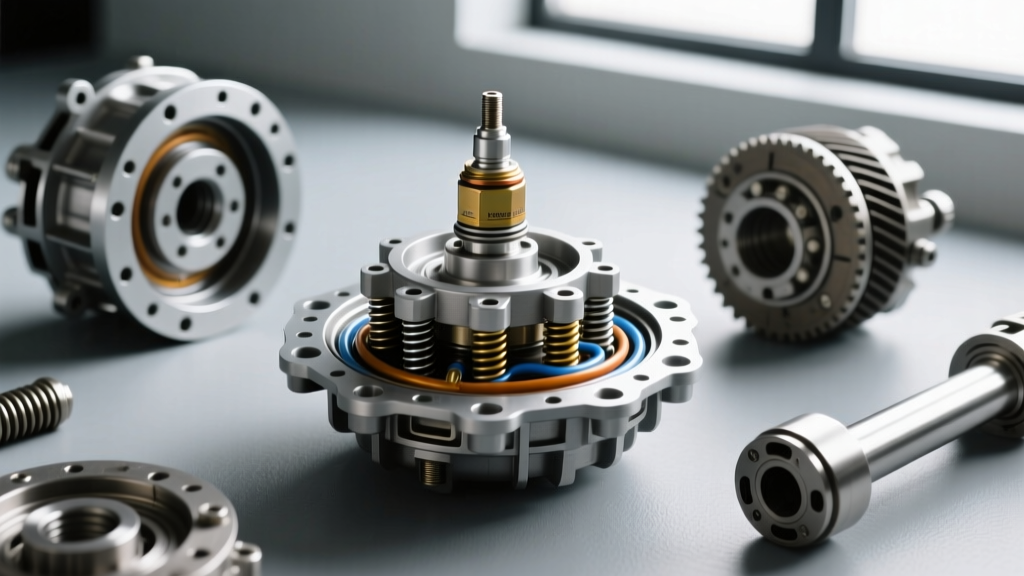
The Diagnosis: The torsional damper contains arc springs and friction plates designed to absorb the torsional spikes of the ICE firing pulses. Over 80,000 to 120,000 miles, these springs sag and the friction plates wear, altering the resonant frequency of the damper. When the hybrid control module (HCM) commands the wet clutch to engage, the MG can no longer buffer the torque spike, resulting in a mechanical shudder. SAE International technical papers frequently cite damper spring hysteresis loss as the primary cause of hybrid transition NVH.
2. Regenerative Braking Clunks (Wet Clutch Pack Drag)
The Symptom: A harsh "clunk" or binding sensation during the transition from regenerative braking to mechanical friction braking, or when the ICE shuts off at a stoplight.
The Diagnosis: Unlike a 700R4 where the TCC simply exhausts fluid to release, hybrid wet clutches rely on precise stroke control and return springs. If the transaxle fluid (e.g., Toyota WS or GM Dexron ULV) degrades and loses its shear stability, or if microscopic clutch debris clogs the apply orifice, the clutch pack will drag. This creates a physical tether between the ICE and the MGs during engine stop/start events, causing a violent chassis jerk.
3. High-Frequency NVH in EV Mode (Bearing & Hub Wear)
The Symptom: A high-pitched whine or metallic grating noise during pure EV driving, entirely independent of ICE operation.
The Diagnosis: Because the ICE is disconnected, the torsional damper hub and the MG rotor bearings endure different load vectors than in a traditional automatic. Pitting on the damper hub splines or wear on the MG1/MG2 stator support bearings will mimic a failing torque converter stator clutch. This requires acoustic chassis ears and frequency analysis to isolate from gear whine.
Diagnostic Data: Legacy Lockup vs. Hybrid Damper Faults
The following table contrasts the diagnostic approach between classic hydraulic lockup systems and modern hybrid architectures.
| Diagnostic Parameter | 700R4 / Legacy 4L60E | Modern Hybrid Transaxle (e.g., P810 / 2ET50) |
|---|---|---|
| Primary Lockup Mechanism | Hydraulic single-plate TCC (often modified via 700r4 torque converter lockup kit) | Multi-plate wet clutch + Torsional Damper + MG Torque Buffering |
| Shudder Root Cause | Glazed friction material, valve body cross-leak, PWM solenoid failure | Arc spring fatigue, damper friction plate wear, MG calibration drift |
| Release Mechanism | Hydraulic exhaust via lockup relay valve | Electromagnetic valve stroke control & mechanical return springs |
| Fluid Dependency | Dexron III/VI (Friction modifiers critical for slip control) | Toyota WS / Dexron ULV (Shear stability & thermal conductivity critical) |
| Diagnostic Tooling | Pressure gauges, vacuum gauge, multimeter (for manual toggle kits) | OEM Scan Tool (Techstream/GDS2), Oscilloscope, Acoustic Frequency Analyzer |
Real-World Service Data: Toyota P810 & GM Voltec 2ET50
When troubleshooting hybrid drivetrain NVH, precise adherence to OEM specifications is non-negotiable. The Automatic Transmission Rebuilders Association (ATRA) emphasizes that hybrid transaxles are highly sensitive to fluid levels and fastener torque, which directly impact damper alignment.
Toyota P810 Transaxle (RAV4 / Camry Hybrid)
- Component: Engine Damper Assembly (Input Torsional Damper)
- Fluid Specification: Toyota Genuine ATF WS (Part No. 08886-02305). Capacity: 3.5 Liters (Dry fill), approx. 2.8 Liters for drain and fill.
- Crucial Torque Spec: Transaxle to Engine Block (M12 bolts): 47 Nm (35 lb-ft). Damper to Flywheel (M10 bolts): 26 Nm (19 lb-ft). Warning: Overtorquing the damper bolts will distort the friction plate housing, causing immediate clutch drag and EV-to-ICE shudder.
- Replacement Cost (2026 Est.): Damper assembly parts ($450 - $700); Labor (Transaxle R&R, 7.5 hours @ $165/hr = $1,237). Total: ~$1,800 - $2,100.
GM Voltec 2ET50 (Chevrolet Volt / Bolt PHEV architectures)
- Component: Torsional Damper & Clutch Actuator Assembly
- Fluid Specification: DEXRON ULV (Ultra Low Viscosity). Using standard ATF will cause immediate clutch apply delays and harsh shifts due to the micro-valving in the hybrid control module.
- Diagnostic PID: Monitor TCC Slip Speed and MG1 Torque Command. If the ICE is commanded to start, and MG1 torque buffering drops to zero before the clutch apply pressure reaches 1200 kPa, a mechanical clunk will occur.
Live Data PID Troubleshooting Framework
Diagnosing a hybrid torque converter equivalent requires abandoning pressure gauges in favor of high-speed data logging. When a vehicle exhibits transition shudder, connect your OEM-level scan tool and log the following PIDs at 100ms intervals:
- Engine Speed (RPM) vs. MG2 Speed (RPM): In a healthy system, MG2 speed remains stable while the ICE cranks and couples. If Engine RPM overshoots MG2 speed by more than 150 RPM during coupling before settling, the torsional damper springs are bottoming out.
- Clutch Apply Current (mA): Monitor the solenoid current curve. A healthy wet clutch apply features a smooth, stepped ramp-up. A jagged current curve indicates a sticking control valve in the transaxle valve body, not a mechanical damper failure.
- MG1 Torque Buffering (Nm): The MG1 motor acts as a virtual shock absorber. If the HCM commands negative torque to buffer the ICE start, but the drivetrain still shudders, the mechanical damper has exceeded its hysteresis limits and must be replaced.
Conclusion
The days of solving every drivetrain shudder with a fluid exchange or a 700r4 torque converter lockup kit are behind us. While the 700R4 remains a masterpiece of hydraulic engineering and a favorite for restomod enthusiasts, modern hybrid transaxles require a fundamentally different diagnostic approach. By understanding the mechanical realities of torsional dampers, respecting ultra-low viscosity fluid requirements, and leveraging high-speed PID data, technicians can accurately isolate hybrid NVH faults. In 2026, mastering the intersection of mechanical resonance and electric torque buffering is the defining skill of the elite drivetrain diagnostician.