The Evolution of Hybrid Drivetrains in 2026
As the automotive landscape shifts aggressively toward electrification in 2026, hybrid electric vehicles (HEVs) and plug-in hybrids (PHEVs) have become the pragmatic choice for millions of drivers. However, this transition has fundamentally altered the mechanical architecture beneath the chassis. When evaluating the components of drivetrain assemblies in modern hybrids, technicians and owners must discard conventional internal combustion engine (ICE) paradigms. The integration of high-voltage motor-generators, planetary gearsets, and complex thermal management loops means that preventive maintenance is no longer just about changing oil; it is about preserving the delicate symbiosis between electrical and mechanical power delivery.
According to the U.S. Department of Energy's Alternative Fuels Data Center, hybrid drivetrains recapture kinetic energy and manage power-split duties that subject mechanical gears to bidirectional torque loads rarely seen in traditional vehicles. This guide provides a deep-dive, expert-level preventive maintenance protocol for the most critical hybrid drivetrain components on the road today.
Architecture of the Power-Split and P2 Drivetrains
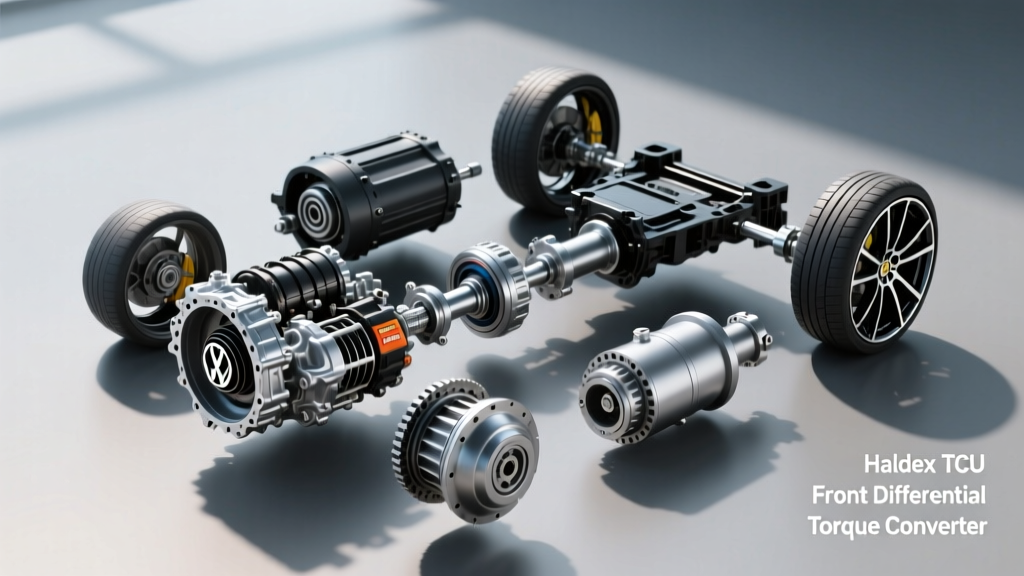
Before turning a single wrench, it is vital to understand the configuration of the components of drivetrain systems in your specific vehicle. The two dominant architectures in the current market are the Power-Split (e-CVT) and the P2 parallel hybrid setups.
Power-Split (e-CVT) Systems
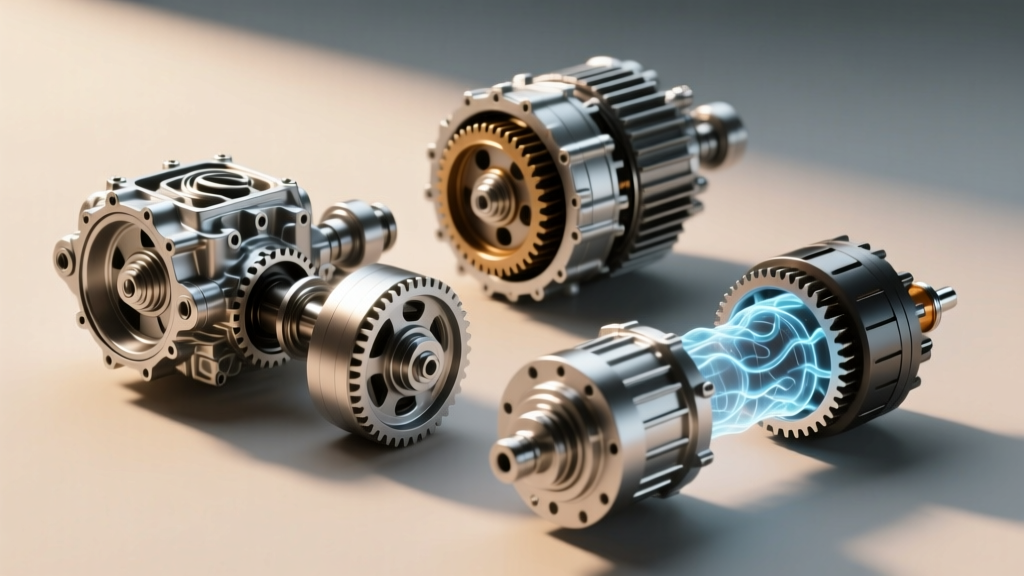
Pioneered by Toyota and adopted in various forms by Ford and Lexus, the power-split device uses a planetary gearset to seamlessly blend power from the ICE and Motor-Generator 2 (MG2), while Motor-Generator 1 (MG1) acts as a starter and electrical governor. There are no traditional belts, chains, or friction clutches in the primary gear reduction path. Wear is predominantly dictated by fluid shear and bearing fatigue.
P2 Parallel Hybrid Systems
Commonly found in European and American architectures (such as the ZF 8HP-based PHEV transmissions used in BMW and Stellantis vehicles), a P2 system sandwiches an electric motor between the engine and a traditional multi-speed automatic transmission. These rely on complex wet-clutch packs and high-pressure hydraulic solenoids, requiring rigorous fluid maintenance to prevent clutch glazing and solenoid clogging.
Fluid Dynamics: e-CVT and Reduction Gear Lubrication
The most critical preventive maintenance task for any hybrid is the drivetrain fluid exchange. Unlike engine oil, transmission fluid in an e-CVT must lubricate mechanical gears while simultaneously acting as a dielectric insulator for the internal motor-generator stators and an effective heat-transfer medium.
| Vehicle / Transaxle | Fluid Type & Part Number | Capacity | Drain Plug Torque | Service Interval |
|---|---|---|---|---|
| Toyota P810 / P910 e-CVT (Prius, RAV4 Prime) | Toyota Genuine ATF WS (08886-02305) | 3.6 Liters | 39 Nm (29 ft-lbs) | 60k mi (Severe) / 100k mi (Normal) |
| Ford HF45 e-CVT (Escape PHEV, Maverick Hybrid) | Motorcraft MERCON ULV (XT-12-QULV) | 5.5 Liters | 28 Nm (21 ft-lbs) | 60k mi (Severe) / 150k mi (Normal) |
| BMW ZF 8HP PHEV (X5 xDrive50e) | ZF LifeguardFluid 8 (or OEM equivalent) | ~8.5 Liters (Dry fill varies) | Pan bolts: 10 Nm | 60k mi (ZF Recommendation) |
The Temperature-Dependent Leveling Procedure
A common mistake in hybrid drivetrain maintenance is checking the fluid level cold. For the Ford HF45 transaxle, the MERCON ULV fluid expands significantly at operating temperatures. The Toyota Technical Information System (TIS) and Ford workshop manuals mandate that the fluid leveling plug be checked only when the transmission fluid temperature (TFT) is precisely between 85°C and 93°C (185°F - 199°F). Checking it cold will result in severe overfilling, leading to fluid aeration, foaming, and catastrophic dielectric breakdown inside the MG2 stator housing.
Thermal Management: Inverter and Stator Cooling Loops
While technically part of the high-voltage electrical system, the inverter and motor cooling loops are inextricably linked to drivetrain survival. The inverter converts DC battery power to AC power for the drivetrain motors. If the inverter overheats, the vehicle's computer will aggressively derate drivetrain power output to prevent silicon meltdown.
- Coolant Type: Most Japanese hybrids require a low-conductivity, phosphate-free coolant (e.g., Toyota Super Long Life Coolant - Pink). Using standard off-the-shelf green antifreeze can increase electrical conductivity, triggering isolation fault codes (DTC P0A0F or P0A1F).
- Electric Water Pump (EWP): The EWP (Part # G9020-47031 for many Toyota PHEVs) operates independently of engine RPM. During a 100,000-mile service, verify the EWP impeller is not degrading. A failing EWP will cause localized boiling inside the transaxle cooling jacket.
- Bleeding the System: Hybrids require specialized vacuum-filling tools to purge air from the inverter cooling plate. An air pocket trapped in the inverter cold plate will cause thermal throttling within 5 miles of highway driving.
"In 2026, we are seeing a spike in MG2 stator insulation failures directly traced back to owners using incorrect, high-conductivity aftermarket coolants in the transaxle cooling loop. Always verify the dielectric properties of the fluid before servicing a hybrid thermal loop."
— Master Hybrid Technician, ASE L3 Certified
High-Torque Axles and CV Joint Wear
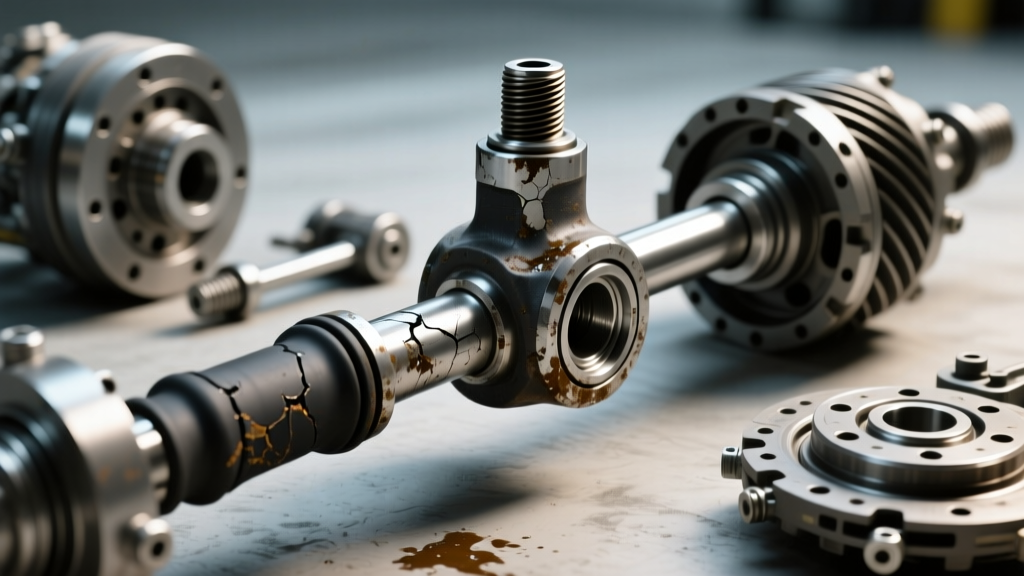
Electric motors deliver maximum torque at zero RPM. When a hybrid launches from a standstill, the instantaneous torque spike transmitted through the half-shafts and Constant Velocity (CV) joints far exceeds that of a comparable ICE-only vehicle. This puts immense shear stress on the CV joint grease and the axle boots.
Preventive Inspection Protocol
- Boot Integrity: Inspect inner and outer CV boots every 15,000 miles. Micro-tears allow moisture ingress, which rapidly degrades the molybdenum-based CV grease.
- Grease Specification: If repacking a CV joint, do not use standard lithium-complex grease. You must use a high-molybdenum CV grease (e.g., Honda Genuine CV Joint Grease or equivalent ISO-L-XBDIB0 spec) capable of withstanding high-shear, low-speed torque spikes.
- Axle Nut Torque: Hybrid axle nuts are typically torque-to-yield (TTY). If an axle is removed for seal replacement, the axle nut must be replaced. For example, the Toyota RAV4 Prime front axle nut requires a new TTY nut torqued to 120 Nm (89 ft-lbs) plus an additional 90-degree turn.
2026 Diagnostic & Cost Matrix for Drivetrain Components
When preventive maintenance is neglected, the financial penalty in hybrid vehicles is steep. Below is a real-world cost and diagnostic matrix based on current 2026 dealership and independent specialist pricing.
| Component / Failure Mode | Common DTC | Root Cause | Estimated Repair Cost (Parts & Labor) |
|---|---|---|---|
| MG2 Resolver Calibration Fault | P3125 / P0A1F | Sensor drift or fluid contamination | $150 - $350 (Software Recalibration) |
| e-CVT Planetary Gearset Wear | P0700 / Whining Noise | Fluid shear / missed 60k service | $3,800 - $5,500 (Remanufactured Transaxle) |
| Inverter Coolant Pump Failure | P0A81 / P26A7 | Impeller degradation / wiring corrosion | $400 - $750 |
| Engine Disconnect Clutch (P2) | P2784 / Shudder on EV-to-ICE transition | Clutch glazing from low fluid pressure | $2,200 - $3,500 (Valve body / Clutch pack) |
Expert Tips for Maximizing Drivetrain Longevity
To ensure the components of drivetrain systems in your hybrid reach the 200,000-mile mark without major intervention, adhere to these final best practices:
- Warm-Up Protocol: Avoid heavy regenerative braking (B-mode) during the first 10 minutes of driving in freezing temperatures. The transaxle fluid is viscous, and aggressive regen can cause localized cavitation and gear scoring.
- Software Updates: Ensure your vehicle's Hybrid Control Module (HCM) and Battery Energy Control Module (BECM) are flashed with the latest OEM calibration. Automakers frequently release updates that optimize clutch engagement pressures and thermal fan curves, directly extending drivetrain life.
- Listen to the Inverter: A healthy inverter emits a faint, high-pitched whine that changes pitch with vehicle speed. If you hear a rhythmic clicking or a sudden change in acoustic frequency, it often precedes a bearing failure in the motor-generator rotor assembly.
For standardized testing and operational parameters regarding hybrid powertrains, technicians frequently reference the SAE International J1711 guidelines, which outline the rigorous benchmarks these components must meet. By treating your hybrid's drivetrain not just as a transmission, but as a unified electro-mechanical power plant, you can avoid catastrophic failures and enjoy the seamless efficiency that modern hybrids provide.