The Hydraulic Ballet: Core Mechanics of Automatic Transmissions
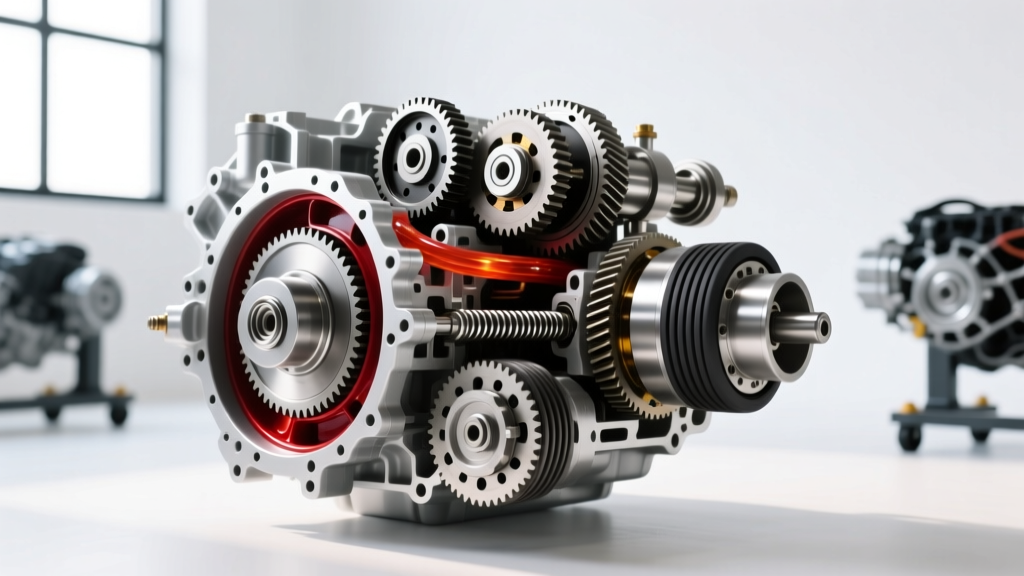
To truly grasp the importance of drivetrain maintenance, one must first understand the engineering marvel bolted to the back of your engine. An automatic transmission is not merely a collection of gears; it is a highly pressurized, computer-controlled hydraulic system designed to multiply torque and optimize engine efficiency across varying speeds. As of 2026, with the proliferation of complex 10-speed automatics and advanced continuously variable transmissions (CVTs), the tolerances inside these units are measured in microns.
Torque Converters and Planetary Gearsets
The journey of power begins at the torque converter, a fluid coupling device that replaces the mechanical clutch found in manual transmissions. Inside the converter housing, three primary components interact: the impeller (driven by the engine), the turbine (connected to the transmission input shaft), and the stator. The stator redirects the flow of automatic transmission fluid (ATF) to multiply torque during initial acceleration, providing the 'push' you feel when launching from a stop. Modern units feature a Torque Converter Clutch (TCC) that mechanically locks the impeller and turbine together at cruising speeds to eliminate parasitic fluid slippage and improve fuel economy.
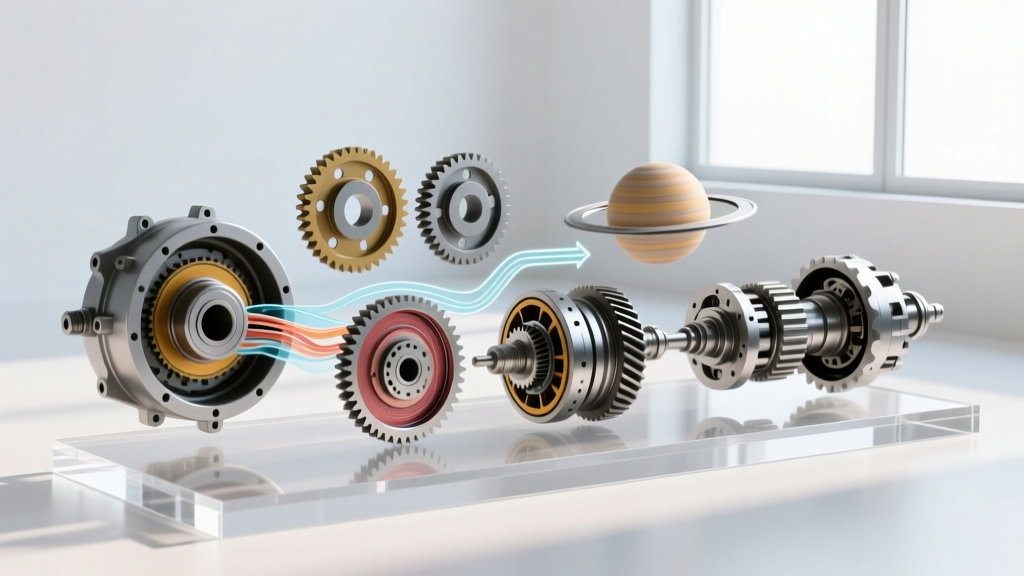
Once power enters the transmission case, it is routed through planetary gearsets. Unlike the sliding spur gears of a manual gearbox, an automatic utilizes a sun gear, planet carrier, and ring gear. By strategically holding or driving different components of this gearset using hydraulic clutch packs and bands, the transmission achieves multiple forward ratios and reverse without physically shifting gears out of mesh.
The Valve Body: Solenoids and Clutch Packs
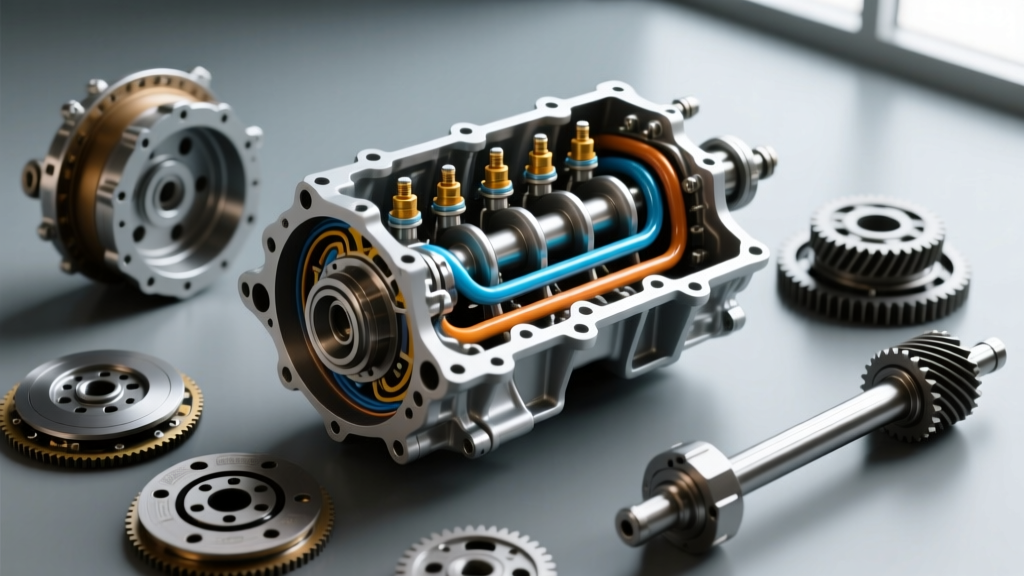
The 'brain' of the hydraulic system is the valve body, a labyrinth of fluid channels controlled by an array of electronic solenoids. When the Transmission Control Module (TCM) commands an upshift, it pulses specific solenoids to route high-pressure ATF into designated clutch packs. This fluid pressure compresses a stack of alternating friction and steel plates, locking them together to drive a specific planetary gear component. If the fluid loses its shear stability or friction modifiers degrade, these clutch packs will slip, generating immense heat and microscopic metallic debris.
Expert Insight: Heat is the ultimate enemy of automatic transmissions. For every 20°F increase in fluid temperature above the optimal 175°F-195°F range, the lifespan of the ATF is effectively cut in half. This thermal degradation is the primary catalyst for catastrophic valve body and clutch pack failures.
Demystifying Maintenance: What Is a Transmission Service on a Car?
If you have ever found yourself searching what is a transmission service on a car while sitting in a dealership waiting room, you are not alone. The automotive service industry is rife with conflicting advice, upsells, and terminology that confuses even seasoned enthusiasts. According to the Automatic Transmission Rebuilders Association (ATRA), a legitimate transmission service is vastly different from the notorious 'power flush' often pushed by quick-lube chains.
The True Definition of a Transmission Service
A proper transmission service involves the physical removal of the transmission oil pan, the draining of the fluid, and the replacement or cleaning of the internal filter or screen. This process allows a technician to inspect the pan magnets for abnormal metallic wear, clean out sludge, and refill the system with exact OEM-specified fluid. It is a surgical, measured procedure designed to preserve the hydraulic integrity of the unit.
Conversely, a 'power flush' uses an external machine to force new fluid through the cooler lines under pressure. While this exchanges nearly 100% of the fluid, it fails to replace the filter and can dislodge accumulated debris from the valve body, pushing it directly into sensitive solenoid screens and causing immediate shift solenoids to stick or fail.
The 'Lifetime Fluid' Myth vs. Reality
Many European and domestic manufacturers market their ATF as 'lifetime' fluid. However, 'lifetime' typically refers to the duration of the manufacturer's powertrain warranty (usually 60,000 to 100,000 miles), not the mechanical lifespan of the vehicle. For example, ZF Aftermarket, the manufacturer of the ubiquitous 8HP transmission used in BMW, Audi, and Stellantis vehicles, explicitly states in their technical bulletins that under 'severe driving conditions'—which includes stop-and-go traffic, towing, and extreme climates—the fluid and integrated plastic pan/filter assembly should be replaced between 60,000 and 75,000 miles.
OEM Service Specifications & Data Matrix
Precision is paramount when servicing modern drivetrains. Utilizing the incorrect fluid viscosity or over-torquing an aluminum oil pan can lead to immediate hydraulic failure or severe leaks. Below is a reference matrix for three of the most common automatic transmissions on the road today.
| Transmission Model | OEM Fluid Specification | Pan Drop Capacity (Approx.) | Pan Bolt Torque Spec | Filter / Gasket Type |
|---|---|---|---|---|
| GM 6L80 (6-Speed) | ACDelco Dexron VI | 6.0 - 7.0 Quarts | 12 Nm (106 lb-in) | Reusable rubber-coated steel gasket; deep plastic filter |
| ZF 8HP70 (8-Speed) | ZF LifeguardFluid 8 | 5.5 - 6.0 Liters | 10 Nm (88 lb-in) | Integrated plastic pan, filter, and sealing sleeve assembly |
| Ford 10R80 (10-Speed) | Motorcraft Mercon ULV | 5.0 - 5.5 Quarts | 11 Nm (97 lb-in) | Stamped steel pan with reusable molded rubber gasket |
Note: Torque specifications for transmission pans are almost universally measured in Newton-meters (Nm) or inch-pounds (lb-in), NOT foot-pounds (lb-ft). Applying 12 lb-ft to a GM 6L80 pan bolt will instantly snap the bolt head or strip the aluminum transmission case threads.
Expert Best Practices for Drivetrain Longevity
To maximize the lifespan of your automatic transmission, adhere to the following expert protocols when scheduling or performing maintenance:
- Demand a Pan-Drop Service: Always insist on a pan-drop and filter replacement over a machine flush, especially if the vehicle has surpassed 80,000 miles without prior service. This allows for vital visual inspection of the clutch material and metallic shavings on the pan magnets.
- Verify Fluid Temperature (TFT): Modern transmissions do not use a traditional dipstick. Fluid level must be checked via the transmission fill plug while the vehicle is running and leveled on a hoist. Crucially, the Transmission Fluid Temperature (TFT) must be read via an OBD2 bi-directional scan tool. For example, the GM 10L90 requires the fluid to be exactly between 86°F and 122°F (30°C-50°C) during the level-check procedure; checking it cold will result in severe under-filling and subsequent clutch burnout.
- Never Mix Fluid Chemistries: The friction modifiers in ATF are engineered for specific clutch materials. Using Dexron VI in a transmission requiring Ford's Mercon ULV (Ultra Low Viscosity) will alter the lock-up clutch apply rates, causing severe shudder and TCC slip codes.
- Replace the Mechatronic Sleeve: On ZF 8HP units, the electrical connector sleeve (Mechatronic sleeve) is notorious for leaking fluid onto the transmission casing. Best practice dictates replacing this $40 O-ring and plastic sleeve assembly every time the transmission pan is dropped.
Understanding how automatic transmissions work demystifies the maintenance process. By recognizing the intricate relationship between hydraulic pressure, friction modifiers, and thermal management, you can confidently navigate the service counter, reject unnecessary flushes, and ensure your drivetrain operates flawlessly for hundreds of thousands of miles.