The Mechatronic Paradigm: Honda E-Clutch Architecture
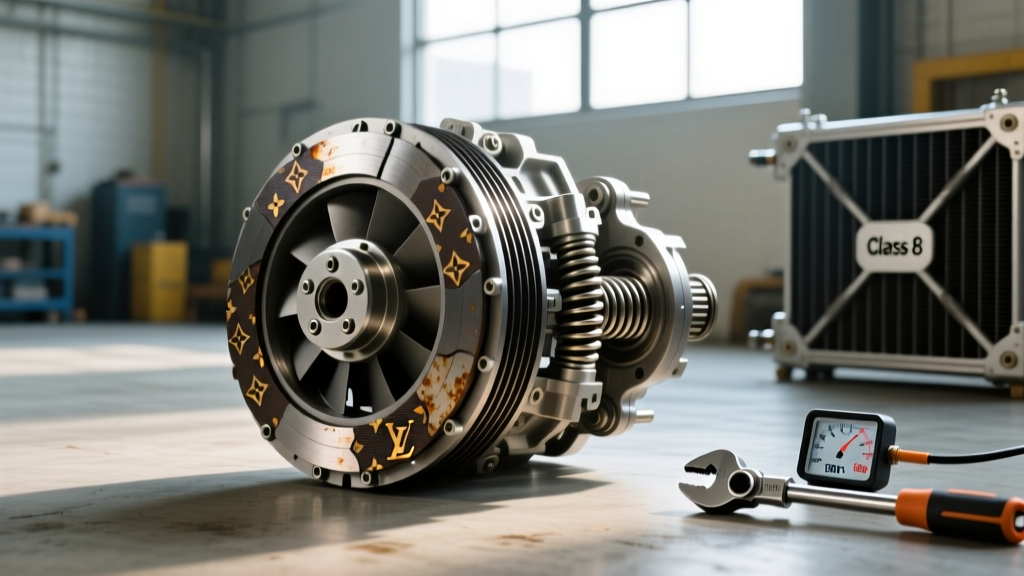
As the lineup of honda e-clutch motorcycle models expands in 2026 to include the CBR650R, CB650R, Rebel 500, and Transalp 750, the traditional approach to clutch diagnostics has been rendered obsolete. Honda’s E-Clutch is not merely a cable-actuated system with an assist; it is a fully integrated mechatronic hybrid. It utilizes an ECU-driven hydraulic actuator, a clutch stroke sensor, and a gear position sensor to manage clutch engagement. Consequently, diagnosing clutch slipping symptoms on these motorcycles requires a fundamental shift from mechanical guesswork to data-driven electronic troubleshooting.
In a conventional manual transmission, slipping is almost always a mechanical failure—worn friction plates or weak springs. In Honda's E-Clutch system, 'slipping' can manifest as a physical degradation of the friction material, or as a sensor calibration fault where the actuator fails to apply adequate clamping force despite the rider's lever input. Understanding this distinction is the cornerstone of modern preventive maintenance.
Differentiating True Slipping from Actuator Lag
Before tearing into the clutch cover, technicians and advanced DIYers must isolate whether the RPM flare is caused by mechanical wear or electronic hesitation. Honda's E-Clutch operates in two primary modes: Manual (rider inputs lever position) and Auto (ECU modulates clutch based on throttle position and RPM).
Symptoms in Manual Mode
When riding in Manual mode, the clutch stroke sensor reads the physical pull of the lever and translates it into a voltage signal (typically sweeping from 0.5V to 4.5V). If the friction plates are worn past their service limit, the actuator will reach its maximum clamping stroke, but the engine speed sensor will detect a mismatch between engine RPM and transmission input shaft speed. This results in a classic RPM flare under heavy load, often accompanied by a burnt odor from the clutch cover.
Symptoms in Auto Mode
In Auto mode, the ECU intentionally induces micro-slip during low-speed maneuvers to prevent stalling. However, if the system detects excessive slip ratios during high-load acceleration (e.g., rolling on the throttle in 4th gear at 4,000 RPM), it will trigger a fail-safe. The dashboard will illuminate the E-Clutch warning indicator, and the motorcycle will enter a reduced-power limp mode to protect the actuator motor from overheating.
Honda Diagnostic System (HDS) and DTC Analysis
You cannot accurately diagnose an E-Clutch slip without interfacing with the motorcycle's CAN bus. Using the Honda Diagnostic System (HDS) or a compatible high-end bi-directional scanner is mandatory. The scanner reads the live data stream for the Clutch Stroke Sensor and the Actuator Motor Duty Cycle.
If the live data shows the actuator motor is operating at a 95% duty cycle (maximum clamping force) but the slip ratio remains above 8%, the fault is mechanical. If the duty cycle is low despite the rider pulling the lever, the fault lies in the stroke sensor, wiring harness, or actuator motor.
| DTC Code | Component | Symptom | Corrective Action |
|---|---|---|---|
| 41-1 | Clutch Actuator Motor | No clutch movement, dashboard warning, limp mode | Test motor resistance (approx. 2.5Ω). Replace actuator assembly if open. |
| 42-1 | Clutch Stroke Sensor | Erratic engagement, slipping in Auto mode, lever feels disconnected | Recalibrate sensor via HDS. Inspect 3-pin connector for corrosion. |
| 43-1 | Hydraulic Pressure Fault | Spongy lever, delayed actuator response, RPM flare on takeoff | Bleed system using specific E-Clutch sequence. Inspect master cylinder. |
| 44-2 | Engine/Input Speed Mismatch | Severe slipping under load, ECU triggers limp mode | Verify mechanical friction plate wear. Replace clutch pack if within limits. |
Physical Inspection: Friction Plates and Wear Limits
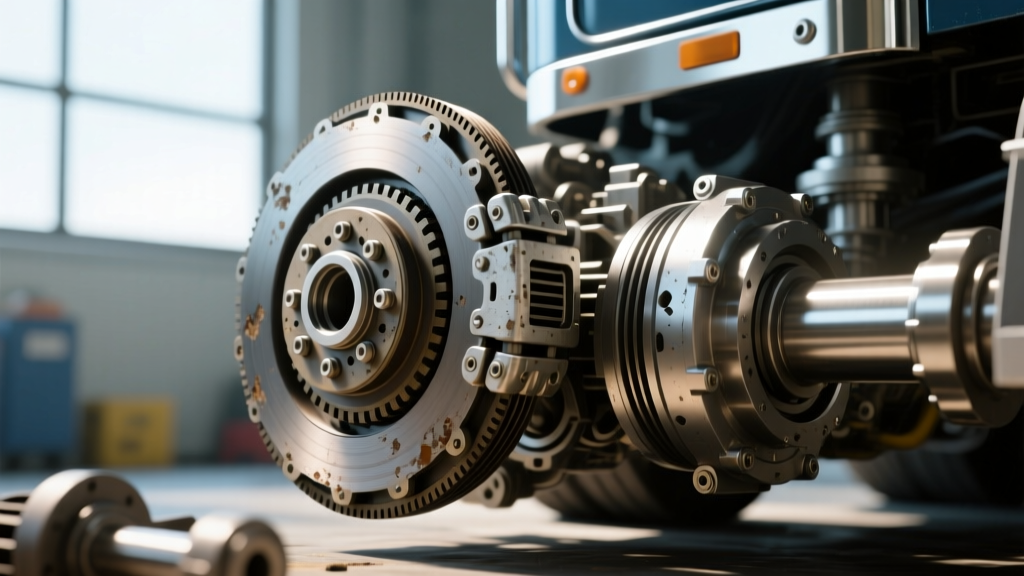
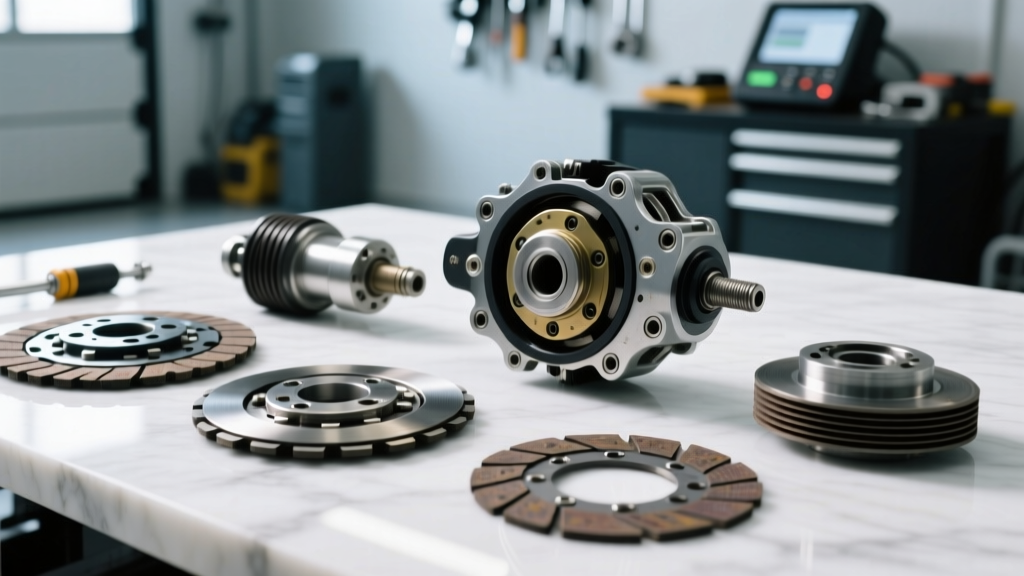
If the HDS scanner confirms a mechanical slip (DTC 44-2 or high duty cycle with slip), the clutch cover must be removed. The E-Clutch utilizes a specialized clutch pack designed to handle the precise modulation of the actuator. Using aftermarket Kevlar or aggressive sintered friction plates can confuse the ECU's slip algorithms and cause harsh Auto-mode engagement. Always stick to OEM Honda friction plates (e.g., Part # 22300-MJE-A00 for the 650cc platform).
Measurement Specifications
Use a micrometer to measure the friction plates at three equidistant points. Honda's tolerances are exceptionally tight to ensure the actuator's stroke sensor remains accurate.
- Standard Thickness: 3.10 mm (0.122 in)
- Service Limit: 2.80 mm (0.110 in)
- Clutch Spring Free Length (Standard): 44.2 mm
- Clutch Spring Service Limit: 41.5 mm
If the plates are within spec but slipping persists, inspect the clutch center hub for grooving. The E-Clutch's constant micro-modulation can accelerate wear on the aluminum tangs of the inner hub, causing plates to hang up and preventing full clamping force.
Preventive Maintenance: The E-Clutch Bleeding Protocol
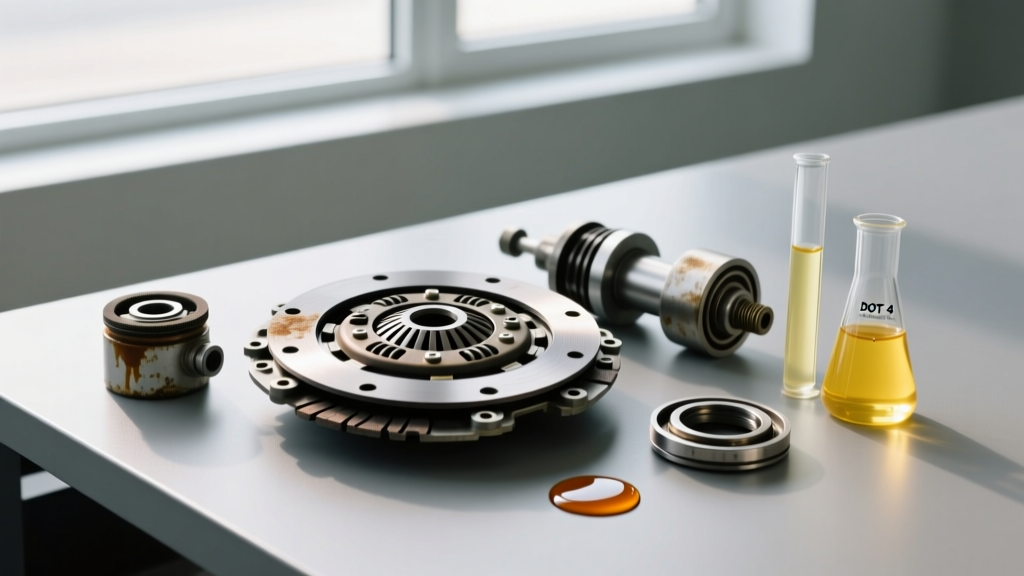
Hydraulic fluid degradation is the silent killer of the E-Clutch actuator. DOT 4 fluid is highly hygroscopic. As moisture enters the system, the boiling point drops, and microscopic vapor pockets form in the actuator lines. Because the E-Clutch actuator relies on exact hydraulic displacement to map lever feel, vapor pockets result in a 'spongy' sensor reading, causing the ECU to under-apply the clutch, leading to slip.
Expert Technician Note: Standard gravity bleeding is insufficient for Honda E-Clutch motorcycle models. The actuator features a complex internal valve body. You must perform a pressure bleed, followed by cycling the actuator via the HDS scanner's 'Clutch Bleed Mode' to purge trapped air from the motor's internal hydraulic chambers. Failure to do so will result in persistent DTC 43-1 faults.
Crucial Torque Specifications
When reassembling the clutch and actuator, precise torque is vital. Over-torquing the actuator mounting bolts can bind the internal gear mechanism, causing premature motor failure and slipping.
| Component | Thread Size | Torque Specification |
|---|---|---|
| Actuator Mounting Bolts | 6mm | 12 Nm (9 lb-ft) |
| Clutch Center Locknut | 14mm | 59 Nm (43 lb-ft) |
| Clutch Spring Bolts | 6mm | 12 Nm (9 lb-ft) |
| Clutch Cover Bolts | 8mm | 22 Nm (16 lb-ft) |
Real-World Cost Analysis and Part Sourcing for 2026
Understanding the financial implications of E-Clutch repairs is vital for preventive maintenance planning. Unlike a standard $150 cable clutch replacement, E-Clutch components carry a premium due to their electronic integration.
- OEM Friction Plate Kit: $120 - $160
- Clutch Spring Set: $45 - $60
- Complete E-Clutch Actuator Assembly: $950 - $1,400 (Dealer MSRP)
- Clutch Stroke Sensor: $85 - $110
Because the actuator assembly is prohibitively expensive, preventive maintenance—specifically bi-annual DOT 4 fluid flushes and avoiding 'riding the clutch' in Manual mode—is the most cost-effective strategy. According to technical breakdowns by Cycle World, the actuator motor is designed to last the life of the motorcycle, provided the hydraulic fluid is kept free of moisture and debris.
Conclusion: Embracing the Diagnostic Shift
The proliferation of honda e-clutch motorcycle models represents a massive leap in rider accessibility and transmission technology. However, it demands that owners and technicians abandon old-school diagnostic habits. Clutch slipping on an E-Clutch equipped CBR650R or Rebel 500 is a symphony of hydraulic pressure, sensor voltage, and friction material wear. By leveraging HDS live data, adhering to strict micrometer measurements, and executing precise hydraulic bleeding protocols, you can ensure the mechatronic heart of your motorcycle operates flawlessly for tens of thousands of miles. For official service intervals and fluid capacities, always refer to the Honda Powersports owner's manual specific to your model year.