The Hidden Parasitic Drag: How Thermal Clutches Destroy AMT Lifespan
Heavy-duty commercial vehicles operate under extreme thermal and mechanical stress. While fleet managers and owner-operators often hyper-focus on the primary driveline clutch—such as the Eaton Fuller 1550 lb-ft twin-disc assembly—auxiliary thermal management components are frequently overlooked. In 2026, with the widespread adoption of Automated Manual Transmissions (AMTs) like the Eaton Endurant HD, Volvo I-Shift, and ZF TraXon, the relationship between engine cooling and driveline longevity has never been more critical. A failing or improperly specified lv fan clutch can introduce severe parasitic drag, robbing the engine of up to 80 horsepower at peak RPM and transmitting destructive torsional vibrations directly into the AMT clutch dampener springs.
When diagnosing clutch problems in heavy-duty and commercial vehicles, it is a critical mistake to isolate the driveline from the engine's accessory drive. The primary clutch and the thermal management system share the same rotational mass. If your fleet manual specifies an lv fan clutch replacement interval and it is ignored, the resulting viscous fluid degradation or electronic solenoid failure can cause the fan to lock up at high speeds. This not only spikes coolant temperatures but also creates a harmonic imbalance that accelerates wear on the main clutch release bearing and input shaft splines.
Understanding the LV Fan Clutch Architecture in Class 8 Trucks
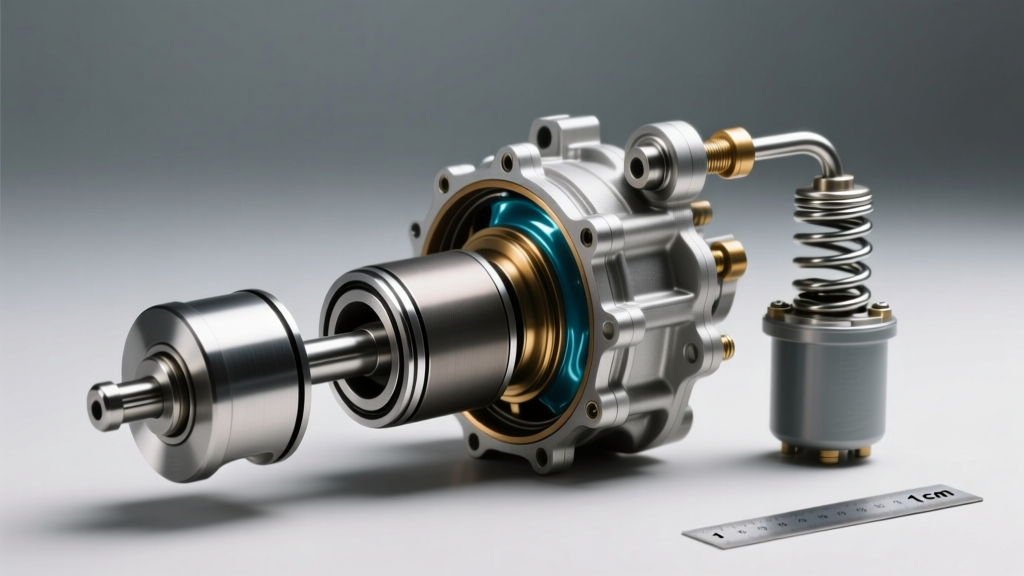
The term 'LV' in heavy-duty thermal management typically refers to Low-Voltage electronic fan clutches or specific Laminar Viscous series clutches designed for modern 12V/24V commercial architectures. Unlike older pneumatic or purely mechanical bimetallic spring clutches, the modern LV fan clutch utilizes pulse-width modulation (PWM) signals from the Engine Control Module (ECM) to precisely control the engagement of the viscous shear fluid or electromagnetic friction plates.
Viscous vs. Electronic: The 2026 Performance Standard
Upgrading from a legacy Kysor K14 pneumatic clutch to a modern LV electronic fan clutch offers significant performance benefits. Electronic systems react in milliseconds to coolant temperature spikes, whereas viscous systems rely on thermal expansion and fluid shear, which can lag by 3 to 5 seconds under heavy load. This lag is particularly detrimental in vocational applications like dump trucks and concrete mixers, where frequent PTO (Power Take-Off) engagement generates massive heat loads while the vehicle is stationary.
| Clutch Type | Engagement Method | Parasitic HP Draw (Peak) | Reaction Time | Approx. Cost (2026) |
|---|---|---|---|---|
| Legacy Bimetallic Viscous | Thermal Spring / Fluid Shear | 45 - 60 HP | 3 - 5 Seconds | $450 - $650 |
| Pneumatic (e.g., Kysor K14) | Air Pressure / Friction Disc | 50 - 70 HP | 1 - 2 Seconds | $700 - $950 |
| LV Electronic / PWM | Electronic Solenoid / Viscous | 20 - 35 HP (Variable) | < 0.5 Seconds | $950 - $1,600 |
By reducing the peak parasitic draw from 70 HP down to a variable 20-35 HP, the LV fan clutch upgrade not only improves fuel economy by 2-4% but also significantly reduces the torsional stress placed on the crankshaft and the primary driveline clutch damper.
Diagnostic Matrix: Driveline vs. Thermal Clutch Failures
One of the most common misdiagnoses in commercial truck repair is confusing a failing fan clutch bearing or locked-up viscous hub with a slipping or chattering primary driveline clutch. Because both components are bolted to the engine's rotating assembly, the symptoms often overlap. Below is a diagnostic framework to help technicians isolate the root cause of clutch-related complaints in Class 8 vehicles.
Symptom 1: High-RPM Chatter and Vibration
- Driveline Clutch Cause: Worn marcel springs in the clutch disc, oil contamination on the friction faces, or excessive flywheel runout (exceeding 0.005 inches). Common in high-torque applications using the Cummins X15 or Detroit DD15.
- LV Fan Clutch Cause: A failing fan clutch pilot bearing or degraded viscous fluid causing the fan blade assembly to wobble at speeds above 1,800 RPM. This creates a harmonic vibration that mimics clutch chatter through the chassis.
Symptom 2: Low-Speed Slipping and Overheating
- Driveline Clutch Cause: Glazed friction material on the twin-disc assembly, weak pressure plate diaphragm springs, or improper clutch brake squeeze adjustment (should be 1.5 to 2.0 inches of pedal travel).
- LV Fan Clutch Cause: If the LV fan clutch fails to engage at low speeds due to a faulty PWM solenoid or wiring harness chafe, the engine will overheat during idle or low-speed PTO operations. The ECM will then derate the engine and intentionally slip the AMT clutch to protect the driveline, leading to a false diagnosis of primary clutch failure.
Expert Insight: 'Before dropping a heavy-duty transmission to inspect the Eaton Fuller twin-disc, always perform a static fan clutch spin test and scan the ECM for PWM duty cycle faults. We see countless fleets spend $5,000 on a driveline clutch replacement only to find the root cause was a $1,200 lv fan clutch solenoid failure causing thermal derates.' — Fleet Maintenance Director, AutoGearNexus
Step-by-Step LV Fan Clutch Upgrade & Torque Specifications
When performing an upgrade from a legacy pneumatic system to a modern LV fan clutch, precision is paramount. Heavy-duty diesel engines generate immense vibration, and improper fastener torque will lead to catastrophic fan detachment or hub failure. Always refer to the specific OEM service manual, but the following baseline specifications apply to most Class 8 applications (Freightliner Cascadia, Volvo VNL, Kenworth T680).
Critical Fastener Torques & Clearances
- Fan Hub to Engine Front Cover: Use Grade 8 or OEM equivalent flange bolts. Torque to 75-85 lb-ft in a crisscross pattern. Apply medium-strength threadlocker (e.g., Loctite 243) to prevent backing out due to harmonic vibration.
- Fan Blade to Hub: Torque mounting bolts to 35-45 lb-ft. Ensure the fan blade tip clearance to the shroud is a minimum of 0.75 inches (19mm) on all sides to prevent shroud contact during heavy engine torque roll.
- Electronic Air Gap (If applicable): For electromagnetic LV fan clutch variants, the air gap between the armature and the rotor must be set between 0.020 and 0.030 inches using a feeler gauge.
- Wiring Harness Routing: Maintain a minimum 4-inch clearance from the exhaust manifold and turbocharger hot side. Use high-temp silicone loom and secure with stainless steel zip ties to prevent PWM signal degradation.
For the primary driveline clutch, if you are already removing the transmission for an unrelated issue, always check the bellhousing alignment. Total Indicator Runout (TIR) must not exceed 0.015 inches. Misalignment will cause the transmission input shaft to bind, leading to premature release bearing failure and uneven wear on the clutch disc splines.
Cost Analysis: OEM vs. Aftermarket Performance Upgrades
Upgrading your fleet's thermal management system requires a clear understanding of the return on investment. While the initial cost of an LV fan clutch upgrade is higher than replacing a legacy bimetallic unit, the reduction in parasitic drag and the extension of the primary driveline clutch life make it a financially sound decision for high-mileage commercial vehicles.
| Component / Service | OEM Part Cost | Aftermarket / Performance Cost | Labor Hours | Total Est. Cost |
|---|---|---|---|---|
| Eaton Fuller Twin-Disc Clutch (K-3459B) | $2,800 - $3,400 | $2,200 - $2,600 | 8 - 12 Hours | $4,200 - $6,500 |
| LV Electronic Fan Clutch Assembly | $1,200 - $1,600 | $950 - $1,300 | 2 - 3 Hours | $1,350 - $2,200 |
| PTO Clutch & Solenoid Pack | $850 - $1,100 | $650 - $900 | 3 - 4 Hours | $1,250 - $1,900 |
By sourcing high-quality aftermarket performance components from reputable manufacturers, fleets can reduce parts costs by up to 20% without sacrificing durability. For more detailed specifications on heavy-duty driveline components, technicians should consult the Eaton Cummins Automated Transmissions technical library or review the latest thermal management white papers published by SAE International. Additionally, verifying fan clutch compatibility and torque specs can be cross-referenced via the Horton heavy-duty fan clutch catalog.
Ultimately, solving clutch problems in heavy-duty and commercial vehicles requires a holistic approach. The primary driveline clutch does not operate in a vacuum; it is part of a complex ecosystem of rotational mass and thermal dynamics. By upgrading to a modern LV fan clutch, adhering to strict torque specifications, and utilizing a comprehensive diagnostic matrix, fleet managers can drastically reduce unscheduled downtime, protect their expensive AMT investments, and keep their rigs running efficiently through the most demanding 2026 freight cycles.