The Bifurcation of Modern Truck and SUV Drivetrains
As we navigate the automotive landscape of 2026, the line between trucks and SUVs has blurred in the showroom, but beneath the chassis, their drivetrain architectures remain fundamentally distinct. Traditional body-on-frame trucks (like the Ford F-150 or Chevrolet Silverado) rely on solid rear axles housing heavy-duty hypoid ring and pinion gears. These require high-viscosity, extreme-pressure (EP) gear oils like 75W-90 GL-5 to survive the immense sliding friction of the gear teeth.
Modern unibody SUVs and crossovers, however, utilize sophisticated on-demand All-Wheel-Drive (AWD) systems. Instead of a simple open or locking differential, these rear drive units contain hydraulic pumps, wet-clutch packs, and precision bearings. Consequently, the maintenance paradigm shifts entirely. For Honda and Acura SUVs—ranging from the CR-V and HR-V to the three-row Pilot and Acura MDX—the lifeblood of this system is Honda Genuine Dual Pump II Differential Fluid. Treating this specialized AWD unit like a traditional truck differential is a catastrophic error that will lead to immediate clutch pack failure and hydraulic pump cavitation.
Inside the Real-Time AWD System: Why DPF-II is Non-Negotiable
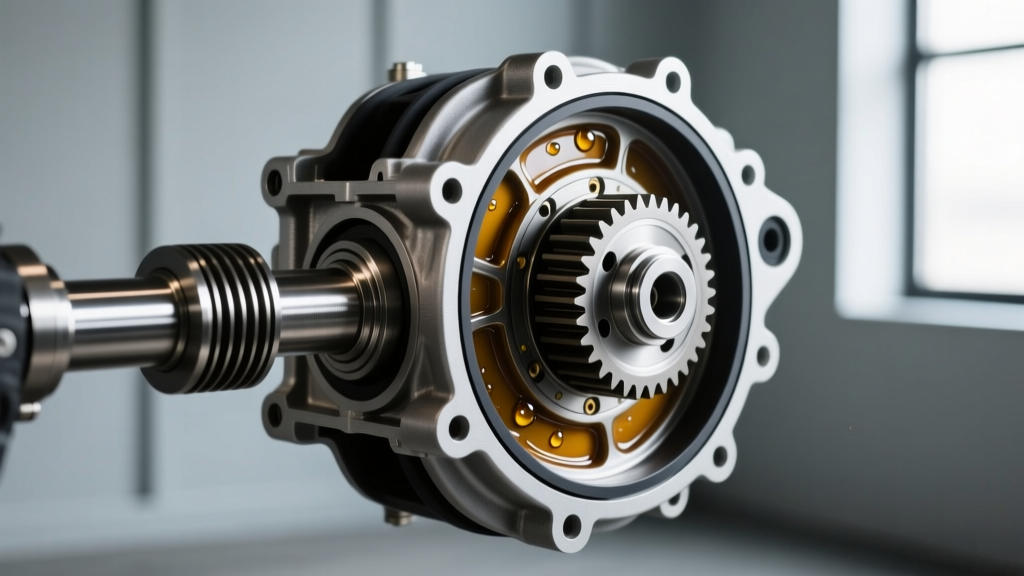
To understand why fluid selection is critical, you must understand the mechanics of Honda's Real-Time AWD system. Unlike traditional Torsen or viscous coupling differentials found in older trucks, the Honda system utilizes a dual-pump hydraulic architecture.
- The Front Pump: Driven by the propeller shaft connected to the front transaxle.
- The Rear Pump: Driven by the rear axle shafts.
- The Wet-Clutch Pack: Located inside the rear differential housing, connecting the propeller shaft to the rear ring gear.
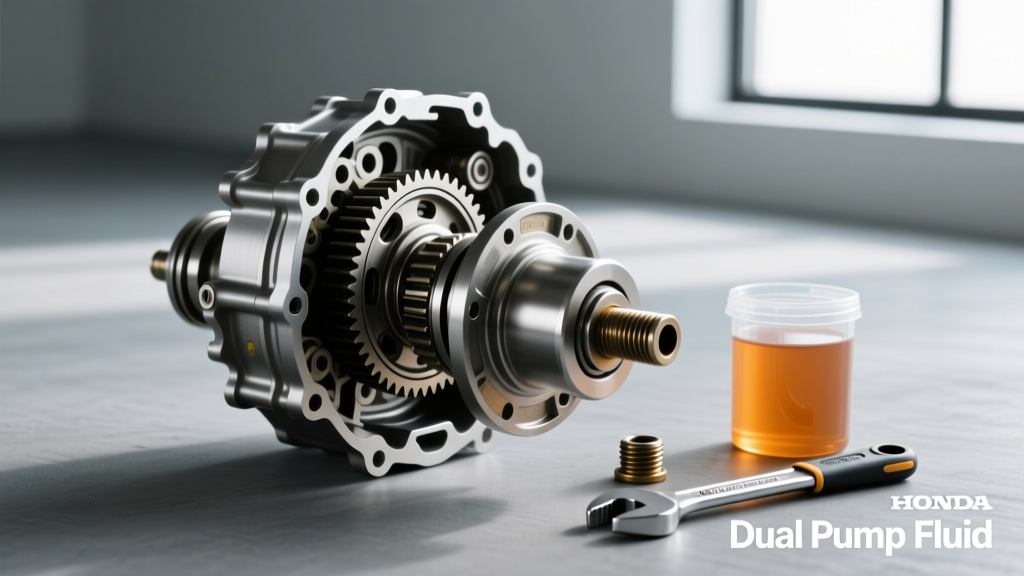
When the front wheels lose traction and spin faster than the rear wheels, a hydraulic pressure differential is created between the two pumps. This pressure forces a piston to engage the wet-clutch pack, seamlessly transferring torque to the rear wheels. Honda Genuine Dual Pump II Differential Fluid (Part # 08200-9007) is engineered specifically as a low-viscosity hydraulic fluid intertwined with proprietary friction modifiers. It must simultaneously lubricate high-speed bearings, act as a hydraulic medium for the pumps, and provide the exact coefficient of friction required for the wet clutches to engage smoothly without shuddering.
The Chemistry of Failure: What Happens When Fluid Degrades?
Over time, the shear forces within the clutch pack break down the fluid's friction modifiers. Furthermore, microscopic clutch material suspends in the fluid, altering its hydraulic properties. When the fluid degrades, the clutch pack can no longer modulate engagement smoothly. This results in the infamous "Honda Groan"—a binding, shuddering noise emanating from the rear axle during tight, low-speed turns (such as pulling into a parking space). If ignored, the clutch plates will glaze, the hydraulic pumps will score, and the entire rear differential assembly will require a $2,500+ replacement.
Diagnostic Matrix: Identifying Rear Differential Issues
Before performing a fluid service, diagnose the current state of the SUV's drivetrain. Use this matrix to determine if a simple fluid swap will suffice, or if mechanical intervention is required.
| Symptom | Probable Cause | Action Plan |
|---|---|---|
| Low-speed groaning/binding in tight turns | Depleted friction modifiers in DPF-II | Perform immediate drain, fill, and Figure-8 calibration drive. |
| High-pitch whining at highway speeds (60+ mph) | Bearing wear or ring/pinion gear misalignment | Fluid change will not fix; requires differential teardown and bearing replacement. |
| AWD warning light on dash, rear wheels slipping | Hydraulic pump failure or clogged internal filter | Inspect fluid for heavy metallic glitter; likely requires complete unit replacement. |
| Clunking upon acceleration from a stop | Excessive backlash or worn propeller shaft U-joints | Inspect driveline mounts and differential pinion nut torque. |
Performance Maintenance: Step-by-Step Service Protocol
For performance-oriented SUV owners who tow, traverse mountain passes, or drive in severe weather, the factory-recommended maintenance interval is often too conservative. While Honda suggests inspecting the fluid under "normal" conditions, severe-duty maintenance dictates a fluid change every 30,000 miles. Here is the exact protocol for servicing the rear differential on a 2016-2026 Honda Pilot or Acura MDX.
Required Materials and Specifications
- Fluid: 2 Quarts of Honda Genuine Dual Pump II Differential Fluid (Part # 08200-9007). Cost: ~$14.00 per quart.
- Crush Washers: 2x 18mm Drain/Fill Plug Washers (Part # 90471-PX4-000). Cost: ~$2.50 each.
- Capacity: 1.27 Quarts (1.2 Liters) for Pilot/MDX; 1.1 Quarts (1.04 Liters) for CR-V/HR-V.
- Torque Specification: 32 lb-ft (43 N·m) for both drain and fill plugs.
The Service Procedure
Step 1: Vehicle Preparation. Level the SUV on a hoist or four jack stands. The rear differential must be perfectly level to ensure an accurate fluid fill. Remove the underbody aerodynamic splash guards if equipped.
Step 2: The Golden Rule of Differentials. ALWAYS remove the FILL plug before removing the DRAIN plug. If you drain the fluid first and subsequently discover the fill plug is seized or stripped, the vehicle is immobilized.
Step 3: Draining and Inspection. Remove the drain plug (32 lb-ft). Allow the fluid to drain completely. Inspect the magnetic portion of the drain plug. A small amount of fine, paste-like metallic fuzz is normal for wet-clutch systems. However, if you find large metal flakes or chunks of clutch friction material, internal damage has occurred.
Step 4: Refilling. Reinstall the drain plug with a new crush washer and torque to 32 lb-ft. Using a fluid transfer pump, inject the Honda Genuine Dual Pump II Differential Fluid into the fill hole until it begins to weep out of the opening. Reinstall the fill plug with a new crush washer and torque to 32 lb-ft.
The Figure-8 Calibration Drive (Critical Step)
Simply changing the fluid is not enough. Air becomes trapped inside the wet-clutch pack and hydraulic circuits during the drain process. To purge this air and coat the clutch plates with the new friction modifiers, you must perform a calibration drive. Find an empty, paved parking lot and perform ten (10) slow, continuous figure-8 turns. This forces the AWD system to engage and disengage the rear clutch pack, circulating the new DPF-II fluid and eliminating any post-service binding or groaning.
The "Universal Fluid" Trap: Why Aftermarket Fails
In the pursuit of performance upgrades or cost savings, many SUV owners attempt to substitute DPF-II with aftermarket "universal" AWD fluids or traditional 75W-85 GL-4/GL-5 gear oils. This is a critical mistake. Traditional gear oils contain sulfur-phosphorus EP additives that are highly corrosive to the yellow metals (brass/bronze) and specific friction papers used in Honda's wet-clutch packs. Furthermore, the higher viscosity of gear oil will cause the hydraulic pumps to cavitate, leading to delayed AWD engagement and eventual pump seizure. For Honda and Acura SUVs, there is no "upgrade" fluid; the OEM Honda Genuine Dual Pump II Differential Fluid is the absolute ceiling for performance and longevity.
Towing, Hauling, and Severe Duty Intervals
The 2026 Honda Pilot and Acura MDX boast impressive towing capacities (up to 5,000 lbs when properly equipped). However, towing places immense thermal stress on the rear differential. Unlike the front transaxle, which benefits from engine bay airflow and dedicated coolers, the rear differential is a sealed, passively cooled unit. When towing near maximum capacity, the internal temperature of the DPF-II fluid can exceed 220°F (104°C), rapidly accelerating the oxidation of the base oil and the depletion of the friction modifiers.
Expert Upgrade Tip: If you frequently tow or drive in mountainous terrain, the ultimate "upgrade" for your Honda SUV's rear differential is not a different fluid, but a strictly enforced 15,000-mile severe-duty drain and fill interval. Pairing this with an aftermarket differential cover featuring integrated cooling fins can drop operating temperatures by 15-20°F, significantly extending the life of the clutch pack.
Sourcing and Technical References
Maintaining the integrity of your SUV's AWD system requires adherence to factory engineering specifications. For detailed service manuals, wiring diagrams, and torque specifications, technicians and advanced DIYers should consult Honda Tech Info. To verify OEM part numbers and source genuine fluids and crush washers, authorized catalogs like Honda Parts Now provide accurate fitment data for all model years. Never compromise on the hydraulic medium that protects your drivetrain's most complex components.