The Link Between the Honda CR-V Rear Differential Fluid Change Schedule and Whining Noises
As of 2026, millions of second, third, and fourth-generation Honda CR-Vs are navigating high-mileage territory. While the K-series engines and 5-speed automatic transmissions are famously bulletproof, the Real Time 4WD rear differential is a notorious weak point if maintenance is deferred. For automotive technicians and DIY enthusiasts, understanding the intersection between differential noise diagnosis and the Honda CR-V rear differential fluid change schedule is critical. Unlike traditional open or locking differentials found in trucks, the CR-V utilizes a complex hydraulic wet-clutch system. When neglected, this system doesn't just wear out—it vocalizes its distress through groans, whines, and clunks.
In this expert guide, we will decode the specific noises generated by the Honda Dual Pump System (DPS), outline the exact OEM fluid specifications, and provide a master troubleshooting framework to determine whether your differential needs a simple fluid service or a complete rebuild.
Understanding the Honda Real Time 4WD Dual Pump System
Before diagnosing noise, you must understand the mechanics. The CR-V rear differential does not use a traditional viscous coupling or an electronically controlled clutch pack (until the fifth generation introduced the Earth Dreams CVT and electronic AWD). Instead, Gen 2 through Gen 4 models use a purely mechanical Dual Pump System (DPS).
- Front Pump: Driven by the propeller shaft connected to the front transaxle.
- Rear Pump: Driven by the rear axle shafts.
- The Clutch Pack: When the front wheels spin faster than the rear wheels (loss of traction), a hydraulic pressure differential builds up. This pressure forces a wet clutch pack to engage, transferring torque to the rear wheels.
Because the clutch pack operates entirely on hydraulic pressure and the frictional properties of the fluid, fluid degradation directly alters clutch engagement. This is why ignoring the Honda CR-V rear differential fluid change schedule is the number one cause of rear-end noise in these vehicles.
Diagnosing Honda CR-V Rear Differential Noise: A Symptom-by-Symptom Guide
Differential noise diagnosis requires isolating the sound by speed, load, and steering angle. Use the troubleshooting matrix below to pinpoint the failure mode.
| Noise Type | Trigger Condition | Probable Cause | Expert Action Required |
|---|---|---|---|
| Low-Pitch Groan / Moan | Tight, low-speed turns (e.g., parking lots) | Fluid shear; loss of friction modifiers causing wet clutch chatter. | Perform the 'Double Drain & Fill' Figure-8 TSB procedure. |
| High-Pitch Whine | Constant 40–70 mph highway speeds | Pinion bearing wear, ring-and-pinion gear lash, or fluid starvation. | Inspect for metallic flakes on the drain plug magnet. Rebuild likely required. |
| Clunk / Shudder | Initial acceleration from a dead stop | Worn propeller shaft U-joints, degraded differential mounts, or severe clutch glazing. | Check driveline U-joints for play; inspect rubber diff mounts for dry rot. |
| Grinding / Crunching | Deceleration or heavy AWD engagement | Spalling on the ring and pinion teeth or catastrophic bearing collapse. | Immediate teardown. Differential replacement or complete rebuild. |
The 'Parking Lot Groan' vs. Terminal Gear Failure
The most common complaint brought into drivetrain shops is the 'parking lot groan.' Owners often fear their ring and pinion gears are destroying themselves. In reality, this is almost always clutch chatter. The specialized friction modifiers in Honda's Dual Pump Fluid break down over time due to thermal cycling and shear forces. When the clutch plates slip and grab rapidly during a tight turn (where the front and rear wheel speeds differ slightly), it creates a resonant groan that echoes through the chassis. According to Honda Automotive Parts bulletins, this is rarely terminal if addressed immediately with fresh fluid.
Why the Honda CR-V Rear Differential Fluid Change Schedule is Non-Negotiable
Honda's official maintenance minder system can sometimes lull owners into a false sense of security, suggesting differential service only when the code appears. However, drivetrain experts universally recommend a more aggressive schedule to prevent the clutch chatter and bearing wear detailed above.
The Expert-Recommended Service Interval
- Break-In Service (15,000 miles): The initial wear-in of the hypoid gears and clutch plates generates microscopic metallic debris. This fluid must be purged to prevent the debris from embedding into the soft clutch friction material.
- Normal Driving (Every 30,000 miles or 2 years): For highway-dominant commuting in temperate climates.
- Severe Driving (Every 15,000 miles): If you frequently drive in mountainous terrain, tow small trailers, or regularly engage the AWD system in snow and mud.
Adhering strictly to this Honda CR-V rear differential fluid change schedule prevents the hydraulic pumps from cavitating and ensures the clutch pack engages smoothly without generating excess heat.
The 'Figure-8' TSB Procedure: Curing the Groan
If your CR-V is already exhibiting the low-speed groaning noise, a standard drain and fill will not suffice. The old, degraded fluid is trapped inside the porous clutch discs and the hydraulic pump galleries. You must perform the procedure outlined in Honda Technical Service Bulletins (TSB), often referred to as the 'Double Drain and Fill' method.
Pro-Tip from the Bench: Never reuse the aluminum crush washers on the differential fill and drain plugs. Over-torquing a reused washer can strip the soft aluminum threads of the differential housing, turning a $40 fluid job into a $1,500 housing replacement.
Step-by-Step Figure-8 Troubleshooting Protocol
- Initial Drain: Level the vehicle. Remove the 17mm drain plug, followed by the 17mm fill plug (always remove fill first to ensure you can refill it if the drain strips). Drain the degraded fluid.
- First Fill: Reinstall the drain plug with a new 20mm crush washer (Part #94109-20000). Torque to 33 lb-ft (45 Nm). Fill with exactly 1.1 to 1.3 quarts of OEM Honda Dual Pump Fluid II until it weeps from the fill hole.
- The Figure-8 Drive: Reinstall the fill plug (torque to 33 lb-ft). Drive the vehicle to a large, empty parking lot. Perform ten (10) tight, continuous figure-8 maneuvers at idle speed. This forces the hydraulic pumps to circulate the new fluid deep into the clutch pack and flushes out the old friction modifiers.
- Second Drain & Fill: Return to the shop, drain the fluid again (it will likely look darker than new fluid due to the flushed clutch material), and perform a final fill with fresh DPF-II.
For a comprehensive look at general drivetrain maintenance best practices, Car and Driver's guide on differential fluid reinforces the importance of using exact OEM formulations over generic 'universal' gear oils.
Fluid Specifications and Hard Parts Data
Using generic 75W-90 GL-5 gear oil in a Honda Dual Pump System will destroy the wet clutch pack within 500 miles. GL-5 additives are designed for hypoid gear sliding, not wet-clutch friction coefficients. You must use the exact OEM specification.
| Component / Spec | Details & Part Numbers |
|---|---|
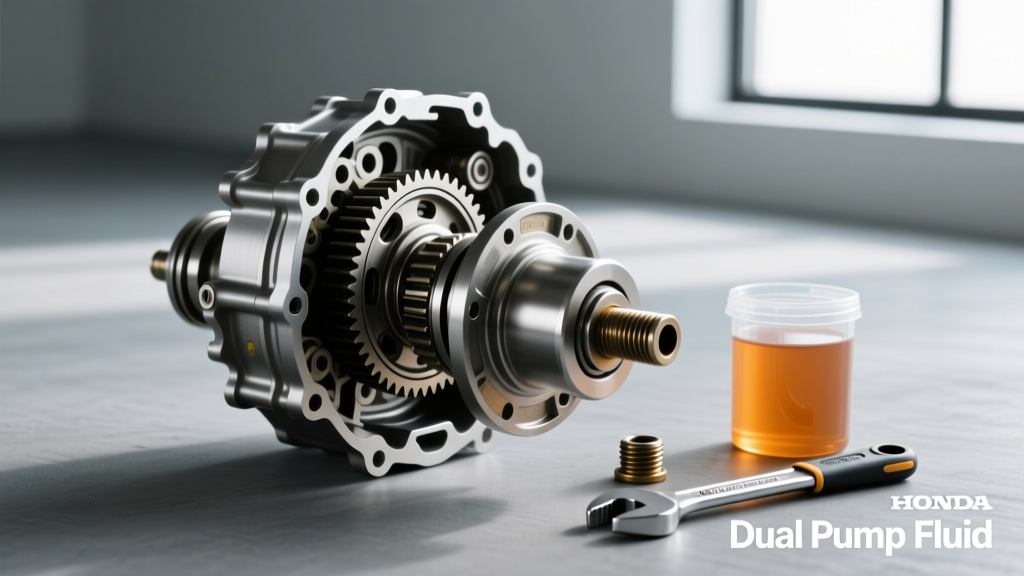
| OEM Fluid Requirement | Honda Dual Pump Fluid II (DPF-II) |
| OEM Part Number | 08200-9007 |
| Fluid Capacity (Dry) | ~1.3 Liters (1.37 Quarts) |
| Fluid Capacity (Drain & Fill) | ~1.1 Liters (1.16 Quarts) |
| Plug Socket Size | 17mm Hex / Socket |
| Plug Torque Spec | 33 lb-ft (45 Nm) |
| Crush Washer (20mm) | 94109-20000 |
When Fluid Changes Fail: Internal Differential Rebuild Realities
If you have performed the Double Drain and Fill procedure and the CR-V rear differential noise persists—specifically if the groan has turned into a metallic whine or a binding shudder—the clutch pack is permanently glazed, or the internal pinion bearings have failed. At this stage, fluid changes are useless.
Cost Breakdown: DIY vs. Dealer vs. Rebuild
Understanding the financial landscape of differential repair helps you make an informed decision when troubleshooting high-mileage CR-Vs.
- DIY Fluid Service: $35 - $50 (Cost of two quarts of DPF-II and crush washers). Requires basic hand tools and a fluid pump.
- Dealership Fluid Service: $120 - $180. Includes labor for a standard single drain-and-fill (note: dealers rarely perform the Figure-8 TSB double-flush unless specifically requested and billed at 1.5 hours labor).
- Used Junkyard Differential: $300 - $600 for the unit, plus $400 - $800 in shop labor to swap the assembly and bleed the system. Highly risky, as the used unit may have the exact same fluid-neglect issues.
- OEM Rebuilt Differential: $1,800 - $2,500 installed. The only guaranteed fix for terminal bearing wear or shattered clutch packs.
Final Expert Takeaways
Differential noise diagnosis in the Honda CR-V is less about heavy wrenching and more about understanding hydraulic clutch dynamics. The vast majority of rear-end noises in these crossovers are entirely preventable. By strictly following an aggressive Honda CR-V rear differential fluid change schedule—starting at 15,000 miles and utilizing the Figure-8 flush method when chatter occurs—you can easily push the Real Time 4WD system past 200,000 miles without a single internal failure. Always respect the OEM fluid requirements, torque specs, and crush washers, and your CR-V will continue to deliver seamless, silent AWD traction for years to come.