The Evolution of Axle Lubrication and Fluid Dynamics
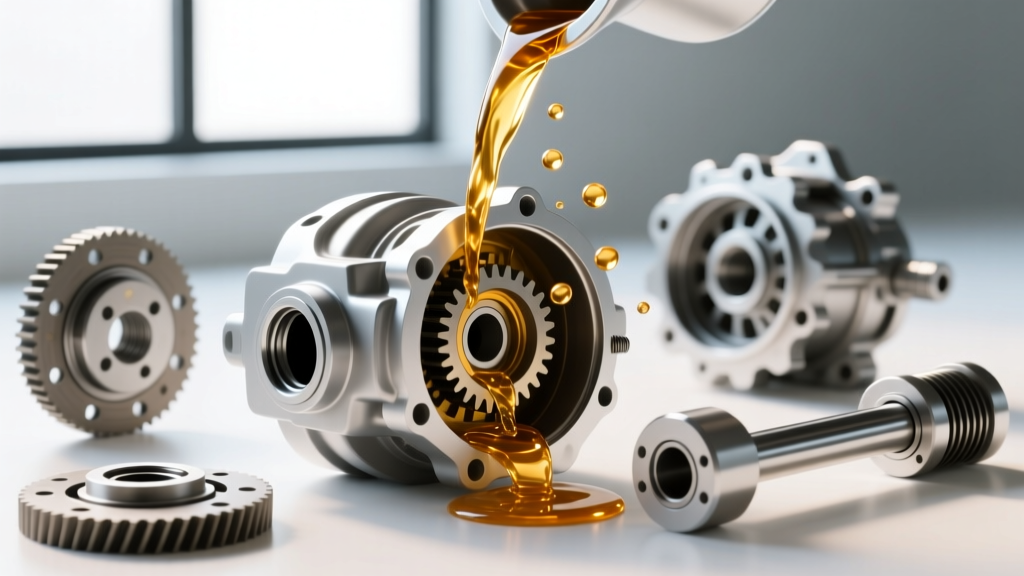
As we navigate the 2026 automotive landscape, the demands placed on modern drivetrains have never been higher. From the instant, massive torque delivery of electric and hybrid trucks to the extreme towing capacities of modern diesel pickups, the ring and pinion gears inside your axle housings operate under immense mechanical stress. Selecting the correct differential fluid is no longer just about picking a viscosity; it is about understanding the complex tribology and extreme-pressure (EP) chemistry that keeps your drivetrain from catastrophic failure. In this comprehensive buyer's guide, we will break down differential fluid types, API specifications, and the advanced laboratory testing methodologies—including the use of differential pressure flow meters—that validate these lubricants for real-world abuse.
Decoding Gear Oil Specifications: API and SAE Standards
Before purchasing gear oil, you must understand the two primary governing standards: the American Petroleum Institute (API) service classifications and the Society of Automotive Engineers (SAE J306) viscosity grades.
API GL-4 vs. API GL-5
The API classification dictates the extreme-pressure additive package. API GL-4 fluids contain moderate levels of sulfur-phosphorus EP additives. They are primarily used in manual transmissions and certain transaxles where yellow metals (brass, bronze, copper) are present, as high sulfur content can corrode these softer metals. API GL-5, on the other hand, is the standard for almost all modern automotive differentials. It contains roughly twice the EP additives of GL-5, designed to protect the hypoid gear sets found in solid axles where the pinion gear sits deep below the centerline of the ring gear, creating extreme sliding friction. Always consult your owner's manual; while GL-5 is superior for hypoid gears, it can damage the synchronizers in a manual transmission if cross-applied.
Viscosity Grades: 75W-90 vs. 75W-140
Viscosity determines the fluid's resistance to flow and its ability to maintain a hydrodynamic lubricating film. The 'W' stands for winter, indicating cold-temperature flow properties, while the second number represents the fluid's viscosity at 100°C (212°F).
- 75W-90: The factory fill for 90% of light-duty SUVs, half-ton trucks, and passenger cars. It offers an excellent balance of cold-weather flow (reducing parasitic drivetrain drag and improving fuel economy) and high-temperature protection.
- 75W-140: Reserved for heavy-duty applications, severe towing, or high-horsepower off-road builds. The thicker 140-grade film prevents metal-to-metal contact when axle housing temperatures exceed 250°F under heavy loads, such as pulling a 12,000-lb trailer up a 6% grade.
How Labs Test Gear Oil: The Role of Differential Pressure Flow Meters
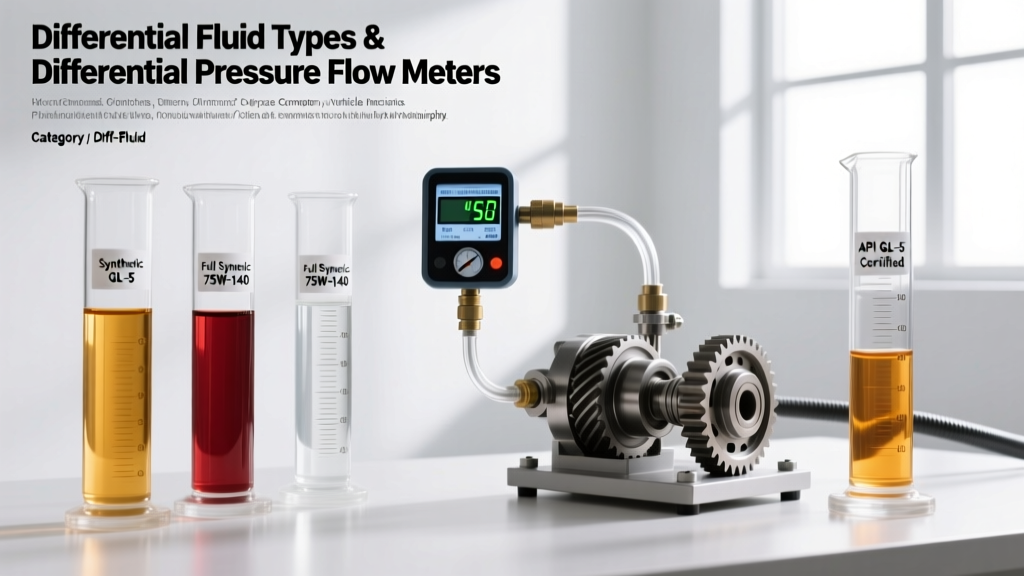
Marketing claims on a bottle of synthetic gear oil are meaningless without rigorous laboratory validation. When formulating heavy-duty 75W-140 fluids, chemical engineers must ensure the oil maintains its hydrodynamic film under immense shearing forces without suffering from permanent viscosity loss (shear-down). To validate this, advanced tribology R&D facilities employ differential pressure flow meters within closed-loop drivetrain test rigs.
These highly calibrated differential pressure flow meters measure the precise pressure drop and volumetric flow rate of the gear oil as it is forced through micro-clearances that mimic pinion bearing journals, axle tube channels, and ring gear splash zones. By analyzing the real-time data from these differential pressure flow meters, engineers can determine if the oil's viscosity index improvers (VIIs) are tearing apart under mechanical shear. If the flow rate increases unexpectedly across a fixed orifice under high load, it indicates the fluid has permanently sheared down to a lower viscosity grade, failing to protect the hypoid gear set. This rigorous testing, often aligned with ASTM D7158 shear stability standards, is what separates premium synthetic lubricants from budget conventional oils.
2026 Buyer's Guide: Top Differential Fluids Compared
Based on current market formulations, additive packages, and real-world teardown data, here is our comparison of the top differential fluids available for your next axle service.
| Brand & Product | Viscosity | API Rating | Est. Price/Qt | Best Application |
|---|---|---|---|---|
| Mobil 1 Synthetic Gear Lube (Part #112660) | 75W-90 | GL-5 | $16.50 | Daily driving, mild towing, OEM replacement |
| Amsoil Severe Gear Synthetic | 75W-90 / 75W-110 | GL-5 | $22.00 | Off-road, heavy load, extreme temps |
| Royal Purple Max Gear (Part #01312) | 75W-90 | GL-5 | $28.50 | High-performance, built-in friction modifier |
| Valvoline High Performance Gear Oil | 80W-90 | GL-5 | $11.00 | Budget-friendly, standard conventional swap |
Expert Note: Royal Purple Max Gear includes a built-in limited-slip friction modifier. If you are servicing a clutch-type limited-slip differential (LSD), this can save you the cost and hassle of adding a separate bottle of modifier, though high-mileage clutch packs may still require supplemental tuning.
The Friction Modifier Debate: Clutch-Type vs. Helical LSDs
One of the most common mistakes DIYers make during a differential service is ignoring the limited-slip friction modifier. If your vehicle is equipped with a clutch-type LSD—such as the Ford 8.8 Trac-Lok, Dana 44 Trac-Lok, or GM Eaton G80—you must add a friction modifier (like Motorcraft XL-3 or Amsoil Slip Lock) to your GL-5 gear oil. Without it, the clutch packs will bind and chatter during low-speed turns, leading to premature wear and an annoying shuddering sensation.
Conversely, if your axle utilizes a helical gear-type LSD (such as a Torsen, Detroit Truetrac, or Eaton ELocker), you do not need a friction modifier. These units rely on gear binding and mechanical torque biasing rather than friction clutches. Adding a modifier to a Truetrac will not harm it, but it is an unnecessary expense and slightly reduces the mechanical bite of the helical gears.
Application Data: Torque Specs and Fluid Capacities
Proper service extends beyond fluid selection. Over-torquing differential cover bolts can warp the stamped steel or cast aluminum covers, leading to chronic leaks. Always use a calibrated torque wrench and follow the star-pattern tightening sequence. Below are the specifications for three of the most common heavy-duty and light-duty axles on the road today.
Dana 60 (Front and Rear)
- Cover Bolt Torque: 30 - 35 lb-ft
- Fill Plug Torque: 25 - 30 lb-ft
- Fluid Capacity: 3.25 to 3.75 quarts (varies by cover depth and aftermarket diff covers)
- Recommended Fluid: 75W-90 or 75W-140 Synthetic GL-5
GM AAM 11.5-Inch (Ram 2500/3500, GM HD Trucks)
- Cover Bolt Torque: 25 lb-ft (Use caution on older stamped steel covers)
- Fill Plug Torque: 22 - 25 lb-ft
- Fluid Capacity: 3.8 to 4.2 quarts
- Recommended Fluid: 75W-90 Synthetic (Mopar/GM spec requires specific synthetic blends for extended drain intervals)
Ford 10.5-Inch Sterling (Super Duty Rear)
- Cover Bolt Torque: 33 lb-ft
- Fill Plug Torque: 22 - 30 lb-ft
- Fluid Capacity: 3.5 to 3.8 quarts
- Recommended Fluid: 75W-140 Synthetic GL-5 (Ford WSL-M2C192-A specification)
Final Thoughts on Drivetrain Maintenance
The health of your ring and pinion gears relies entirely on the microscopic film of lubricant separating them under thousands of pounds of rotational force. By understanding the API classifications, selecting the correct SAE viscosity for your specific towing and driving habits, and appreciating the rigorous validation testing—such as the data gathered from differential pressure flow meters in R&D labs—you can make an informed purchase that will extend the life of your axle. Always dispose of used gear oil at a certified recycling center, as the heavy metals and sulfur-phosphorus compounds are hazardous to the environment. For further reading on drivetrain lubrication standards, consult the technical bulletins provided by the American Petroleum Institute.