Decoding the Honda CR-V Rear Differential: A Preventive Maintenance Guide
When it comes to all-wheel-drive maintenance, the Honda CR-V rear differential operates on a fundamentally different philosophy than the traditional hypoid gear sets found in trucks and legacy SUVs. Honda’s Real Time AWD system relies on a sophisticated wet-clutch pack and twin hydraulic pumps to distribute torque. Because of this unique architecture, the fluid inside is not a standard 75W-90 gear oil, but a highly specialized hydraulic and friction-modifier blend known as Dual Pump System Fluid (DPSF).
As we navigate the 2026 automotive landscape, preventive maintenance on these clutch-based differentials is more critical than ever. The most accurate window into the health of your Honda CR-V rear differential is the color, viscosity, and smell of the fluid itself. In this comprehensive guide, we will break down exactly how to read your differential fluid's condition, what specific colors indicate about internal wear, and how to execute a proper diagnostic drain.
The Real Time AWD Architecture and Fluid Chemistry
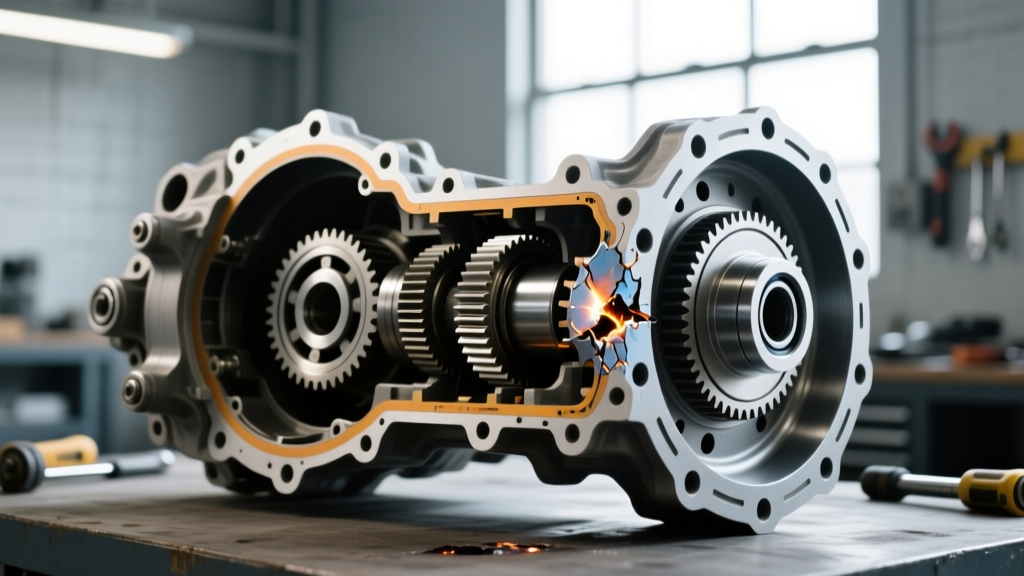
To understand why fluid condition is paramount, you must understand the mechanism. The Honda CR-V rear differential contains a wet clutch pack that engages only when the front wheels lose traction. Two hydraulic pumps—one driven by the front axle and one by the rear—create a pressure differential when wheel slip occurs. This pressure forces the clutch discs together, transferring torque to the rear wheels.
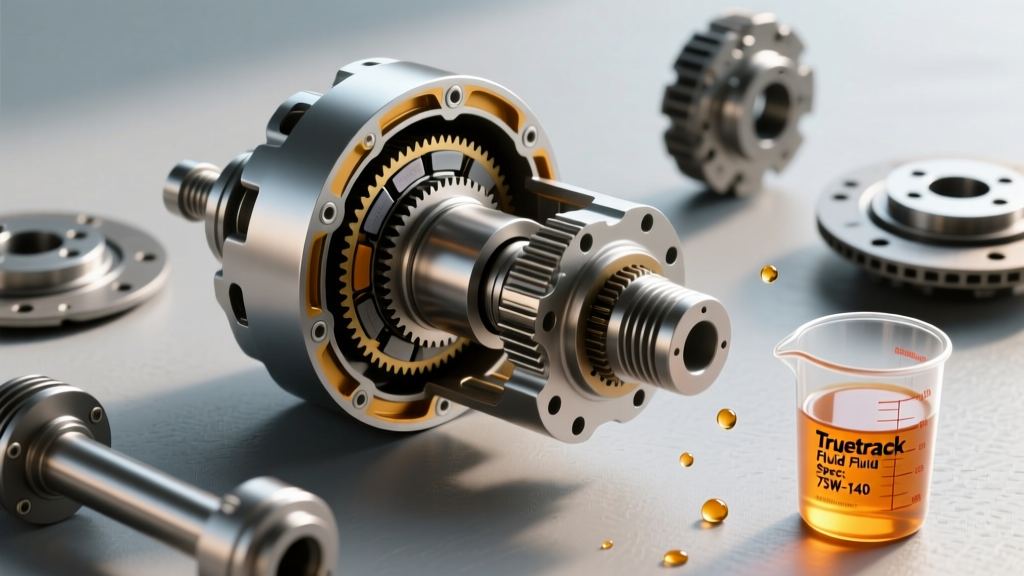
Honda Genuine Dual Pump System Fluid (Part Number 08200-9007) is engineered with specific friction modifiers. Over time, the microscopic shedding of the clutch friction material and the thermal breakdown of these modifiers alter the fluid's chemical composition. When the friction modifiers deplete, the clutches fail to engage smoothly. This results in the infamous 'Honda groan'—a shuddering, binding sensation felt during tight, low-speed turns in parking lots. Catching this degradation early via visual fluid inspection can save you from a $1,500+ rear coupler replacement.
Diagnostic Fluid Color Chart: What Your Fluid is Telling You
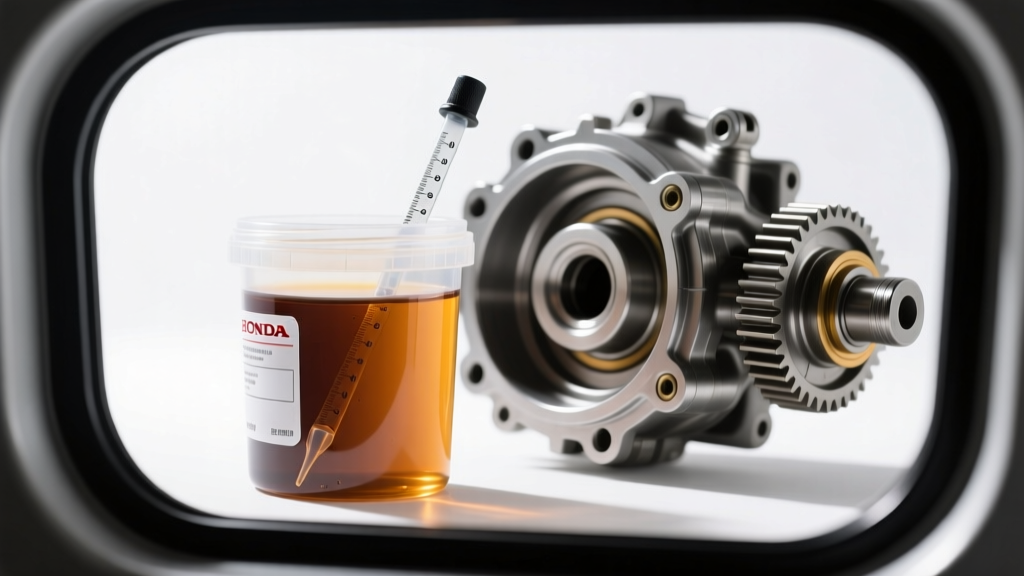
Because the Honda CR-V rear differential lacks a traditional dipstick, the only way to accurately assess fluid condition is to extract a sample via the drain plug. Catch the fluid in a clean, clear glass or plastic pan and evaluate it against the diagnostic matrix below.
| Fluid Color & Appearance | Odor Profile | Diagnostic Meaning | Required Action |
|---|---|---|---|
| Translucent Cherry Red | Slightly sweet, chemical | Factory fill or recently serviced. Friction modifiers are fully intact. | No action required. Re-check in 15,000 miles. |
| Dark Brick Red / Light Brown | Mild burnt oil scent | Normal wear. Microscopic clutch dust is suspended in the fluid. Modifiers are beginning to deplete. | Schedule a standard drain and fill within the next 5,000 miles. |
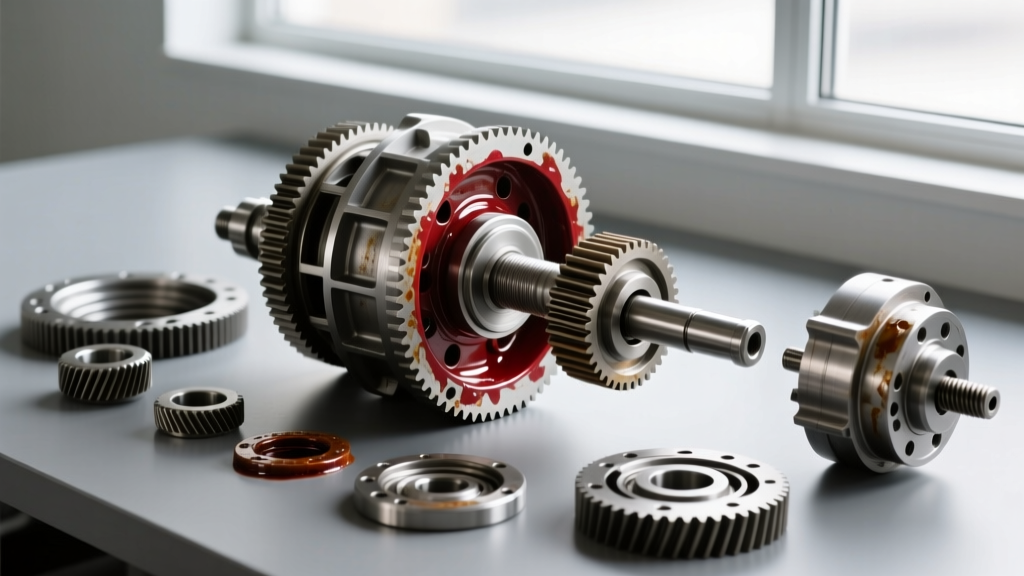
| Opaque Grey / Charcoal Black | Acrid, heavy burnt smell | Severe clutch pack degradation. High volume of friction material shedding. High risk of clutch glazing. | Immediate 'Double-Flush' procedure required. Inspect for binding. |
| Milky / Chocolate Brown | Damp, no burnt scent | Water intrusion. Emulsification has occurred, destroying hydraulic pressure capabilities. | Immediate flush. Inspect axle seals and differential breather tube. |
| Glitter / Metallic Flake | Standard burnt oil | Bearing or internal gear failure (rare in Honda rear diffs, but possible in high-mileage units). | Stop driving. Differential teardown and rebuild required. |
The Danger of Water Intrusion
If your fluid resembles a milky chocolate shake, water has breached the differential housing. In the Honda CR-V, this typically happens for two reasons: a failed rear axle seal, or a submerged differential breather tube. The breather tube is designed to allow the differential to vent pressure as it heats up. If you frequently drive through deep water or off-road trails, water can be sucked past the breather check-valve as the differential cools down. Emulsified fluid cannot maintain the hydraulic pressure required to engage the AWD clutches, leaving you with a front-wheel-drive vehicle in slippery conditions.
Step-by-Step Fluid Extraction and Inspection Procedure
Performing a diagnostic drain on a Honda CR-V rear differential requires minimal tools but strict adherence to procedure. You will need a 10mm hex socket, a torque wrench, a drain pan, and new aluminum crush washers (Part Number 90471-PX4-000).
- Vehicle Preparation: Raise the rear of the CR-V and support it securely on jack stands. Ensure the vehicle is perfectly level side-to-side and front-to-back to get an accurate fluid volume reading and complete drainage.
- Break the Fill Plug First: This is the golden rule of differential service. Locate the upper fill plug and loosen it before touching the drain plug. If the fill plug is seized and you drain the fluid first, you will strand the vehicle.
- Extract and Observe: Place your clear catch pan beneath the rear differential. Remove the lower drain plug (10mm hex). Allow the fluid to flow completely. Observe the initial color, and note if the flow is sluggish, which indicates severe oxidation and sludge buildup.
- The Magnet Test: While the Honda rear differential drain plug is not typically magnetic from the factory, wipe the fluid off and run a rare-earth magnet over the plug and the drain hole. The clutch friction material is non-ferrous and will wash right through. If you feel ferrous metal shards, you have internal bearing or gear failure.
- Inspect the Breather: While under the vehicle, trace the breather hose from the top of the differential housing. Ensure it is routed high up into the chassis and that the check-valve is not clogged with mud or debris.
The 'Double-Flush' Protocol for Chattering Differentials
If your inspection reveals opaque grey fluid, or if the vehicle is already exhibiting the low-speed parking lot groan, a single drain and fill will not resolve the issue. The Honda Real Time AWD system holds roughly 1.25 liters (1.32 quarts) of DPSF, but simply draining it leaves contaminated fluid trapped inside the hydraulic pump galleries and the clutch pack pores.
Master technicians at CR-V Owners Club and Honda dealerships recommend the 'Double-Flush' method to restore clutch operation without replacing the rear coupler:
- Phase 1: Drain the degraded fluid, replace the crush washers, and torque the drain plug to 29 lb-ft (39 N·m).
- Phase 2: Fill the differential with exactly 1.25 liters of fresh Honda DPSF (08200-9007) until it weeps from the fill hole. Torque the fill plug to 29 lb-ft.
- Phase 3: Lower the vehicle. Drive the CR-V in a series of tight, slow-speed figure-eights in an empty parking lot. This forces the hydraulic pumps to cycle and pushes the fresh fluid deep into the clutch pack, purging the old modifiers.
- Phase 4: Raise the vehicle, drain the fluid again (it will already look darker due to the suspended clutch dust), and perform a final fill with fresh DPSF.
This double-flush procedure costs roughly $35 in DIY fluid costs but can resurrect a chattering rear differential, saving you from purchasing a $1,200+ OEM rear differential coupler assembly.
Preventive Maintenance Intervals and Sourcing
Unlike traditional hypoid differentials that can easily run 100,000 miles on a single batch of 75W-90 gear oil, the Honda CR-V rear differential requires much more frequent attention due to the wet-clutch architecture. For severe driving conditions—which includes frequent AWD engagement in snow, towing, or stop-and-go city driving—Honda recommends inspecting the fluid every 15,000 miles and replacing it every 30,000 miles.
According to the official Honda Owners portal, adhering to these intervals prevents the friction modifiers from breaking down past the point of no return. Always use Genuine Honda Dual Pump System Fluid. While some aftermarket brands claim compatibility, the specific friction coefficient required by the Honda clutch pack is highly sensitive, and universal synthetic AWD fluids often trigger the exact binding issues you are trying to avoid.
Summary of Specifications
- System: Honda Real Time AWD (Wet Clutch Dual Pump)
- Fluid Type: Honda Genuine DPSF (08200-9007)
- Capacity: 1.25 Liters (1.32 US Quarts)
- Drain/Fill Plug Torque: 29 lb-ft (39 N·m)
- Crush Washer Part #: 90471-PX4-000 (Qty: 2)
- Tool Required: 10mm Hex / Allen Socket
By treating your Honda CR-V rear differential fluid inspection as a critical diagnostic tool rather than an afterthought, you ensure the longevity of the Real Time AWD system. Reading the color and condition of the DPSF allows you to intercept clutch wear, identify water intrusion, and maintain the seamless torque transfer that makes the CR-V a benchmark in the compact crossover segment.