Differential Leak Detection: Beyond the Pinion Seal
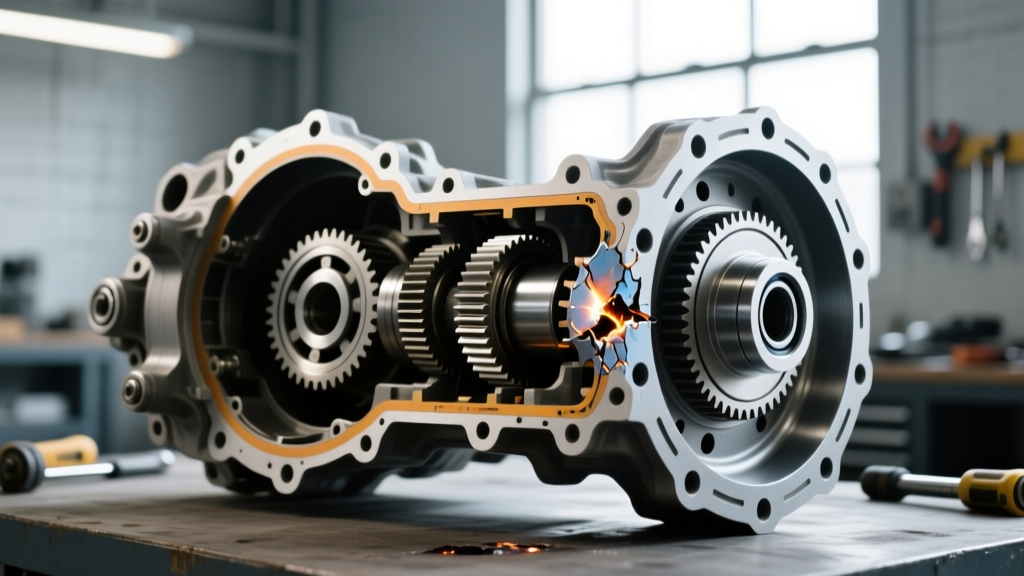
When a puddle of thick, sulfur-scented gear oil appears under your truck or SUV, the immediate assumption is often a failed pinion seal or axle shaft seal. However, on high-mileage workhorses and off-road rigs, the leak source is frequently far more structural. Differential housings endure immense torsional stress, impact loads from trail debris, and cyclical thermal expansion. Over time, this leads to hairline fractures in cast iron center sections or failed plug welds where stamped steel axle tubes meet the housing.
When standard gasket replacements fail to stop the bleeding, enthusiasts and budget-conscious repair shops often ask: Is welding a rear differential housing a viable leak repair strategy? The answer is highly dependent on the axle model, the housing metallurgy, and the exact location of the breach. In this model-specific repair guide, we break down the precise leak detection methods and the metallurgical realities of welding a rear differential on the ubiquitous Ford 8.8-inch and GM 14-bolt axles.
The UV Dye and Talcum Powder Detection Method
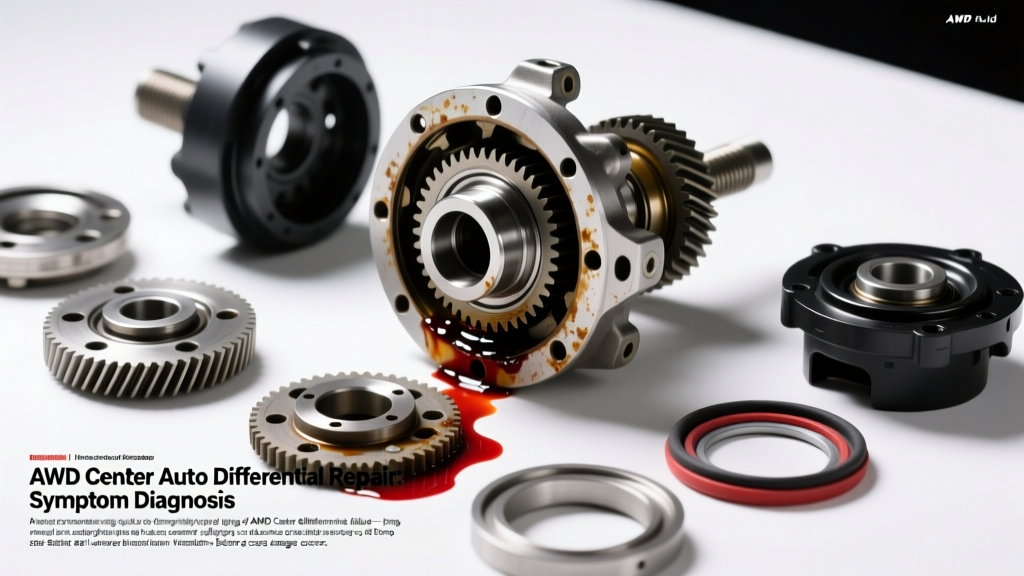
Gear oil (especially 75W-90 and 75W-140 synthetics) is notorious for capillary action, meaning it will creep along axle tubes and mimic a seal leak. Before striking an arc, you must definitively map the leak.
- Initial Degrease: Remove the differential cover, drain the fluid, and pressure wash the housing. Follow up with an aerosol brake cleaner blast to remove embedded road grime.
- UV Dye Injection: Refill the differential with the manufacturer-specified gear oil mixed with a petroleum-compatible UV fluorescent dye. Run the vehicle under load for 20 miles to bring the axle up to operating temperature (typically 160°F to 190°F).
- Blacklight Inspection: Inspect the housing seams, axle tube insertion points, and cover flange with a 365nm UV flashlight. If the leak originates from the axle tube weld seam or a hairline crack in the cast iron center, welding a rear differential housing may be your only alternative to a $1,500+ axle replacement.
The Metallurgy of Differential Housings: Can You Weld It?
Welding a rear differential assembly is not as simple as patching a rusted frame rail. The primary concern is thermal warping. The ring and pinion gear set requires alignment tolerances measured in thousandths of an inch. If the heat from a MIG or TIG welder distorts the housing bore, the gear pattern will shift under load, resulting in catastrophic tooth shearing within 500 miles.
Furthermore, differential housings are constructed from varying materials, each requiring drastically different welding approaches.
| Axle Model | Housing Material | Common Failure Point | Welding Process & Filler | Warp Risk |
|---|---|---|---|---|
| Ford 8.8-inch | Cast Iron Center / Steel Tubes | Axle Tube Plug Welds | TIG (GTAW) with ER70S-2 | Moderate |
| GM 10.5" 14-Bolt | Heavy Cast Iron | Cover Flange Cracks | SMAW with Ni-Rod ENi-CI | High |
| Toyota 8" Clamshell | Cast Aluminum | Pinion Bearing Bore | AC TIG with 4043/5356 | Extreme |
Model-Specific Guide: Repairing Ford 8.8 Axle Tube Weld Leaks
The Ford 8.8-inch rear axle (found in millions of F-150s, Rangers, and Mustangs) utilizes steel axle tubes pressed and plug-welded into a cast iron center section. Heavy towing or off-road articulation can crack these perimeter welds, leading to massive fluid loss.
Step 1: Complete Fluid Evacuation and Prep
You cannot weld over gear oil. Synthetic 75W-140 contains extreme pressure (EP) additives, including sulfur and phosphorus. When subjected to arc temperatures, these additives vaporize into toxic gases and cause severe weld porosity. Drain the differential completely. Use a die grinder with a carbide burr to V-groove the cracked weld seam down to the root, then wipe the area with acetone until the rag comes away perfectly clean.
Step 2: Controlled TIG Welding
While MIG welding is faster, TIG (GTAW) offers superior heat control, which is critical when welding near the ring gear bore. Using an ER70S-2 silicon-deoxidized filler rod, stitch-weld the seam. Do not run a continuous bead. Weld 1 inch, allow the housing to cool below 150°F (use an infrared thermometer), and repeat. This "stitch and skip" method prevents the localized heat buildup that warps the axle tube alignment.
Model-Specific Guide: GM 14-Bolt Cast Iron Center Cracks
The GM 14-bolt full-floating axle is a legendary heavy-duty platform, but its massive cast iron center section is prone to cracking around the differential cover bolt holes if over-torqued or subjected to rock strikes. Welding cast iron is notoriously difficult due to its high carbon content, which forms brittle martensite upon rapid cooling.
According to Miller Welds technical guidelines, repairing cast iron requires specialized nickel-based filler metals and strict thermal management. If you are welding a rear differential center section made of cast iron, you must use a Nickel (Ni-Rod ENi-CI) electrode. Before striking an arc, the housing must be pre-heated to at least 500°F using an oxy-acetylene torch or induction heater to slow the cooling rate. Post-weld, the housing must be wrapped in thermal insulation (like vermiculite or a welding blanket) to cool slowly over 24 hours. Failure to pre-heat and slow-cool will result in the crack immediately propagating further due to thermal shock.
When to Abandon Welding and Replace
Welding a rear differential housing is strictly a repair for peripheral cracks (cover flanges, axle tube seams, spring perches). If the leak originates from a crack that intersects the pinion bearing bore or the carrier bearing caps, welding is entirely contraindicated. The heat required to fuse the metal will invariably distort the bearing bores. In these scenarios, the housing is scrap metal. A remanufactured GM 14-bolt housing assembly typically costs between $600 and $950 in 2026, while a bare Ford 8.8 cast center section runs about $250 to $400 from aftermarket suppliers.
Post-Repair: Torque Specs, Refill, and Verification
Once the weld repair is complete and the housing has returned to ambient temperature, proper reassembly is critical to prevent new leaks. The differential cover mating surface must be filed flat, as the welding process may have pulled the flange out of true.
Fastener Torque Specifications
- Ford 8.8-inch Cover Bolts (10-bolt pattern): 28 - 38 lb-ft (Target 32 lb-ft). Use a high-tack gasket maker like Permatex Ultra Black if a paper/cork gasket is omitted.
- GM 14-Bolt Cover Bolts (14-bolt pattern): 20 - 25 lb-ft. Do not exceed 25 lb-ft, as over-torquing is the primary cause of flange cracking on this specific axle.
Fluid Capacities and Friction Modifiers
Refill the axle with the correct viscosity. For heavy-duty towing or off-road use, upgrade to a 75W-140 Full Synthetic (e.g., AMSOIL Severe Gear or Mobil 1). The Ford 8.8 requires approximately 2.5 to 3.0 pints. If your axle is equipped with a Trac-Lok or Eaton limited-slip differential, you must add 4 oz of Friction Modifier (Motorcraft XL-3 or equivalent) prior to filling to prevent clutch pack chatter and subsequent housing vibration.
Final Leak Testing
After the 20-mile heat cycle, re-inspect the welded seams with your UV blacklight. For comprehensive drivetrain reliability data and gear setup tolerances, always consult resources like Lincoln Electric's metallurgy guides and your vehicle's specific OEM service manual. When executed with proper thermal management and material science, welding a rear differential housing is a highly effective, cost-saving leak repair that keeps your rig on the road and out of the scrap yard.