The Role of Helical Gear Center Differentials in AWD Systems
All-Wheel-Drive (AWD) systems rely heavily on the center differential to manage the front-to-rear torque split and accommodate rotational speed differences between the axles during cornering. While many modern AWD vehicles use electronically controlled clutch packs, performance-oriented and legacy AWD systems frequently utilize helical gear designs. When engineers and enthusiasts adapt the architecture of a truetrac limited slip differential for center differential applications—or when diagnosing functionally identical helical units like the Torsen T-2/T-3 found in Audi Quattro and custom AWD transfer cases—the diagnostic approach must shift from electronic troubleshooting to pure mechanical and fluid dynamics.
Unlike clutch-type limited-slip differentials (LSDs) that rely on friction plates and preload springs, helical gear center differentials operate on the principle of axial thrust and gear separation forces. This design provides a seamless Torque Bias Ratio (TBR), typically ranging from 2.5:1 to 3.5:1, without the parasitic drag of clutch packs. However, when these units begin to fail, the symptoms are often misdiagnosed as transfer case chain stretch, viscous coupler failure, or transmission output shaft wear. Proper diagnosis requires a deep understanding of gear geometry, fluid shear stability, and precise drivetrain load testing.
Top 4 Symptoms of a Failing Helical Center Differential
Diagnosing a center differential requires isolating the AWD transfer case from the front and rear axle differentials. Below are the primary failure modes associated with helical gear center units.
1. Low-Speed Binding and Drivetrain Wind-Up
Helical gear center differentials are torque-sensitive, not speed-sensitive. During tight, low-speed maneuvers (such as parking lot turns), the front and rear driveshafts must rotate at significantly different speeds. If the gear oil has degraded or the internal thrust washers have worn past their 0.005-inch tolerance, the helical gears will fail to slide axially to relieve the binding force. This results in severe drivetrain wind-up, characterized by a 'hopping' sensation from the rear tires and a loud clunking noise from the transfer case extension housing. Many technicians mistakenly diagnose this as a seized U-joint or a failing steering angle sensor.
2. High-Frequency Whine Under Deceleration
A distinct, high-pitched whine that occurs exclusively during throttle lift-off (deceleration) is a hallmark of helical gear backlash issues. In a center differential application, the helical gears are constantly meshed. As the gear oil loses its kinematic viscosity due to extreme shear forces inside the AWD transfer case, the microscopic fluid film separating the involute gear profiles collapses. This allows metal-to-metal contact on the coast side of the gear teeth. If the whine shifts pitch precisely in correlation with vehicle speed rather than engine RPM, the center differential is the primary suspect.
3. Torque Bias Collapse (AWD Slippage)
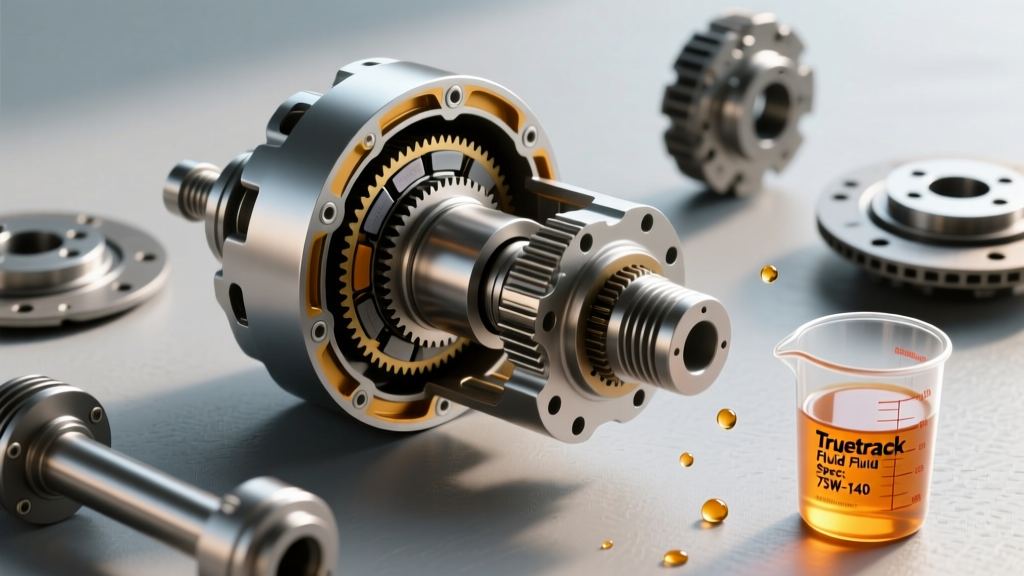
The primary advantage of a Truetrac-style helical design is its ability to transfer torque to the axle with traction. If the internal pocket gears or worm wheels become rounded off due to shock loading (common in high-horsepower AWD launches), the unit will lose its TBR. The symptom manifests as the vehicle operating effectively in FWD or RWD only, accompanied by a spinning center driveshaft while the secondary axle receives zero torque. This is often misdiagnosed as a failed transmission output sensor or a slipping torque converter.
4. Transfer Case Overheating and Fluid Shear
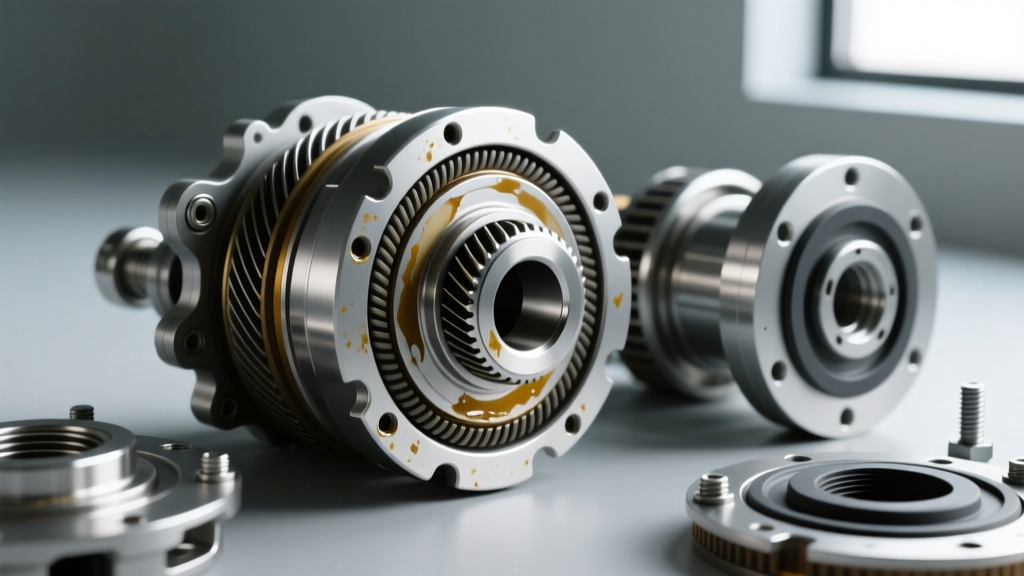
Because helical center differentials rely on axial thrust against thrust washers to generate the friction necessary for torque biasing, they generate immense localized heat. If the transfer case fluid is not rated for high shear stability, the fluid will rapidly oxidize, turning from a clear amber to a burnt, opaque black. This thermal breakdown accelerates thrust washer wear, leading to catastrophic gear misalignment.
Fluid Diagnostics: The Friction Modifier Mistake
As a core component of drivetrain maintenance, fluid analysis is the most critical step in diagnosing AWD center differential issues. The most common cause of premature helical center diff failure is the incorrect application of Friction Modifiers (FM).
Expert Warning: Helical gear differentials do NOT use clutch packs. Adding a limited-slip friction modifier (like Ford XL-3 or GM EOS) to a helical center differential will coat the thrust washers, eliminating the internal friction required for the gears to bind and transfer torque. This will instantly cause AWD slippage and torque bias collapse.
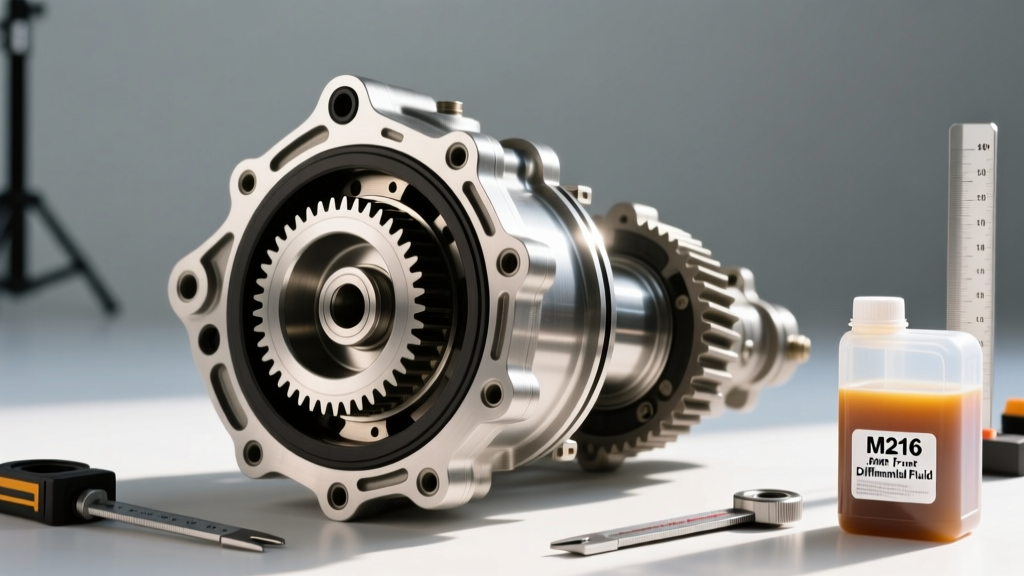
When servicing or diagnosing these units, you must verify the exact chemical composition of the fluid currently in the transfer case. According to Red Line Oil's technical documentation, synthetic 75W-90 GL-5 gear oils without clutch-pack modifiers provide the necessary extreme pressure (EP) protection for helical gear thrust surfaces while maintaining shear stability under high-load AWD operation.
| Fluid Parameter | Optimal Specification (Helical Center Diff) | Symptom of Incorrect Fluid / Degradation |
|---|---|---|
| Viscosity Grade | SAE 75W-90 (Synthetic) | Whining under load; rapid thrust washer wear |
| API Service Class | GL-5 (High EP Additives) | Micro-pitting on helical gear flanks |
| Friction Modifier | NONE (Strictly Prohibited) | AWD slippage; inability to bias torque to slipping axle |
| Shear Stability | High (Polymer-thickened synthetics) | Fluid thinning at 220°F+; transfer case overheating |
| Drain Interval | 30,000 - 50,000 miles (Severe Duty) | Sludge formation; blocked internal oiling galleries |
Step-by-Step Center Differential Troubleshooting Protocol
To accurately isolate a center differential failure from front/rear axle issues, follow this mechanical diagnostic protocol:
- The 4-Wheel Lift Test: Raise the vehicle on a symmetrical 4-post lift or four jack stands. With the transmission in Neutral and the parking brake disengaged, rotate the front driveshaft by hand. In a properly functioning open or helical center diff, the rear driveshaft should rotate in the opposite direction (if axles are unlocked) or remain stationary while the front wheels spin. If you encounter severe mechanical binding or 'notchy' resistance that feels like grinding, the center differential's internal pocket gears are likely damaged.
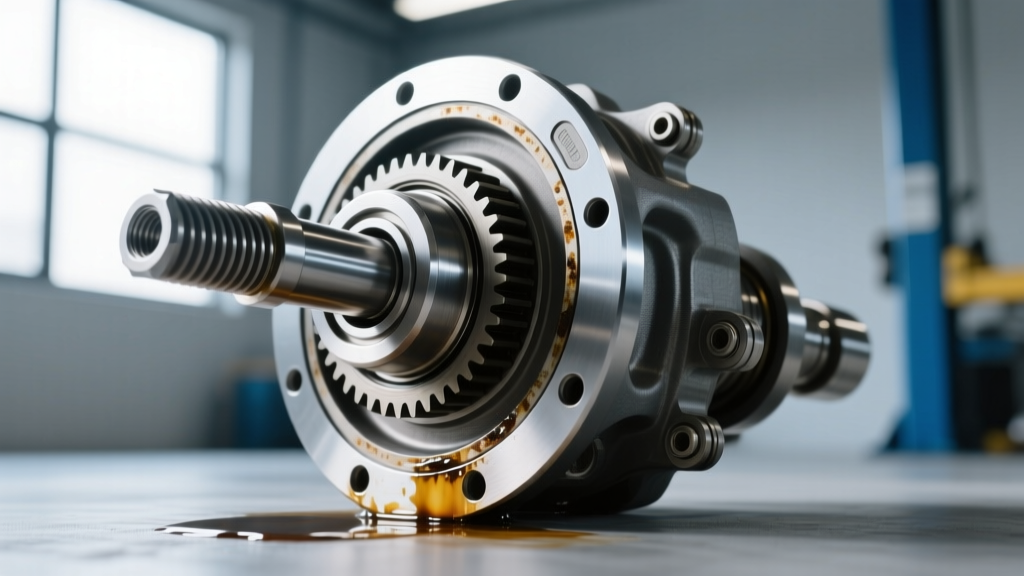
- Fluid Extraction and Particle Analysis: Extract 50cc of gear oil from the center differential fill plug. Inspect for particulate matter. Brass/gold flakes indicate thrust washer degradation (normal in high-mileage units but requires monitoring). Steel shards or chunky magnetic debris on the drain plug indicate catastrophic helical gear tooth shearing or bearing cage failure, mandating an immediate teardown.
- Thermal Imaging: After a 15-mile mixed driving cycle, use an infrared thermal camera to scan the transfer case extension housing. A properly lubricated helical center diff should read between 140°F and 170°F. Readings exceeding 210°F indicate severe internal friction due to thrust washer failure or incorrect fluid viscosity.
Replacement Costs, Part Numbers, and Torque Specifications
If diagnostics confirm internal mechanical failure, replacing or rebuilding the center differential requires precision torque management. While axle-mounted Truetrac units (like the popular Eaton part #19119-1 for Dana 30 axles) are widely available, AWD center differential helical units are often integrated into the transfer case or transmission extension housing (such as the Subaru Symmetrical AWD center diff assembly). For deeper insights into AWD architecture, refer to Subaru's official AWD engineering documentation.
2026 Pricing and Labor Estimates
- OEM Helical Center Differential Assembly: $850 - $1,600 (depending on vehicle integration and TBR rating).
- Aftermarket/Custom Helical Swap Kits: $600 - $950.
- Premium Synthetic 75W-90 GL-5 Gear Oil (3 Quarts): $65 - $90.
- Professional Diagnostic & Fluid Service Labor: $180 - $250 (based on 1.5 - 2.0 hours at standard 2026 shop rates).
Critical Torque Specifications
When reinstalling the center differential housing or transfer case extension, improper torque will lead to housing warpage, gear misalignment, and immediate fluid leaks. Always reference the specific OEM service manual, but standard baseline specifications for AWD center diff housings include:
- Extension Housing to Transmission Case Bolts (M10x1.25): 35 - 40 lb-ft (47 - 54 Nm). Apply blue threadlocker (Loctite 243) to prevent vibration-induced backing out.
- Center Differential Mounting Nuts (Driveshaft Flange): 110 - 145 lb-ft (150 - 195 Nm). Must be torqued with the parking brake engaged or transmission in Park to prevent drivetrain rotation.
- Differential Drain/Fill Plugs (with copper crush washer): 25 - 30 lb-ft (34 - 41 Nm). Never overtighten, as aluminum transfer case housings will strip easily.
By understanding the unique mechanical and fluid requirements of helical gear designs, technicians and enthusiasts can accurately diagnose AWD drivetrain anomalies, avoiding costly misdiagnoses and ensuring the longevity of the vehicle's all-wheel-drive system. For comprehensive technical data on helical gear differentials, consult the Eaton automotive differential engineering archives.