The Drivetrain Dilemma: Understanding Your CR-V's Differentials
When searching for a Honda CR-V differential fluid change, many owners stumble into a web of confusing drivetrain terminology. Forums and generic auto parts stores often throw around terms like 'open differential,' 'limited slip differential (LSD),' and 'locking locker' without distinguishing between traditional truck axles and the sophisticated, transverse-engine AWD systems found in modern crossovers. To perform proper maintenance, select the correct fluid, and avoid catastrophic drivetrain damage, you must first understand the mechanical differences between open and limited slip differentials, and more importantly, how your specific Honda CR-V fits into this landscape.
The Honda CR-V utilizes a unique setup. The front differential is an open differential integrated directly into the transmission transaxle housing. The rear differential, however, is not a traditional mechanical LSD; it is a clutch-based AWD coupler (historically known as the Dual Pump System or Real Time AWD). Confusing a traditional mechanical LSD with Honda's hydraulic/electromagnetic rear coupler is the leading cause of improper fluid selection during a Honda CR-V differential fluid change. Let us break down the mechanical realities of open vs. limited slip differententials, and exactly what your CR-V requires in 2026.
Open vs. Limited Slip: A Mechanical Comparison
To understand maintenance requirements, we must look at how these units distribute torque. According to Wikipedia's comprehensive guide on differential mechanics, the fundamental purpose of any differential is to allow the left and right wheels to rotate at different speeds while cornering. However, how they handle slip is where the engineering diverges.
The Open Differential
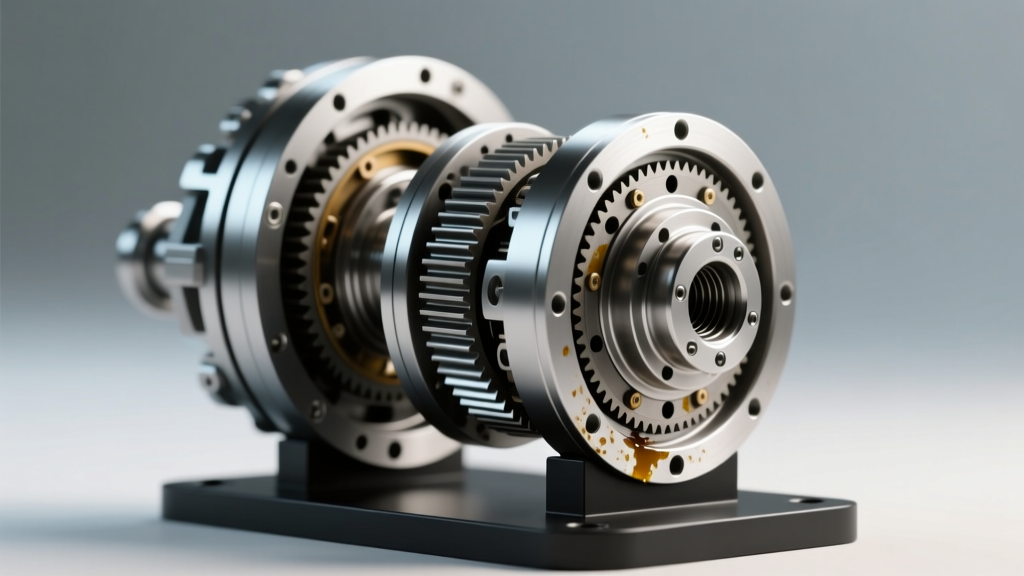
An open differential uses a set of spider gears and side gears to split torque equally. Its fatal flaw is that it always sends power to the path of least resistance. If your left front wheel is on ice and the right is on dry asphalt, 100% of the rotational force goes to the spinning ice wheel, leaving you stranded. The front transaxle of your Honda CR-V uses an open differential. Because it is housed inside the transmission, it shares lubrication with the transmission fluid (Honda ATF DW-1 or Honda CVT fluid, depending on your model year), meaning there is no standalone 'front differential fluid change' for most CR-V generations.
The Mechanical Limited Slip Differential (LSD)
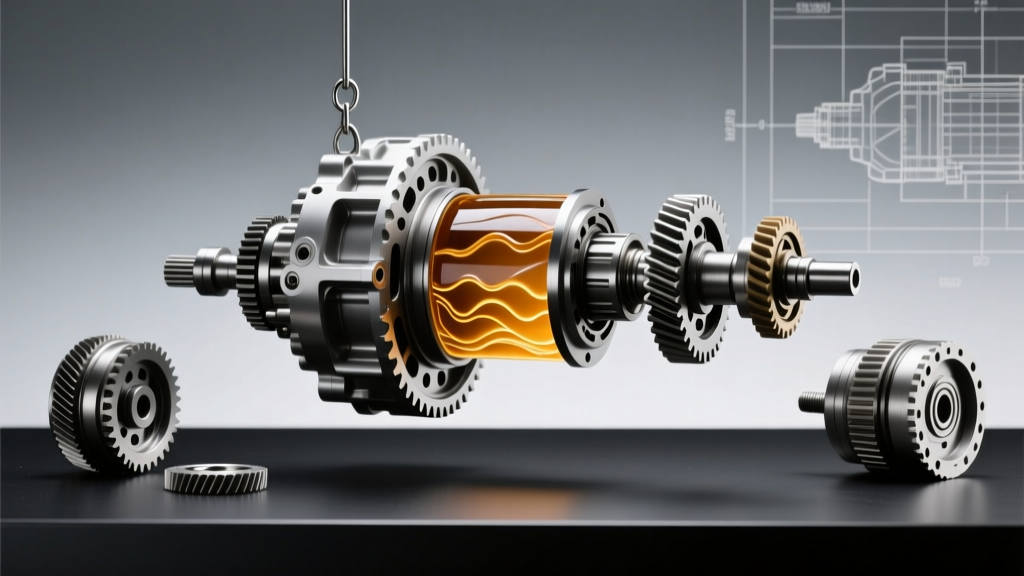
A mechanical LSD solves the open differential's traction issue by introducing internal friction. Clutch-type LSDs use a stack of friction plates and preload springs to bind the axles together when one wheel loses traction. Gear-type LSDs (like the Torsen unit) use complex worm gears that mechanically lock under torque load. These units require specialized gear oils loaded with friction modifiers to prevent the clutch packs from chattering and wearing out prematurely.
Where the Honda CR-V Rear Differential Fits In
The rear differential of an AWD Honda CR-V is frequently misidentified as a standard LSD. In reality, it is an on-demand torque-transfer coupling. Older models (pre-2015) use a hydraulic Dual Pump system, while newer models utilize an electronically controlled electromagnetic clutch pack. While it functions similarly to an LSD by transferring power to the rear wheels when front slip is detected, its internal architecture is entirely different.
| Differential Type | Torque Biasing Mechanism | Typical Application | Fluid Requirement | Friction Modifier Needed? |
|---|---|---|---|---|
| Open Differential | Spider/Side Gears (Path of least resistance) | CR-V Front Transaxle | Shared Transaxle ATF/CVT | No |
| Clutch-Type LSD | Friction Plates & Preload Springs | Trucks, Sports Cars (e.g., Ford 8.8) | 75W-90 GL-5 Gear Oil | Yes (Strictly Required) |
| Helical/Gear LSD | Worm Gears (Torque-sensing binding) | Off-Road, Performance (e.g., Torsen) | 75W-90 GL-5 Gear Oil | No |
| Honda Real Time AWD (Dual Pump/Clutch) | Hydraulic Pressure / Electromagnetic Clutches | Honda CR-V Rear Differential | Honda DPSF-II | No (Modifiers will destroy it) |
The Danger of 'Universal' LSD Fluids in a CR-V
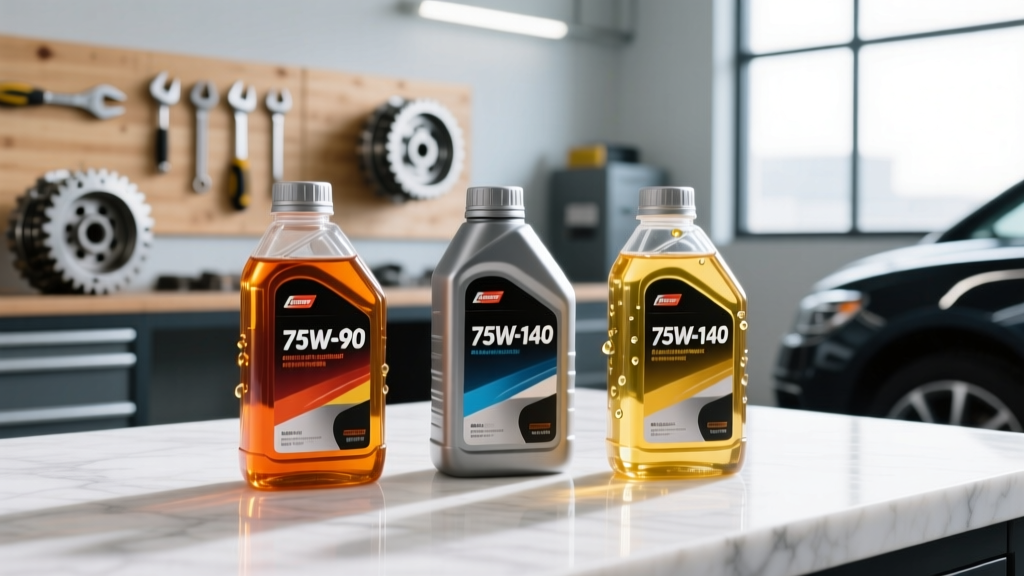
This is the most critical E-E-A-T warning for any DIY mechanic or independent shop performing a Honda CR-V differential fluid change. If you walk into an auto parts store and ask for 'Limited Slip Gear Oil' for your rear differential, you will likely be handed a bottle of 75W-90 GL-5 with friction modifiers. Do not put this in your CR-V.
Honda's Dual Pump Fluid II (DPSF-II) is a highly specialized, low-viscosity hydraulic fluid designed specifically to actuate and cool the microscopic clutch packs in the Real Time AWD system. Standard GL-5 gear oil is far too thick for the hydraulic pumps to move, and the friction modifiers designed for traditional LSDs will cause the Honda electromagnetic/hydraulic clutches to slip, overheat, and ultimately fuse together. Once the rear clutch packs fuse, your CR-V will bind violently during tight parking lot turns, destroying the rear differential and the transfer case.
Honda CR-V Rear Differential Service Specifications
To execute a proper Honda CR-V differential fluid change on the rear axle, you must adhere to strict OEM specifications. As of 2026, aftermarket alternatives exist, but OEM fluid remains the gold standard for preventing the infamous 'CR-V rear diff groan.'
- Required Fluid: Honda Dual Pump Fluid II (DPSF-II)
- OEM Part Number: 08200-9007
- Fluid Capacity: 1.25 to 1.30 Liters (Approx. 1.37 US Quarts). Always purchase two quarts.
- Drain Plug Torque: 43 N·m (32 lb-ft)
- Fill Plug Torque: 43 N·m (32 lb-ft)
- Tooling Required: 10mm Hex (Allen) socket, 3/8-inch drive torque wrench, fluid transfer pump, new aluminum crush washers (Part# 90471-PX4-000).
Step-by-Step Fluid Exchange Protocol
Unlike a traditional solid-axle truck differential where you drop a metal pan, the CR-V rear diff features a sealed housing with drain and fill plugs. Always remove the fill plug first. If you drain the fluid and then discover the fill plug is seized or stripped, you will be left with a disabled vehicle and an empty differential.
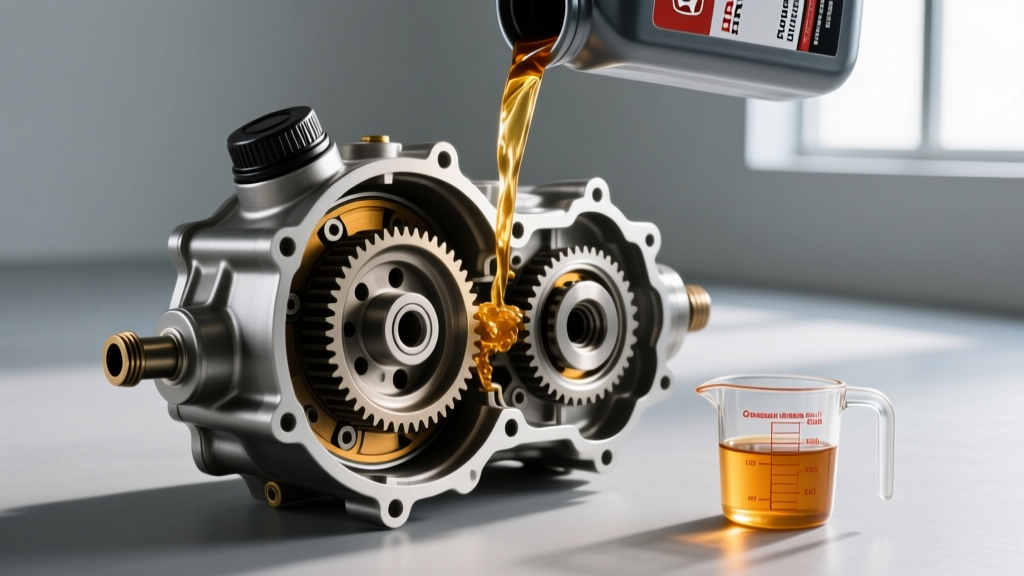
Once the fill plug is removed, place a catch pan under the drain plug and remove it using your 10mm hex socket. Allow the fluid to drain completely; you will likely notice a metallic sheen or fine glitter in the old fluid. This is normal clutch pack wear material. Once drained, reinstall the drain plug with a fresh crush washer and torque to 32 lb-ft. Using a fluid pump, inject the new DPSF-II into the fill hole until it begins to weep out of the threads. Reinstall the fill plug with a new washer, torque to 32 lb-ft, and wipe the housing clean.
Diagnosing the 'CR-V Rear Diff Groan'
Why do owners seek out a Honda CR-V differential fluid change in the first place? The most common symptom of degraded DPSF-II fluid is a low-frequency groaning or shuddering noise emanating from the rear of the vehicle during slow, tight turns (such as pulling into a parking space).
This noise is not a failing gear set; it is clutch chatter. Over time, the specialized friction properties of the DPSF-II fluid break down due to thermal cycling and shear forces. The clutch packs begin to grab and release rapidly instead of engaging smoothly. In 90% of cases, performing a single Honda CR-V differential fluid change with fresh OEM DPSF-II will completely eliminate the groan. If the noise persists after two consecutive fluid changes spaced 500 miles apart, the clutch packs have suffered permanent mechanical glazing, and a rear differential rebuild or replacement is required.
2026 Cost Breakdown: Dealer vs. DIY
Maintaining your AWD system does not have to break the bank, but ignoring it will result in a $2,500+ rear differential replacement bill. Here is what you can expect to pay for a Honda CR-V differential fluid change in the current market:
- Honda Dealership: $130 - $190 (Includes shop supplies, labor, and OEM DPSF-II).
- Independent Mechanic: $90 - $140 (Ensure they use OEM Honda DPSF-II, not a 'universal' AWD fluid).
- DIY at Home: $25 - $35 (Cost of two quarts of OEM fluid and a set of crush washers, assuming you own the tools).
For further reading on the evolution of Honda's AWD architecture, the Honda Real Time 4WD historical archive provides excellent context on how the Dual Pump system evolved into the modern electromagnetic setups found in the 2024-2026 CR-V Hybrid models.
Final Verdict: Know Your Hardware
The comparison between an open differential and a limited slip differential is a masterclass in mechanical engineering, but as a Honda CR-V owner, your maintenance reality is entirely unique. You are not maintaining a traditional mechanical LSD, nor are you maintaining a simple open rear axle. You are servicing a highly sensitive, on-demand hydraulic/electromagnetic clutch coupler. By understanding this distinction, avoiding the trap of generic LSD friction modifiers, and strictly adhering to Honda's DPSF-II specifications and 32 lb-ft torque values, you will ensure your CR-V's AWD system operates silently and flawlessly for hundreds of thousands of miles.