The Ford 8.8 Axle: Legacy, Leaks, and the 2026 Reality
The Ford 8.8-inch rear axle is arguably one of the most prolific and durable drivetrain components ever produced by the Blue Oval. Found in everything from 1986-2014 Mustangs to F-150s, Rangers, and Explorers, this semi-floating axle is a staple of the automotive world. However, as of 2026, millions of these axles are well into their second or third decade of service. With age comes the inevitable degradation of elastomeric seals, leading to gear oil leaks that can quickly destroy a limited-slip differential (LSD) if left unaddressed.
When an 8.8 axle equipped with a Trac-Lok (clutch-type) or Torsen (gear-type) differential loses fluid, the resulting friction and heat will annihilate internal components. This model-specific repair guide will walk you through accurate leak detection, precise seal replacement procedures, and the critical fluid refill process—specifically focusing on selecting the correct additive for limited slip differential applications to prevent clutch chatter and premature wear.
Diagnosing the Leak: Visual Inspection Matrix
Before ordering parts, you must accurately identify the leak source. The 8.8 axle has three primary failure points for fluid egress. Clean the entire axle housing with brake cleaner, run the vehicle to operating temperature, and inspect the following areas:
| Leak Location | Common Culprit | Visual Symptom | Repair Complexity |
|---|---|---|---|
| Pinion Yoke / Driveshaft Junction | Pinion Shaft Seal | Fluid slung forward onto the undercarriage and exhaust; wet yoke neck. | Medium (Requires preload measurement) |
| Wheel Hub / Brake Backing Plate | Axle Shaft Seal | Fluid inside the rear wheel, wet brake shoes/pads, dripping from the hub. | High (Requires opening differential to remove C-clips) |
| Differential Cover Perimeter | RTV Silicone / Cork Gasket | Seeping along the 10-bolt cover edge; dirt accumulation on the lower lip. | Low (Drain, clean, reseal) |
Pinion Seal Replacement: The Crush Sleeve Dilemma
The pinion seal (typically National 8660S or Timken 8660S) is the most frequent offender on the 8.8. Replacing it is not as simple as unbolting the yoke and prying out the old rubber. The 8.8 utilizes a crush sleeve to set pinion bearing preload. If you over-torque the pinion nut during reassembly, you will crush the sleeve too far, overloading the bearings and guaranteeing a whining differential within 500 miles.
Step-by-Step Pinion Seal Procedure
- Measure Baseline Preload: Before removing anything, use an inch-pound torque wrench on the pinion nut to measure the rotational drag of the bearings. A healthy, broken-in 8.8 axle should read between 8 to 14 in-lbs of rotational preload.
- Mark and Remove: Mark the yoke to the driveshaft for perfect realignment. Remove the 1310 U-bolt straps and the pinion nut (usually a 27mm or 1-1/16" socket).
- Extract and Prep: Use a seal puller to remove the old seal. Clean the yoke neck with emery cloth to ensure no grooves will tear the new seal lip.
- The Crush Sleeve Rule: While some mechanics reuse the old crush sleeve by applying thread locker to the nut, the only factory-correct method is to replace the crush sleeve and pinion nut entirely. If you choose the shortcut, you must tighten the nut to the exact thread mark you made before removal, then verify rotational preload matches your baseline.
- Install New Seal: Tap the new Timken/National seal flush using a specialized seal driver or a large socket. Apply a thin layer of grease to the seal lip to prevent dry-start burning.
Expert Warning: Never use an impact wrench to tighten the pinion nut if you are installing a new crush sleeve. Use a long breaker bar and an inch-pound torque wrench to check preload every quarter-turn. Once you exceed 14 in-lbs on a new sleeve, the sleeve is permanently over-crushed and must be replaced again.
Axle Shaft Seals: Navigating the C-Clip Removal
If your leak is at the wheel hub, you are dealing with a failed axle shaft seal (Timken 8835S for standard 31-spline 8.8 axles). Unlike the pinion seal, accessing the axle seals requires opening the differential housing.
- Drain the differential fluid and remove the 10-bolt cover.
- Locate the 8mm 12-point bolt securing the differential cross-pin. Remove the bolt and slide the cross-pin out.
- Push the axle shaft inward toward the center of the vehicle. This will expose the C-clip retaining ring on the inboard side of the axle shaft.
- Use a magnetic pick-up tool or a specialized C-clip removal tool to extract the clip.
- Slide the axle shaft completely out of the housing to access the seal and bearing.
According to Timken's engineering guidelines, if the bearing shows signs of pitting or the roller surface has a visible wear groove, replace the bearing and race as a set (Timken SET36) rather than just swapping the seal.
Refilling: Choosing the Right Additive for Limited Slip Differential
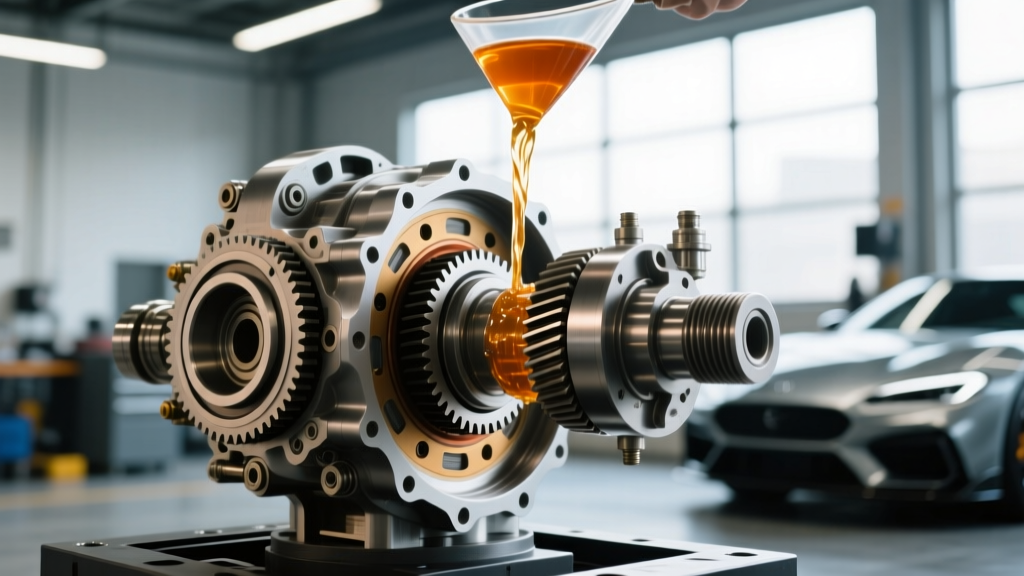
Once the leaks are repaired, the refill process is where many DIYers make critical errors. The Ford 8.8 Trac-Lok uses carbon-fiber or paper-based clutch packs that require a highly specific coefficient of friction to operate smoothly. If you fill the axle with standard API GL-5 gear oil without a friction modifier, the clutch packs will bind during cornering, resulting in violent "chatter," judder, and eventual destruction of the clutches.
The Chemistry of Friction Modifiers
When sourcing an additive for limited slip differential units, you are looking for long-chain organic friction modifiers. These molecules coat the clutch surfaces, allowing them to slip smoothly under low-torque cornering loads while still locking firmly under heavy acceleration. The American Petroleum Institute (API) sets baseline standards for GL-5 gear oils, but LSD friction modifiers fall under specific OEM automaker specifications, such as Ford's EST-M2C118-A.
Recommended Fluids and Additives for the 8.8
- OEM Fluid: Motorcraft 75W-140 Synthetic Gear Oil (XY-75W140-QL). Note: Some modern synthetic blends claim to have "limited slip additive already included." In practice, for the 8.8 Trac-Lok, these pre-mixed fluids are rarely sufficient to eliminate chatter on their own.
- The Gold Standard Additive: Motorcraft XL-3 Friction Modifier. This is the exact factory fill additive for Ford LSDs.
- Aftermarket Alternative: Lubegard 40602 Limited Slip Supplement. An excellent synthetic alternative that provides superior thermal stability for track-driven Mustangs.
Capacity and Mixing Protocol
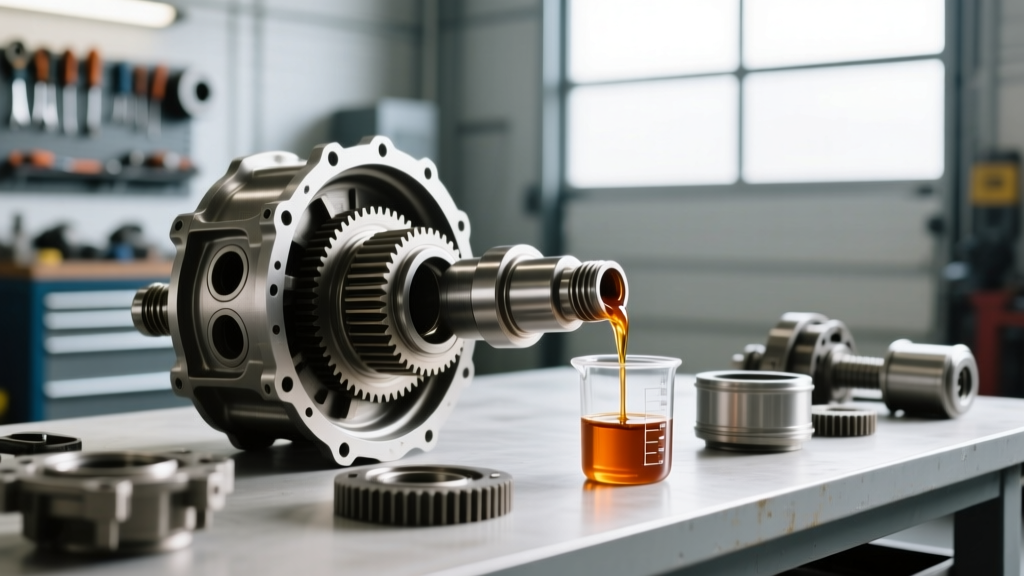
The standard Ford 8.8 differential holds approximately 3.75 to 4.0 pints (1.8 to 1.9 Liters) of fluid. The correct refill protocol is as follows:
- Add 4 to 6 ounces of your chosen additive for limited slip differential applications directly into the fill hole first.
- Top off with 75W-140 or 75W-90 synthetic gear oil until it reaches the bottom edge of the fill plug (roughly 5/8" below the plug threads).
- Drive the vehicle in 10-15 slow, tight figure-eight circles in an empty parking lot. This forces the clutch packs to engage and disengage, circulating the additive into the porous friction material.
- If chatter persists after the figure-eight test, add 1 to 2 more ounces of modifier. Do not over-add, or the differential will slip excessively under hard acceleration.
Cost Breakdown: DIY vs. Dealership (2026 Estimates)
Understanding the financial impact of these repairs helps justify the DIY approach, especially given the specialized knowledge required for LSD additive tuning.
| Repair Scenario | DIY Parts Cost | Dealership / Shop Labor & Parts |
|---|---|---|
| Pinion Seal Replacement | $35 - $60 (Seal, Nut, Sleeve) | $350 - $550 |
| Both Axle Seals (w/ Bearings) | $80 - $120 (Seals, Bearings, Fluid) | $600 - $900 |
| Cover Reseal & Fluid Service | $60 - $90 (RTV, 75W-140, XL-3 Additive) | $250 - $350 |
Final Torque Specifications Reference
Keep this reference handy when reassembling your Ford 8.8 axle to ensure long-term reliability and leak-free operation:
- Differential Cover Bolts (10mm): 25 - 30 ft-lbs
- Axle Shaft Retainer Nuts (1/2" or 12mm): 35 - 40 ft-lbs
- Cross-Pin Lock Bolt (8mm 12-point): 15 - 20 ft-lbs (Apply Blue Loctite 243)
- Driveshaft U-Bolt Straps (12mm): 70 - 95 ft-lbs
For further OEM maintenance schedules and technical service bulletins regarding Ford drivetrain components, always consult Ford Motor Company Support resources. Proper leak detection, meticulous seal installation, and the precise application of a high-quality additive for limited slip differential units will ensure your 8.8 axle survives for another 100,000 miles of trouble-free driving.