The Thermal Reality of the Honda Real Time AWD System
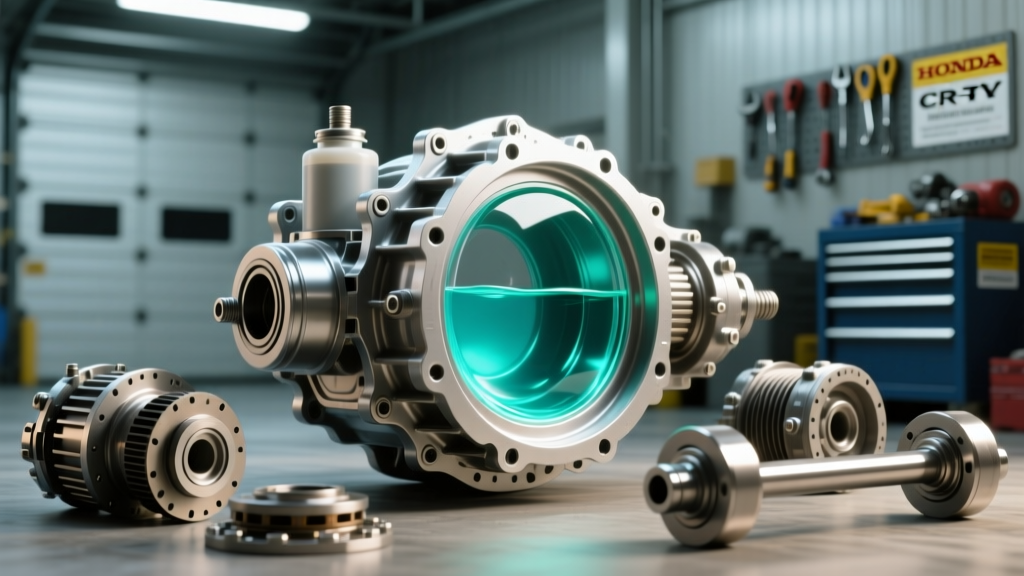
The Honda CR-V has long been a staple of the compact crossover segment, but beneath its family-friendly exterior lies a highly reactive, heat-sensitive all-wheel-drive (AWD) system. Unlike traditional body-on-frame SUVs that utilize massive, high-capacity hypoid gear differentials, the CR-V's Real Time AWD system relies on a compact rear drive assembly and a hydraulic dual-pump or electro-hydraulic clutch pack to distribute torque. While this setup is incredibly efficient for daily commuting and light inclement weather, it introduces a critical vulnerability: thermal saturation.
When the rear differential and AWD coupling are subjected to sustained loads—such as climbing mountain passes, towing near the 1,500-pound limit, or navigating deep snow—the internal friction generates immense heat. Because the CR-V utilizes specialized, low-viscosity fluids rather than heavy 75W-90 gear oils, the margin for error before thermal breakdown occurs is remarkably narrow. Understanding the intersection between the Honda CR-V differential fluid change schedule and the physical limitations of the stock differential cover is paramount for any owner looking to preserve the longevity of their drivetrain in 2026 and beyond.
Fluid Chemistry: Why DPSF-II is Vulnerable to Heat
To understand why cooling and maintenance schedules are critical, we must examine the fluid itself. The rear differential and AWD coupling in modern CR-V models (2015-present) utilize Honda Genuine DPSF-II (Dual Pump System Fluid II, P/N 08200-9007). DPSF-II is not a traditional high-viscosity gear oil; it is a highly engineered hydraulic fluid fortified with specific friction modifiers designed to allow the AWD clutch plates to engage and disengage smoothly without chatter.
The kinematic viscosity of DPSF-II is intentionally low—closer to an automatic transmission fluid (ATF) than a heavy gear oil—to reduce parasitic drag and improve fuel economy. However, this thin film strength means the fluid relies heavily on chemical boundary lubrication. When internal differential temperatures exceed 220°F (104°C), the complex friction modifiers begin to undergo thermal depolymerization. Once these modifiers shear and burn off, the clutch packs lose their ability to modulate torque smoothly, resulting in the infamous 'AWD groan' during tight turns and accelerated wear to the clutch friction surfaces.
Decoding the Honda CR-V Differential Fluid Change Schedule
One of the most common points of confusion for owners is the factory-recommended maintenance interval. If you look up the standard Honda CR-V differential fluid change schedule in the owner's manual, Honda often lists the rear differential fluid under 'inspect' or recommends replacement only at 90,000 miles under 'normal' driving conditions. However, the definition of 'normal' is highly restrictive.
According to Honda's official maintenance portal, 'severe' driving conditions mandate a drastically different approach. If you frequently drive in mountainous terrain, tow a trailer, drive in stop-and-go traffic in hot climates, or traverse snow/sand, the fluid must be replaced much earlier. Furthermore, independent tribological analysis from the Bob Is The Oil Guy community consistently shows that Honda DPSF-II fluid begins to show severe oxidation and friction modifier depletion as early as 25,000 to 30,000 miles under moderate AWD engagement.
Factory Specifications and Torque Data
For the 5th Generation CR-V (2017-2023) and the refreshed models leading into 2026, adhere strictly to the following specifications during your service intervals:
| Component | Fluid Specification | Part Number | Capacity | Drain/Fill Plug Torque |
|---|---|---|---|---|
| Rear Differential (AWD) | Honda DPSF-II | 08200-9007 | 1.3 qt (1.2L) | 33 lb-ft (45 Nm) |
| Front Differential (AWD) | Honda HGO-1 (75W-85) | 08200-HGO-01 | 0.4 qt (380ml) | 33 lb-ft (45 Nm) |
| Transfer Case / Angle Gear | Honda HGO-1 | 08200-HGO-01 | 0.3 qt (280ml) | 33 lb-ft (45 Nm) |
Note: Always replace the aluminum crush washers (Honda P/N 90471-580-000) on the drain and fill plugs to prevent casing thread stripping, a common issue on the soft aluminum housings.
The Weak Link: Stamped Steel Differential Covers
Even if you adhere to a strict 15,000-mile severe-duty fluid change schedule, the physical hardware of the CR-V rear differential presents a thermal bottleneck. The stock rear differential cover on most CR-V models is a thin, stamped steel pan. While stamped steel is cost-effective and lightweight, it possesses a thermal conductivity of roughly 50 W/m·K. In practical terms, this means the stock cover acts more like an insulator than a heat sink, trapping thermal energy inside the differential housing.
Because the rear differential on the CR-V is positioned high and tucked behind the rear subframe, it receives minimal direct airflow compared to the front axle. During sustained highway speeds or low-speed crawling, the heat generated by the hypoid ring and pinion gears, combined with the hydraulic friction of the AWD clutch pack, has nowhere to escape. The fluid temperature spikes, accelerating the oxidation of the DPSF-II fluid regardless of how recently it was changed.
Engineering a Solution: Differential Cooling Upgrades
To combat heat soak, drivetrain engineers and the aftermarket community have developed targeted cooling solutions that address the CR-V's specific thermal deficiencies. Upgrading the differential cover and implementing auxiliary cooling are the most effective ways to extend the life of both the fluid and the AWD clutch packs.
Cast Aluminum Finned Differential Covers
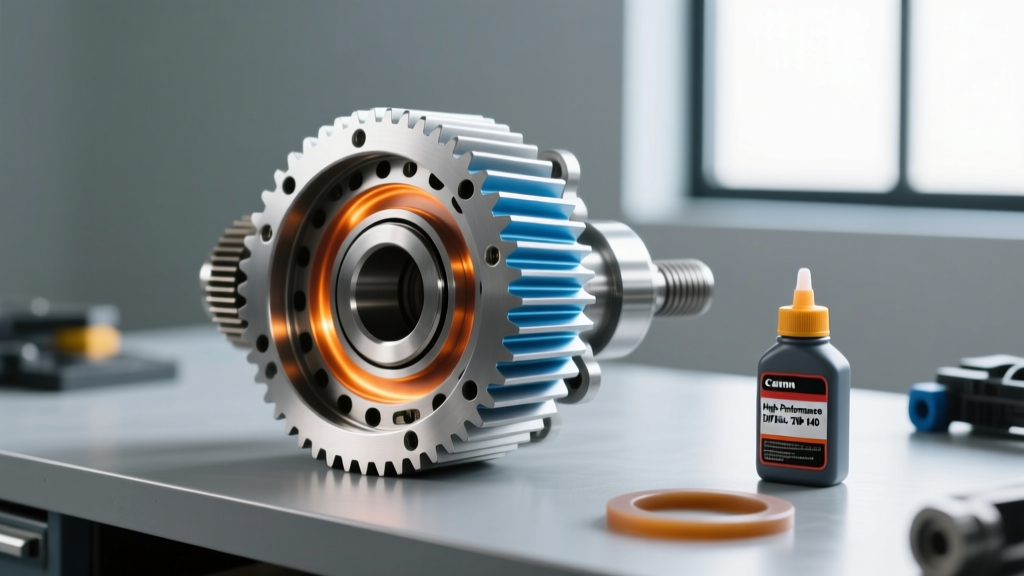
Replacing the stamped steel cover with a cast aluminum, finned differential cover is the most straightforward hardware upgrade. Cast aluminum boasts a thermal conductivity of approximately 160 W/m·K—more than three times that of steel. By adding an external finned surface area, the cover acts as a passive heat sink, utilizing ambient underbody airflow to dissipate heat.
- Surface Area Expansion: Quality aftermarket finned covers increase the external surface area by 40% to 60%.
- Temperature Reduction: Real-world data logging shows a steady-state temperature drop of 15°F to 25°F (8°C to 14°C) during highway cruising, and even more significant reductions during cooldown phases after heavy load.
- Magnetic Drain Plugs: Most premium upgraded covers include integrated neodymium magnetic drain plugs, which capture ferrous metallic wear particles from the ring and pinion gears before they can circulate through the delicate AWD clutch valves.
Auxiliary Heat Exchangers for Extreme Duty
For CR-V owners who push their vehicles into extreme territory—such as overlanding in desert environments or frequent heavy towing—passive finned covers may not suffice. In these scenarios, an active auxiliary differential fluid cooler is required. This involves installing a low-pressure, high-volume fluid pump that draws DPSF-II from the differential, routes it to a front-mounted air-to-oil heat exchanger, and returns it to the housing. While complex and requiring custom fabrication, active cooling can maintain fluid temperatures below the critical 180°F (82°C) threshold regardless of ambient conditions. For detailed thermal management strategies, Motul's technical lubricant data sheets provide excellent baseline metrics on hydraulic fluid shear stability under active cooling conditions.
Diagnosing Thermal Breakdown: The 'AWD Groan'
If you have neglected the Honda CR-V differential fluid change schedule or suspect your stock cover is allowing excessive heat soak, the drivetrain will provide audible warnings before catastrophic failure occurs. The most common symptom is the 'AWD Groan' or 'CR-V Shudder.'
- The Figure-8 Test: Find an empty, dry parking lot. Roll the windows down and turn the steering wheel to full lock.
- Execute Slow Circles: Drive in tight, continuous figure-8 patterns at 5 to 10 mph.
- Listen and Feel: If you hear a distinct groaning, moaning, or binding noise from the rear axle, or feel a rhythmic shudder through the chassis, the friction modifiers in your DPSF-II fluid have thermally degraded.
- The Remedy: Perform an immediate drain and fill. In 90% of cases, introducing fresh, cool DPSF-II fluid will restore the friction modifiers and eliminate the noise. If the noise persists after two consecutive fluid changes, the AWD clutch pack friction surfaces have suffered permanent mechanical glazing and require a rear differential rebuild.
2026 Cost and ROI Analysis
Investing in differential cooling and strict adherence to fluid schedules is economically sound when compared to the cost of drivetrain replacement. Here is a breakdown of the financial realities for CR-V AWD maintenance:
- Routine Fluid Service (DIY): $35 - $50 (Includes 2 quarts of Genuine Honda DPSF-II, 1 quart of HGO-1, and new crush washers).
- Routine Fluid Service (Dealership): $150 - $220.
- Aftermarket Finned Aluminum Cover: $120 - $250 (Depending on brand and integrated magnetic plug features).
- Complete Rear Differential / AWD Coupling Replacement: $1,800 - $3,500+ (Including OEM parts and dealership labor rates).
By upgrading to a finned aluminum differential cover and strictly following a 20,000-mile severe-duty fluid change schedule, you effectively eliminate the risk of thermal clutch pack failure. The ROI on a $150 differential cover and a $40 DIY fluid change is immense, preserving the functionality of your Real Time AWD system and ensuring your CR-V remains capable, quiet, and reliable for hundreds of thousands of miles.