The Thermal Reality of Honda's Real Time AWD System
When diagnosing drivetrain noise or planning maintenance on a Honda crossover, enthusiasts and daily drivers alike eventually confront the rear drive unit (RDU). Unlike traditional body-on-frame trucks with live axles, the Honda CR-V utilizes a sophisticated, transaxle-derived Rear Drive Unit paired with a hydraulic dual-pump clutch system. This setup is incredibly efficient for on-demand all-wheel drive, but it generates significant localized heat. When evaluating the differential fluid change cost Honda CRV owners encounter, it is vital to understand that this service is not just about replacing dirty oil; it is about preserving the friction modifiers that keep the dual-pump clutch packs from groaning, shuddering, or failing entirely under thermal stress.
Heat is the ultimate enemy of the Honda RDU. During sustained highway speeds, towing, or aggressive cornering, the internal hydraulic pumps shear the fluid. As the fluid's shear stability breaks down, the specialized friction modifiers in Honda's Dual Pump System Fluid II (DPSF-II) degrade. This leads to the infamous "Honda groan"—a low-frequency vibration and noise emitted from the rear axle during tight, low-speed turns. To prevent this, understanding the anatomy of the differential housing, the myths surrounding differential covers, and advanced cooling strategies is paramount for any 2026-era CR-V owner or independent mechanic.
The "Differential Cover" Myth on FWD-Based Crossovers
A frequent point of confusion for DIY mechanics transitioning from trucks like the Ford F-150 or Jeep Wrangler to the Honda CR-V is the search for the differential cover. On a traditional solid axle (e.g., a Dana 44 or Ford 8.8), the differential cover is a removable steel or aluminum plate bolted to the front or rear of the differential housing. Removing this cover allows you to drain the fluid, clean out metal shavings from the internal magnet, and install an aftermarket finned cover to increase surface area for passive cooling.
The Honda CR-V does not have a traditional removable differential cover.
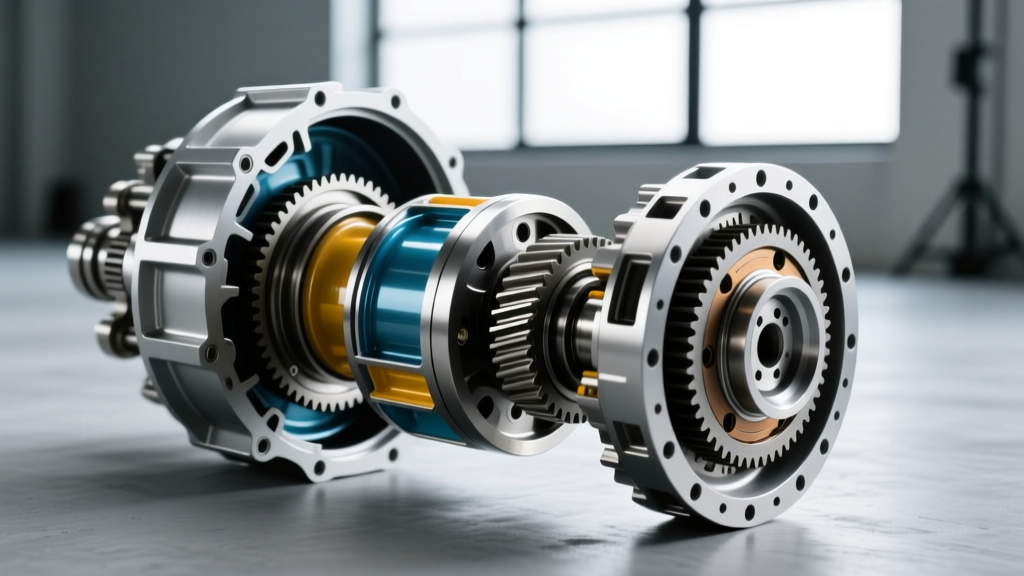
The CR-V's RDU is essentially a sealed, welded, and stamped aluminum/steel casing, much like a manual transmission or transaxle housing. There is no "pan" to drop and no gasket to scrape. Access to the internal gear set and clutch pack is strictly limited to the drain and fill plugs located on the exterior of the housing. Because there is no cover removal, gasket replacement, or RTV sealant curing time required, the baseline differential fluid change cost Honda CRV owners pay at a dealership or independent shop is significantly lower than that of a traditional truck.
Breaking Down the Differential Fluid Change Cost Honda CRV
Because the service is relatively straightforward, labor times are minimal. However, using the correct OEM fluid is non-negotiable. Below is a 2026 market breakdown of what you can expect to pay for this critical service.
| Service Provider | Estimated Cost (USD) | Parts & Labor Breakdown | Pros & Cons |
|---|---|---|---|
| Honda Dealership | $110 - $160 | OEM DPSF-II, new crush washers, 0.5 hr labor | Guaranteed OEM fluid; highest labor rate. |
| Independent Mechanic | $80 - $120 | Aftermarket or OEM fluid, 0.4 hr labor | Cost-effective; ensure they use DPSF-II equivalent. |
| DIY (Home Garage) | $25 - $35 | 2 qts DPSF-II ($20), 2 OEM crush washers ($5) | Requires basic tools and torque wrench; most thorough. |
Note: Never allow a quick-lube shop to flush the CR-V rear differential with generic 75W-90 gear oil. The RDU requires specific hydraulic friction modifiers found only in DPSF-II or highly specialized synthetic equivalents.
Differential Cooling Limitations and Thermal Management
Since you cannot simply unbolt the differential cover and slap on a finned aluminum upgrade, how do you manage heat in the Honda RDU? The stock housing relies entirely on ambient airflow and the thermal mass of the stamped metal casing to dissipate heat. For 95% of commuters, this is adequate. However, for owners who tow small trailers, frequently drive in mountainous terrain, or engage in soft-roading, thermal saturation is a real risk.
When the internal temperature of the RDU exceeds 220°F (104°C), the viscosity of the DPSF-II drops, and the hydraulic pressure required to fully engage the rear clutch packs becomes inconsistent. This results in clutch slip, accelerated wear, and eventual RDU failure—a repair that costs upwards of $1,500 to $2,500 for a remanufactured unit.
Advanced Cooling Solutions for the Honda RDU
If you are looking to improve differential cooling without a traditional cover swap, consider these technical approaches:
- Thermal-Conductive Epoxy Heat Sinks: Some off-road enthusiasts use high-temperature, thermally conductive epoxy (such as Arctic Alumina) to bond universal aluminum finned heat sinks directly to the flat sections of the RDU's stamped steel casing. This increases the surface area for passive heat dissipation without requiring any internal modifications.
- Underbody Aerodynamic Management: The CR-V's underbody plastic splash shields are designed to route ambient air over the exhaust and the rear differential. Removing these shields for "weight savings" or due to damage actually starves the RDU of cross-breeze cooling. Replacing OEM Part # 76470-TLA-A00 (lower cover) is a critical, often overlooked cooling maintenance step.
- Custom Inline Fluid Coolers (Extreme Duty Only): For extreme towing applications, specialized fabricators can drill and tap the RDU housing to install AN-fittings, routing the hydraulic fluid to a small, front-mounted tube-and-fin cooler. This requires a custom PTO cover plate and an inline micro-pump. This is highly advanced and generally not recommended for street-driven vehicles, but it represents the pinnacle of CR-V diff cooling.
Precision Service: Torque Specs and OEM Part Numbers
Whether you are paying the dealership or doing it yourself, the integrity of the drain and fill plugs is paramount. The CR-V RDU operates under high pressure; a leaking fill plug will quickly lead to fluid starvation and catastrophic clutch pack burnout. Always source genuine Honda hardware for the sealing washers, as aftermarket copper or aluminum washers often deform incorrectly against the Honda RDU casing.
Official Honda OEM Part Numbers (2026 Reference)
- Fluid: Honda Genuine Dual Pump System Fluid II (DPSF-II) - Part # 08200-9007
- Drain Plug Washer (18mm): Part # 90471-PX4-000
- Fill Plug Washer (20mm): Part # 90472-PX4-000
Critical Torque Specifications
Do not use an impact wrench on the RDU plugs. The casing threads are easily stripped, which would necessitate replacing the entire differential housing. Use a calibrated torque wrench.
- Drain Plug Torque: 39 lb-ft (53 Nm)
- Fill Plug Torque: 32 lb-ft (44 Nm)
According to technical service bulletins and long-term reliability data shared by the CR-V Owners Club, the most common cause of post-service leaks is the re-use of the factory crush washers. Once compressed, these washers lose their ability to maintain a seal against thermal expansion and contraction cycles.
Expert Diagnostic Tip: Before draining the fluid, perform the "Figure-8 Test." Drive the CR-V to an empty parking lot and perform tight, low-speed figure-eight turns with the windows down. If you hear a distinct groaning or feel a shudder from the rear axle, your DPSF-II fluid has lost its friction modifiers due to thermal shear. A simple drain and fill (repeated twice over 500 miles) will often cure this issue without requiring a clutch pack rebuild.
Fluid Capacity and the "Measure-Out" Method
Unlike engine oil, you cannot simply pour a fixed amount of fluid into the Honda RDU and assume it is correct. The official service manual states the capacity is approximately 1.1 to 1.3 liters (1.16 to 1.37 US quarts) depending on the specific generation (2012-2016 vs. 2017-2022+ platforms). However, internal clutch pack wear and residual fluid left in the hydraulic valves can alter this number.
The golden rule of Honda RDU service is the Measure-Out Method. Drain the old fluid into a clean, graduated measuring vessel. Note the exact volume removed. Then, pump the new DPSF-II fluid into the fill hole until it reaches the exact same volume, plus an additional 2 ounces to account for the new fluid filling the dry spaces of the drain threads. When fluid begins to weep out of the fill hole, stop, insert the fill plug immediately, and torque to 32 lb-ft. For more detailed OEM diagrams and fluid routing, technicians frequently reference Honda Parts Now to verify housing variations across different trim levels and model years.
Conclusion: Protecting the Real Time AWD Investment
While the lack of a traditional removable differential cover limits your passive cooling upgrade options, it simultaneously keeps the differential fluid change cost Honda CRV owners face remarkably affordable. By understanding the thermal limitations of the dual-pump system, strictly adhering to DPSF-II fluid requirements, and utilizing proper torque specs on the drain and fill plugs, you can easily push the lifespan of your CR-V's rear drive unit well past the 150,000-mile mark. Treat the rear differential not as an afterthought, but as a highly sensitive hydraulic clutch system that demands meticulous thermal and fluid maintenance.