The Paradigm Shift: From Dipsticks to Digital Diagnostics
As we navigate the automotive maintenance landscape in 2026, the traditional method of checking transmission fluid has evolved drastically. When researching how to check Honda automatic transmission fluid, most DIYers and even some generalist mechanics still picture pulling a yellow-looped dipstick, wiping it on a rag, and reading the hot/cold crosshatches. While this applies to older Honda 5-speed and 6-speed parallel-shaft automatics, modern Honda vehicles equipped with the ZF-sourced 9-speed (9HP48) or Honda's in-house 10-speed automatic transmissions do not have a dipstick. Instead, they rely entirely on a precision check-plug and the Transmission Fluid Temperature (TFT) sensor.
In this preventive maintenance guide, we will bridge the gap between fluid level verification and electronic sensor diagnostics. If your Honda's TFT sensor is providing skewed data, you cannot accurately check or fill your transmission fluid, leading to severe mechanical consequences.
Why the TFT Sensor Dictates Your Fluid Level
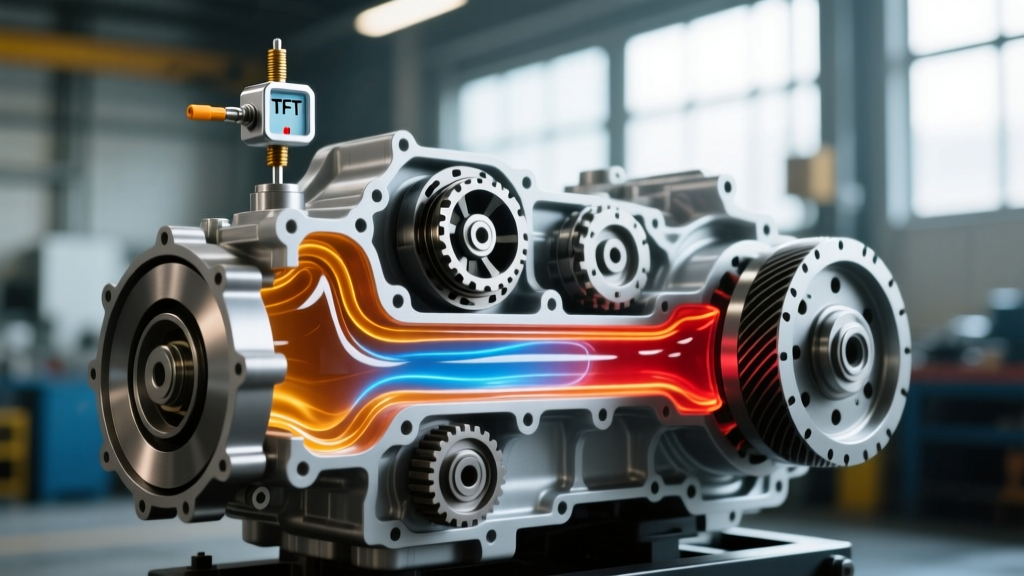
Transmission fluid expands as it heats up. To ensure the hydraulic system operates at the correct pressure without aerating the fluid or starving the clutch packs, the fluid level must be verified at a highly specific temperature window. The vehicle's Transmission Control Module (TCM) relies on the TFT sensor—a negative temperature coefficient (NTC) thermistor—to measure this heat.
If the TFT sensor fails or drifts out of calibration, the TCM may default to a fail-safe temperature value (typically 176°F / 80°C). If you attempt a fluid level check while the TCM is in fail-safe mode, you will inevitably overfill or underfill the transmission. Overfilling a modern Honda 9-speed or 10-speed causes the rotating assembly to whip the fluid into a foam, resulting in delayed shifts, torque converter shudder, and eventual clutch pack burnout.
Target Temperatures and Fluid Specifications
Before attempting a fluid check, you must know your specific transmission's target temperature window and required fluid type. Using the incorrect fluid or checking at the wrong temperature voids the preventive maintenance objective entirely.
| Transmission Model | Application Examples | Required Fluid | Target TFT Window | Check Method |
|---|---|---|---|---|
| 5-Speed Parallel Shaft | 2008-2012 Accord, V6 | Honda ATF DW-1 | 140°F - 158°F (60-70°C) | Dipstick (Hot Marks) |
| ZF 9HP48 (9-Speed) | 2016+ Pilot, 2018+ Odyssey | Honda ATF Type 3.1 | 104°F - 113°F (40-45°C) | 18mm Check Plug |
| Honda 10-Speed | 2018+ Accord 2.0T, Ridgeline | Honda ULTF | 104°F - 113°F (40-45°C) | 18mm Check Plug |
Step-by-Step: How to Check Honda Automatic Transmission Fluid via TFT Data
To perform a scientifically accurate fluid level check on a modern Honda, you must monitor the TFT sensor in real-time using a bi-directional OBD2 scan tool (such as an Autel MaxiSys, Foxwell NT510 Elite, or the OEM Honda HDS).
- Preparation: Park the Honda on a perfectly level surface. Engage the parking brake and leave the engine idling.
- Scan Tool Connection: Connect your OBD2 scanner and navigate to the Transmission Data PIDs. Locate the Trans Fluid Temp parameter.
- Reaching the Window: If the fluid is cold, you may need to drive the vehicle or let it idle until the TFT reads between 104°F and 113°F (for 9/10-speed models). Note: Do not exceed 113°F, or the fluid will expand past the check-plug threshold.
- The Check Plug Procedure: With the engine still running and the transmission in Park, place a catch pan beneath the transmission. Remove the 18mm check plug located on the bottom/side of the transmission pan.
- Flow Verification: A steady stream that slows to a drip indicates the correct level. If no fluid emerges, add Honda ATF Type 3.1 or ULTF through the top fill tube until it drips out. If a massive rush of fluid exits, the system was overfilled.
- Reinstallation: Reinstall the 18mm check plug with a new crush washer. The factory torque specification for the check plug is 33 lb-ft (45 Nm).
Expert Preventive Tip: Always verify the TFT sensor reading against an infrared thermometer pointed at the transmission fluid pan. If the scan tool reads 110°F but the IR thermometer reads 75°F, your TFT sensor has failed and the level check will be inaccurate. Reference Honda TechInfo service bulletins for your specific VIN to confirm pan material emissivity for accurate IR readings.
Diagnosing a Faulty Honda TFT Sensor
Because the TFT sensor is critical for both fluid level checks and the TCM's shift scheduling, a failing sensor will trigger immediate drivability issues and Check Engine Lights. The sensor operates by altering its electrical resistance based on heat; as temperature rises, resistance drops.
Common OBD-II Diagnostic Trouble Codes (DTCs)
- P0711 (TFT Sensor Circuit Range/Performance): The TCM sees a temperature reading that is physically impossible or contradicts other engine thermal sensors (e.g., ECT sensor). This often points to a degraded thermistor element.
- P0712 (TFT Sensor Circuit Low Input): The circuit is reading near 0 volts, indicating a short to ground. The TCM interprets this as an impossibly high temperature.
- P0713 (TFT Sensor Circuit High Input): The circuit is reading near 5 volts, indicating an open circuit or broken wire. The TCM interprets this as an impossibly cold temperature (e.g., -40°F).
For a comprehensive breakdown of how these codes interact with Honda's fail-safe limp modes, consult standard diagnostic databases like OBD-Codes.com.
Multimeter Testing the Thermistor
Before replacing components, verify the sensor's health using a digital multimeter set to Ohms (Ω). Disconnect the sensor harness and measure across the two sensor pins. Compare your ambient temperature to the factory resistance curve:
- At 68°F (20°C): ~30,000 - 32,000 Ohms
- At 104°F (40°C): ~14,000 - 15,500 Ohms
- At 176°F (80°C): ~2,500 - 3,000 Ohms
If your readings deviate by more than 10% from these baselines, the sensor is out of specification and must be replaced to ensure accurate fluid level maintenance.
TFT Sensor Replacement: Part Numbers, Specs, and Costs
The physical replacement of the TFT sensor depends heavily on the transmission architecture. On older Honda 5-speed automatics (like the BAYA or BYBA models), the TFT sensor is a standalone, 2-wire component screwed directly into the transmission case near the shift solenoids. The OEM part number is typically 28600-P7W-003 or 28600-RPC-003 depending on the exact year. Replacing this standalone sensor requires draining the fluid, removing the old sensor (often a 22mm or 27mm deep socket), and installing the new one with a new aluminum crush washer. Torque spec for standalone case-mounted sensors is generally 7 to 10 lb-ft—do not overtighten, as the transmission case is cast aluminum and will strip.
However, on the ZF 9HP48 and Honda 10-speed units, the TFT sensor is not a standalone external component. It is integrated directly into the internal mechatronics wiring harness or the valve body assembly inside the transmission pan. According to ZF Aftermarket guidelines, diagnosing an internal TFT failure on the 9HP requires dropping the transmission pan, removing the mechatronics valve body, and replacing the integrated sensor harness. This elevates the job from a simple $50 DIY fix to a more involved maintenance procedure.
Estimated Costs (2026 Market Rates)
- Standalone Sensor (Older 5/6-Speed): Part cost $35 - $80. Labor 0.5 hours. Total: $100 - $180.
- Integrated Harness (ZF 9-Speed / 10-Speed): Part cost $150 - $280. Labor 2.5 - 4.0 hours (includes pan removal, valve body R&R, and fluid refill). Total: $450 - $850.
Preventive Maintenance Summary
Knowing how to check Honda automatic transmission fluid is no longer just about visual inspection; it is an exercise in electronic data verification. The Transmission Fluid Temperature sensor is the linchpin of modern hydraulic maintenance. By utilizing a bi-directional scan tool, verifying thermistor resistance, and adhering strictly to the 104°F - 113°F temperature window, you protect your Honda's transmission from the catastrophic damage caused by incorrect fluid levels. Always prioritize OEM fluids and exact torque specifications to ensure your drivetrain survives well past the 150,000-mile mark.