The Thermodynamics of ATF in Performance Applications
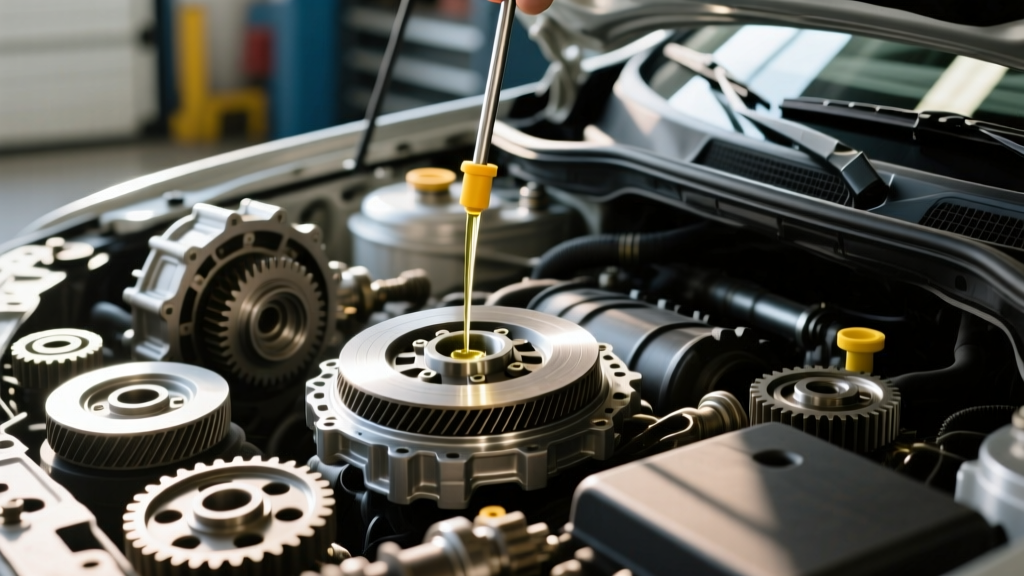
When upgrading a drivetrain for high-horsepower towing, drag racing, or track use, the margin for error in fluid management shrinks dramatically. Enthusiasts often focus on upgraded valve bodies, billet shafts, and high-stall torque converters, but overlook the fundamental physics of hydraulic fluid. Understanding exactly how to fill automatic transmission fluid in a performance context requires abandoning the 'park on level ground and guess' mentality. The core issue is thermal expansion. Automatic Transmission Fluid (ATF) expands significantly as it absorbs heat from the torque converter and clutch packs. If you check and fill your transmission cold to the 'Full' mark, you are guaranteeing a dangerous overfill once the system reaches operating temperature.
The Physics of Thermal Expansion: Why Temperature Dictates Volume
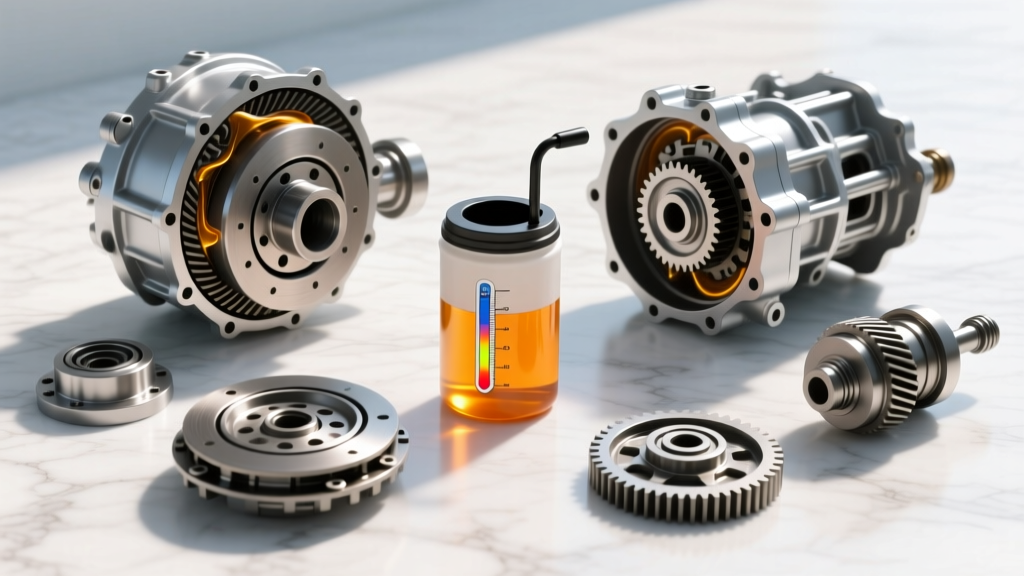
Standard synthetic ATFs, such as AMSOIL Signature Series or Red Line D4, exhibit a volumetric expansion rate of approximately 4% to 6% between ambient temperatures (70°F / 21°C) and heavy-load operating temperatures (200°F / 93°C). In a high-capacity performance system like a GM 4L80E with an aftermarket deep pan holding 13+ quarts, a 5% expansion equates to more than half a quart of increased volume.
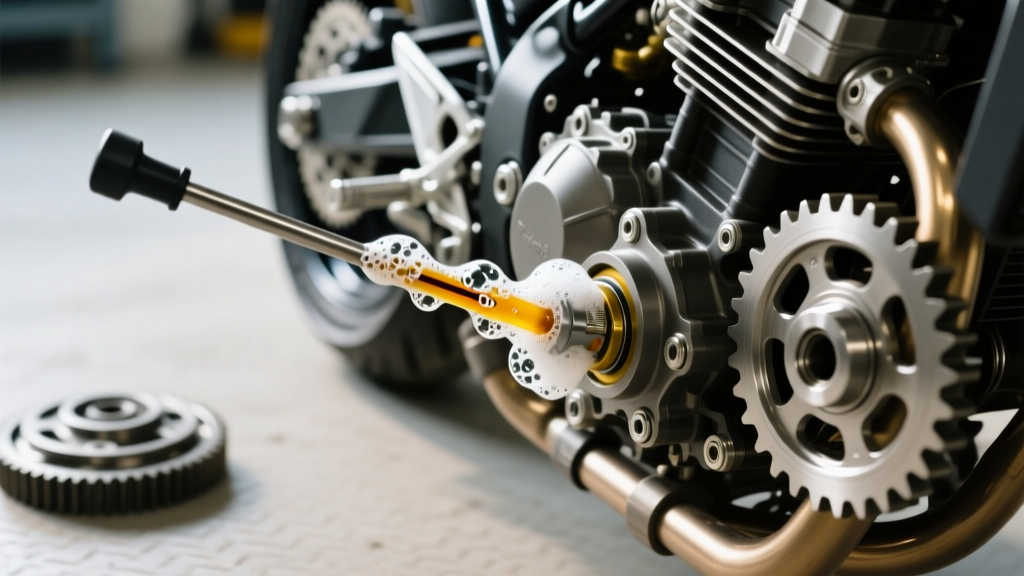
If the fluid is overfilled, the rotating assembly—specifically the planetary gearsets and clutch drums—will physically whip the fluid. This introduces air into the hydraulic system, a condition known as aeration or foaming. Aerated fluid is compressible, leading to delayed shifts, slipping clutches, and eventual catastrophic friction material failure. Conversely, checking the fluid hot when it is actually cold leads to underfilling, which starves the front pump, causes cavitation (a high-pitched whining noise), and results in immediate pressure drops during wide-open-throttle (WOT) shifts.
Step-by-Step: How to Fill Automatic Transmission Fluid for Upgraded Drivetrains
For performance builds utilizing aftermarket transmission pans, upgraded coolers, and external filters, the fill procedure must be methodical. Here is the definitive protocol for achieving the perfect fluid level:
- Establish the Cold Baseline: With the vehicle on a perfectly level surface and the transmission at ambient temperature (60°F-80°F), add fluid until it registers at the lowest mark on the dipstick or just begins to weep from the side-fill plug. For a dry rebuild, consult your builder's exact dry capacity, but generally, start with 75% of the advertised total capacity.
- Prime the System: Start the engine. Cycle the shifter slowly through every gear position (P-R-N-D-L), pausing for 3 seconds in each. This fills the clutch apply circuits and the torque converter.
- Reach True Operating Temperature: Drive the vehicle under moderate load. For modern transmissions with thermal bypass valves, you must reach the temperature required to open the cooler circuit (usually 185°F+). If you check the fluid before the thermostat opens, the cooler and lines remain empty, and you will severely underfill the system.
- Execute the Hot Check: With the engine running and the transmission in Park (or Neutral, depending on manufacturer spec), check the fluid level at the target hot temperature. Add fluid in half-quart increments until it reaches the precise hot-fill mark or weeps from the level plug.
Hot vs. Cold Calibration: Performance Fluid Data Comparison
The following table outlines the critical specifications for popular performance and heavy-duty transmissions. Note that target hot temperatures and torque specifications are non-negotiable for maintaining hydraulic pressure integrity in 2026 performance applications.
| Transmission Model | Dry Capacity | Typical Service Fill | Target Hot Temp for Level Check | Level Plug Torque Spec |
|---|---|---|---|---|
| GM 6L80 / 6L90 | 11.2 qt | 6.0 - 6.3 qt | 185°F - 200°F (85°C - 93°C) | 12 Nm (106 lb-in) |
| ZF 8HP70 / 8HP90 | 9.2 L | 5.5 - 6.5 L | 30°C - 50°C (86°F - 122°F) | 15 Nm (11 lb-ft) |
| GM 4L80E (Deep Pan) | 13.5+ qt | 8.0 - 10.0 qt | 160°F - 180°F (71°C - 82°C) | N/A (Dipstick) |
| Ford 10R80 | 13.1 qt | 6.5 - 8.0 qt | 193°F - 203°F (89°C - 95°C) | 9 Nm (80 lb-in) |
Transmission-Specific Hot/Cold Check Protocols
GM 6L80 / 6L90 (Truck, Towing, and Boosted Builds)
The 6L80 and 6L90 are notorious for thermal management quirks due to their internal thermal bypass valve. When the fluid is cold, the bypass valve routes fluid directly back to the sump to promote rapid warm-up, completely bypassing the external cooler and lines. If you attempt to check or set the fluid level while the trans is below 185°F, the cooler circuit is empty. You might think the fluid is at the correct level, but once the thermostat opens and fluid rushes into the cooler, the sump level will drop drastically, causing pump cavitation. Always use a bi-directional scan tool to monitor the Transmission Fluid Temperature (TFT) sensor, and ensure the bypass is fully closed before pulling the 12 Nm level check plug.
ZF 8HP70 / 8HP90 (Track, Euro-Swap, and High-RPM Applications)
The ZF 8-speed is a masterpiece of hydraulic efficiency, but it is incredibly sensitive to fluid levels. Unlike older American V8s, the ZF 8HP requires the fluid level to be set with the engine running, in Park, and strictly between 30°C and 50°C (86°F to 122°F). If the fluid exceeds 50°C during the check, thermal expansion will cause excess fluid to drain out of the fill hole, resulting in an underfilled system once it cools. For performance applications, avoid generic 'multi-vehicle' ATFs. Use the exact OEM ZF Lifeguard 8 (Part# S671 090 312, approx. $35/qt) or a highly vetted equivalent like Red Line D4 (approx. $22/qt). For a comprehensive breakdown of this exact procedure, refer to the FCP Euro ZF 8HP Transmission Fluid Service Guide, which remains the gold standard for ZF servicing.
GM 4L80E / 4L60E (Classic Muscle, Drag Racing, and Restomods)
When retrofitting a 4L80E into a classic muscle car, builders frequently install aftermarket deep aluminum pans (e.g., Moroso, TCI) to increase fluid capacity and cooling. These pans alter the distance between the fluid level and the dipstick tube. The 'Hot' and 'Cold' marks on a stock dipstick are now irrelevant. You must establish a custom cold-fill baseline (usually 2 quarts below the final hot level), run the trans to 160°F-180°F, and mark your own 'Hot' line on the dipstick with a file or punch. Always use a high-quality synthetic like AMSOIL Signature Series to withstand the extreme shear forces of high-stall torque converters.
Diagnosing Fill Errors: Cavitation vs. Aeration
Even with meticulous attention to hot vs. cold checking, performance drivetrains can exhibit symptoms of incorrect fluid volume. Knowing how to diagnose these issues on the dyno or at the track is critical for preserving your hardware.
- Aeration (Overfilled): Pull the dipstick or catch fluid from the cooler return line. If the ATF looks like a 'strawberry milkshake' or is covered in tiny, uniform bubbles, the rotating assembly is whipping the fluid. This compressible foam will cause line pressure to drop under load, resulting in RPM flares during the 2-3 or 3-4 shifts. Fix: Drop the pan and drain exactly 1 quart, then re-test.
- Cavitation (Underfilled): The transmission will emit a distinct, high-pitched whining noise that increases with engine RPM. This is the front pump sucking air due to low sump volume. Shifts will be harsh and erratic because the accumulator circuits cannot fill properly. Fix: Add fluid in half-pint increments with the engine running until the whine subsides and line pressure stabilizes.
Precision is Power
In the realm of performance drivetrain upgrades, horsepower is useless if the hydraulic system cannot hold a clutch pack applied under load. Mastering the thermodynamics of your specific transmission and adhering to strict hot vs. cold fill protocols ensures that your valve body receives clean, bubble-free, high-pressure fluid. For further technical insights into valve body modifications and pressure regulation, the Sonnax Technical Resources library is an invaluable asset for any serious builder. Treat your fluid level check with the same precision as your torque converter stall speed or your ignition timing curve, and your transmission will survive the abuse of the track and the street.