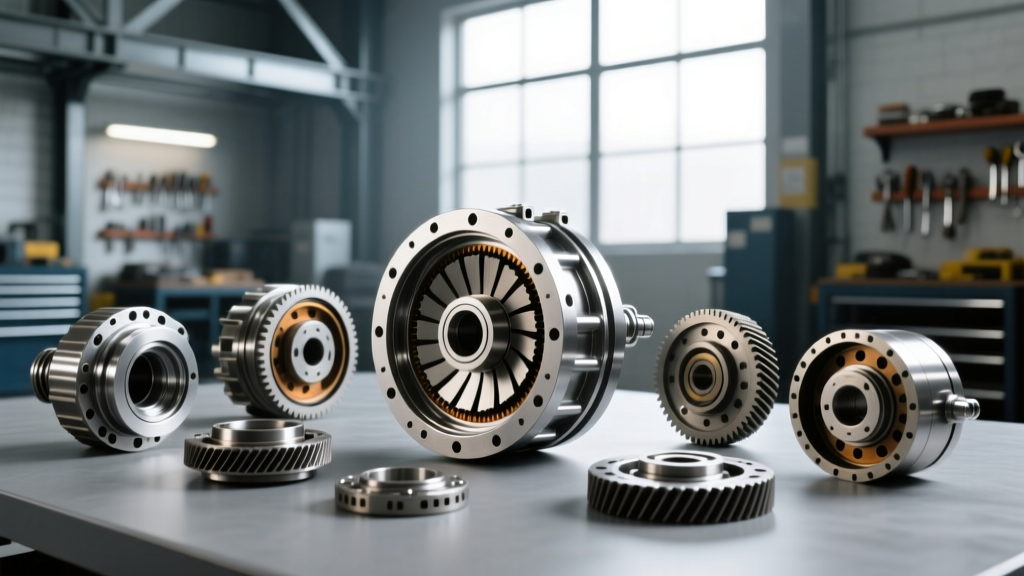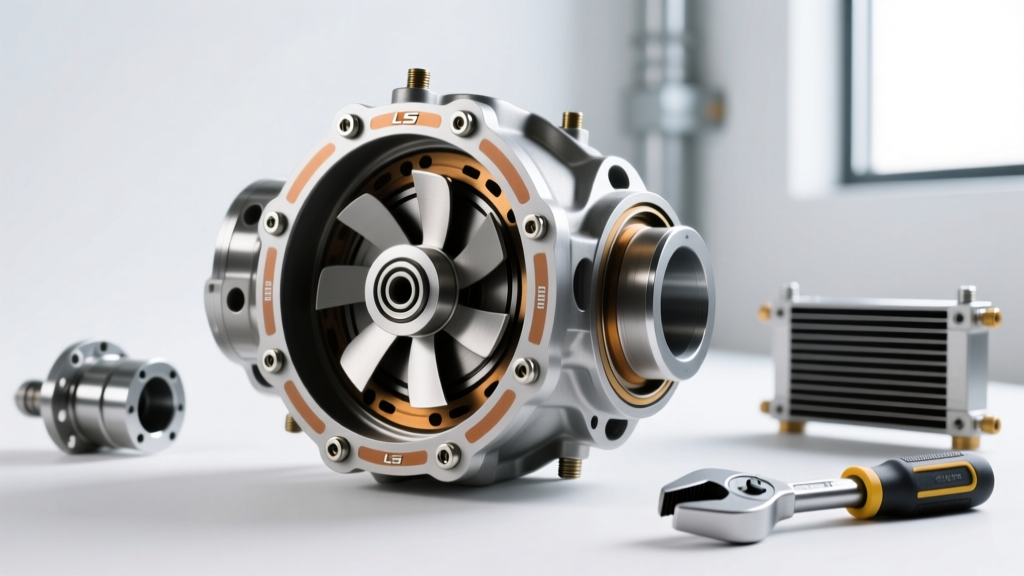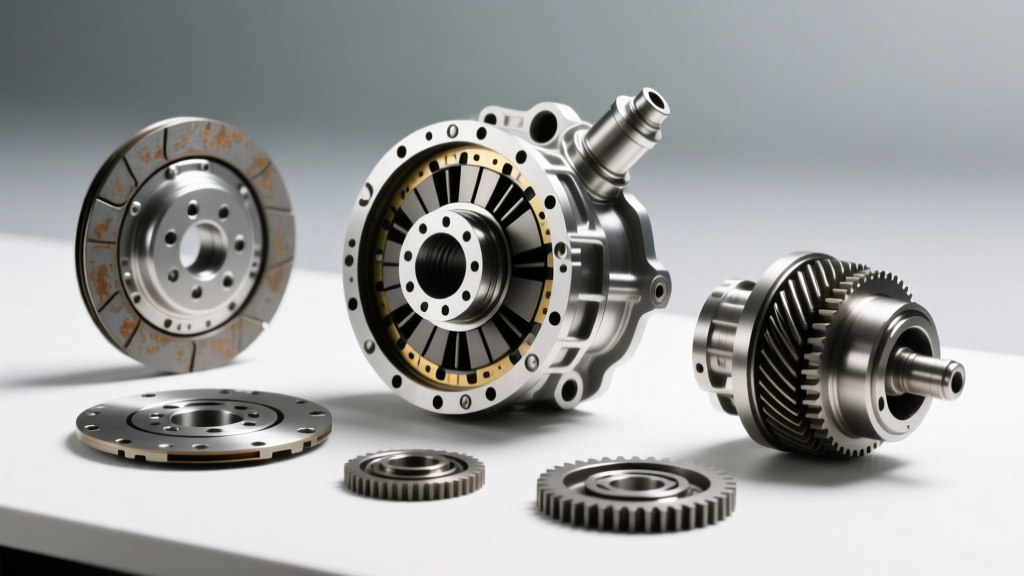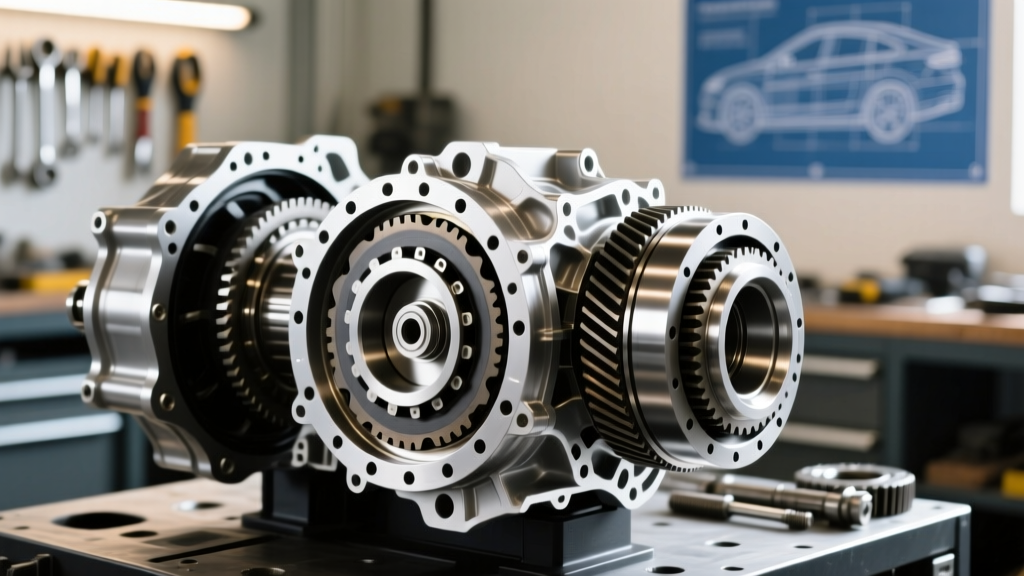
When extracting maximum performance from a modified powertrain, the auto transmission torque converter is arguably the most misunderstood component. While enthusiasts obsess over cylinder head flow rates and camshaft duration, the torque converter acts as the critical gateway between the engine's powerband and the transmission's gear ratios. Upgrading to a high-stall, billet-cover converter can shave tenths off your quarter-mile time and drastically improve street manners, provided the selection is matched precisely to your engine's torque curve.
The Fluid Coupling Physics: Why Stock Converters Restrict Power
Factory torque converters are engineered for a compromise: low-rpm fuel economy, minimal noise, vibration, and harshness (NVH), and adequate durability for stock horsepower levels. They typically feature stall speeds between 1,600 and 2,000 RPM. When you install an aggressive camshaft or add forced induction, the engine's peak torque band shifts higher. A stock converter forces the engine to lug at low RPMs, generating excessive transmission fluid heat and failing to utilize the engine's actual powerband.
By upgrading the stator geometry and fin angles inside the converter, aftermarket manufacturers alter the torque multiplication ratio. A performance converter allows the engine to 'flash' to a higher RPM upon launch, instantly placing the camshaft in its optimal powerband and multiplying torque by a factor of 2.2:1 to 2.8:1 before the vehicle even begins to move. This hydraulic multiplication is what allows a 4,000-pound street car to launch with the violence of a purpose-built drag racer.
Flash Stall vs. True Stall: Decoding the Marketing
One of the most pervasive myths in the drivetrain community is the concept of 'true stall.' When shopping for an auto transmission torque converter, manufacturers list a stall speed (e.g., 3,200 RPM). This is actually the flash stall—the maximum RPM the engine will reach when the transmission output shaft is locked (brakes applied and throttle pinned) before the tires break traction or the brakes give out. 'True stall' is a theoretical number measured on a dynamometer with a specialized brake, which is irrelevant to real-world track performance. Always select a converter based on its flash stall rating relative to your engine's peak torque RPM. For deeper technical insights into fluid dynamics and stator design, consult TCI Auto's technical guidelines on converter basics.
Matching the Converter to the Camshaft and Powerband
The golden rule of converter selection is that the flash stall speed should be at least 500 to 800 RPM higher than the engine's peak torque RPM, but ideally sit just below the camshaft's 'operating range' (the RPM where the engine starts making serious power). If your stall speed is too low, the car will feel sluggish and run hot. If it is too high, you will experience excessive slip at highway speeds, poor fuel economy, and a lack of engine braking.
| Camshaft Duration (at .050) | Peak Torque RPM | Recommended Flash Stall | Application Profile |
|---|---|---|---|
| 220° - 230° | 2,800 - 3,200 | 2,800 - 3,200 RPM | Mild Street / Towing |
| 235° - 245° | 3,500 - 4,000 | 3,500 - 4,000 RPM | Aggressive Street / Strip |
| 250° - 265° | 4,500 - 5,200 | 4,500 - 5,500 RPM | Pro-Touring / Bracket Racing |
| 270°+ | 5,500+ | 5,500 - 6,500+ RPM | Dedicated Drag / Track |
Platform-Specific Upgrade Paths: 4L60E, 6L80, and ZF 8HP
The GM 4L60E: The Proven Budget Powerhouse
The 4L60E remains one of the most popular platforms for LS swaps and street builds. For a 400-500 HP naturally aspirated LS build, the Circle D Specialties 2800-3200 Series is the industry benchmark. Priced around $650, these units feature a billet steel cover to prevent ballooning at high line pressures and a heavy-duty 34-element sprag clutch to handle aggressive 1-2 shifts (the stock 29-element sprag is a known failure point above 450 lb-ft). When upgrading a 4L60E, it is mandatory to pair the high-stall converter with an auxiliary transmission cooler, as slip generates exponential heat. You can browse specific application fitments and current pricing via the Summit Racing torque converter catalog.
The GM 6L80/6L90: Handling 800+ lb-ft
The 6L80 and 6L90 transmissions introduced complex 300mm torque converters with internal TCC (Torque Converter Clutch) dampers designed for cylinder deactivation (AFM/DFM). When building a 6L80 for 700+ HP, the stock converter hub and internal clutch will shatter under the load of a trans-brake or aggressive launch control. Upgrading to a Precision Industries Vigilante 3200 or a Yank Powertrain 3400 series (approx. $950 - $1,150) replaces the weak stamped steel components with billet stators and multi-disc carbon-fiber TCC clutches. Note: When deleting AFM/DFM, you must use a custom TCM tune to adjust the TCC apply/release ramps, otherwise the aftermarket converter will shudder aggressively during lockup.
The ZF 8HP (8HP70/8HP90): Tuning vs. Hardware
Found in modern Dodge Hellcats, BMWs, and Jaguars, the ZF 8HP utilizes a highly sophisticated centrifugal pendulum style converter. Unlike older push-button style converters, the ZF relies on early, slipping lockup for efficiency and NVH reduction. For builds under 800 HP, you rarely need to replace the physical auto transmission torque converter. Instead, performance is unlocked via TCM tuning (using HP Tuners or Syvecs) to alter the TCC slip tables and raise the line pressure. If you exceed 900 HP, companies like Sonnax offer upgraded heavy-duty damper springs and billet clutch pistons to rebuild the factory ZF converter, costing roughly $800 in parts and machine shop labor.
Lockup Clutch (TCC) Considerations for Street/Strip Cars
Expert Insight: Never run a non-lockup converter in a street car with overdrive. The continuous 300-500 RPM slip at 70 MPH will boil your transmission fluid in under 20 minutes, glazing the clutch packs and destroying the 3-4 clutch drum.
Modern performance builds demand a lockup torque converter. When selecting a converter, scrutinize the TCC friction material. Standard organic paper friction is fine for stock applications, but for performance builds, demand carbon-fiber or Kevlar-lined TCC clutches. Carbon-fiber can withstand the immense shear forces of locking up a 6L80 at 4,500 RPM during a 3-4 shift on the track, whereas organic material will instantly delaminate and contaminate the valve body with friction material debris.
Installation: Critical Clearances and Torque Specs
A $1,000 billet converter can be destroyed in three seconds if installed improperly. The most common failure is inadequate converter-to-flexplate clearance, which destroys the transmission front pump gear upon tightening the bellhousing bolts.
- Endplay / Clearance: The converter must sit fully seated in the front pump. When bolted to the flexplate, there must be exactly 1/8' to 3/16' (0.125' - 0.187') of gap between the converter mounting pads and the flexplate. If it sits flush, pull it out, verify the pump gear is engaged, and reinstall.
- Fasteners: Never use standard Grade 8 bolts. Use dedicated flexplate-to-converter bolts (such as ARP 200-2802). These feature a reduced shoulder to prevent bottoming out in the converter pad.
- Torque Specification: Torque the converter bolts to 45-50 lb-ft, applying a medium-strength threadlocker (Loctite 242) to prevent backing out under high-RPM centrifugal force.
- Fluid Selection: High-stall converters require fluids with robust shear stability and friction modifiers. Amsoil Signature Series Fuel Efficient or Red Line D4 are highly recommended to maintain TCC lockup grip and prevent stator sprag failure.
Upgrading your auto transmission torque converter is not merely about picking the highest stall speed on a catalog page. It requires a holistic understanding of your engine's volumetric efficiency, the transmission's hydraulic limitations, and the thermal management of the entire drivetrain. By matching the stator geometry to your camshaft and utilizing billet internal components, you transform your drivetrain from a parasitic power-leak into a precision torque-multiplying weapon.