The Hidden Cost of Power: Why Stock Converters Fail
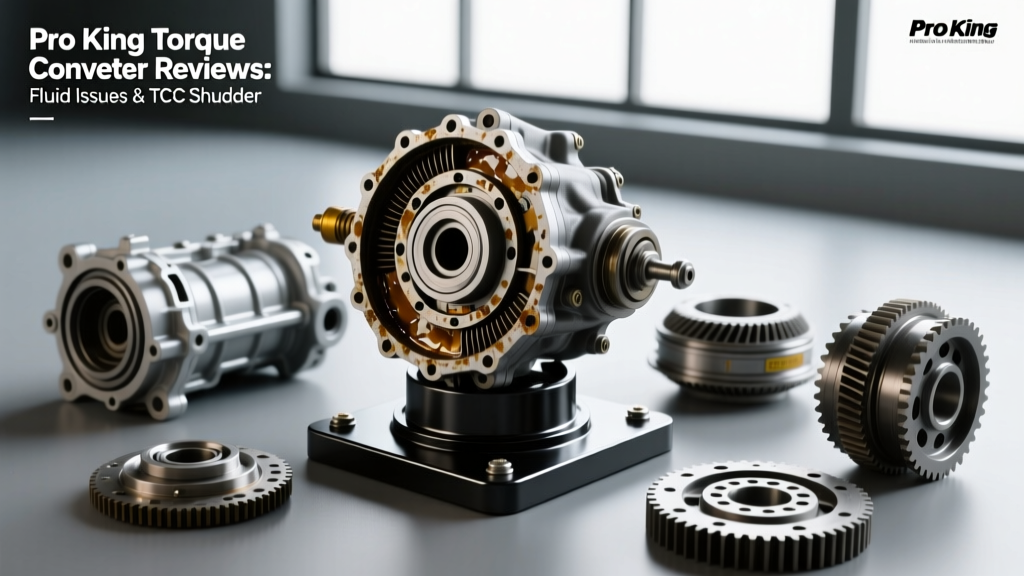
When pushing a 4L80E, 6L80E, or ZF 8HP70 beyond 600 wheel-horsepower, the torque converter rapidly becomes the weakest link in the drivetrain. Torque converter problems in performance applications do not look like the gentle slipping you would find in a neglected commuter vehicle. Instead, they manifest as violent Torque Converter Clutch (TCC) shudder, unexplained elapsed time (ET) drops at the drag strip, and catastrophic thermal runaway. Understanding the physics of these failures is the first step in diagnosing bad torque converter symptoms before they destroy your transmission.
Fin Deflection and Brazing Fatigue
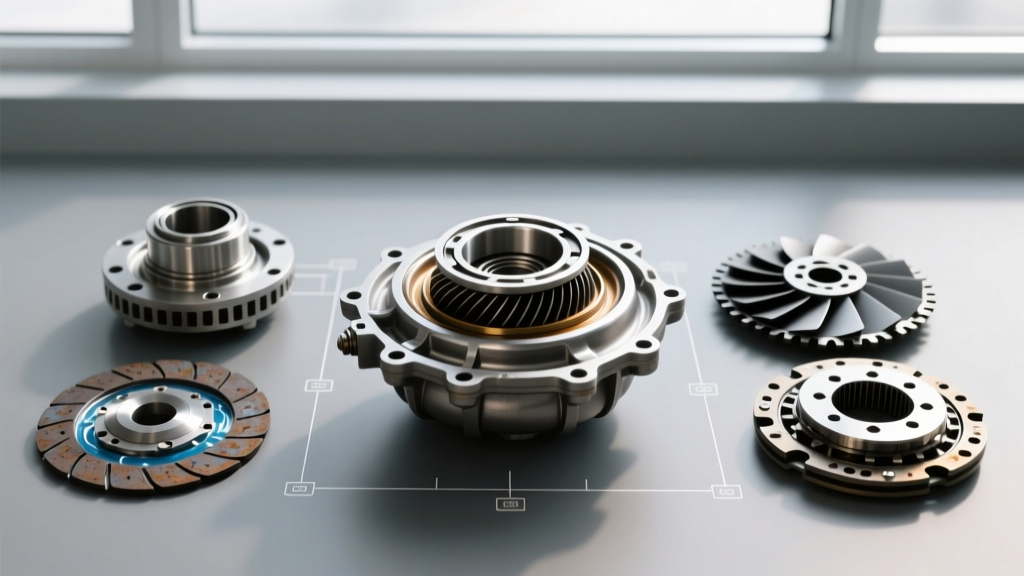
Stock torque converters are manufactured using stamped steel fins that are furnace-brazed to the hub and outer cover. Under the immense torque multiplication of a modified engine—especially those utilizing superchargers or aggressive nitrous tunes—the hydraulic forces inside the converter can physically bend the turbine and impeller fins. This fin deflection alters the fluid dynamics, reducing torque multiplication and causing a phenomenon known as 'stall creep,' where your flash stall speed unpredictably rises by 300 to 500 RPM under load.
Identifying Bad Torque Converter Symptoms on the Dyno and Track
Diagnosing performance-oriented torque converter problems requires looking past standard OBD-II codes and analyzing telemetry, fluid condition, and drivetrain behavior under high-load conditions. Below are the primary symptoms that indicate your converter is failing to manage your engine's output.
1. High-Load TCC Micro-Slip and Harmonic Shudder
In modern performance tuning, locking the TCC in 3rd and 4th gear is essential for maximizing power transfer and reducing transmission fluid temperatures. However, when bad torque converter symptoms arise, you will often experience a violent harmonic shudder during TCC apply. This is a stick-slip friction phenomenon. The Powertrain Control Module (PCM) commands apply pressure, the friction material grabs, the torsional dampener springs compress, and the material slips. This cycle repeats at 30 to 50 Hz, creating a vibration that feels like driving over rumble strips.
According to technical data from Sonnax Industries, this micro-slip is often caused by inadequate TCC apply pressure or degraded friction material. A stock 6L80E TCC clutch relies on a single apply piston and OEM friction rings that simply cannot handle the torque load of a 650 lb-ft build. When the friction material glazes or shears, the PCM detects slip via the input and output speed sensors, often triggering a P0741 code and forcing the transmission into a limp mode to protect the clutch.
2. Inconsistent Stall Speed and Stator Roll-Through
The stator is the unsung hero of torque multiplication. It sits on a one-way sprag or roller clutch, redirecting fluid flow from the turbine back to the impeller to multiply torque at low speeds. A severe torque converter problem occurs when the stator clutch 'rolls through' or breaks under high torque. If you launch your vehicle and experience a sudden, massive bog followed by a spike in transmission fluid temperature, the stator is likely spinning backward. This completely eliminates torque multiplication, effectively turning your converter into a highly inefficient fluid coupling and ruining your 60-foot times.
3. Thermal Runaway and Fluid Cavitation
Performance converters with high stall speeds (3,000 RPM and above) generate immense heat due to fluid shearing. If your converter's internal clearances are worn, or if the hub bearing has failed, you will see fluid temperatures exceed 240 degrees Fahrenheit within a single pass. At these temperatures, standard Dexron VI or Mercon LV fluids undergo rapid viscosity breakdown and cavitation. Cavitation introduces air bubbles into the hydraulic circuit, leading to spongy shifts, delayed TCC apply, and eventual clutch pack burnout in the transmission itself.
Diagnostic Matrix: Performance TC Failure Modes
Use the following diagnostic table to differentiate between normal performance characteristics and genuine bad torque converter symptoms.
| Symptom / Metric | Stock TC Behavior (Failing) | Performance Billet TC Behavior | Diagnostic Action Required |
|---|---|---|---|
| TCC Apply Shudder | Violent 30-50 Hz vibration at 45-65 MPH | Smooth, immediate lockup with zero slip | Check TCC apply PSI; upgrade to multi-disc billet TCC |
| Stall Speed Consistency | Fluctuates 400+ RPM between passes | Holds within +/- 50 RPM of rated stall | Inspect turbine fins for deflection; replace converter |
| Fluid Temp Delta | Spikes 40+ degrees during a single 1/4 mile pass | Rises 10-15 degrees; recovers rapidly with cooler | Verify cooler flow rate; check for internal stator slip |
| Stator Engagement | Sluggish launch; feels like slipping brakes | Aggressive torque multiplication off the line | Perform stall test; replace sprag/roller assembly |
The Upgrade Path: Engineering Out Torque Converter Problems
When diagnosing these issues confirms that your current hardware is insufficient, the only viable solution is an upgrade. The aftermarket performance industry has developed highly engineered solutions to eliminate the torque converter problems inherent in OEM designs.
Billet Covers and Multi-Disc TCC Assemblies
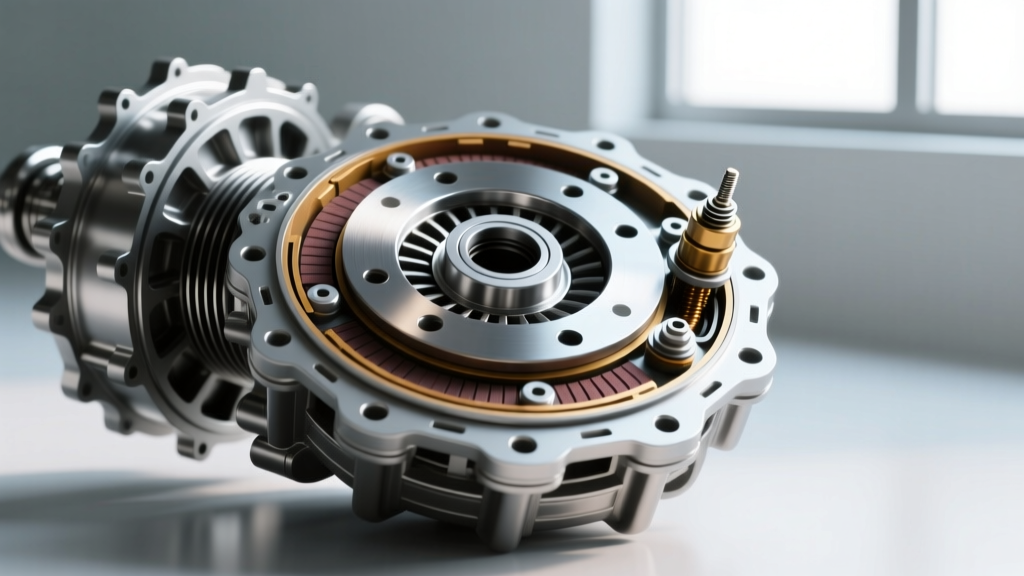
To eliminate cover flex and TCC shudder, performance builders utilize billet steel front covers. Unlike stamped steel, a billet cover will not deflect under high line pressures (180-220 PSI), ensuring that the TCC apply piston maintains uniform clamping force. Furthermore, upgrading from a single-disc OEM TCC to a dual or triple-disc billet clutch assembly increases the friction surface area by up to 300 percent. This allows for aggressive TCC lockup strategies at lower RPMs without the risk of friction material degradation. Experts at the Automatic Transmission Rebuilders Association (ATRA) frequently note that multi-disc conversions are mandatory for any 6L80E or 8HP70 pushing beyond 700 wheel-horsepower.
Furnace-Brazed and Tig-Welded Internals
High-end performance converters feature fins that are individually Tig-welded or heavily furnace-brazed to the hub. This prevents the fin deflection mentioned earlier, ensuring that your 3,400 RPM stall speed remains consistent pass after pass. Additionally, heavy-duty stator sprags with increased roller counts are installed to handle the shock load of trans-brake launches.
Precision Installation: Clearances and Torque Specs
Even the most expensive billet torque converter will exhibit severe problems if installed incorrectly. Proper hub engagement and flexplate alignment are non-negotiable.
- Hub Clearance: You must maintain exactly 3/8-inch to 1/2-inch of clearance between the torque converter pilot and the flexplate. If the converter is pulled tight to the flexplate with the bolts, you will instantly destroy the transmission front pump upon startup.
- Flexplate Torque: For GM LS and LT applications, flexplate bolts must be torqued to 62 lb-ft using a high-strength threadlocker. For Ford Modular and Coyote engines, the specification is typically 60 lb-ft. Always use new, hardened ARP or OEM-grade fasteners.
- Transmission Cooler Sizing: A high-stall performance converter requires a minimum of a 24,000 GVW plate-and-fin transmission cooler. Tube-and-fin designs are insufficient for the thermal load generated by modern performance converters.
Pro-Tip: After installing a new performance torque converter, always perform a static pressure test before driving. Verify that your base line pressure meets the manufacturer's specification (often 160-180 PSI in gear) and that TCC apply pressure ramps smoothly without oscillation. Utilizing performance valve body recalibration kits from TransGo can drastically improve hydraulic stability and eliminate micro-slip shudder.
By understanding the mechanical limits of OEM components and recognizing the specific bad torque converter symptoms associated with high-horsepower applications, you can save your transmission from catastrophic failure. Upgrading to a properly specced billet converter is not just a preventative measure; it is a fundamental requirement for translating engine power into consistent, reliable track performance.