The Thermal Threshold: Why Overheating Destroys Torque Converters
When mechanics and DIY enthusiasts search for the symptoms of a torque converter going bad, they typically focus on drivability issues like low-speed shudder, gear hunting, or delayed engagement. However, the most destructive symptom is one you often cannot feel until catastrophic damage has occurred: severe internal overheating. The torque converter is the primary heat generator in any automatic transmission. During the fluid coupling phase—before the Torque Converter Clutch (TCC) locks up—hydrodynamic friction generates immense thermal energy.
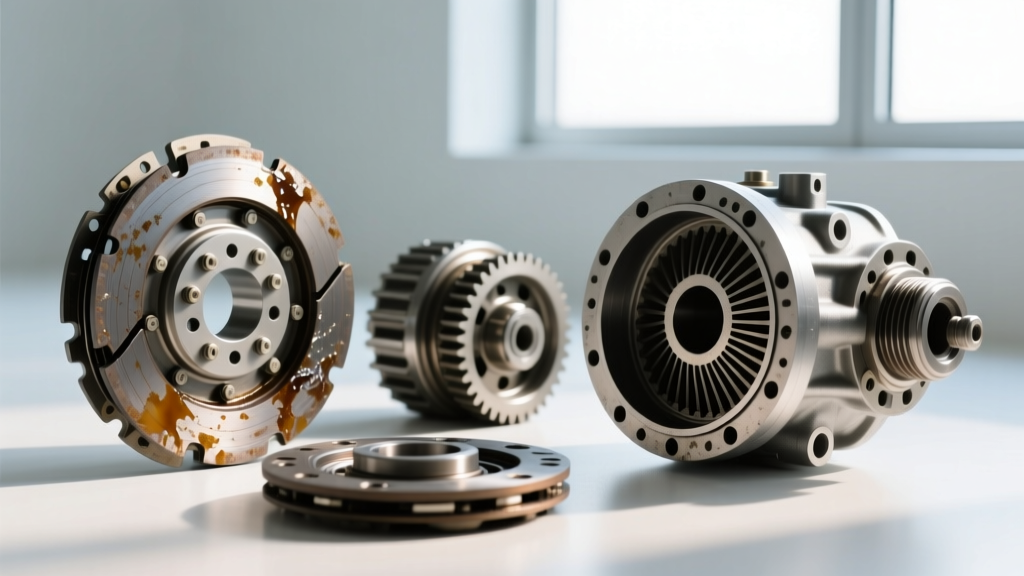
According to Mobil 1 ATF engineering guidelines, conventional automatic transmission fluid begins to rapidly degrade at temperatures exceeding 220°F (104°C). For every 20-degree increase past this threshold, the fluid's lifespan is effectively halved. When a torque converter's internal stator one-way clutch fails, or the TCC apply piston warps, the converter cannot achieve a 1:1 mechanical lockup. This continuous slippage acts like a massive fluid heater, pushing internal temperatures past 260°F, glazing the friction materials, and ultimately melting the solder on the stator fins.
Identifying the Heat-Related Symptoms of a Torque Converter Going Bad
Before you invest in upgraded cooling or a billet replacement, you must confirm that the torque converter is the heat source. Look for these specific thermal indicators:
- Burnt Fluid Odor & Discoloration: Pull the transmission dipstick (if equipped) or crack the pan drain plug. Fluid that smells like burnt toast and appears dark brown or black indicates severe thermal breakdown and friction material suspension.
- Highway RPM Fluctuation (TCC Slip): While cruising at a steady 65 MPH, watch your tachometer. If the RPM surges by 100-300 RPM without a downshift, the TCC is slipping due to heat-warped apply surfaces.
- Transmission Over-Temperature Codes: Scanners pulling codes like P0218 (Transmission Fluid Over Temperature) or P0741 (TCC Performance/Stuck Off) are direct electronic confirmations of thermal failure.
Diagnostic Buyer’s Guide: Tools to Measure TCC Health
You cannot fix what you cannot measure. Guessing based on a burnt fluid smell is a relic of the 1990s. To accurately diagnose modern transmissions like the GM 6L80, Ford 10R80, or ZF 8HP, you need a bidirectional OBD2 scanner capable of reading live Transmission Fluid Temperature (TFT) and TCC Slip Speed PIDs.
- Autel MaxiSys MS906 Pro: An excellent mid-tier choice ($900-$1,100) that reads manufacturer-specific TFT and TCC slip data. Ideal for advanced DIYers and independent shops.
- Snap-on Zeus+: The professional standard ($4,000+). Features guided component tests that can command the TCC solenoid to isolate converter slip from valve body issues.
- Edge Insight CTS3: A dashboard-mounted monitor ($500) perfect for towing rigs. It allows you to keep a constant eye on transmission temps in real-time, alerting you before the torque converter cooks your ATF.
Auxiliary Transmission Cooler Comparison (2026 Market)
If your diagnostic data shows TCC slip and high temperatures, but the converter hasn't yet suffered mechanical failure, upgrading your cooling system is mandatory. Factory radiator-integrated coolers are designed for emissions and quick warm-ups, not sustained heavy loads. When selecting an auxiliary cooler, stacked-plate designs vastly outperform older tube-and-fin models in heat dissipation and flow restriction.
Below is a comparison of the top-rated auxiliary coolers for mitigating the overheating symptoms of a torque converter going bad:
| Brand & Model | Core Design | GVWR Rating | Best Application | Est. Price (2026) |
|---|---|---|---|---|
| Hayden 678 Rapid-Cool | Stacked Plate | 24,000 lbs | 3/4-Ton Trucks, Heavy Towing | $75 - $95 |
| B&M 70264 SuperCooler | Stacked Plate | 20,000 lbs | Performance Street, 4L60E/4L80E | $90 - $115 |
| Derale 13504 Series 8000 | Tube & Fin w/ Turbulators | 18,000 lbs | Light Duty, SUVs, Daily Drivers | $55 - $70 |
Source: Cooling capacity metrics and product specifications verified via Hayden Automotive Cooling Products and manufacturer catalogs.
Sizing and Routing Your Cooler
Bigger is not always better. If you install a 30,000 GVWR cooler on a daily-driven commuter car in a cold climate, the fluid may never reach optimal operating temperature (175°F-195°F), leading to sluggish shifts and torque converter shudder. Always route the auxiliary cooler after the factory radiator cooler (the "return" line) so the auxiliary unit acts as a final heat exchanger before the fluid re-enters the transmission pan.
When Cooling Fails: Heavy-Duty Torque Converter Replacements
If your scanner shows TCC slip exceeding 100 RPM at steady cruise, and the fluid is heavily contaminated with clutch material, no cooler will save you. The internal friction lining is gone. As noted in Sonnax technical documentation on TCC apply strategies, modern pulse-width modulated (PWM) apply systems require pristine friction surfaces to prevent aggressive lockup shudder.
When replacing the unit, you have two primary paths:
1. OEM Replacements (The Safe Route)
For a GM 6L80 or Ford 6R80, sticking to an OEM unit (e.g., ACDelco or Motorcraft) ensures the stall speed and TCC apply volume match the factory TCM tuning.
Cost: $350 - $550.
Warranty: Typically 12 months / 12,000 miles.
2. Billet & Upgraded Replacements (The Performance/Towing Route)
If your overheating was caused by heavy towing or modified engine output, an OEM converter will just fail again. Upgrading to a billet-front cover converter with a multi-plate TCC (like those from Circle D or RPM Performance) increases the friction surface area by up to 300%, drastically reducing slip and heat generation.
Cost: $700 - $1,200.
Specs: Billet steel stator caps, forged steel covers (prevents flex-plate bowing), and high-carbon TCC clutches.
Pro-Tip for ZF 8HP Owners: The ZF 8-speed uses a multi-plate TCC that is highly sensitive to fluid degradation. If you are experiencing shudder and overheating, do not immediately condemn the torque converter. Perform a ZF-approved "adapt reset" and fluid flush using exact ZF Lifeguard 8 fluid first. The mechatronic sleeve and solenoid screens often clog with debris, starving the TCC of apply pressure and mimicking a bad converter.
Critical Installation Torque Specs & Best Practices
Replacing a torque converter requires precision. Improper installation will result in immediate pump failure or flex-plate cracking. Adhere to these general specifications (always verify with your specific OEM service manual):
- Flexplate to Torque Converter Bolts: Typically M10x1.5. Torque to 35-45 lb-ft (e.g., GM 6L80 spec is 37 lb-ft / 50 Nm). Use a medium-strength thread locker (Blue Loctite 243).
- Engine to Transmission Bellhousing Bolts: Torque sequence is critical. Usually 37-55 lb-ft depending on bolt size (M10 vs M12).
- Cooler Line Fittings: 5/16" or 3/8" inverted flare nuts at the transmission case should be torqued to 15-18 lb-ft. Over-tightening will crack the aluminum transmission case or warp the cooler tube.
- Pre-Lube the Stator Shaft: Before sliding the converter onto the transmission input shaft, coat the stator support tube and shaft seals with assembly lube or fresh ATF to prevent dry-start scoring.
Final Verdict: Protecting Your Drivetrain
Ignoring the early thermal symptoms of a torque converter going bad will inevitably lead to a $3,000+ transmission rebuild. By investing $100 in a stacked-plate auxiliary cooler and utilizing a bidirectional scanner to monitor TCC slip, you can extend the life of your drivetrain by hundreds of thousands of miles. If the damage is already done, bypass cheap remanufactured units and invest in a billet multi-plate converter designed to handle the thermal realities of modern towing and performance driving.