The True Cost of an OEM Clutch Kit: Beyond the Sticker Price
When budgeting for a manual transmission overhaul in 2026, most enthusiasts and repair shops focus strictly on the retail price of the replacement components. However, the true financial impact of an OEM clutch kit installation is heavily dictated by microscopic measurements—specifically, clutch disc thickness and flywheel step height specifications. As supply chains have stabilized post-2024, the baseline cost of genuine and OEM-equivalent kits (like those from Exedy or Sachs) has normalized, but the labor and precision machining costs associated with out-of-spec tolerances have surged.
A mismatch of just 0.5 millimeters in disc thickness can lead to catastrophic release bearing failure, clutch fork geometry issues, and premature diaphragm spring fatigue. This guide breaks down the exact engineering specifications, hidden machining costs, and real-world pricing matrices you need to understand before tearing into your bell housing.
Decoding Clutch Disc Thickness Specifications
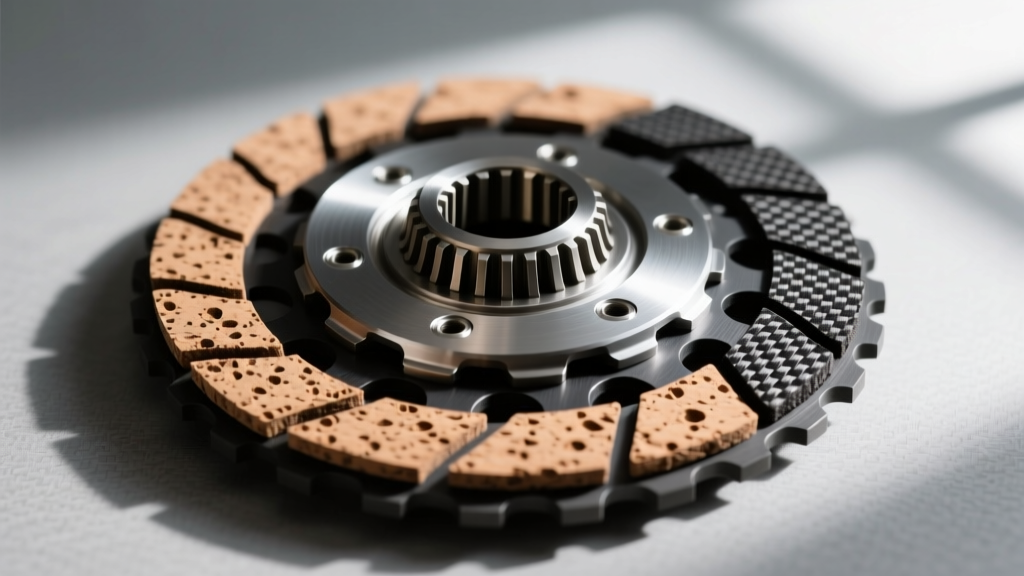
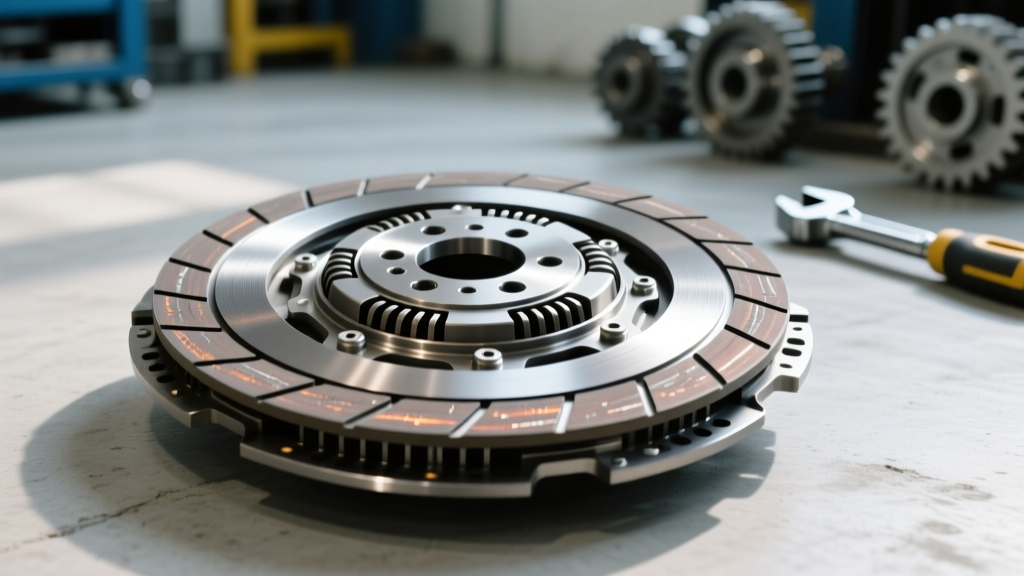
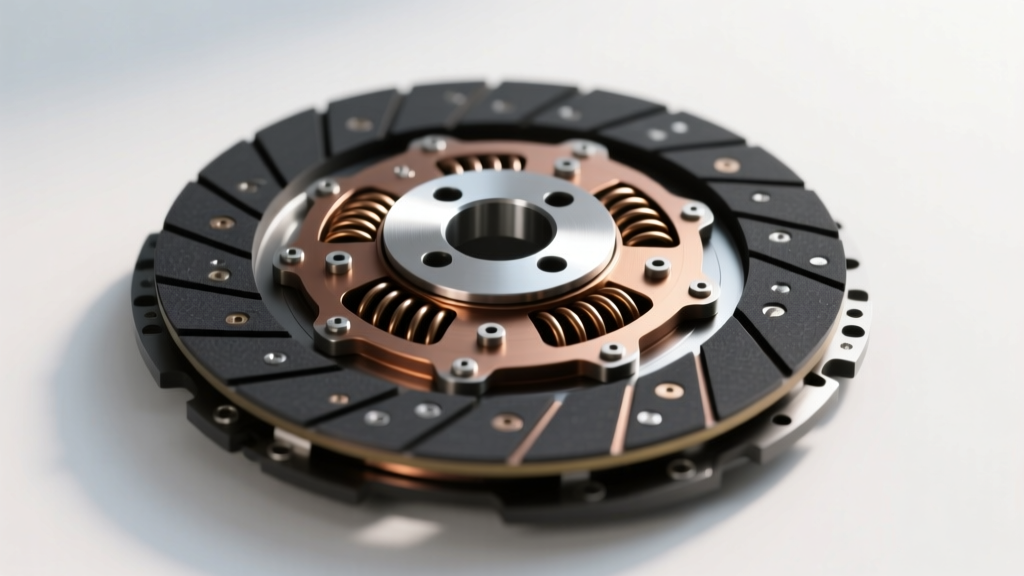
To understand the cost implications, we must first define what 'thickness' actually means in a clutch engineering context. A clutch disc is not a solid puck of friction material; it is a complex assembly featuring a hub, torsional dampening springs, and a segmented friction ring attached to marcel (cushion) springs.
The Role of the Marcel Spring
The marcel spring is a waved steel leaf spring situated between the two friction facings. Its purpose is to compress slightly as the pressure plate clamps down, ensuring smooth engagement and absorbing micro-vibrations. When measuring a new OEM clutch kit disc, the 'free thickness' (uncompressed) and the 'compressed thickness' (under pressure plate load) are two entirely different metrics.
- Free Thickness: Measured with a micrometer lightly resting on the friction material. Typically ranges from 8.0mm to 9.5mm depending on the application.
- Compressed Thickness: The operational thickness when the pressure plate is fully torqued. This dictates the ride height of the diaphragm spring fingers and the preload on the hydraulic release bearing.
Cheap aftermarket manufacturers often cut costs by eliminating the marcel spring or using friction material that is 0.5mm to 1.0mm thicker than OEM specifications to increase perceived lifespan. While this saves $40 on the initial RockAuto shopping cart, it completely alters the clutch pack geometry, often necessitating a $120 flywheel re-machining to correct the step height.
2026 OEM Clutch Kit Pricing & Disc Thickness Tolerances
Below is a comparative breakdown of popular 2026 OEM clutch kit replacements, their exact thickness specifications, and the associated baseline costs. Data sourced from current OEM service manuals and Exedy Global engineering sheets.
| Vehicle & Transmission | OEM Kit Part Number | New Disc Thickness | Wear Limit | Flywheel Step | 2026 Avg. Kit Cost |
|---|---|---|---|---|---|
| 2015-2021 Subaru WRX (6MT) | Exedy FJK1001 | 8.50 mm | 7.50 mm | 0.50 mm (Positive) | $415 |
| 2018-2023 Mustang GT (MT-82) | Motorcraft BR3Z-7540-A | 9.20 mm | 8.00 mm | 0.00 mm (Flat) | $520 |
| 2017-2021 Civic Si (6MT) | Exedy HJK1003 | 7.80 mm | 6.80 mm | 0.20 mm (Positive) | $310 |
| 2016-2021 Miata ND (6MT) | Exedy MZK1001 | 8.10 mm | 7.10 mm | 0.40 mm (Positive) | $285 |
How Disc Thickness Dictates Machining and Shim Costs
The most common financial bleed during a clutch replacement occurs at the machine shop. The flywheel's 'step height'—the difference in elevation between the friction surface and the pressure plate mounting pad—is engineered to pair perfectly with a brand-new OEM clutch kit's compressed thickness.
The Hidden Labor Costs of Out-of-Spec Thickness
If you install an aftermarket disc that is 0.8mm thicker than the OEM specification, the pressure plate will sit 0.8mm higher. This pushes the diaphragm spring fingers closer to the transmission. In vehicles with concentric slave cylinders (CSC) or self-adjusting hydraulic release bearings, this reduces the critical air gap. The bearing will ride constantly against the spinning diaphragm fingers, generating immense heat and leading to a $150+ throwout bearing failure within 5,000 miles.
To correct this, technicians must either:
- Machine the Flywheel Deeper: Removing extra material from the friction surface to restore the OEM step height. This costs between $100 and $175 in 2026 and reduces the overall lifespan of the flywheel.
- Install Pressure Plate Shims: Adding hardened steel shims between the pressure plate and flywheel. While shims are cheap ($15 - $30), they require longer, custom-grade pressure plate bolts (adding $40 to the bill) and precise measurement with a dial indicator.
Expert Measurement Protocol: Never use standard digital calipers to measure clutch disc thickness. The wide jaws of a caliper will compress the marcel springs unpredictably. Always use an outside micrometer with a friction thimble to measure the friction material, and use a dial indicator on a magnetic base to measure the flywheel step height after resurfacing.
Real-World Cost Breakdown: Subaru WRX vs. Ford Mustang MT-82
To illustrate how adhering to OEM thickness specifications impacts the final invoice, let us compare two distinct platforms: the Subaru FA20DIT 6-speed and the Ford Coyote 5.0 MT-82.
Case Study 1: Subaru WRX (6-Speed)
The Subaru 6-speed requires a precise positive step height of 0.50mm. If a shop installs a thick, aggressive 'Stage 2' aftermarket puck-style disc (which lacks marcel springs entirely and measures significantly thinner), the pressure plate fingers will sit too far back. This causes the clutch fork to over-extend, binding the pivot ball and resulting in a stiff pedal and snapped fork.
- OEM Kit (Exedy FJK1001): $415
- Flywheel Resurfacing (OEM Step): $125
- Subaru Flywheel Bolt Torque Spec: 69 lb-ft (94 Nm) in a star pattern.
- Total Parts & Machining: $540
Case Study 2: Ford Mustang GT (MT-82)
The MT-82 utilizes a flat flywheel (0.00mm step). The Ford Performance OEM replacement relies on the 9.20mm disc thickness to maintain the hydraulic release bearing preload. Because the MT-82 uses a hydraulic CSC, there is zero mechanical adjustment available. If the disc is too thick, the CSC piston extends past its maximum stroke and begins to leak fluid directly into the bell housing.
- OEM Kit (Motorcraft BR3Z-7540-A): $520
- Flywheel Resurfacing (Flat): $110
- Mustang Flywheel Bolt Torque Spec: 59 lb-ft + 90 degrees (yield bolts, must be replaced, adding $45 to the cost).
- Total Parts & Machining: $675
Sourcing Strategy: When to Pay the OEM Premium
In 2026, the price gap between a genuine dealer-boxed OEM clutch kit and an OEM-equivalent kit (like Exedy, which manufactures the clutches for Subaru and Honda on the assembly line) is typically 20% to 35%. Buying the Exedy kit directly through reputable transmission suppliers yields the exact same marcel spring tension, friction material compound, and disc thickness as the dealer part, saving you upwards of $200.
However, when dealing with dual-mass flywheel (DMF) conversions or heavy-duty towing setups, deviating from the OEM disc thickness requires a complete recalculation of the clutch pack stack-up. Always demand a spec sheet from your clutch manufacturer detailing the uncompressed and compressed disc thickness before purchasing. The $50 you save on a budget kit will rapidly evaporate when your machine shop charges you $150 to cut the flywheel step to accommodate poor manufacturing tolerances. Precision in measurement is the ultimate cost-saving tool in the transmission bay.