The Mixed-Fleet Dilemma: Light-Duty Searches vs. Heavy-Duty Realities
Fleet managers and lead diesel technicians often juggle a chaotic mix of assets. On a typical Tuesday morning, you might find yourself frantically searching for a 2004 GMC Yukon fan clutch removal tool nearby to get a site supervisor’s aging 5.3L V8 SUV back into rotation. The thermal fan clutches on those light-duty GM trucks require specific 36mm or specialty spanner wrenches to bypass the reverse-threaded water pump shaft. But by the afternoon, you are faced with a far more expensive and complex issue: heavy-duty clutch problems in your Class 8 commercial haulers.
Treating a commercial drivetrain like a light-duty pickup is a fast track to catastrophic failure. As we navigate the 2026 landscape of high-torque diesel platforms and heavy-haul vocational routing, understanding the nuanced diagnostics, performance upgrades, and specialized tooling required for commercial manual and automated manual transmissions (AMTs) is critical. This guide bridges the gap between light-duty fleet maintenance and heavy-duty drivetrain engineering.
Diagnosing the Big Three Heavy-Duty Clutch Symptoms
Commercial clutches—such as those mated to the Eaton Fuller RTLO-18918B or the ZF TraXon AMT—operate under extreme thermal and mechanical stress. When diagnosing clutch system symptoms in heavy-duty applications, technicians must look beyond basic slipping.
1. High-RPM Slip Under Load (Thermal Glazing)
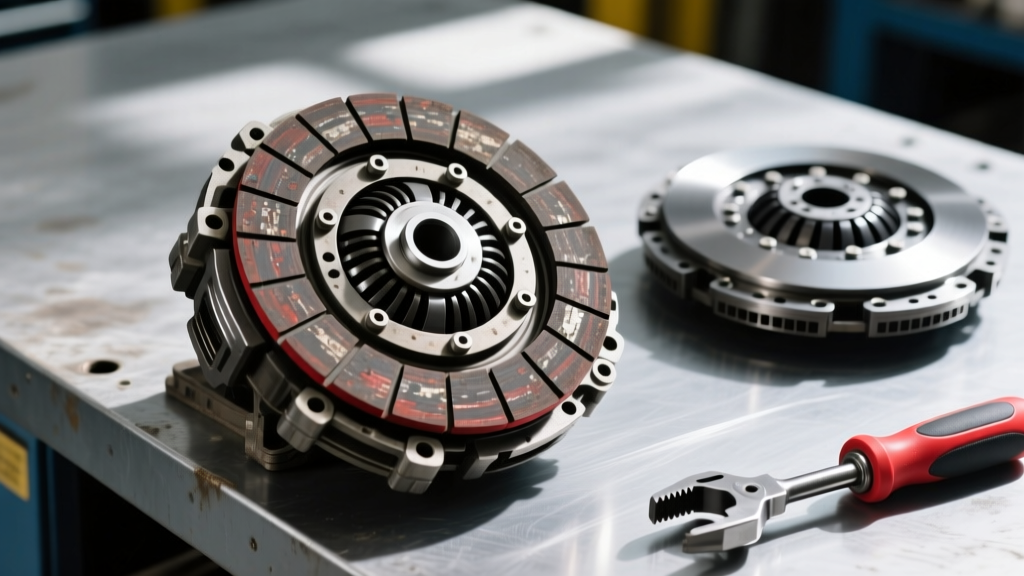
In heavy-haul applications (80,000+ lbs GCW), organic friction materials can easily exceed their thermal threshold of 400°F (204°C). When this happens, the resins in the organic facings bake and glaze. Unlike a passenger car where slip is gradual, heavy-duty glazing often presents as sudden, violent slip when pulling a grade in top gear. The remedy is not just a replacement, but an upgrade to cerametallic or Kevlar-faced friction discs.
2. Torsional Vibration and Damper Spring Failure
Modern high-efficiency diesels like the Cummins X15 or Detroit DD15 generate massive low-RPM torque but suffer from severe torsional vibration. Heavy-duty clutch discs are equipped with complex multi-stage damper springs (often featuring a combination of stiff and soft springs with friction rings). If a driver consistently 'lugs' the engine below 1,100 RPM, these damper springs can fatigue, fracture, or bottom out. The symptom is a deep, rhythmic driveline shudder between 1,000 and 1,300 RPM that mimics a failing U-joint or unbalanced driveshaft.
3. Release Bearing Wear and Clutch Brake Squeeze
Heavy-duty manual transmissions utilize a clutch brake to stop the input shaft for smooth gear engagement. Proper adjustment requires exactly 0.500" to 0.625" of release bearing free travel. If a technician improperly adjusts the linkage, eliminating the free travel, the release bearing will ride constantly against the diaphragm spring. This causes premature bearing failure and prevents the clutch brake from fully engaging, resulting in grinding during gear shifts.
Performance Upgrades: Engineering for Extreme Torque
When a commercial fleet experiences repeated clutch failures, simply replacing the OEM organic clutch is a waste of capital. Upgrading to performance heavy-duty clutches reduces downtime and handles the torque spikes of modern drivetrains. Below is a comparison of clutch configurations for Class 8 vocational and heavy-haul trucks.
| Clutch Configuration | Friction Material | Max Torque Capacity | Heat Dissipation | Best Application |
|---|---|---|---|---|
| Stock Single Disc (OEM) | Organic | 1,450 lb-ft | Moderate | Regional LTL, Highway |
| Heavy-Duty Twin-Disc | Cerametallic | 2,250+ lb-ft | Extreme | Heavy Haul, Logging, Oilfield |
| Vocational Single Disc | Kevlar/Carbon Blend | 1,850 lb-ft | High | Stop-and-Go, Dump Trucks |
Expert Note: When upgrading to a Twin-Disc Cerametallic setup, pedal effort will increase by 15% to 30%. Ensure the fleet's hydraulic assist systems are functioning optimally, and consider upgrading the master cylinder bore size to maintain driver comfort over 12-hour shifts.
Tooling and Torque: Why Improvisation Destroys Drivetrains
This brings us back to the reality of the mixed-fleet shop. While searching for a 2004 GMC Yukon fan clutch removal tool nearby might yield results at a local auto parts store, heavy-duty clutch service requires specialized, calibrated equipment. You cannot service a 15.5-inch twin-plate clutch with standard alignment dowels and a floor jack.
Critical Torque Specifications (Cummins X15 / ISX15 Platforms)
Improper torque sequences on heavy-duty flywheels lead to warped mating surfaces and catastrophic harmonic imbalances. Always follow the OEM multi-step sequence:
- Flywheel to Crankshaft: 125 lb-ft (170 Nm) + 90-degree final turn. (Must be done in the specified star pattern to prevent runout).
- Clutch Housing to Engine Block: 65 lb-ft (88 Nm).
- Pressure Plate to Flywheel: 35 to 45 lb-ft (depending on the manufacturer, e.g., Eaton Solo or Borg & Beck), tightened in a crisscross pattern to ensure even diaphragm spring tension.
Essential Heavy-Duty Tooling
Forget the local auto parts store loaner tools. Proper commercial clutch service requires:
- Heavy-Duty Transmission Jacks: Minimum 1,000 lb capacity with a wide saddle and tilt-adjustment screws to mate the input shaft to the pilot bearing without binding.
- Clutch Alignment Arbor Sets: Such as the OTC Heavy-Duty Alignment Kits, which include stepped pilots for 1.5-inch and 1.75-inch input shafts common in Eaton and Mack transmissions.
- Dial Indicators: To measure flywheel runout. Anything exceeding 0.008" (0.20mm) requires flywheel resurfacing or replacement; otherwise, the new clutch will chatter violently upon engagement.
Hydraulic Release System Bleeding and Maintenance
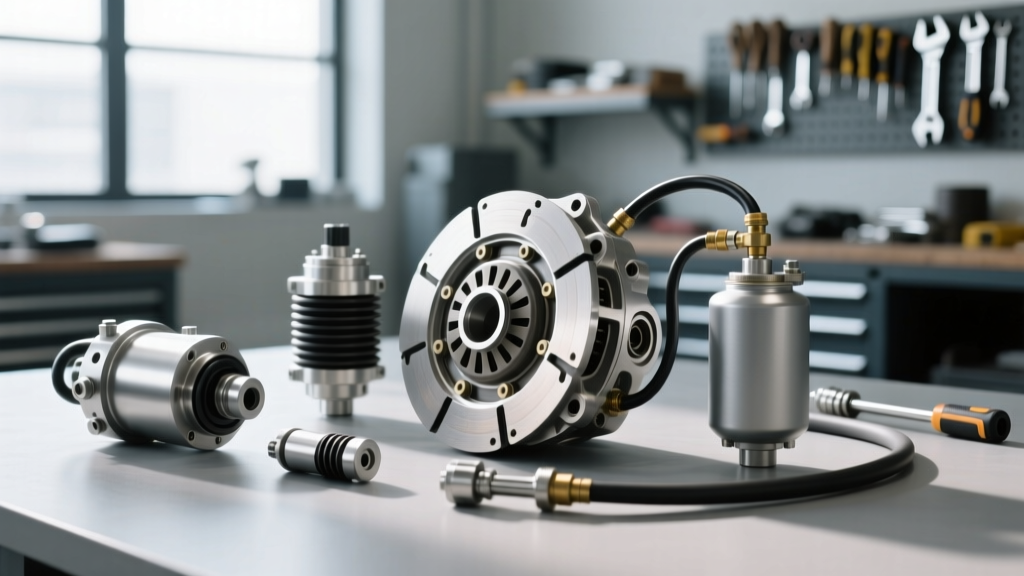
Most modern heavy-duty trucks utilize a hydraulic clutch release system with an automated manual transmission (like the Allison TC10 or Eaton UltraShift). Air trapped in the hydraulic lines causes incomplete clutch disengagement, leading to input shaft wear and gear grinding.
Gravity bleeding is insufficient for commercial systems due to the length of the hydraulic lines and the presence of complex actuator valves. Technicians must use a pressure bleeder set to 25-30 PSI. Furthermore, always use the manufacturer-specified synthetic hydraulic fluid (often DOT 4 or specific mineral oils like LHM+). Mixing fluid types will destroy the internal seals of the concentric slave cylinder (CSC), leading to a $1,500+ repair bill that requires dropping the transmission all over again.
2026 Fleet Budgeting: The Cost of Downtime vs. Upgrades
In the current economic climate, the cost of a heavy-duty clutch replacement ranges from $3,500 to $7,000+ when factoring in shop labor, heavy-duty tow-in, and downtime. Investing $1,200 extra upfront for a twin-disc cerametallic upgrade or a heavy-duty Kevlar vocational clutch can extend the service interval from 250,000 miles to over 500,000 miles in severe applications.
Ultimately, maintaining a mixed fleet requires recognizing the boundaries of light-duty maintenance. Keep the local parts store on speed dial for your Yukon fan clutches and water pumps, but when it comes to the Class 8 haulers that generate your revenue, rely on precision diagnostics, OEM torque specs, and severe-duty performance upgrades to keep the fleet moving.