The Hidden Cost of Clutch Disengagement Failures in Class 8 Trucks
When managing a fleet of Class 8 commercial vehicles equipped with manual or automated manual transmissions (AMTs), clutch system diagnostics often focus on the friction disc, release bearing, or flywheel. However, a poorly adjusted or failing clutch system creates a destructive shockwave that travels directly into the transmission case, specifically targeting the shift tower. For fleet mechanics and performance upgrade specialists, understanding the relationship between clutch disengagement and the clutch gear tumbler mechanism is critical for preventing catastrophic drivetrain downtime.
'In heavy-duty applications, a slipping clutch is a nuisance, but a dragging clutch is a transmission killer. The shift tower detents and tumblers take the brunt of the abuse when the mainshaft fails to stop spinning during a shift.' — Fleet Maintenance Director, Midwest Regional Freight
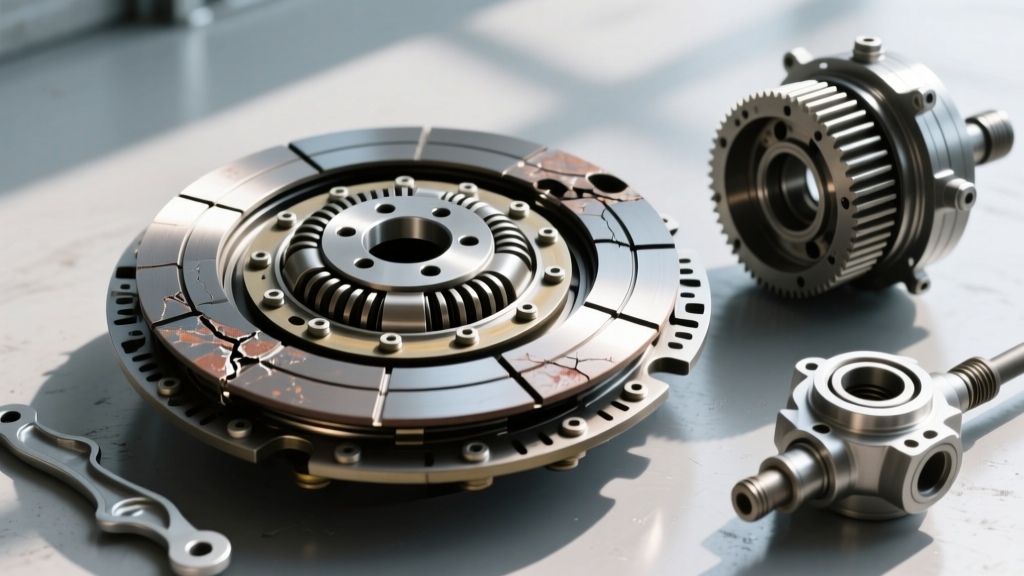
Commercial drivetrains, such as the Eaton Fuller RTLO-18918B 18-speed and the 10-speed RT-12910B, rely on precise mechanical interlocks to handle torque loads exceeding 1,850 lb-ft. When the clutch fails to fully disengage, the kinetic energy of the spinning input shaft forces the shift collars against the stationary gear tumblers. Over time, this shears detent springs, galls the tumbler grooves, and leads to false neutrals, gear jump-out, and eventual shift fork failure.
Anatomy of the Shift Tower and Tumbler Assembly
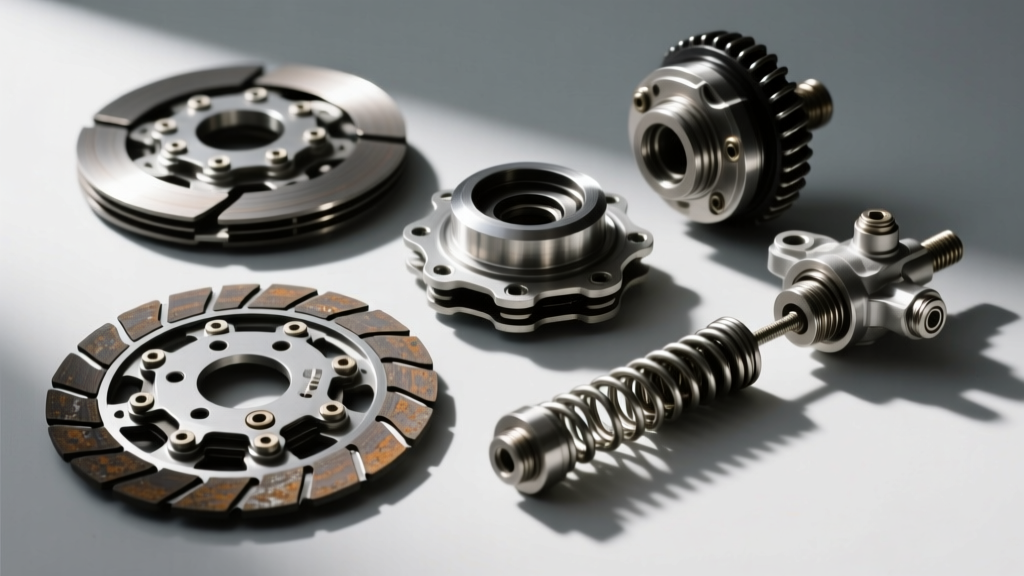
The clutch gear tumbler assembly is housed within the transmission's shift tower. It consists of detent pins, heavy-duty compression springs, interlock balls, and the machined grooves on the shift rails. Its primary function is to lock the shift rail into the selected gear position and prevent the simultaneous engagement of two gears. In a performance or heavy-haul context, the stock detent springs can fatigue prematurely if the clutch brake is improperly adjusted, causing the operator to force the shift lever against a spinning mainshaft. Upgrading these internal components is a cornerstone of heavy-duty transmission reliability.
Diagnostic Matrix: Clutch Symptoms vs. Tumbler Damage
Diagnosing heavy-duty clutch problems requires looking beyond the pedal. The following matrix correlates external clutch symptoms with internal shift tower damage, guiding technicians toward the correct performance upgrade path.
| External Clutch Symptom | Internal Tumbler/Shift Tower Effect | Root Cause & Diagnostic Check | Recommended Performance Upgrade |
|---|---|---|---|
| Hard shifting into first or reverse | Galling on the reverse/first tumbler groove; sheared detent spring | Clutch brake squeeze out of spec; worn clutch brake friction discs | Install heavy-duty ceramic clutch brake; upgrade to hardened shift rail detents |
| Gear jump-out under heavy deceleration | Worn tumbler detent notch; weakened interlock spring tension | Clutch dragging causing partial gear engagement; worn shift finger pads | Eaton Fuller 4300-series heavy-duty detent spring kit; replace shift finger pads |
| False neutrals between ranges | Range cylinder tumbler interlock failure; air pressure bleed-off | Hydraulic clutch master cylinder bypassing; incomplete mainshaft stoppage | Upgrade to high-flow hydraulic slave cylinder; install quick-exhaust range valves |
| Grinding on upshifts (floating gears) | Shift collar and tumbler edge chipping; shift fork deflection | Operator error compounded by degraded clutch pedal free-play | Install automated shift assist; upgrade to forged steel shift forks |
Performance Upgrades for Commercial Shift Towers
For commercial vehicles operating in severe-duty environments—such as logging, heavy-haul towing, or vocational dump trucks—OEM shift tower components may not withstand the aggressive shifting forces required. Upgrading the clutch gear tumbler and associated detent hardware ensures positive gear engagement even when drivetrain harmonics and torsional vibrations are at their peak.
Essential Torque Specs and Clearances for Rebuilds
When performing a shift tower overhaul to address tumbler wear, precision is non-negotiable. According to FleetOwner maintenance guidelines, improper torque on the shift tower can warp the case mating surface, leading to oil leaks and misaligned tumblers. Adhere strictly to these specifications:
- Shift Tower to Case Bolts: 35-45 lb-ft (47-61 Nm). Use a star-pattern tightening sequence to ensure even clamping force across the gasket.
- Shift Knob Torque: 15-20 lb-ft. Over-torquing can crack the internal shift tower cap, altering the depth of the detent springs and causing premature tumbler wear.
- Clutch Pedal Free Travel: 1.5 inches to 2.0 inches (measured at the pedal pad). Less than 1.5 inches prevents the release bearing from fully retracting, causing continuous drag on the clutch brake and tumblers.
- Clutch Brake Squeeze: 0.375 inches to 0.500 inches maximum at the pedal. Excessive squeeze will crush the clutch brake friction discs, rendering the mainshaft stoppage ineffective and forcing the operator to crush the gear tumblers into the spinning collars.
Mastering the Clutch Brake Squeeze: The Ultimate Tumbler Saver
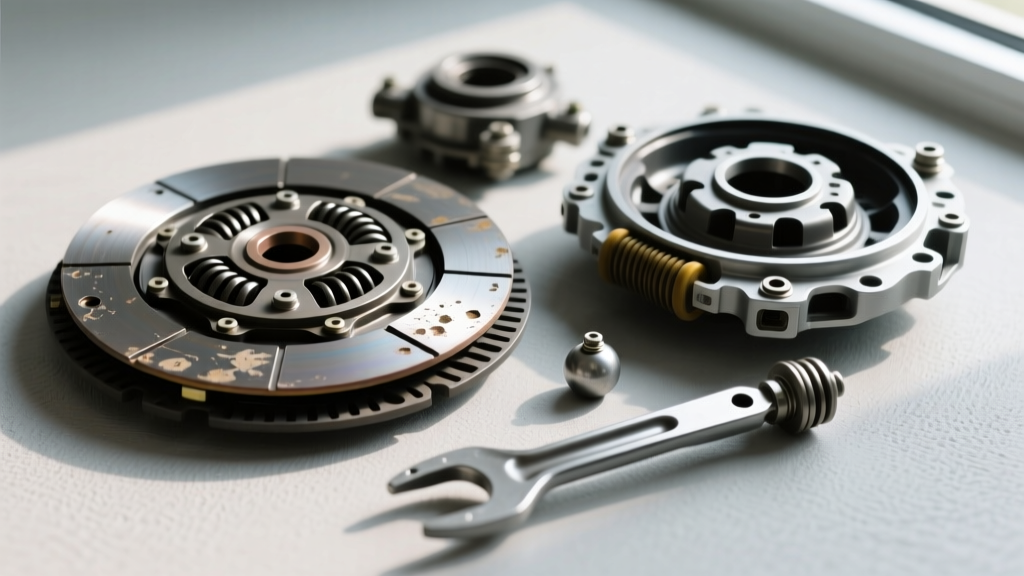
The most effective way to preserve the clutch gear tumbler mechanism in a heavy-duty manual transmission is to optimize the clutch brake system. The clutch brake is a friction disc assembly located on the transmission input shaft. When the clutch pedal is depressed to the floor, the release bearing carrier squeezes the clutch brake against the transmission case, physically stopping the input shaft from spinning. This allows the synchronizers and gear tumblers to engage smoothly without grinding.
If a fleet is experiencing a high rate of shift tower rebuilds (typically costing between $800 and $1,400 in parts and labor per unit), the first diagnostic step is measuring the clutch brake squeeze. If the squeeze exceeds 0.5 inches, the clutch brake is bottoming out before it can generate sufficient friction to stop the shaft. The operator then uses brute force on the shift lever, driving the shift finger pads into the tumbler grooves with enough force to deform the metal.
Hydraulic Linkage Bleeding and Tumbler Preservation
Modern Class 8 trucks utilize hydraulic clutch actuation systems to reduce pedal effort. However, hydraulic systems are prone to aeration and master cylinder bypassing, which results in a 'soft' pedal and incomplete clutch disengagement. To protect the internal transmission tumblers, fleet shops must implement rigorous hydraulic bleeding protocols.
Using a pressure bleeder set to 30-40 PSI, technicians should cycle the clutch pedal a minimum of 50 times after any hydraulic component replacement. Furthermore, upgrading to a high-capacity, remote-mounted fluid reservoir (such as those offered in the Commercial Carrier Journal recommended severe-duty kits) prevents fluid starvation during steep grade operations. When the hydraulic system maintains rock-solid pressure, the release bearing travels its full stroke, the clutch brake engages properly, and the clutch gear tumbler assembly operates exactly as engineered—locking the gears in place without taking destructive axial loads.
ROI of Shift Tower and Clutch System Upgrades
Investing in performance upgrades for the clutch and shift tower yields immediate returns for commercial fleets. A standard OEM detent and tumbler spring kit costs between $65 and $120, while a heavy-duty ceramic clutch brake assembly runs $150 to $250. Compare this to the cost of a complete transmission teardown required to replace a shattered shift fork or a scored mainshaft, which easily exceeds $4,500 in labor and downtime. By treating the clutch gear tumbler not just as a passive lock, but as a critical wear component dependent on perfect clutch disengagement, fleet managers can extend transmission overhaul intervals by hundreds of thousands of miles.