The Financial Reality of DCT Motorcycle Clutch Repairs
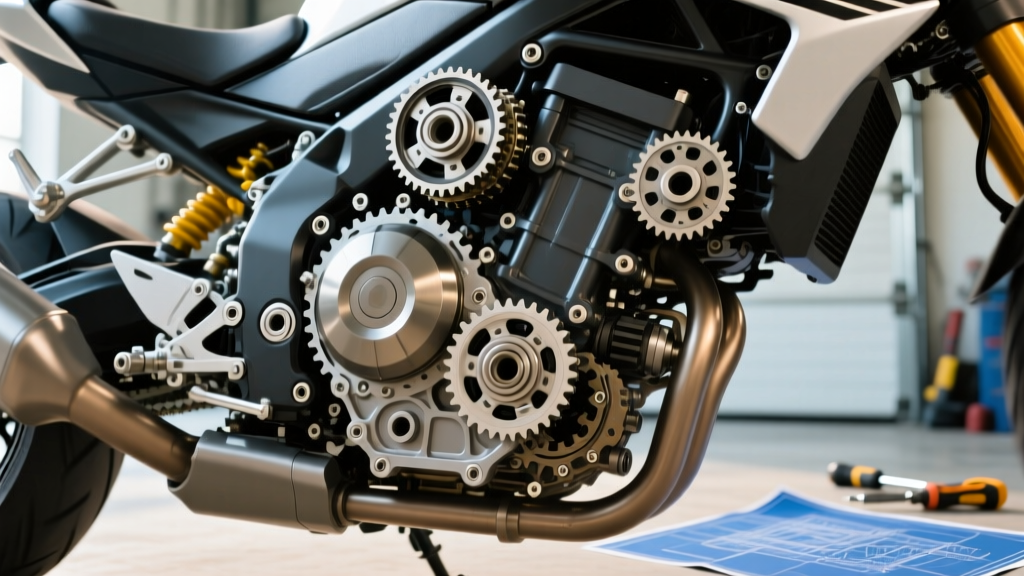
When a dual clutch transmission motorcycle begins exhibiting slip, harsh engagement, or failsafe modes, the repair process is vastly more complex than a traditional manual cable-clutch replacement. As of 2026, Honda remains the undisputed pioneer of motorcycle DCT systems, equipping models like the CRF1100L Africa Twin, GL1800 Gold Wing, NT1100, and Rebel 1100 with their proprietary 6-speed and 7-speed automated manual transmissions. While these systems offer seamless shifting and reduced rider fatigue, a failing clutch pack or hydraulic actuator requires specialized diagnostic procedures, precise torque specifications, and proprietary ECU recalibrations.
Many riders experience severe post-repair symptoms—such as low-speed judder, erratic gear hunting, or immediate clutch slip—simply because the servicing shop treated the DCT like a standard wet-clutch manual transmission. In this comprehensive cost and diagnostic guide, we break down the exact pricing, mechanical pitfalls, and E-E-A-T-level troubleshooting steps required to fix post-replacement DCT clutch issues.
2026 DCT Clutch Replacement Cost Breakdown
The cost to replace a clutch pack in a dual clutch transmission motorcycle varies heavily based on the model's sump architecture and the required labor hours to access the right-side crankcase cover and internal hydraulic actuators. Below is a realistic pricing matrix based on current OEM dealership and specialized independent shop rates.
| Cost Category | Honda Africa Twin (CRF1100L) | Honda Gold Wing (GL1800) | Notes & Variables |
|---|---|---|---|
| OEM Clutch Pack (Friction/Steel) | $280 - $350 | $450 - $600 | Part # 22200-MJM-D01 (AT). Must replace as matched set. |
| Gaskets & Seals | $60 - $90 | $120 - $180 | Right crankcase cover gasket, oil pump O-rings, crush washers. |
| Fluids (Engine/ATF/DOT 4) | $40 - $60 | $80 - $110 | Gold Wing requires separate DCT hydraulic fluid; AT shares engine oil. |
| Labor (Removal & Install) | $480 - $720 (4-6 hrs) | $900 - $1,400 (7-10 hrs) | Gold Wing requires fairing, exhaust, and subframe removal. |
| ECU Relearn & Bleed | $120 - $180 | $150 - $250 | Requires OEM HDS (Honda Diagnostic System) or advanced bi-directional OBD2. |
| Total Estimated Cost | $980 - $1,400 | $1,700 - $2,540 | Prices reflect 2026 average dealer rates ($120-$150/hr). |
Common Post-Repair Symptoms and Diagnostic Fixes
If your motorcycle is exhibiting strange behaviors immediately after a DCT clutch replacement, the issue almost always traces back to one of three critical errors: improper fluid selection, missed ECU adaptation resets, or incorrect clutch stack height measurements. According to technical bulletins highlighted by Honda Powersports Service Portals, failing to adhere to DCT-specific rebuilding protocols will result in immediate component degradation.
Symptom 1: Low-Speed Clutch Judder and Chatter
The Scenario: You pull away from a stoplight in 'D' mode, and the drivetrain shudders violently, feeling as though the clutch is rapidly engaging and disengaging.
The Root Cause: This is the hallmark symptom of a fluid mix-up or trapped air in the hydraulic actuator lines. Unlike traditional manuals, a dual clutch transmission motorcycle relies on high-pressure hydraulic solenoids to modulate clutch engagement.
- The Shared Sump Trap (Africa Twin / Rebel 1100): These models use the same engine oil to lubricate the crankcase AND actuate the DCT hydraulic pump. If a shop uses a high-friction-modifier automotive oil or an incorrect viscosity (e.g., 20W-50 instead of the specified 10W-30 or 10W-40 MA/MB), the DCT hydraulic pump will cavitate, and the clutch plates will chatter due to improper friction coefficients.
- The Separate Sump Trap (Gold Wing): The GL1800 uses a dedicated hydraulic fluid circuit for the DCT. If a technician accidentally tops off the DCT reservoir with standard DOT 4 brake fluid instead of the specified Honda ULTF or ATF HM-1, the internal seals will swell, and the solenoids will stick, causing severe judder.
Symptom 2: Harsh 'Clunking' Shifts and Erratic Gear Hunting
The Scenario: The bike shifts abruptly from 1st to 2nd gear, throwing the rider forward, and frequently hunts between 4th and 5th gear on steady inclines.
The Root Cause: The shop replaced the physical clutch friction plates but failed to perform the Clutch Touch-Point Relearn Procedure. The DCT ECU continuously adapts its hydraulic pressure maps based on the wear thickness of the friction material. When brand-new, full-thickness plates are installed, the ECU's 'learned' wear-adaptation maps command excessive hydraulic pressure, slamming the clutches together.
The Fix: You must connect a bi-directional scan tool capable of accessing the Honda PGM-FI/DCT module. Navigate to the Clutch Calibration or Touch Point Learning menu. The procedure requires the rear wheel to be elevated (or the bike on a center stand), the engine at operating temperature (above 140°F / 60°C), and the system in 'N'. The ECU will cycle the clutches, measuring the exact millisecond hydraulic pressure required to achieve initial friction bite, effectively resetting the shift logic to factory baseline parameters. Resources like RevZilla's Common Tread technical archives frequently emphasize that skipping this software step is the #1 cause of post-repair customer comebacks.
Symptom 3: Clutch Slip Under Heavy Throttle / High RPM
The Scenario: The bike accelerates normally in city traffic, but when merging onto the highway or climbing a steep grade in 5th or 6th gear, the RPMs flare without a corresponding increase in wheel speed.
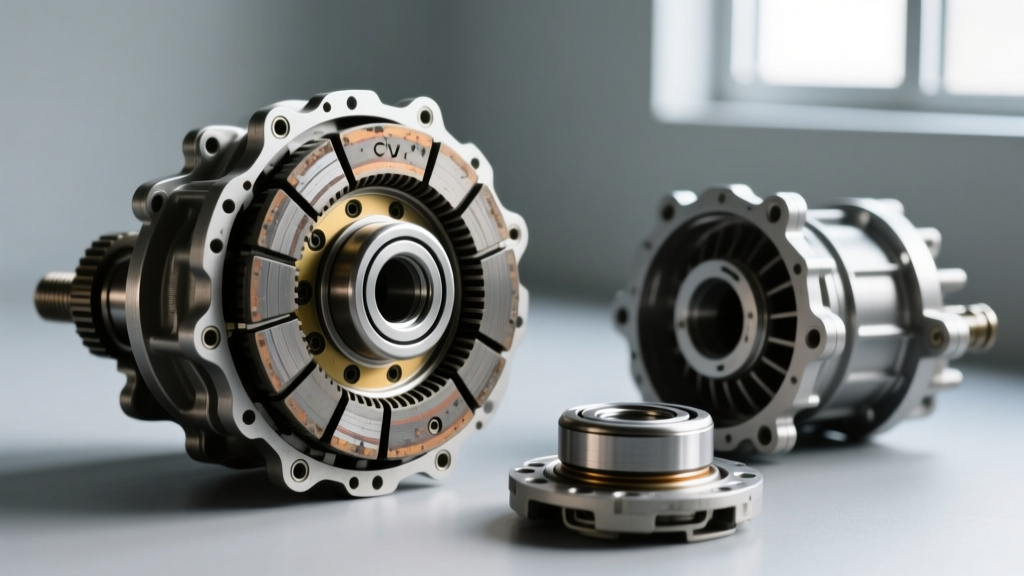
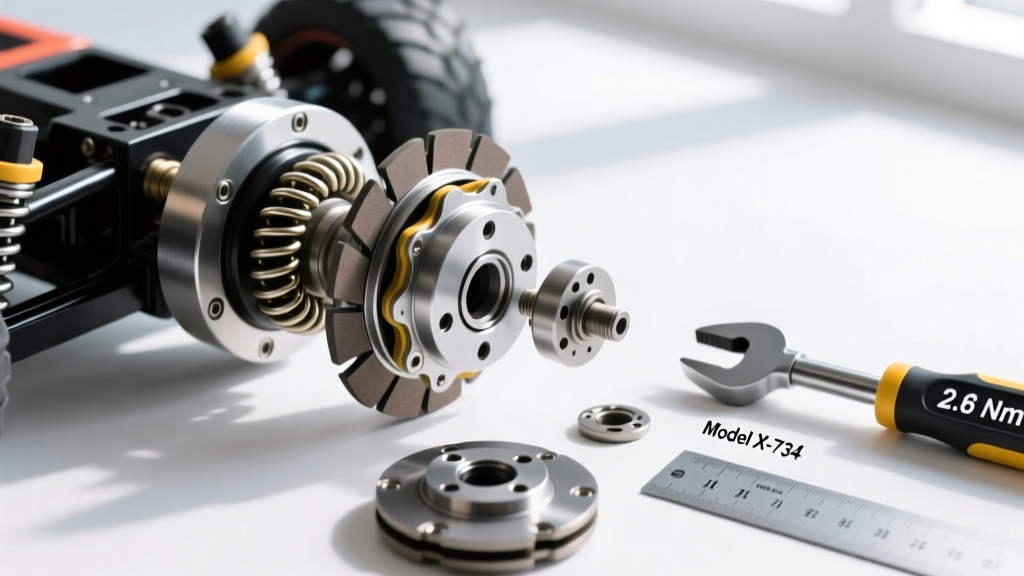
The Root Cause: Incorrect clutch stack height or failure to replace warped steel separator plates. When measuring the friction plates (e.g., OEM Part # 22200-MJM-D01), the standard thickness is typically 2.0mm, with a strict service limit of 1.6mm. However, simply installing new plates isn't enough. The total stack height must be verified. If the underlying steel plates are blued or warped from previous overheating, the hydraulic piston cannot apply uniform clamping force.
The Fix: The transmission must be reopened. Measure the clutch center and pressure plate for warpage using a precision straight edge and feeler gauge (limit: 0.1mm). When reinstalling the clutch center locknut, it is absolutely critical to apply the correct torque spec: 59 Nm (43 lb-ft), followed by mechanically staking the collar to prevent the nut from backing out under DCT torsional vibration. If the locknut is under-torqued, the entire clutch basket will walk outward on the main shaft, resulting in catastrophic slip and potential casing damage.
Hidden Costs: When the DCT Actuator Fails
Sometimes, a post-repair clutch issue isn't the fault of the friction material, but rather a failing internal hydraulic actuator or linear solenoid. If the clutch pack is verified to be within spec, the fluid is clean, and the ECU is calibrated, the next diagnostic step is checking hydraulic line pressure.
Using a specialized high-pressure hydraulic gauge tapped into the DCT test port, a healthy system should show:
- Idle Pressure (Neutral): 80 - 110 psi
- Operating Pressure (Under Load / High RPM): 400 - 550 psi
If pressures are low despite a new clutch pack, the internal DCT oil pump (driven by the engine crankshaft) may be suffering from internal bypass leakage, often caused by reusing the old oil pump O-rings during the initial repair. Replacing the DCT oil pump assembly adds roughly $350 to $500 in parts and requires an additional 2 hours of labor, pushing the total repair cost closer to the $2,000 mark for adventure-touring models.
Expert Checklist for Verifying a DCT Repair
Before signing off on a repair invoice or accepting the bike back from the dealership, ensure the following documentation and physical checks have been completed:
- Fluid Verification: Confirm the exact part number of the fluid used. (e.g., Honda GN4 10W-30 for Africa Twin shared sumps; Honda ULTF for Gold Wing separate sumps).
- Torque Documentation: Request proof that the right-side crankcase cover bolts were torqued in the correct crisscross sequence to 12 Nm (9 lb-ft). Uneven torqueing warps the cover, binding the DCT selector forks.
- Relearn Printout: Ask for the physical or digital printout from the HDS diagnostic tool proving the 'Clutch Touch-Point Learning' routine was completed and returned a 'SUCCESS' status.
- Override Test: Test the manual override system. In the event of a DCT electronic failure, the bike defaults to a manual hydraulic override. If the lever feels spongy, the master cylinder (torqued to 12 Nm) was not bled properly.
By understanding the intricate marriage of hydraulic physics, friction materials, and ECU logic, riders can avoid the financial sinkhole of repeated dealership visits. For further reading on advanced motorcycle drivetrain maintenance, Cycle World's Maintenance Guides offer excellent supplementary visual references for DCT component layouts. Always demand DCT-specific expertise; a standard manual-clutch mechanic is simply not equipped to handle the tolerances of a modern automated transmission.