The Limitations of a Standard Clutch de Carro in Commercial Fleets
When sourcing drivetrain components globally or consulting international service manuals, you may encounter the term clutch de carro—a Portuguese and Spanish designation for standard passenger vehicle clutches. While a standard clutch de carro is perfectly engineered for a commuter hatchback producing 130 to 250 lb-ft of torque, applying light-duty diagnostic logic or replacement standards to a Class 6-8 commercial truck is a recipe for catastrophic drivetrain failure. Fleet managers and heavy-duty owner-operators know that drivetrain downtime costs thousands of dollars per day in lost revenue and recovery fees.
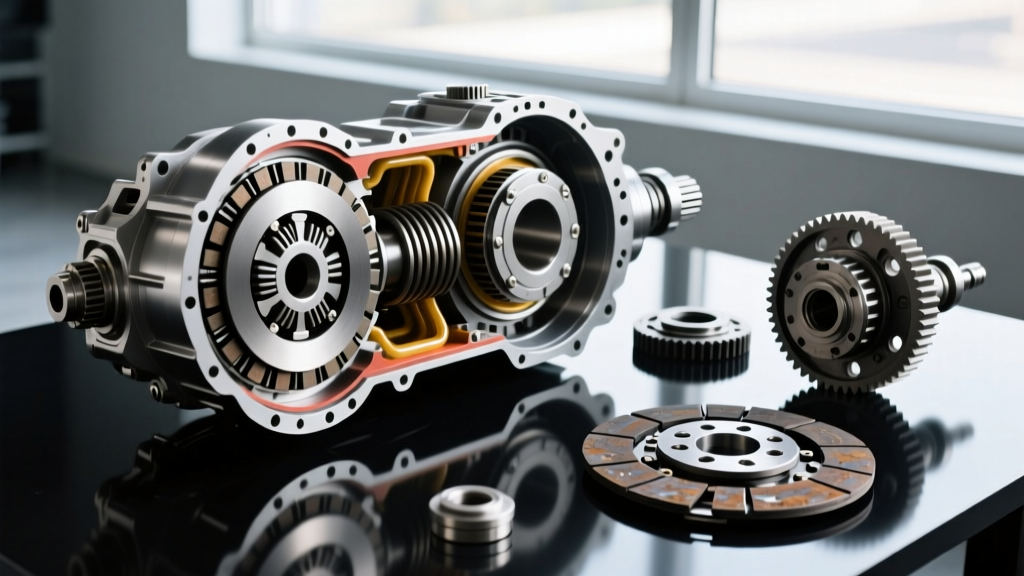
In the commercial sector, vehicles operate at or near their Gross Combined Weight Rating (GCWR). This subjects the friction assembly to immense thermal cycling and mechanical shock. A passenger car clutch relies on a single organic disc and a lightweight diaphragm spring. In contrast, heavy-duty applications demand exponential clamping force, high-mass cast iron flywheels for thermal dissipation, and complex torsional dampers to protect the transmission input shaft from diesel engine harmonic vibrations. In this 2026 performance and upgrade guide, we dissect heavy-duty clutch problems, diagnose specific failure modes in commercial vehicles, and outline the ultimate upgrade paths for workhorse transmissions like the Eaton Fuller RTLO series and the ZF S6-650.
Diagnosing Heavy-Duty Clutch Failure Modes (Class 6-8)
Commercial clutch diagnostics require an understanding of heavy-duty specific components that simply do not exist on light-duty vehicles. Misdiagnosing these symptoms often leads to unnecessary transmission teardowns.
Symptom 1: Clutch Brake Drag and Incomplete Disengagement
The clutch brake is a hallmark of heavy-duty manual transmissions, such as the Eaton Vehicle Group Fuller Road Ranger 13- and 18-speed manuals. Unlike passenger vehicles, heavy trucks utilize a clutch brake to halt the input shaft's rotation, allowing the driver to engage first gear or reverse from a standstill without grinding the gears. The clutch brake is a friction disc splined to the transmission input shaft, squeezed against the transmission bearing retainer when the pedal is pushed to the floor.
- The Symptom: The driver experiences severe grinding when attempting to engage first gear or reverse at a complete stop, but shifting while rolling (floating gears) is perfectly smooth.
- The Diagnosis: This is rarely a synchro failure. It indicates a worn clutch brake, improper pedal free-play adjustment, or a failing hydraulic master cylinder that is not achieving full stroke. If the pedal does not travel the final 1.5 inches to the floorboard, the clutch brake cannot engage.
- The Fix: Adjust the clutch linkage to achieve exactly 1.5 inches of clutch brake travel at the pedal. If the friction material on the clutch brake is worn below 0.120 inches, replace the clutch brake assembly.
Symptom 2: Torsional Damper Failure and Gear Rattle
Heavy-duty diesel engines produce massive low-frequency torsional vibrations. To prevent these harmonics from shattering the transmission's input shaft and helical gears, the clutch disc features a robust torsional damper—a series of heavy-duty coil springs housed within the disc hub.
- The Symptom: A loud, metallic 'clacking' or gear rattle at idle that disappears when the clutch pedal is depressed. Under heavy load, the driver may feel a violent shudder or chatter upon engagement.
- The Diagnosis: The torsional damper springs have fatigued, broken, or lost their damping grease. This is highly common in tuned Cummins and Powerstroke commercial engines where aftermarket tuning has increased low-end torque beyond the OEM damper's absorption capacity.
- The Fix: Immediate replacement of the clutch disc. Continuing to drive with a failed torsional damper will result in the input shaft bearing cage disintegrating, requiring a complete transmission rebuild costing upwards of $6,000.
Symptom 3: Concentric Slave Cylinder (CSC) Bypass Leaks
In the medium-duty and commercial pickup segment, transmissions like the ZF S6-650 (found in Ford Super Duty applications) utilize a hydraulic Concentric Slave Cylinder. The CSC wraps around the transmission input shaft, eliminating the need for a mechanical clutch fork.
- The Symptom: The clutch pedal slowly sinks to the floor during prolonged stops at red lights, or the engagement point wanders unpredictably.
- The Diagnosis: Internal seal bypass within the CSC. The hydraulic fluid is leaking past the internal piston cup back into the reservoir line, rather than leaking externally. This is often exacerbated by using incorrect, moisture-contaminated DOT 3 fluid that swells the EPDM seals.
2026 Performance Upgrade Matrix: OEM vs. Aftermarket Heavy-Duty
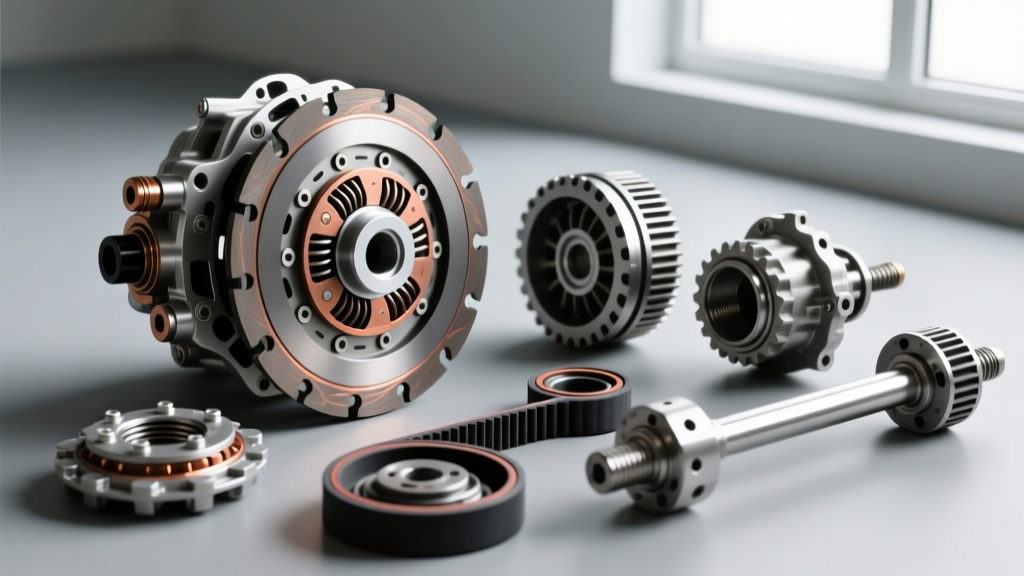
When a commercial fleet or heavy-duty owner-operator requires a replacement, reverting to an OEM clutch de carro equivalent is a false economy. Upgrading to a performance heavy-duty friction assembly ensures longevity under high GCWR conditions. Below is a comparison of top-tier commercial upgrade options available in the 2026 market.
| Brand / Part Number | Configuration | Torque Capacity | Est. Cost (2026) | Best Application |
|---|---|---|---|---|
| South Bend SDD3250-6 | Dual Disc (Organic/Ceramic) | 1,200 lb-ft | $1,850 - $2,100 | Ram Cummins 2500/3500 Heavy Towing |
| Valair Quiet Street Triple | Triple Disc (Organic) | 1,500+ lb-ft | $2,400 - $2,800 | Ford Powerstroke Commercial Fleet |
| BorgWarner 501808 | Single Disc (HD Organic) | 650 lb-ft | $650 - $850 | Class 6 Medium-Duty Box Trucks |
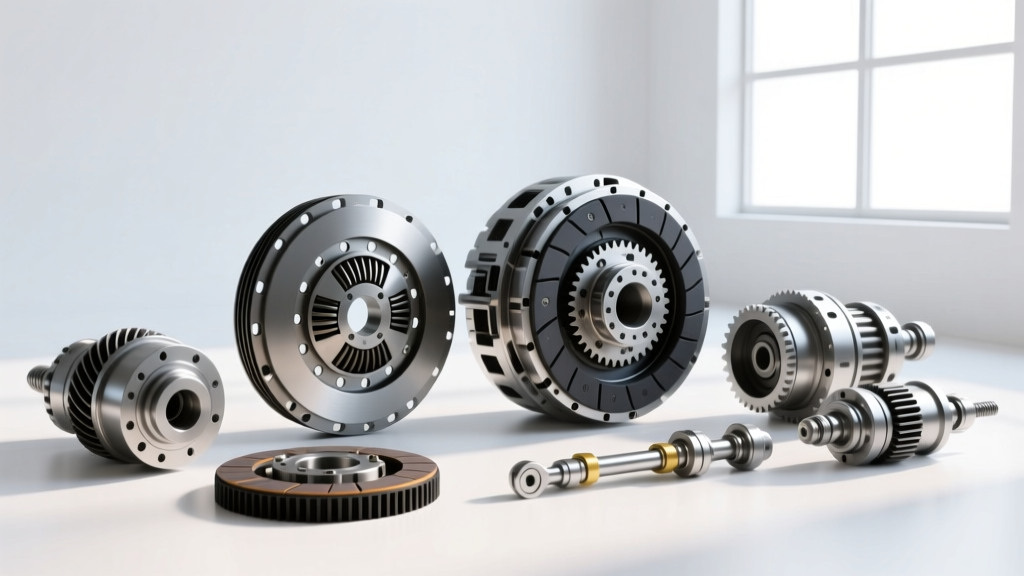
According to engineering data from ZF Friedrichshafen AG, upgrading to a multi-disc setup increases the friction surface area without requiring a diaphragm spring so stiff that it causes driver fatigue or firewall flex. Dual and triple disc setups utilize intermediate floaters that distribute the thermal load, virtually eliminating the clutch fade experienced by single-disc OEM setups on 8% mountain grades.
Precision Installation: Torque Specs and Runout Limits
Heavy-duty clutches operate under extreme clamping pressure. A minor installation error that a light-duty setup might tolerate will instantly destroy a commercial clutch. Adhering to precise machining limits and torque specifications is non-negotiable.
Flywheel Machining and Runout
Never install a heavy-duty performance clutch on an unverified flywheel. The maximum allowable lateral runout for a Class 8 flywheel is 0.005 inches measured at the friction surface. Excessive runout causes the intermediate floater plates in a dual-disc setup to bind, leading to incomplete disengagement and severe chatter. Furthermore, the flywheel must be resurfaced with a specific micro-finish (typically 15-30 RA) to properly mate with ceramic or heavy-duty organic friction materials.
Critical Torque Specifications (ZF S6-650 & Eaton Fuller)
- Flywheel to Crankshaft (Cummins ISB 6.7): 90 lb-ft, plus an additional 90-degree torque-to-yield (TTY) turn. Always use new TTY bolts.
- Pressure Plate to Flywheel (South Bend Dual Disc): 35 lb-ft in a star pattern. Do not use impact wrenches; the uneven clamping will warp the intermediate floater.
- ZF S6-650 Bellhousing to Engine Block: 59 lb-ft. Misalignment here causes premature release bearing wear.
- Eaton Fuller Clutch Fork Pivot Ball: 35 lb-ft with high-temp threadlocker.
Fleet Maintenance Note: 'The most common cause of premature warranty returns on heavy-duty performance clutches is improper break-in. Unlike a standard clutch de carro that might glaze if slipped too much, a ceramic-puck or heavy-duty organic disc requires 500 to 1,000 miles of moderate, varied-RPM engagement to transfer a layer of friction material onto the cast iron flywheel and seat the marcel springs.' — Commercial Drivetrain Engineering Guidelines
Hydraulic System Bleeding and Maintenance Framework
Upgrading the mechanical components is only half the battle. The hydraulic actuation system must be optimized to handle the increased volume and pressure requirements of heavy-duty pressure plates.
The Gravity and Reverse-Pressure Bleed Method
Commercial vehicles with long hydraulic lines and remote reservoirs are notorious for trapping air in the master cylinder dead-zone. Standard pedal-pumping bleeding is insufficient.
- Preparation: Flush the system with a high-boiling-point synthetic DOT 4 or specific heavy-duty hydraulic fluid (e.g., Valvoline Synthetic DOT 3/4).
- Gravity Bleed: Open the bleeder valve on the CSC or external slave cylinder and allow gravity to pull fluid through for 30 minutes to purge large air pockets.
- Reverse Pressure Bleeding: Use a motive power bleeder to push fluid from the slave cylinder bleeder valve up into the master cylinder reservoir. This forces trapped air out of the master cylinder's compensating port, which is located at the top of the bore and impossible to clear via downward bleeding.
Conclusion: The ROI of Commercial Drivetrain Upgrades
Treating a commercial vehicle's drivetrain with the same diagnostic and replacement protocols as a passenger car is a critical error. By understanding the unique mechanics of clutch brakes, torsional dampers, and hydraulic concentric systems, fleet managers can accurately diagnose failures before they cascade into the transmission. Investing in a verified heavy-duty upgrade from manufacturers like South Bend or BorgWarner, paired with strict adherence to runout limits and torque specs, ensures that the vehicle remains on the road, generating revenue rather than sitting in a service bay. For more in-depth transmission diagnostics, continue exploring our commercial fleet maintenance archives.