The 2026 Landscape of Heavy-Duty AMT Clutch Diagnostics
As of 2026, Automated Manual Transmissions (AMTs) account for over 85% of new Class 8 commercial vehicle specifications. While AMTs like the Detroit DT12, Volvo I-Shift, and Eaton Endurant HD have revolutionized fleet efficiency, they have also shifted the maintenance burden from clutch pedal linkages to complex electro-pneumatic and electro-hydraulic actuator systems. When heavy-duty AMT clutch problems arise, the symptoms—ranging from actuator hunting to severe thermal slip—can ground a truck for days.
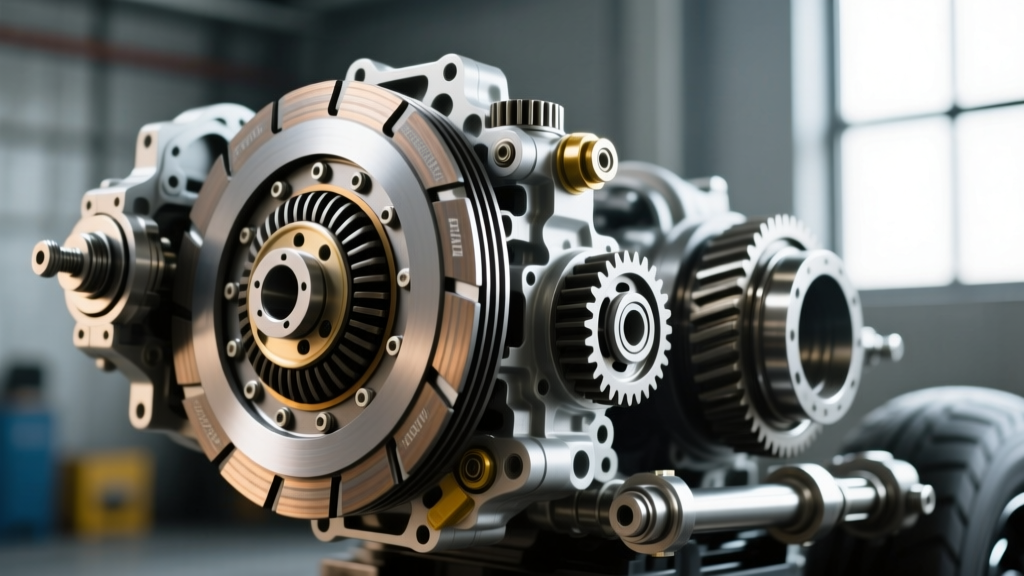
Interestingly, the thermodynamic and friction-management challenges faced by a 1,800 lb-ft commercial AMT are remarkably similar to those engineered into high-performance motorcycle auto clutch systems. Whether it is a Honda DCT navigating stop-and-go traffic or a Rekluse EXP system modulating slip on a dirt bike, the core principles of friction material degradation and actuator response mapping apply. By analyzing the upgrade paths used in advanced motorcycle auto clutch tuning, fleet managers and owner-operators can apply parallel performance upgrades to commercial AMTs to solve chronic slipping, extend service intervals, and optimize heavy-haul performance.
Common Heavy-Duty AMT Clutch Symptoms in Commercial Fleets
Before exploring upgrades, it is critical to accurately diagnose the root cause of AMT clutch failures. Unlike traditional manual transmissions where driver error causes wear, AMT clutch problems are usually tied to software calibration, actuator fatigue, or thermal overload.
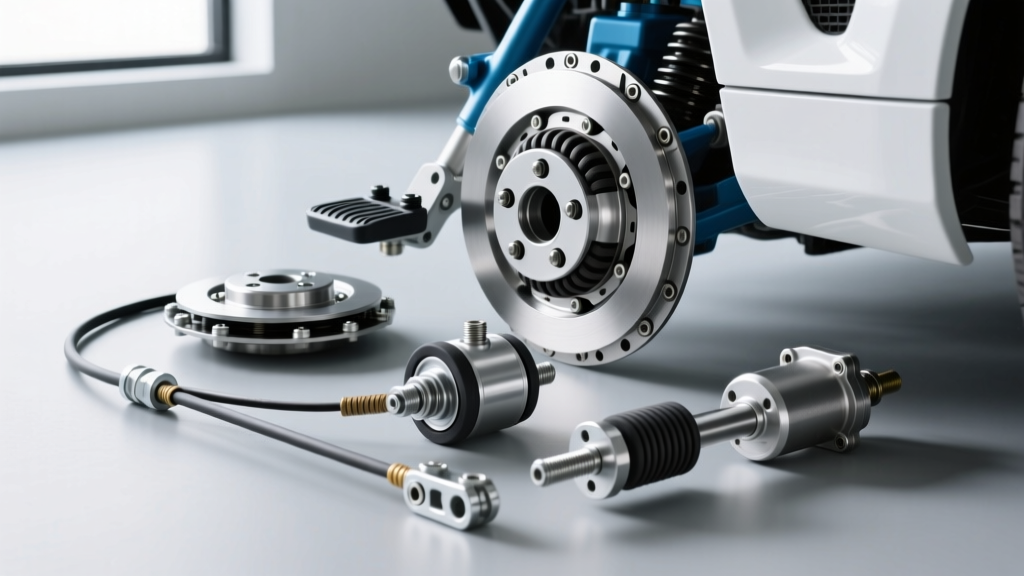
- Actuator Hunting (Gear Chatter): The transmission repeatedly engages and disengages the clutch at low speeds or during hill starts. This is often caused by a failing Concentric Slave Cylinder (CSC) in hydraulic systems or a leaking Pneumatic Clutch Actuator (PCA) in air-driven systems.
- Thermal Slip Under Load: Occurs when pulling heavy payloads (80,000+ lbs) on steep grades. The Transmission Control Module (TCM) detects a mismatch between engine RPM and transmission input shaft speed, triggering a limp-home mode.
- Clutch Brake Failure: The clutch brake (designed to stop the input shaft for smooth shifting) wears out, resulting in grinding during neutral-to-first or neutral-to-reverse engagements.
- Creep Mode Glazing: Similar to how a motorcycle auto clutch manages low-speed slip via centrifugal weights or ECU mapping, heavy-duty AMTs use intentional clutch slip for "creep" mode. Over time, this micro-slipping glazes organic friction discs, leading to catastrophic slip under high torque.
The Friction Material Debate: Organic vs. Ceramic Upgrades
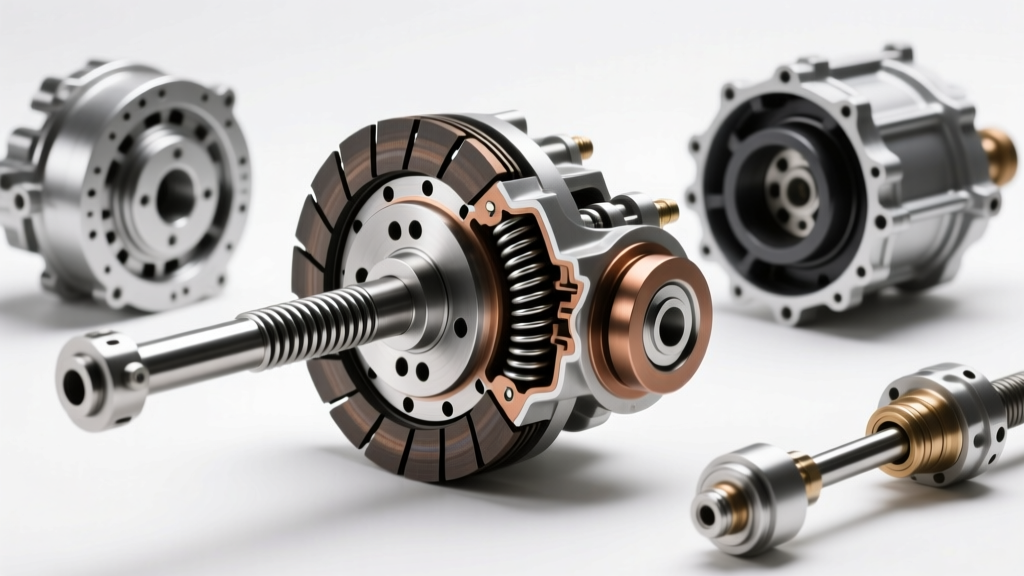
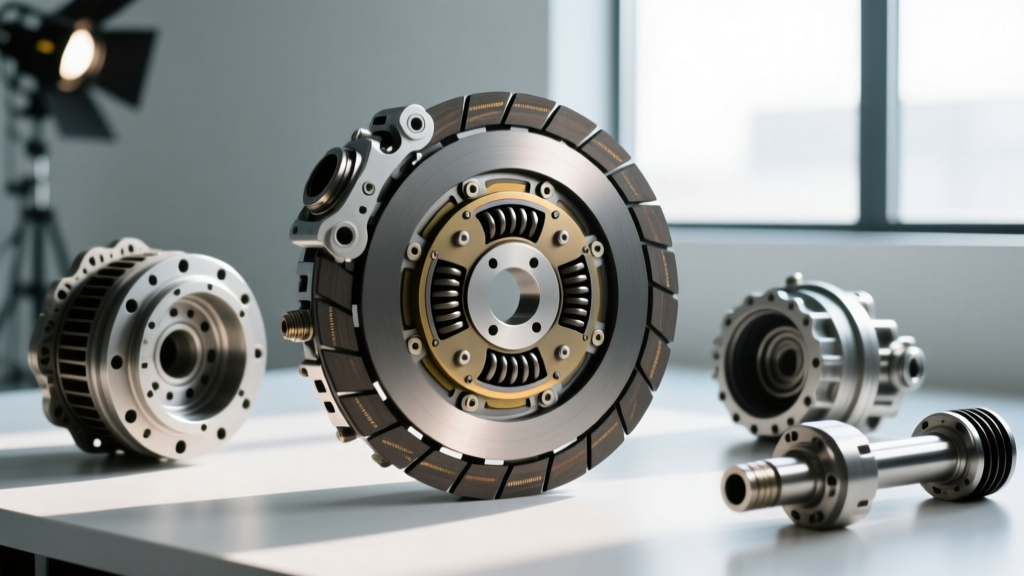
The most effective performance upgrade for heavy-duty AMTs involves swapping the OEM organic clutch pack for a ceramic or multi-material segmented disc. This mirrors the evolution seen in the motorcycle auto clutch market, where sintered metallic and Kevlar-ceramic blends have replaced standard cork or organic papers to handle extreme heat without fading.
For commercial applications like the Cummins X15 paired with an Eaton Endurant HD, upgrading to a ceramic button clutch (such as the Eaton Solo Advantage series) drastically increases the coefficient of friction and thermal threshold. While organic discs begin to fade at approximately 450°F (232°C), ceramic button clutches maintain structural integrity and friction coefficients well past 700°F (371°C).
Friction Material Comparison Chart
| Material Type | Thermal Threshold | Torque Capacity | Best Application | Estimated Cost (Parts) |
|---|---|---|---|---|
| OEM Organic | 450°F (232°C) | Up to 1,650 lb-ft | Regional haul, flat terrain | $800 - $1,100 |
| Ceramic Button | 700°F+ (371°C+) | Up to 2,250 lb-ft | Heavy haul, mountainous routes | $1,400 - $1,900 |
| Carbon/Kevlar Blend | 600°F (315°C) | Up to 1,850 lb-ft | Vocational, stop-and-go PTO | $1,600 - $2,200 |
Actuator Diagnostics: Electro-Hydraulic vs. Electro-Pneumatic
Upgrading the friction disc is only half the battle; the actuator must be calibrated to handle the aggressive bite point of a ceramic clutch. Heavy-duty AMTs utilize two primary actuator architectures, each requiring specific diagnostic protocols.
1. Electro-Hydraulic Systems (Detroit DT12, ZF TraXon)
The Detroit DT12 uses a hydraulic Concentric Slave Cylinder (CSC) to actuate the clutch. A common failure point is internal seal degradation within the CSC, leading to fluid bypass and clutch drag.
- Diagnostic Step: Connect to DiagnosticLink software and monitor the "Clutch Position Sensor" voltage. A healthy CSC should show a smooth voltage sweep from 0.5V (disengaged) to 4.5V (engaged). Erratic drops indicate internal seal bypass.
- Fluid Spec: Never use standard ATF in the DT12 hydraulic circuit. Use only Detroit-approved synthetic manual transmission fluid (e.g., Spirax S6 TXME) to prevent seal swelling.
- Bleeding Procedure: Automated bleed via DiagnosticLink requires a minimum system pressure of 60 PSI. Manual bleeding at the CSC bleeder screw requires a strict torque of 8 Nm (71 lb-in) to avoid stripping the aluminum housing.
2. Electro-Pneumatic Systems (Volvo I-Shift, Mack mDRIVE)
The Volvo I-Shift relies on a Pneumatic Clutch Actuator (PCA) mounted on the transmission bell housing. Air leaks in the PCA piston or the quick-release valves will cause the TCM to abort shifts.
- Diagnostic Step: Use Volvo PTT (Premium Tech Tool) to perform a "Clutch Stroke Calibration." The system will measure the physical travel of the release fork. If the stroke exceeds 28mm, the clutch disc is worn beyond the software's compensation limit.
- Torque Specs (PCA Mounting): When replacing the PCA, the mounting bolts must be torqued to exactly 45 Nm (33 lb-ft). Over-torquing can warp the actuator housing, causing internal pneumatic binding.
Cross-Industry Telemetry: What Trucking Learns from Motorcycle Auto Clutch Mapping
The concept of "clutch mapping"—modulating engagement speed based on throttle position and RPM—was perfected in the motorcycle auto clutch segment, specifically with Honda's Dual Clutch Transmission (DCT). In a motorcycle DCT, the ECU intentionally slips the clutch during low-speed cornering to keep the engine in the powerband without stalling.
Heavy-duty AMTs use a nearly identical algorithm for "Hill Start Assist" and "Creep Mode." However, because a Class 8 truck weighs 80,000 lbs, the thermal energy generated during this intentional slip is exponentially higher. Performance tuners in the commercial sector are now adopting motorcycle-derived telemetry strategies: reprogramming the TCM to utilize "pulse-slip" (rapidly engaging and disengaging the clutch in milliseconds) rather than "continuous slip" during creep mode. This reduces friction surface temperatures by up to 18%, drastically extending the life of upgraded ceramic clutch packs in vocational and refuse truck applications.
Step-by-Step Heavy-Duty Clutch Upgrade & Calibration Guide
When performing a physical clutch upgrade on a heavy-duty commercial vehicle, precision is non-negotiable. Below is the standard protocol for installing an upgraded Eaton Solo Advantage clutch kit (Part # K-3861-XX series) onto a Cummins X15 engine.
- Flywheel Inspection & Machining: Measure flywheel runout. Maximum allowable runout is 0.005 inches. If resurfacing, do not remove more than 0.030 inches of material; otherwise, the clutch brake squeeze dimension will be compromised.
- Flywheel Torque: Install the flywheel using new OEM bolts. Torque to 135 lb-ft (183 Nm) in a star pattern, followed by a 90-degree angle turn.
- Clutch Brake Squeeze Adjustment: This is the most critical step for AMTs. The distance between the clutch brake and the transmission input bearing retainer must yield a "squeeze" of 0.380" to 0.420" when the clutch is fully depressed (or fully actuated by the PCA). Use the manufacturer-provided feeler gauge block.
- Pressure Plate Torque: Secure the pressure plate to the flywheel using a crisscross pattern. Final torque spec is 40 lb-ft (54 Nm).
- TCM Calibration: Once assembled, you MUST perform a "Clutch Touch Point Learning" procedure via the OEM diagnostic software. Failure to do so will result in the AMT slamming into gear, potentially shattering the ceramic friction buttons.
Cost Analysis: OEM Replacement vs. Performance Upgrades
While performance upgrades carry a higher initial parts cost, the reduction in downtime and extended service intervals provide a clear ROI for owner-operators and fleets running heavy-haul or vocational routes.
| Service Type | Parts Cost | Labor (Shop Rate $150/hr) | Total Estimated Cost | Expected Lifecycle |
|---|---|---|---|---|
| OEM Organic Replacement | $950 | $1,800 (12 hrs) | $2,750 | 350,000 - 450,000 miles |
| Ceramic Upgrade + PCA Rebuild | $2,100 | $2,250 (15 hrs) | $4,350 | 600,000 - 750,000 miles |
| Full AMT Swap (Reman) | $14,000 | $1,200 (8 hrs) | $15,200 | N/A (Last resort) |
Final Diagnostics Takeaway
Solving heavy-duty AMT clutch problems requires looking beyond simple wear-and-tear. By understanding the electro-hydraulic and pneumatic nuances of modern actuators, and by borrowing friction-management philosophies from the high-performance motorcycle auto clutch sector, commercial technicians can dramatically improve drivetrain longevity. Whether you are spec'ing a new fleet of Volvo VNLs or upgrading an owner-operator's Freightliner Cascadia, prioritizing ceramic friction materials and strict TCM calibration protocols will keep the power on the pavement and the truck out of the shop.
Expert Note: Always verify the exact TCM software build level before attempting clutch touch-point calibrations. Running outdated firmware on a Detroit DT12 or Eaton Endurant can cause the ECU to reject the new bite-point data, resulting in immediate limp-mode activation upon startup.