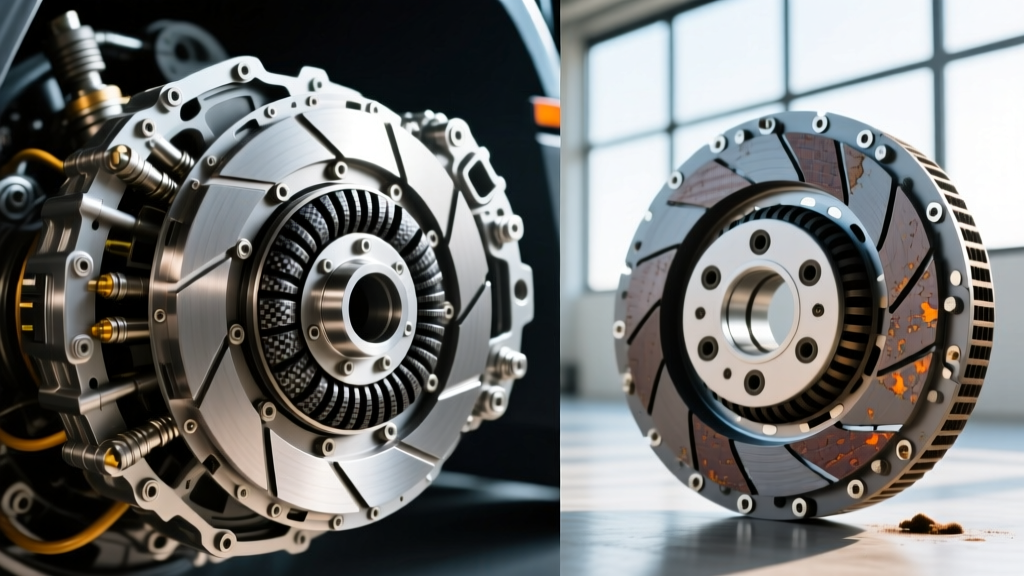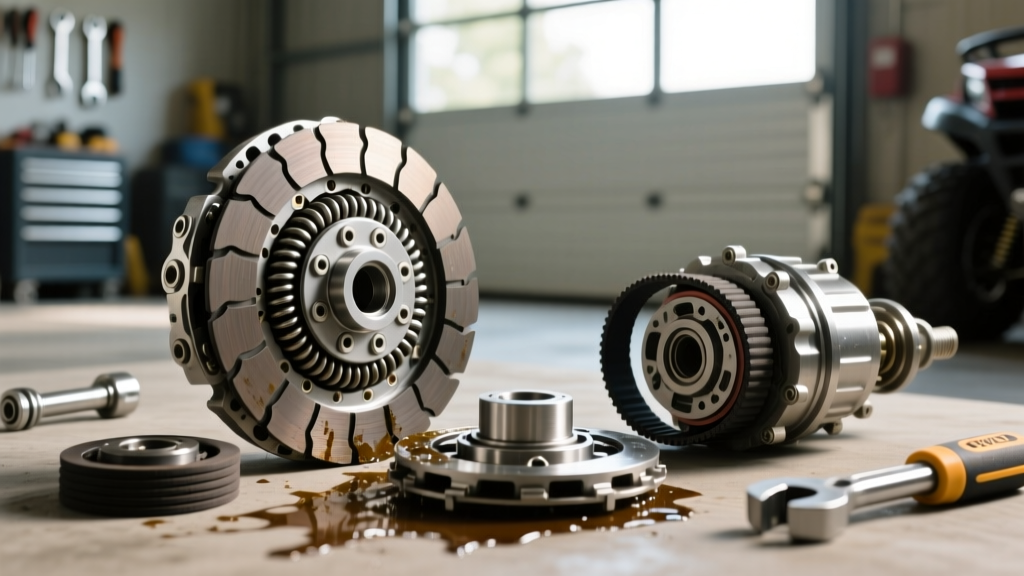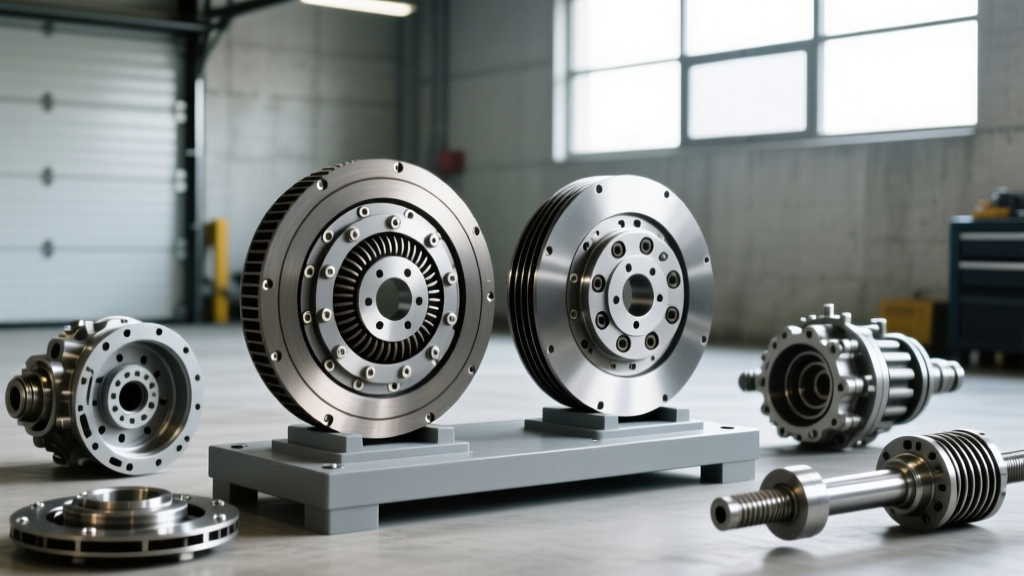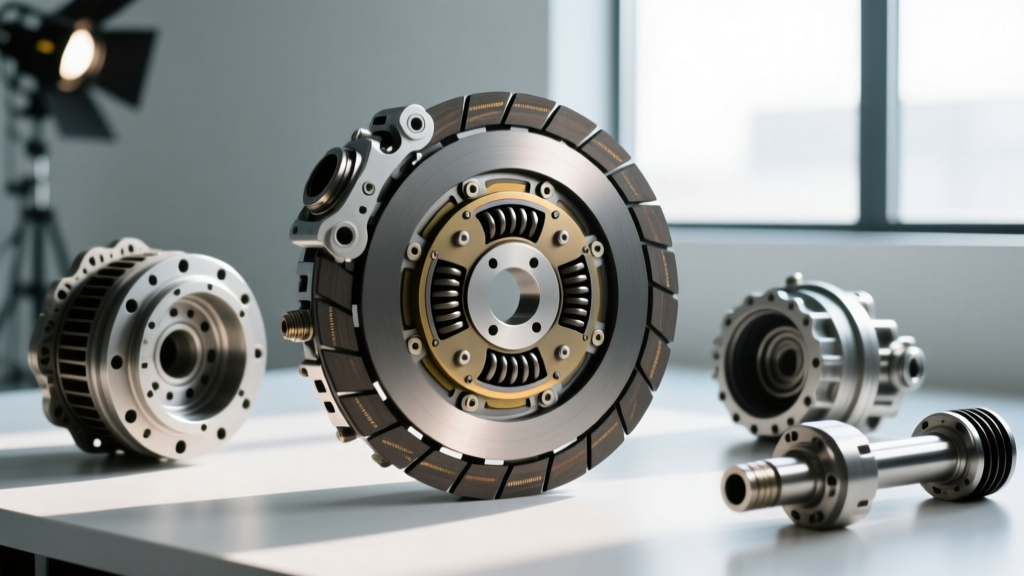
Introduction to Twin Disc Clutch Diagnostics
Upgrading to a twin disc clutch is a mandatory step for high-horsepower builds, modern EV-swapped track cars, and heavy-duty diesel trucks pushing over 800 lb-ft of torque. However, the added clamping force and secondary friction surfaces introduce unique NVH (Noise, Vibration, and Harshness) characteristics. In 2026, with platforms like the Tremec T56 Magnum F and TR-6060 handling massive power, misdiagnosing a twin disc setup often leads to unnecessary teardowns or catastrophic driveline failure.
This step-by-step diagnostic guide isolates the root causes of twin disc clutch chatter, pedal feel inconsistencies, and anomalous noises. We will cover exact hydraulic clearances, flywheel runout tolerances, and hardware torque specifications to ensure your high-performance drivetrain operates flawlessly.
Step 1: Evaluating Pedal Feel and Hydraulics
The most common complaint with twin disc setups (such as the McLeod RXT or Ram 950 Series) is an inconsistent, spongy, or overly stiff pedal. Because twin discs require significantly higher clamp loads, the hydraulic system is pushed to its absolute limits.
Master Cylinder Pushrod and Firewall Flex
Before blaming the clutch assembly, verify the hydraulic input. A heavy twin disc clutch generates between 450 and 650 lbs of pedal effort. This force frequently causes factory sheet metal firewalls to flex, resulting in a spongy pedal and incomplete disengagement.
- Diagnostic Check: Have an assistant press the clutch pedal while you observe the master cylinder pushrod from the engine bay. If the firewall bows inward before the pushrod fully actuates, you have firewall flex.
- Correction: Install a billet firewall brace (e.g., MGW or B&M, typically $85-$120) to eliminate deflection.
Next, check the master cylinder pushrod preload. For a standard Wilwood 0.75-inch bore master cylinder (PN 260-9439), the pushrod must have exactly 0.010 to 0.015 inches of freeplay against the piston. Zero freeplay will cause the master cylinder to trap fluid, leading to a dragging clutch that destroys the intermediate floater plate.
Hydraulic Throwout Bearing (HTOB) Clearance
If your setup utilizes an HTOB (like the Tremec TUET0999), air trapped in the system or incorrect bearing preload mimics clutch slip. Bleed the system using a pressure bleeder set to 25 PSI. The bearing preload gap should measure between 0.100 and 0.150 inches when the clutch is fully engaged. If the gap is zero, the bearing is constantly riding on the pressure plate diaphragm, causing premature wear and a heavy pedal feel.
Step 2: Isolating Driveline Vibration and Chatter
Twin disc clutch chatter upon engagement is rarely a defect in the friction material itself; it is almost always an installation tolerance issue or a driveline harmonic imbalance.
Flywheel Runout and Bellhousing Alignment
The intermediate floater plate in a twin disc assembly is highly sensitive to axial misalignment. If the flywheel or bellhousing is out of spec, the floater plate binds during engagement, causing violent chassis shudder.
- Measure Flywheel Runout: Mount a dial indicator on the engine block and rest the tip on the friction surface of the flywheel. Rotate the crankshaft 360 degrees. Total Indicator Runout (TIR) must not exceed 0.005 inches. If it exceeds this, the crankshaft flange may be warped, or debris is trapped behind the flywheel.
- Check Bellhousing Concentricity: Use a dial indicator on the transmission input shaft to measure the bellhousing bore runout. The maximum allowable TIR is 0.005 inches. If the bellhousing is offset, install offset dowel pins (available in 0.007, 0.014, and 0.021-inch offsets from Lakewood or Moroso) to true the housing.
Expert Insight: Never attempt to 'bed in' a chattering twin disc clutch by aggressively slipping it in high gear. The localized heat will instantly glaze the sintered iron or ceramic friction surfaces and warp the intermediate plate, turning a $150 alignment fix into a $1,200 replacement.
Step 3: Decoding Twin Disc Clutch Noises
Dual-disc clutches introduce a secondary metal plate (the floater) that is not directly bolted to the flywheel or pressure plate. This creates inherent acoustic signatures that inexperienced mechanics often misdiagnose as transmission bearing failure.
| Noise Symptom | Operating Condition | Probable Cause | Diagnostic Action & Fix |
|---|---|---|---|
| Metallic Rattle at Idle | Clutch engaged (pedal out), neutral gear | Intermediate floater plate rattle against drive lugs | Normal for aggressive twin discs. Depress pedal; if noise stops, it is transmission input shaft rattle, not the clutch. |
| High-Pitch Squeal | Clutch disengaging (pedal pressed) | Dry or failing release bearing / HTOB | Inspect bearing face for grooving. Replace bearing and verify hydraulic preload gap. |
| Clunk on Engagement | Releasing pedal in 1st gear | Excessive hub clearance or worn floater straps | Measure drive strap tension. Replace floater plate if lugs are wallowed out. |
| Grinding on Shift | Rapid gear changes under load | Incomplete disengagement / hydraulic restriction | Check for collapsing braided clutch line or air in HTOB. Bleed and inspect fluid for banding. |
The 'Depress-to-Test' Noise Rule
To differentiate between twin disc floater rattle and internal transmission damage, perform the depress-to-test. Start the engine in neutral. If you hear a metallic rattle, slowly press the clutch pedal to the floor. If the noise completely disappears, the rattle is coming from the transmission input shaft bearing or gear lash (common in straight-cut gearsets or worn T56 synchros). If the noise changes pitch or persists while the pedal is depressed, the issue lies within the clutch release mechanism or the pressure plate diaphragm.
Step 4: Inspecting Hardware and Torque Specifications
Improper torque sequences are the silent killers of twin disc clutches. The clamping forces exceed 3,500 lbs, and uneven bolt tension will warp the pressure plate housing, leading to uneven wear on the inner and outer friction discs.
Flywheel and Pressure Plate Torque Specs
Always use high-grade hardware. For most GM LS and Ford Coyote applications utilizing ARP 200-2804 (3/8-16) flywheel bolts, the torque specification is critical.
- Flywheel to Crankshaft: 95 lb-ft using ARP Ultra-Torque moly assembly lube. Do not use standard 30W oil, as it alters the friction coefficient and results in a 20% under-torque condition.
- Pressure Plate to Flywheel: 25 to 30 lb-ft (consult specific manufacturer, e.g., McLeod Racing or Ram Clutches). You must tighten these bolts in a strict crisscross star pattern, drawing the pressure plate down in three incremental steps (10 lb-ft, 20 lb-ft, final spec) to prevent housing distortion.
For the intermediate floater plate drive straps (if equipped), torque the mounting bolts to exactly 15 lb-ft with a drop of blue Loctite 243. Over-torquing these straps restricts the axial float of the floater plate, causing the clutch to drag and burn up during stop-and-go traffic.
When to Replace: Wear Limits and 2026 Costs
Diagnosing a worn twin disc clutch requires measuring the friction material and the floater plate thickness. Unlike single disc setups, you cannot simply measure the clutch fork travel.
- Friction Disc Wear Limit: Replace the friction discs if the sintered iron or ceramic material is worn down to 0.030 inches above the rivet heads, or if the overall disc thickness drops below the manufacturer's minimum (typically 0.280 inches for standard 7.25-inch twin discs).
- Floater Plate Resurfacing: The intermediate plate must be perfectly flat. If it exhibits heat bluing or exceeds 0.003 inches of warpage, it must be replaced. Resurfacing a stepped twin disc flywheel requires specialized CNC grinding; standard machine shop Blanch grinding will ruin the step height, destroying the clutch's release geometry.
2026 Pricing Context: Expect to pay between $180 and $250 for professional stepped-flywheel resurfacing. A replacement intermediate floater plate costs roughly $130 to $180. If the entire assembly has suffered thermal failure, a complete street/track twin disc kit (e.g., McLeod RXT 1000) currently retails between $1,150 and $1,400, depending on spline count and bellhousing configuration.
References and Technical Resources
For exact torque specifications, hydraulic bleed procedures, and bellhousing alignment data, always consult the manufacturer's current technical documentation:
- McLeod Racing Technical Information - Flywheel step heights and HTOB setup guides.
- Ram Clutches Tech Portal - Twin disc installation and drive strap torque specs.
- ARP Fasteners Installation Guide - Torque specs and lubricant requirements for flywheel hardware.