The Legacy of the Harley-Davidson 4-Speed Transmission
The Harley-Davidson 4-speed transmission—encompassing the legendary ratchet-top Big Twin (1936-1984) and the early Ironhead Sportster (1957-1970)—remains a cornerstone of vintage motorcycle performance. Unlike modern hydraulic or cable-actuated multi-plate systems, the classic 4-speed relies on a robust, mechanically actuated wet clutch. As of 2026, the vintage restoration market has seen a massive influx of advanced friction materials, giving builders more options than ever. However, selecting the correct Harley 4 speed clutch plates requires a deep understanding of wet-clutch dynamics, primary fluid compatibility, and stack height tolerances. Choosing the wrong friction material or pairing it with the wrong separator plates will result in catastrophic slippage, clutch drag, or destroyed clutch hubs.
Understanding the Wet Clutch Environment
Before dissecting friction materials, it is critical to address the environment in which these plates operate. The Harley 4-speed clutch is bathed in primary chaincase lubricant. This fluid must cool the plates, lubricate the primary chain, and provide the correct coefficient of friction.
A common mistake in modern vintage builds is using standard full-synthetic 20W-50 engine oil in the primary. Modern engine oils contain friction modifiers designed to protect engine bearings, which will cause cork and carbon-fiber clutch plates to slip under load. For classic 4-speeds, veteran mechanics and J&P Cycles technical advisors frequently recommend dedicated primary oils or Dexron III / Type F Automatic Transmission Fluid (ATF). Type F ATF lacks the slippery friction modifiers of modern engine oils, providing the aggressive 'bite' required for high-torque Big Twin applications.
Friction Material Types for Harley 4 Speed Clutch Plates
The evolution of clutch friction materials has drastically changed how vintage Harleys transfer power to the rear wheel. Here is a breakdown of the primary materials available for 4-speed rebuilds.
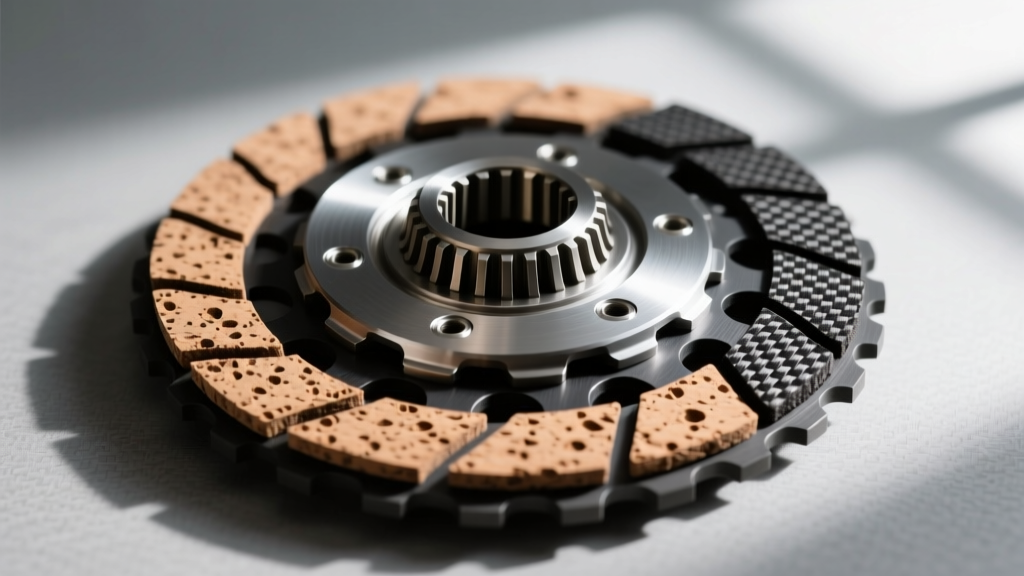
1. Cork and Paper-Based Composites (OEM Style)
Original equipment and standard replacement clutch plates utilize a cork-impregnated or paper-based composite material bonded to a steel core.
- Pros: Extremely smooth engagement, gentle on the clutch hub and basket splines, and highly forgiving in cold-weather starts.
- Cons: Low heat tolerance. Under aggressive riding or high-torque stroker engines, cork plates will glaze, burn, and rapidly degrade.
- Best Application: Stock-panhead, knucklehead, and low-compression Shovelhead builds prioritizing smooth, low-speed maneuverability.
2. Kevlar (Aramid Fiber)
Kevlar plates offer a significant step up in tensile strength and heat resistance. According to Barnett Clutches engineering data, Kevlar can withstand surface temperatures exceeding 500°F without losing its friction coefficient.
- Pros: Exceptional durability, high friction coefficient, and resistance to glazing.
- Cons: Kevlar requires a precise break-in period and heavier clutch springs to maintain adequate clamping force. If under-sprung, Kevlar will slip and generate enough heat to warp the steel separator plates.
- Best Application: High-horsepower Shovelheads and drag-racing Ironhead Sportsters.
3. Carbon Fiber
Carbon fiber is the premium choice for modern vintage performance builds. Carbon fiber friction material is woven and resin-impregnated to provide consistent friction across a massive temperature range.
- Pros: Unmatched heat dissipation, zero fade under heavy load, and a surprisingly smooth, progressive engagement feel.
- Cons: Expensive. Carbon fiber is also highly abrasive; it requires hardened steel separator plates and will quickly destroy soft aluminum separator plates.
- Best Application: Touring Shovelheads, heavy custom baggers, and high-torque stroker motors.
4. Sintered Bronze / Ceramic (Racing Only)
While available, sintered bronze and ceramic metallic plates are generally designed for dry-clutch applications or specific racing environments. Using these in a standard Harley 4-speed wet primary chaincase is not recommended, as they can be overly aggressive, causing severe drivetrain shock and premature wear to the mainshaft and primary drive gears.
Separator Plates: Steel vs. Aluminum
The friction plates are only half of the equation. The separator plates (the smooth plates that sit between the friction discs) dictate heat capacity and rotating mass.
- Steel Separator Plates (0.078-inch thick): The industry standard. Steel acts as a massive heat sink, absorbing the thermal energy generated during clutch slip. They are heavy, but they resist warping. When using Kevlar or Carbon Fiber friction plates, hardened steel separators are mandatory.
- Aluminum Separator Plates: Aluminum reduces rotating mass, allowing the engine to rev slightly faster. However, aluminum retains heat poorly and is prone to warping under the abrasive nature of modern synthetic friction materials. Use aluminum plates only with standard cork/paper friction discs in low-horsepower applications.
Stack Height and Measurement Specifications
Proper clutch function relies entirely on achieving the correct 'stack height'—the total compressed thickness of the friction and steel plates. If the stack is too short, the clutch will slip because the pressure plate cannot apply enough force. If the stack is too tall, the clutch will drag, making it impossible to find neutral.
| Specification | Big Twin 4-Speed (1936-1984) | Sportster 4-Speed (1957-1970) |
|---|---|---|
| Friction Plates Required | 10 | 9 |
| Steel Plates Required | 9 | 8 |
| New Friction Thickness | 0.145 in. - 0.150 in. | 0.145 in. - 0.150 in. |
| Service Wear Limit | 0.120 in. | 0.120 in. |
| Steel Plate Thickness | 0.078 in. | 0.078 in. |
| Target Total Stack Height | 1.530 in. - 1.580 in. | 1.380 in. - 1.420 in. |
| Mainshaft Hub Nut Torque | 75 ft-lbs (Taper Shaft) | 70 ft-lbs |
Note: Always measure your stack height with a digital caliper before installing the clutch spring and pressure plate. If your stack height is below the minimum specification, you must install a thicker custom steel plate or an extra friction/steel pair to compensate.
Step-by-Step Installation and Torque Specifications
Rebuilding a Harley 4-speed clutch requires precision. Follow these critical steps to ensure longevity:
1. Pre-Soaking the Friction Plates
Never install dry friction plates. Submerge your new cork, Kevlar, or carbon fiber plates in your chosen primary fluid (e.g., Type F ATF or Formula+) for a minimum of two hours prior to installation. This allows the porous friction material to become fully saturated, preventing immediate burnout upon the first engagement.
2. Inspecting the Clutch Hub and Shell
The aluminum clutch shell and steel inner hub develop deep grooves (notches) over decades of use. These notches prevent the plates from sliding freely, causing clutch drag. Use a fine-tooth file to carefully dress the notches. If the grooves exceed 0.020 inches in depth, the hub and shell must be replaced, or the clutch will never disengage cleanly.
3. Mainshaft Taper and Woodruff Key Alignment
Early 4-speed mainshafts utilize a taper-fit with a Woodruff key. This is a notorious failure point. Ensure the taper on the mainshaft and the inner hub are surgically clean and completely free of oil. Apply a tiny drop of blue Loctite to the threads (not the taper), align the Woodruff key carefully, and torque the mainshaft nut to exactly 75 ft-lbs. Failure to achieve proper torque will result in the hub spinning on the taper, shearing the Woodruff key and destroying the mainshaft.
4. Spring Selection and Adjustment
The classic 4-speed uses a coil-spring setup (typically 5 or 6 springs depending on the exact year and diaphragm conversions). If you have upgraded to Kevlar or Carbon Fiber plates, you must install heavy-duty clutch springs to increase clamping pressure. Adjust the spring nuts evenly so that the pressure plate sits perfectly parallel to the clutch shell. Finish by adjusting the internal center pushrod adjuster to allow exactly 1/8-inch of free play at the clutch release lever.
Troubleshooting Common 4-Speed Clutch Issues
Clutch Drag (Cannot find neutral): This is almost always caused by notched clutch hubs, warped steel separator plates, or using an overly thick stack of friction plates. It can also be caused by using an oil that is too viscous in cold weather, causing the plates to stick together via surface tension.
Clutch Slippage under Load: Slippage indicates a lack of clamping force or degraded friction material. Verify that your stack height is within the 1.530-inch to 1.580-inch window for Big Twins. Check that you are not using a full-synthetic automotive motor oil in the primary chaincase, and ensure your clutch springs have not taken a set (measure free length; replace if they have compressed more than 1/8-inch from their factory specification).
Final Thoughts on Material Selection
Upgrading your Harley 4 speed clutch plates is one of the most transformative modifications you can make to a vintage motorcycle. For a numbers-matching museum restoration, stick to OEM-style cork plates and standard steel separators. However, for a rider who demands reliability on modern highways, a combination of carbon fiber friction plates, hardened steel separators, and heavy-duty coil springs will provide a bulletproof, fade-free clutch capable of handling the torque of modern stroker engines. Always prioritize precise stack height measurements and strict adherence to mainshaft torque specifications to ensure your classic 4-speed performs flawlessly for decades to come.