The Architecture of Golf Cart Drivetrains: Transaxle vs. Standalone
When diagnosing a golf cart rear differential, the first step is understanding your specific drivetrain architecture. Unlike traditional solid-axle trucks, golf carts utilize two primary rear-end configurations. Misidentifying these leads to catastrophic maintenance errors. Older Club Car DS models and E-Z-GO TXT carts typically use an integrated transaxle, where the differential shares a common housing and fluid reservoir with the transmission. Conversely, the Yamaha G29 (Drive) and heavily modified lifted carts utilize a standalone rear differential connected to the transmission via a drive shaft. Troubleshooting requires isolating whether your symptoms originate in the transmission, the drive shaft, or the differential carrier itself.
Auditory Diagnostics: Decoding Rear End Noises
Golf cart differentials operate at lower speeds than highway vehicles, but their gear lash and bearing tolerances are equally precise. Because golf carts lack heavy sound deadening, differential noise is often the first indicator of impending failure.
- Coast-Down Whine: A high-pitched whine that occurs only when you lift off the throttle and the cart is coasting indicates wear on the coast side of the ring and pinion gears. This is often caused by improper gear backlash adjustment during a previous rebuild or prolonged operation with degraded fluid.
- Load-Bearing Howl: A steady howl under acceleration points to wear on the drive side of the gear teeth or a failing pinion bearing. If the howl changes pitch with speed, the pinion bearing is the primary suspect.
- Reversal Clunk: A distinct metallic "clunk" when shifting from forward to reverse signifies excessive backlash. This is typically caused by worn spider gears, a degraded cross pin, or severely worn axle splines where the CV joint mates with the differential side gears.
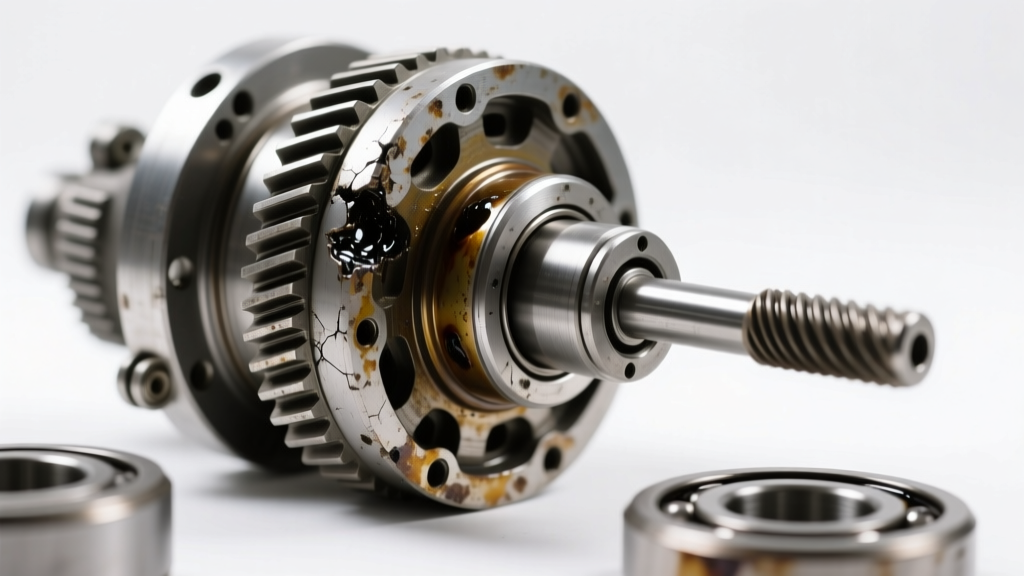
- Grinding or Crunching: This is a critical failure state. It usually indicates that a carrier bearing or needle bearing has disintegrated, allowing the ring gear to physically contact the differential housing casing.
Troubleshooting Matrix: Symptom to Solution
Use the following diagnostic table to isolate your golf cart rear differential issues before ordering parts.
| Symptom | Probable Cause | Verification Method | Corrective Action |
|---|---|---|---|
| Fluid weeping from axle tube | Failed outer axle seal or worn axle bearing | Check for lateral play in the rear wheel; inspect seal lip | Replace axle seal (e.g., JW1-25188-00) and needle bearing |
| Chatter during tight turns | Limited-slip additive depletion (if equipped) or spider gear bind | Perform tight figure-8s on pavement; listen for skipping | Flush fluid; add friction modifier or replace spider gears |
| Whining that disappears at speed | Incorrect fluid viscosity or foaming | Drain and inspect fluid for aeration; verify fluid type | Refill with exact OEM-specified 10W-30 motor oil |
| Vibration at 15+ MPH | Worn carrier bearing or bent ring gear | Remove diff cover; check carrier bearing for pitting | Replace carrier bearings and inspect gear mating pattern |
The 80W-90 Trap: Fluid Specification Errors
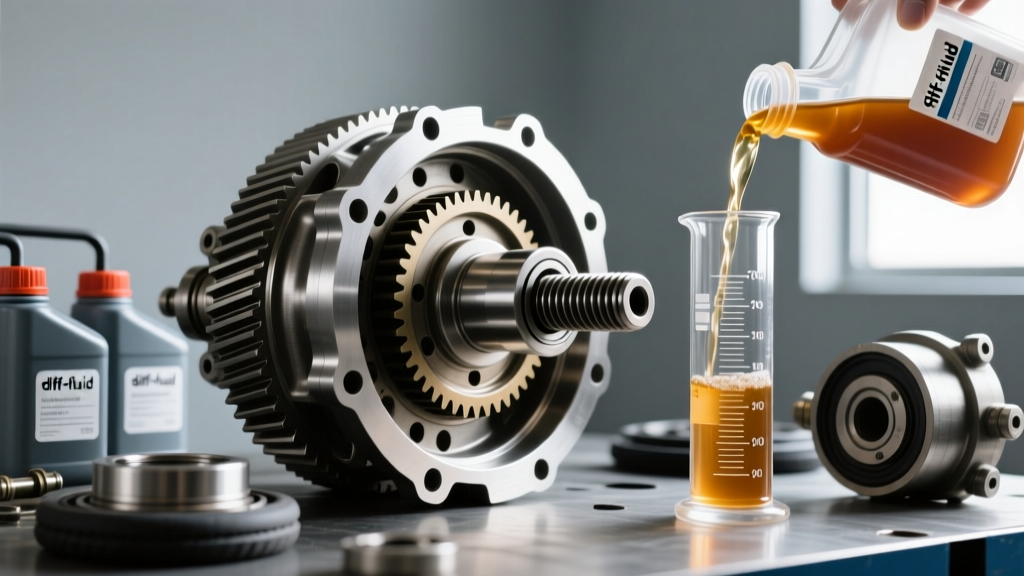
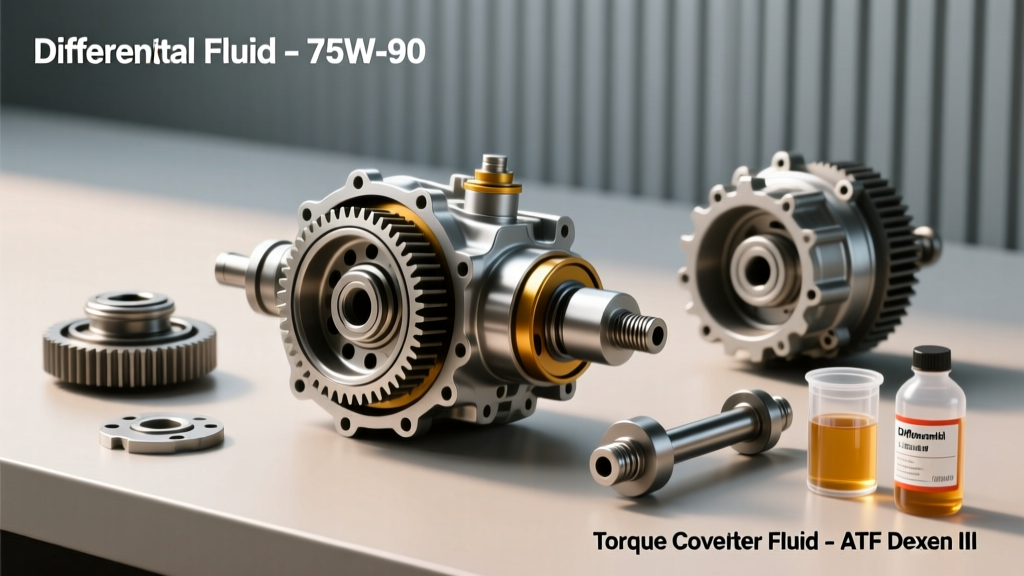
The most common maintenance error that destroys a golf cart rear differential is the assumption that it requires heavy gear oil. Many DIY enthusiasts and generic repair shops mistakenly fill Yamaha G29 standalone differentials and Club Car transaxles with 75W-90 or 80W-90 gear oil. This is a critical mistake.
According to Yamaha Motor Corporation specifications, the standalone rear differential in a Yamaha Drive (G29) requires standard 10W-30 or 10W-40 motor oil, not gear oil. The internal clearances of these small differentials are exceptionally tight. Heavy gear oil causes sluggish oil flow, foaming, and inadequate lubrication of the upper pinion bearing, leading to premature seizure. Similarly, Club Car Precedent transaxles require 10W-30 synthetic engine oil. The fluid capacity for a Yamaha G29 rear differential is exactly 1.2 liters (1.27 quarts). Overfilling will cause the fluid to aerate and blow past the axle seals due to crankcase-style pressure buildup.
Step-by-Step Standalone Differential Service Procedure
If you are servicing a standalone Yamaha-style rear differential, follow these precise steps to ensure longevity and proper sealing.
1. Preparation and Draining
Elevate the rear of the cart using jack stands placed securely under the leaf spring perches or frame rails. Never support the cart by the axle tubes, as this can bend the tubes and bind the outer bearings. Place a catch pan beneath the differential. Remove the bottom drain plug using a 10mm Allen or hex socket. Allow the fluid to drain completely. Inspect the drain plug for metal shavings. A fine, glitter-like paste is normal wear; chunky metal shards indicate bearing or gear failure requiring a teardown.
2. Flushing the Housing
If the drained fluid smells burnt or contains heavy sediment, flush the housing. Use a pump to inject 0.5 quarts of cheap 10W-30 oil or a dedicated gear-case flush into the fill hole. Rotate the rear wheels by hand in both directions for two minutes to circulate the flush, then drain it completely.
3. Refilling and Torque Specifications
Reinstall the drain plug. The OEM drain plug torque specification is 18 ft-lbs. Do not overtighten, as the aluminum differential housing strips easily. Using a fluid transfer pump, fill the differential through the top fill hole with high-quality 10W-30 synthetic motor oil until the fluid reaches the exact bottom lip of the fill hole threads. The capacity is approximately 1.27 quarts. Reinstall the fill plug and torque to 18 ft-lbs.
Addressing Axle Seal Leaks and Bearing Play
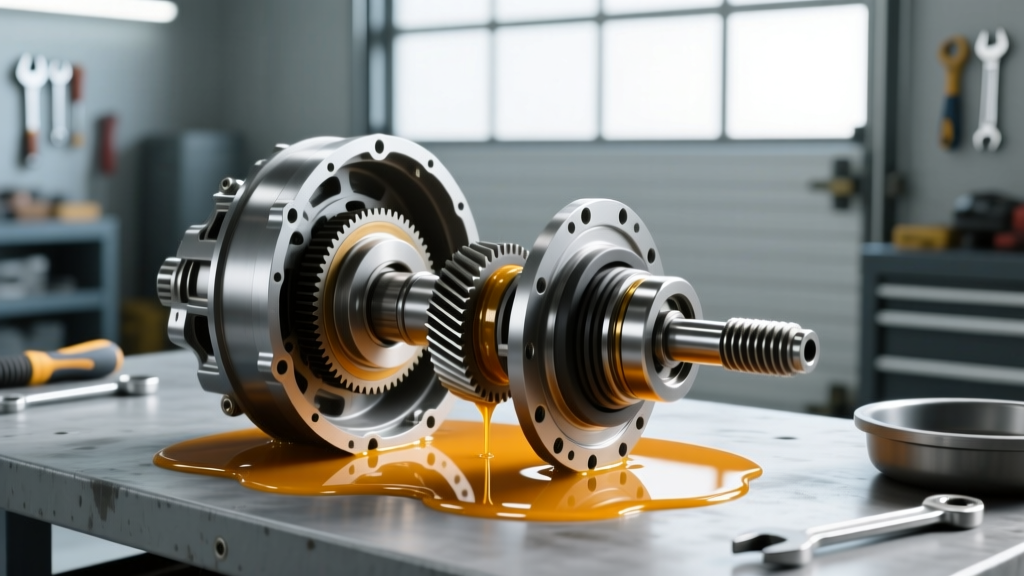
A leaking axle seal on a golf cart is rarely just a seal failure; it is usually a symptom of a failing outer axle bearing. When the needle bearing inside the axle tube degrades, it allows the axle shaft to deflect under the heavy load of the cart's weight and passenger cargo. This deflection tears the inner lip of the rubber axle seal.
Before replacing a seal, grab the rear tire at the 12 and 6 o'clock positions and attempt to rock it. Any discernible clunk or lateral play means the needle bearing must be replaced alongside the seal. For Yamaha G29 models, the outer axle seal part number is typically JW1-25188-00, and the needle bearing is 93306-205Y1-00. When pressing in the new seal, use a specialized seal driver to ensure it sits perfectly flush. A crooked seal will leak within 50 miles. Furthermore, ensure the axle shaft mating surface is smooth; if the old seal wore a groove into the axle shaft, you must install a speedi-sleeve or replace the axle shaft entirely, or the new seal will fail immediately. Parts suppliers like Buggies Unlimited offer complete seal and bearing kits that include the necessary retaining clips and O-rings for this exact procedure.
Rebuild vs. Replace: 2026 Cost Analysis
When internal diagnostics reveal severe gear damage or a cracked carrier, you must decide between rebuilding the existing unit or installing a remanufactured assembly.
- Complete Rebuild Kit: A master rebuild kit (including ring and pinion, carrier bearings, pinion bearings, seals, and shims) costs between $180 and $320. However, setting the gear backlash (typically 0.005" to 0.008") and pinion depth requires specialized dial indicators and significant expertise. If done incorrectly, the new gears will whine and fail within weeks.
- Remanufactured Assembly: Purchasing a complete, pre-assembled, and bench-tested drop-in differential assembly from a reputable supplier costs between $850 and $1,250. While the upfront cost is higher, it eliminates the risk of improper gear mesh setup and drastically reduces labor time.
- Used/Salvage Units: While you can find used differentials on eBay or via Golf Cart Garage for $300 to $500, this is a high-risk gamble. The internal bearing wear is invisible from the outside, and you may end up paying for the labor twice.
For most fleet operators and daily drivers in 2026, the remanufactured drop-in unit provides the highest return on investment by guaranteeing correct gear tolerances and minimizing cart downtime. Always remember to transfer your existing drive shaft yoke and axle shafts carefully, ensuring the splines are coated in anti-seize compound before reassembly to prevent future galvanic corrosion.