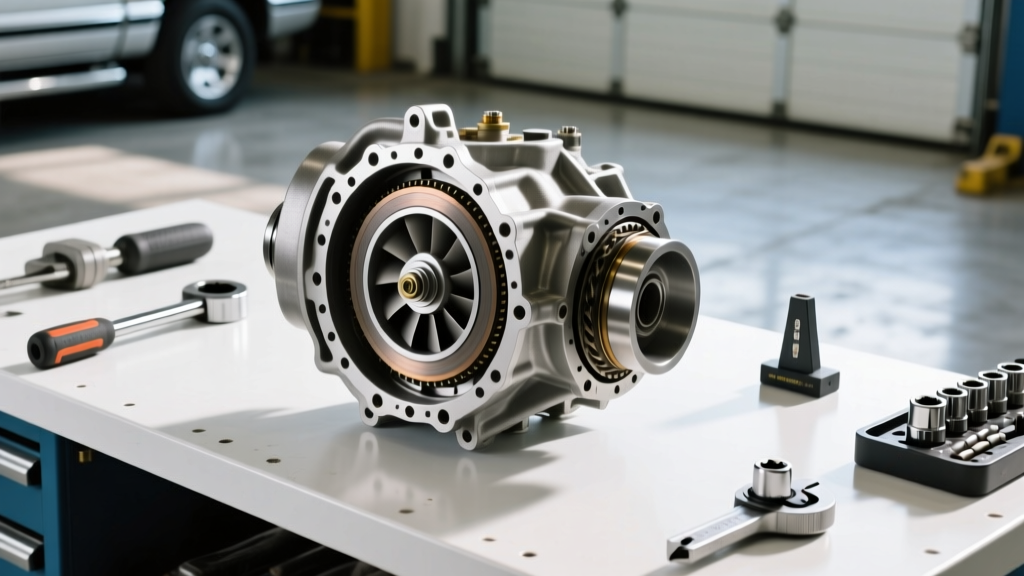
Core Drivetrain Architecture: CVT vs. Direct Drive
When building or upgrading a small-engine chassis—whether it is a trail-rated yard kart, a heavy-duty off-road buggy, or a sprint racer—the final drivetrain decision hinges on a single question: Should you use a fixed-ratio centrifugal clutch or a variable-ratio go kart torque converter setup? While both components serve the fundamental purpose of transferring rotational energy from the crankshaft to the jackshaft, their internal mechanics, torque delivery profiles, and failure modes are vastly different. In this technical deep-dive, we will dissect the engineering behind both systems, compare real-world performance metrics, and outline the precise diagnostic symptoms that indicate impending failure.
Inside the Go Kart Torque Converter Setup
A go kart torque converter is technically a continuously variable transmission (CVT) adapted for single-cylinder, horizontal-shaft engines (such as the Honda GX200, Predator 212, or Tillotson 225). Unlike automotive torque converters that rely on hydrodynamic fluid coupling, small-engine torque converters utilize a mechanical belt-and-pulley system to achieve infinite gear ratios between a low-gear launch and a high-gear overdrive.
Driver and Driven Pulley Dynamics
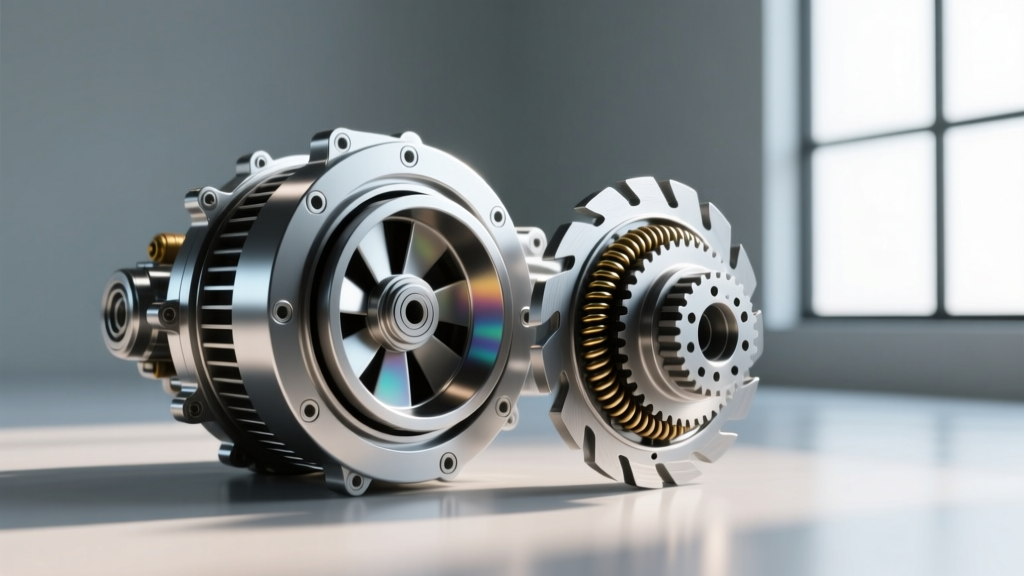
The system consists of three primary components: the driver pulley (mounted to the engine crankshaft), the driven pulley (mounted to the jackshaft), and a specialized asymmetric drive belt. The driver pulley features a movable sheave actuated by centrifugal force. As engine RPM increases, internal cam rollers are forced outward, pushing the movable sheave against the stationary sheave. This pinches the belt, forcing it to ride higher on the pulley, effectively increasing the driver's pitch diameter.
Simultaneously, the driven pulley utilizes a heavy-duty torsion spring. As the belt is pulled tight by the expanding driver pulley, it forces the sliding sheave of the driven pulley outward against the spring tension. This decreases the driven pulley's pitch diameter. The result is a seamless transition from a 2.7:1 low-gear ratio (maximum torque multiplication) to a 0.9:1 high-gear ratio (overdrive for top speed). Premium setups like the Hilliard Inferno or the classic Comet TAV2 (Part #218353A) utilize asymmetrical belt profiles (typically 3/4-inch top width, such as the 725 or 735 belt series) to prevent the belt from bottoming out in the pulley grooves, ensuring constant grip and reducing hysteresis losses.
Centrifugal Clutch Mechanics and Limitations
In contrast, a centrifugal clutch is a direct-drive, single-ratio coupling mechanism. It consists of a central hub splined or keyed to the crankshaft, weighted friction shoes lined with high-temperature aramid or ceramic composite material, and a surrounding steel drum connected to the jackshaft sprocket. Retraction springs hold the shoes inward at idle.
When the engine reaches the engagement threshold—typically tuned between 1,400 RPM and 1,600 RPM for standard karts, or up to 2,200 RPM for highly modified sprint engines—centrifugal force overcomes the spring tension. The shoes expand outward and lock against the inner wall of the drum. Once fully locked, the clutch operates at a strict 1:1 ratio. There is zero torque multiplication; the jackshaft receives exactly the torque output of the engine crankshaft, minus minor parasitic friction losses.
Technical Specification and Performance Matrix
To understand the practical applications of each system, review the comparative data matrix below based on 2026 market specifications for standard 6.5 HP to 9 HP (196cc - 274cc) engine platforms.
| Specification | Torque Converter (TAV2 / Inferno) | Centrifugal Clutch (Max-Torque / Standard) |
|---|---|---|
| Torque Multiplication | Up to 2.7:1 at stall speed | 1:1 (Fixed Direct Drive) |
| Top Speed Overdrive | 0.9:1 (Overdrive ratio) | 1:1 (No overdrive) |
| Engagement Type | Progressive / Variable | Instantaneous Lockup |
| Heat Dissipation | Air-cooled via pulley fins | Mass-dependent (drum acts as heatsink) |
| Maintenance Interval | Belt replacement every 50-100 hrs | Shoe/Spring inspection every 25-50 hrs |
| Average Cost (2026) | $130 - $380 USD | $35 - $120 USD |
| Chain Compatibility | #35, #40, #41, #420 | #35, #40, #41, #420 |
Torque Multiplication Math: Why Converters Win Off-Road
The primary advantage of a go kart torque converter setup is torque multiplication, which is critical for off-road karts, dune buggies, and heavy payload vehicles. Let us apply real-world mathematics to a standard 212cc engine producing 9.5 lb-ft of peak torque at the crankshaft.
- Centrifugal Clutch Scenario: At launch, the clutch locks at a 1:1 ratio. The jackshaft receives 9.5 lb-ft of torque. If the kart is attempting to climb a 30-degree incline or pull through deep mud, this torque level is often insufficient to overcome the static inertia and rolling resistance, leading to clutch slip, extreme heat generation, and eventual glazing of the friction shoes.
- Torque Converter Scenario: At launch (stall speed), the driver pulley is at its minimum diameter and the driven pulley is at its maximum diameter, yielding a 2.7:1 multiplication ratio. The jackshaft receives 25.6 lb-ft of torque (9.5 x 2.7). This massive surge in low-end mechanical advantage allows the kart to conquer extreme obstacles without over-revving the engine or slipping the belt.
According to engineering data published by SAE International regarding small-displacement CVT systems, the mechanical efficiency of a properly aligned asymmetric belt drive can exceed 85% during peak torque multiplication phases, making it vastly superior to the slip-dependent friction coupling of a clutch in high-load scenarios.
Diagnostic Symptoms: Identifying Drivetrain Failures
Because the autogearnexus diagnostic framework categorizes drivetrain health by component failure modes, it is vital to recognize the specific symptoms that indicate a failing torque converter or clutch. Ignoring these symptoms will inevitably lead to catastrophic drivetrain seizure or crankshaft shearing.
Torque Converter Failure Indicators
- Belt Glazing and Chirping: If you hear a high-pitched chirping sound during initial acceleration, the belt is slipping. This is rarely a belt issue; it is almost always caused by crankshaft-to-jackshaft misalignment exceeding 1/32-inch, or a worn asymmetric belt that has bottomed out in the pulley grooves.
- Failure to Upshift (Engine Bogging):strong> If the engine screams at high RPM but the kart refuses to accelerate past 25 MPH, the driver pulley's internal spider cam is binding. This occurs when the factory grease dries out or when fine particulate dust infiltrates the movable sheave. The rollers fail to push the sheave outward, trapping the kart in low gear.
- Premature Downshifting on Inclines: If the kart aggressively downshifts and surges on minor inclines, the torsion spring in the driven pulley has suffered fatigue or heat-induced annealing, reducing its tension rating and causing erratic ratio hunting.
Centrifugal Clutch Failure Indicators
- Shoe Shattering: If the clutch drum locks up instantly and the engine seizes, a friction shoe has likely shattered. This happens when an engine without a rev limiter exceeds 8,500 RPM, generating centrifugal forces that exceed the tensile strength of the shoe's retaining pins.
- Delayed Engagement and Chatter: A clutch that engages late (above 2,200 RPM on a stock engine) and violently chatters indicates that the retraction springs have stretched or that the friction material is heavily glazed from prolonged 'feathering' of the throttle.
Precision Installation and Alignment Tolerances
The longevity of any go kart torque converter setup relies entirely on installation precision. Unlike automotive automatic transmissions (e.g., the ZF 8HP or GM 6L80) which are enclosed and pre-aligned at the factory, small engine CVTs require manual field calibration.
First, parallel alignment between the engine crankshaft and the jackshaft must be exact. Using a precision machined straight-edge across the face of the driver and driven pulleys, verify that the gap does not exceed 1/32-inch (0.031 inches). Misalignment will cause the belt to track improperly, leading to rapid sidewall fraying and catastrophic belt delamination within hours of operation.
Second, belt deflection must be set correctly. With the engine off and the belt seated in its neutral resting position, apply moderate thumb pressure to the midpoint of the belt span. The deflection should measure exactly 5/16-inch to 3/8-inch. If the belt is too tight, it will cause excessive drag on the engine bearings and overheat the driven pulley spring. If it is too loose, it will slip and glaze during high-torque launches.
Finally, secure the jackshaft bearing hangers and engine mount bolts using a medium-strength threadlocker (such as Loctite 243). Torque all 3/8-16 Grade 5 mounting hardware to 25-30 lb-ft to prevent harmonic vibration from loosening the chassis geometry under heavy load. For comprehensive parts diagrams and torque specifications, technical manuals available through major distributors like BMI Karts and Parts are invaluable resources for builders.
Final Verdict: Selecting the Right Drivetrain
If your application involves flat, hard-packed surfaces, sprint racing, or lightweight chassis dynamics where instantaneous throttle response and 1:1 lockup efficiency are paramount, a high-quality centrifugal clutch is the superior choice. However, for trail riding, heavy payload hauling, mud bogs, or any scenario requiring massive low-end crawling torque and variable top-speed overdrive, a properly maintained go kart torque converter setup is an undisputed engineering necessity.