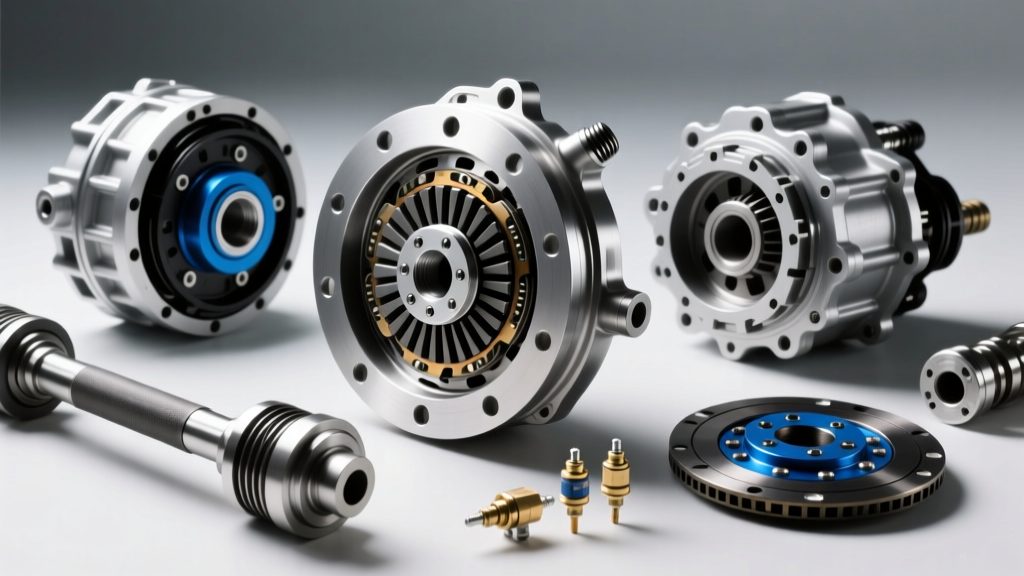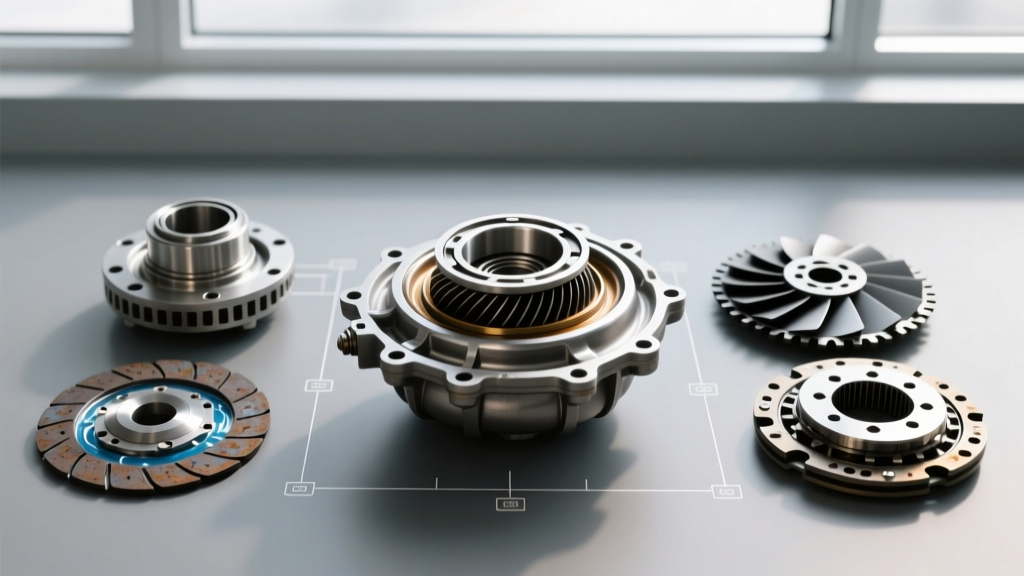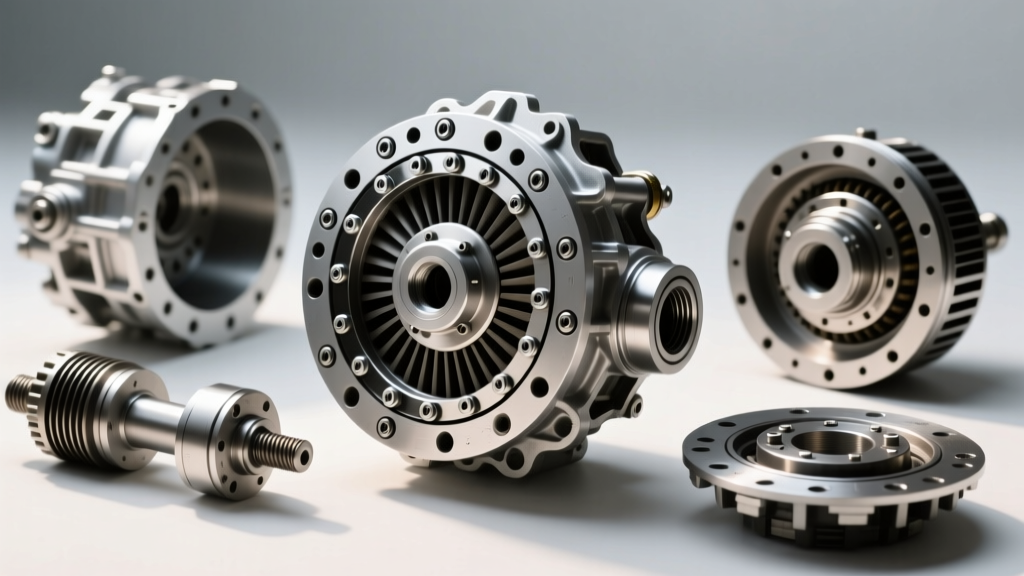
The Anatomy of High-Stall Predator Torque Converter Fitment
In the high-performance automotive sector, a 'predator torque converter' typically refers to aggressive, high-stall, billet-cover units designed to multiply torque violently off the line. Whether you are building a dedicated drag car or a high-horsepower street/strip machine, upgrading to one of these performance converters is a massive leap forward. However, as of 2026, with modern CNC-machined flexplates and tighter engine-to-transmission tolerances, simply bolting on a high-stall unit without verifying the exact torque converter bolt pattern and dimensional fitment is a recipe for catastrophic drivetrain failure.
At AutoGearNexus, we see countless transmission pump failures and cracked flexplates that trace directly back to improper bolt circle geometry, incorrect pilot hub depths, or missing spacer shims. This technical deep-dive will walk you through the exact measurements, torque specifications, and diagnostic symptoms required to properly mate a performance torque converter to GM, Ford, and Chrysler automatic transmissions.
Decoding Torque Converter Bolt Patterns
The bolt pattern on a torque converter is defined by two critical metrics: the bolt count and the bolt circle diameter (BCD). The BCD is measured from the center of one bolt hole to the center of the hole directly across from it (on even bolt counts) or using a specialized pitch circle gauge (on odd bolt counts like GM's 3-bolt pattern).
GM Platforms: The 3-Bolt and 6-Bolt Divides
General Motors has historically relied on a 3-bolt pattern for its most ubiquitous rear-wheel-drive transmissions, including the TH350, TH400, 700R4, and the legendary 4L60E. However, there are two distinct bolt circles you must verify:
- 10.75-inch BCD: Common on standard passenger car flexplates and smaller 12-inch to 13-inch diameter converters.
- 11.5-inch BCD: Standard on heavy-duty truck applications, large 14-inch to 15-inch flexplates, and many high-performance aftermarket SFI-certified flexplates.
With the introduction of the 6L80 and 6L90 transmissions, GM shifted to a 6-bolt pattern. These late-model units require precise alignment, as the torque converter is also responsible for driving the high-volume gerotor transmission pump. A mismatched 6-bolt pattern will result in immediate pump housing fracture upon engine startup.
Ford and Chrysler Applications
Ford's C4, C6, AOD, and modern 10R80 transmissions predominantly utilize a 4-bolt pattern. The BCD varies between 10.5 inches and 11.5 inches depending on the flexplate tooth count (e.g., 157-tooth vs. 164-tooth). Chrysler's TorqueFlite derivatives (like the ZF 8HP-based TorqueFlite 8-speeds) use highly specific metric 4-bolt and 5-bolt patterns that require OEM-style dowel pin alignment.
Compatibility and Measurement Chart
Use the following reference table to verify your application before ordering a custom-stall predator torque converter. Always measure your existing flexplate with digital calipers rather than relying on application guides alone.
| Transmission Family | Bolt Count | Bolt Circle Diameter (BCD) | Pilot Hub Diameter | Standard Fastener |
|---|---|---|---|---|
| GM 4L60E / TH350 | 3 | 10.75' or 11.5' | 1.703' | M10 x 1.5 or 3/8'-24 |
| GM 6L80 / 6L90 | 6 | 12.0' (Approx) | 1.703' / 2.05' | M10 x 1.5 Flange |
| Ford C4 / AOD | 4 | 10.5' or 11.5' | 1.375' | 3/8'-24 UNF |
| Ford 10R80 | 6 | Specific Metric | Custom Stepped | M10 Metric Flange |
| Chrysler TorqueFlite (ZF 8HP) | 4 / 5 | Model Dependent | Stepped Pilot | M10 x 1.5 |
Critical Fitment Metrics: Beyond the Bolt Circle
Matching the bolt holes is only 20% of the battle. The remaining 80% of a successful installation relies on axial clearances and pilot hub engagement. According to TCI Automotive Tech Articles, ignoring axial spacing is the number one cause of warranty claims on billet performance converters.
1. Pilot Hub Clearance and the 'Clay Test'
The pilot hub is the machined snout on the front of the torque converter that centers the unit inside the engine's crankshaft bore. For most GM applications, this diameter is exactly 1.703 inches. The critical metric is axial depth. The pilot hub must never bottom out inside the crankshaft bore. If it does, the engine's thrust bearing will absorb the forward thrust of the torque converter, or worse, the converter will push rearward against the transmission stator support, shattering the transmission pump gears.
The Fix: Perform the 'clay test.' Place a small ball of modeling clay inside the crankshaft bore. Slide the transmission and torque converter into place and seat the converter fully into the transmission pump. Bolt the transmission to the engine block, then remove it and measure the compressed clay. You must have a minimum of 0.060 to 0.125 inches of clearance. If the clearance is insufficient, the pilot hub must be machined down on a lathe.
2. Flexplate Thickness and Spacer Shims
When upgrading to an SFI 29.1 certified aftermarket flexplate to handle the violent torque multiplication of a predator-style converter, you will often find that the new flexplate is thicker than the OEM stamped-steel unit. This reduces the distance between the flexplate mounting pad and the torque converter pad.
If the gap exceeds 0.030 inches, the torque converter will 'dimple' or pull forward when the bolts are tightened, creating immense parasitic drag on the transmission pump and leading to severe TCC (Torque Converter Clutch) shudder. You must use precision-machined steel spacer shims (typically available in 0.030', 0.060', and 0.100' thicknesses) to restore the factory gap, which should ideally sit between 0.060' and 0.125' when the converter is fully seated in the pump.
Fastener Science and Torque Sequences
Never reuse OEM torque converter bolts. The cyclic loading of a high-stall converter will stretch standard hardware, leading to fatigue failure. Always use Grade 8 (SAE) or Class 10.9 (Metric) flange bolts with a wide washer face to distribute the load across the converter's mounting pads.
Expert Tech Tip: Thread engagement is non-negotiable. You must achieve a minimum thread engagement equal to 1.5 times the diameter of the bolt. For an M10 bolt, that means at least 15mm of thread bite into the flexplate. If your aftermarket flexplate is thin, you may need to use specialized high-strength studs and nuts instead of standard bolts. Always apply a medium-strength threadlocker like Loctite 243 to prevent backing out under high-RPM vibrations.
Standard Torque Specifications:
- GM M10 x 1.5 (4L60E/6L80): 33 lb-ft (45 Nm)
- Ford 3/8'-24 UNF (C4/AOD): 30 to 35 lb-ft (40-47 Nm)
- Flexplate to Crankshaft (GM V8): 60 to 85 lb-ft depending on bolt diameter (always verify with OEM service manual).
Diagnosing Symptoms of Poor Fitment
If a predator torque converter is improperly mated, the symptoms will manifest quickly, often mimicking internal transmission failures. According to Sonnax Transmission Tech Resources, misdiagnosing these external fitment issues often leads to unnecessary transmission teardowns. Watch for these specific symptoms:
High-Pitch Pump Whine at Idle
If the torque converter pilot hub is bottomed out in the crank, or if the gap between the converter and flexplate was pulled tight without shims, the converter pushes rearward into the transmission pump. This binds the pump gears against the stator support, causing a high-pitched whine that increases with RPM. This will rapidly destroy the pump housing and cause total loss of line pressure.
Severe TCC Shudder and Lockup Failure
Modern units like the 6L80 rely on precise axial alignment for the Torque Converter Clutch (TCC) apply piston. If the converter is dimpled forward due to incorrect bolt pull-in, the TCC friction material cannot apply evenly against the front cover. This results in violent shudder during highway cruising and will eventually burn out the TCC lining, contaminating the transmission fluid and clogging the solenoid screens.
Harmonic Vibration at 1,500 - 2,500 RPM
A vibration that peaks in the mid-RPM range and shakes the entire chassis is often a sign of a mismatched bolt circle or an improperly balanced flexplate/converter combination. High-stall converters are furnace-brazed and computer-balanced as a single assembly. If the flexplate is warped, or if the pilot hub clearance is too tight (transferring engine crankshaft runout directly to the converter), the rotational mass will wobble, destroying the transmission input shaft bushing and the engine's rear main seal.
Cracked Flexplate Pads
Inspect the flexplate mounting pads during any transmission service. If you see hairline cracks radiating from the bolt holes, it indicates that the converter was forced into place using the bolts to 'pull' the converter to the flexplate, rather than using proper shims to bridge the gap. As noted in Summit Racing's Tech Advice archives, using bolts as a winch to close a gap exceeding 0.100 inches guarantees eventual metal fatigue and flexplate failure, which can result in the converter detaching at high RPM.
Final Assembly and Fluid Considerations
Once the bolt pattern, pilot depth, and shim spacing are verified, ensure you account for the increased fluid capacity of a high-stall predator torque converter. A standard 245mm GM converter holds roughly 2 to 3 quarts of fluid. A larger 258mm or 278mm billet performance converter can hold up to 5 or 6 quarts. For a 4L60E, this means your total system capacity will jump from the standard 11.5 quarts to nearly 14 quarts. For a 6L80 running Dexron VI, expect to add an extra 2-3 quarts during the initial fill and tuning phase.
Proper fitment is the difference between a reliable, tire-shredding drivetrain and a trailered car. Always measure twice, shim correctly, and torque to spec.